The 13661 form serves as a crucial tool for individuals seeking reasonable accommodations in the workplace, particularly within the context of employment with the Internal Revenue Service (IRS). This form is divided into several parts, each designed to facilitate the request process. The first part requires the applicant, employee, or IRS official to provide essential information regarding the individual’s medical condition and how it impacts their ability to perform job functions. In the second part, the Deciding Official documents their assessment of the request, which may include alternative accommodation suggestions. Parts III-A and III-B focus on the necessary medical documentation that must be completed by a qualified health care practitioner, social worker, or rehabilitation counselor. This documentation is vital as it establishes the relationship between the medical condition and the need for accommodation. Finally, Part IV allows the Deciding Official to formally document any denial of the accommodation request. It is important to note that the form includes a Privacy Act Statement, ensuring that the information provided is handled with confidentiality and used solely for the purpose of processing the accommodation request. The form also emphasizes compliance with the Genetic Information Nondiscrimination Act (GINA), which restricts the collection of genetic information to protect individuals' privacy. Understanding the 13661 form and its components is essential for both employees and employers to ensure a fair and supportive workplace environment.

Instructions for Form 13661, Reasonable Accommodation Request
This form is intended to assist persons involved in the reasonable accommodation process and to memorialize important information. Completion of the form, including medical documentation if the condition is not obvious or history of, is strongly encouraged for Agency Reasonable Accommodation Services (RAS) review and record keeping purposes.
Part I – Written Reasonable Accommodation Request
To be completed by applicant for employment, employee, representative, or by an IRS official when necessary to document a reasonable accommodation request. Submitting any medical or other supporting documentation with Part I will help expedite the processing of the request for accommodation.
Part
To be completed by Supervisor or Deciding Official addressing management's decision. Management makes the final decision on a request for accommodation.
Part
To be completed by Supervisor or Deciding Official addressing management's decision. Management makes the final decision on a request for accommodation. A temporary request, condition, or accommodation should be documented on Part I and Part II with re- evaluation or ending date.
Part
To be completed by Health Care Practitioner, Social Worker, or Rehabilitation Counselor.
Part
To be completed by Health Care Practitioner, Social Worker, or Rehabilitation Counselor. Note: Medical documentation is generally not required where the disability is obvious or known to the Agency and the nexus between the disability and the requested accommodation is apparent.
Part IV – Denial of Reasonable Accommodation Request
To be completed by Deciding Official to document the denial of reasonable accommodation.
Authorization of Representation – To be completed by representative and/or employee for authorized representation for request.
Privacy Act Statement
Collection of the requested information is authorized by Section 501 of the Rehabilitation Act, 29 U.S.C. § 791.The information you furnish will be used for the purpose of facilitating your request. Additionally, the information may be used to disclose information to: appropriate Federal, state or local agencies when relevant to civil, criminal or regulatory investigations or prosecutions when necessary to adjudicate a claim for benefits; a Federal agency in connection with a decision in hiring, retention or the granting of a security clearance. It may also be used in an administrative or judicial proceeding affecting an employee's personnel rights and in any criminal prosecutions for willfully making false or fraudulent statements in violation of U.S.C. § 1001. Additional uses may include disclosure to the Department of Justice for the purpose of litigating any civil, administrative, or judicial proceeding where the United States, the IRS, or its employees (in their official capacities or where the government has decided to represent them) are parties. It may also be used in response to subpoena from a third party provided that (1) IRS is a party in interest, (2) the records are relevant and necessary to the litigation, and (3) not otherwise privileged. This information may be provided to professional associations, such as state bar disciplinary authorities, for use in connection with their administration of standards of conduct. Further, it may be disclosed to contractors when necessary to perform work associated with reasonable accommodation and to those Federal agencies that oversee property and procurement matters. Furnishing the requested information is required to establish that you have a covered disability, the functional limitations of your disability, and the need for reasonable accommodation. Failure to fully complete the form or refusal to provide the requested documentation may lead to a breakdown in the reasonable accommodation process and could result in a determination that you are not entitled to reasonable accommodation.
Form 13661 (Rev. |
Catalog Number 39619X |
publish.no.irs.gov |
Department of the Treasury - Internal Revenue Service |

Nondisclosure of GINA Protected Information
The Genetic Information and Nondiscrimination Act of 2008 (GINA) prohibits employers and other entities covered by GINA Title II from requesting, requiring, or purchasing genetic information of employees or their family members, except as specifically allowed by this law. GINA has specific exceptions for requests under the Family and Medical Leave Act and the Rehabilitation Act, as explained below. To comply with GINA, we are asking that you not provide any genetic information when responding to this request for medical information, unless the information is allowable as explained below.
“Genetic information”, as defined by GINA, includes information concerning the manifestation of disease/disorder in family members (“family medical history”), information about an individual's or family member's genetic tests, the fact that an individual or an individual's family member sought or received genetic services, and genetic information of a fetus carried by an individual or an individual's family member or an embryo lawfully held by an individual or family member receiving assistive reproductive services. Document 12986 - Nondisclosure of GINA Protected Information (Provided for your information).
Family and Medical Leave Act (FMLA)
The general prohibition against requesting or requiring genetic information does not apply where an employer requests medical information of an employee who invokes the FMLA to attend to the employee's own serious health condition or where an employee complies with the employer's return to work certification requirements. See 29 CFR 1635.8(b)(1)(i)(D)(2). An employer does not violate GINA by asking an employee seeking FMLA leave to care for a seriously ill family member to provide family medical history to comply with the certification provisions of the FMLA. See 29 CFR 1635.8(b)(3).
Further, GINA permits disclosure of relevant genetic information consistent with the requirements of the FMLA to persons with a need to know the information because of responsibilities relating to the handling of FMLA requests. See 29 CFR 1635.9(b)(5).
Rehabilitation Act
The general prohibition against requesting or requiring genetic information does not apply where an employer requests documentation to support a request for reasonable accommodation as long as the request for documentation is lawful. Such a request is lawful only where the disability and/or the need for accommodation is not obvious; the documentation required contains no more information than what is sufficient to establish that an individual has a disability and needs reasonable accommodation; and the documentation relates only to the impairment that the individual claims to be a disability that requires reasonable accommodation. See 29 CFR 1635.8(b)(1)(i)(D)(1); see also 29 CFR 1635.8(b) (1)(i)(B).
Form 13661 (Rev. |
Catalog Number 39619X |
publish.no.irs.gov |
Department of the Treasury - Internal Revenue Service |

Reasonable Accommodation Request
Part I. Written Reasonable Accommodation Request
To be completed by applicant, employee, or IRS official
1. Applicant/Employee information |
|
2. Occupational |
|
|
|
|
|
|
|
Last name |
First name |
SEID |
Series |
Grade |
|
|
|
|
|
3. Operating Division/Function
4. Contact information
Office telephone number |
FAX number |
Cubicle, floor, or building code |
Tour of Duty/Shift (work hours) |
|
|
|
|
|
|
Post of Duty (POD) City |
|
State |
|
ZIP code |
|
|
|
|
|
|
Preferred method/time to contact (cell phone or email, hours) |
|||
|
|
|
|
|
5.Mailing address (where you receive official correspondence)
Address 1 (work) |
Address 2 (home) |
|
|
Room #
Mail Stop
City
State
ZIP code
6. Manager's contact information
Manager's name |
SEID |
Telephone number |
|
|
|
|
|
Post of Duty (POD) City
State
ZIP code
7.Medical condition (Describe your medical condition requiring accommodation.)
8.Job functions affected (Describe how your medical condition limits your ability to perform your current duties, participate in the application process, or access a benefit of employment. Copy of position description or clarify essential job functions impacted.)
9.Accommodation requested (Based on your disability or medical condition and job functions affected, what accommodations would help you to perform effectively.)
10.List alternative accommodation options to consider
I affirm that all statements made above are true to the best of my knowledge and belief.
Signature of Applicant/Employee |
Date signed |
|
|
Authorization of Representation Name / Contact Information (attach release form to package)
eFAX
Form 13661 (Rev. |
Catalog Number 39619X |
publish.no.irs.gov |
Department of the Treasury - Internal Revenue Service |
Part I
Page 4
Reasonable Accommodation Request
Part
To be completed by Supervisor/Deciding Official
1. Name of Applicant/Employee
RA case number
2. Supervisor/Deciding Official
Last name
Post of Duty (POD) City
First name |
Title |
|
SEID |
|
|
|
|
|
State |
ZIP code |
|
|
|
|
|
Telephone number (Including Area Code)
3. Is the employee's/applicant's condition obvious or otherwise known to management
Yes
No
4.What duties or functions of the job are limited by the applicant/employee's medical condition. (Refer to the Position Description, Critical Job Elements (CJE), applicant requirements, or other relevant documentation).
5.Does this limitation affect an essential function of the job or participation in the application process (See RAC if essential job function worksheet is needed). Explain answer
Yes
No
6.Will the requested accommodation allow the applicant/employee to successfully perform the essential job functions or participate in the application process. Explain answer
Yes
No
Not sure
7. Describe any interim accommodation efforts, alternative accommodation recommendations or previously approved accommodations
8. |
Further medical information/review: Does management need additional medical information |
Yes |
No |
|
|
|
|
9. |
Potential review through Federal Occupational Health (FOH) |
Yes |
No |
If either additional medical information or review by FOH is necessary. Explain the need (Additional medical information should not be sought where the condition is obvious or known and the connection to the requested accommodation is apparent)
I affirm all statements made above are true to the best of my knowledge and belief.
Signature of Supervisor/Deciding Official |
|
|
Date signed |
|
|
|
|
||
|
eFAX |
|||
|
|
|
|
|
Form 13661 (Rev. |
Catalog Number 39619X |
publish.no.irs.gov |
Department of the Treasury - Internal Revenue Service |
|
Part
Reasonable Accommodation Request
Part
To Be Completed After Review of Accommodation Request
Request approved Alternative accommodation approved Accommodation denied If an alternative accommodation approved, describe accommodation approved
If the condition and/or accommodation is temporary, document specifics with date to
Review date
Signature of Deciding Official |
|
|
Date signed |
|
|
|
|
|
|
Deciding Official |
|
|
|
|
|
|
|
|
|
Last name |
First name |
Title |
|
SEID |
|
|
|
|
|
Telephone number (Including Area Code)
Post of Duty (POD) City
State
ZIP code
eFAX
Form 13661 (Rev. |
Catalog Number 39619X |
publish.no.irs.gov |
Department of the Treasury - Internal Revenue Service |
Part
Reasonable Accommodation Request
Part
To be completed by a Health Care Practitioner, Social Worker, or Rehabilitation Counselor
Name of Applicant/Employee
Instructions
We have been requested to consider a reasonable accommodation for the individual named above. An accommodation is a modification made to a job and/or the work environment that enables a qualified employee/applicant with a disability to successfully perform the essential duties or functions of the position. We request that you provide medical information which reflects:
•the individual has one or more physical or mental impairment that substantially limit(s) one or more of his/her major life activities (e.g., walking, speaking, breathing, hearing, seeing, thinking, sitting, standing, reaching, interacting with others, learning, performing manual tasks, caring for oneself, concentrating, lifting, working, sleeping),
•a relationship or nexus between the medical condition(s) and the recommended accommodation(s).
Medical Documentation; provide a copy of employee position or job description
1. Have you made a diagnosis that relates to this reasonable accommodation request? State the diagnosis
2.Describe what limitations result from this condition, address any workplace safety concerns or impact to perform essential job duties that may result from the condition. (Complete Part
3.What is the anticipated duration of this medical condition
4.Recommended options or alternatives for accommodation efforts
Certification
Name of Health Care Practitioner, Social Worker, Rehabilitation Counselor
Telephone number
Best method and time to contact
I understand an IRS medical consultant may contact me for additional information.
Signature |
|
|
|
Date signed |
|
|
|
||
|
eFAX |
|||
|
|
|
|
|
Form 13661 (Rev. |
Catalog Number 39619X |
publish.no.irs.gov |
Department of the Treasury - Internal Revenue Service |
|
Part
Reasonable Accommodation Request
Part
To be completed by a Health Care Practitioner, Social Worker, or Rehabilitation Counselor
Name of Applicant/Employee
Instructions
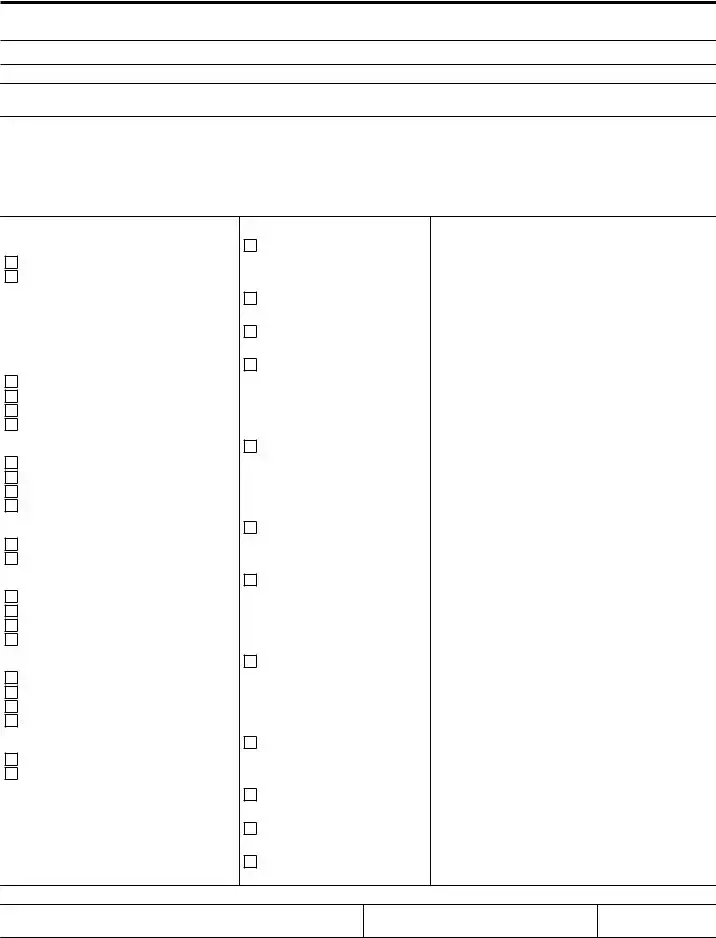
1.The following table indicates the major life activity that is affected by the applicant/employee's medical condition. Major life activities are those basic activities that the average person in the general population can perform with little or no difficulty.
2.Indicate only the major activity affected by the applicant / employee's medical condition by circling or checking the appropriate block. Indicate the specific limitation of the applicant / employee resulting from their condition. Quantify their limitation in order for the agency to determine appropriate workplace accommodations
Activity |
Extent of Limitation |
Detailed Explanation/Recommendation |
|||
|
|
|
|
|
|
Sensory |
|
|
Limited to: |
|
|
|
|
|
|||
Seeing/Vision |
|
|
|
|
|
Hearing |
|
|
|
|
|
|
|
|
|
|
|
Breathing/Respiratory |
|
|
Limited to: |
|
|
|
|
|
|||
|
|
|
|
|
|
Speaking |
|
|
Limited to: |
|
|
|
|
|
|||
|
|
|
|
|
|
Basic Mobility |
|
|
Limited to: |
|
|
|
|
|
|||
Walking |
|
|
|
Hours per day |
|
Climbing stairs |
|
|
|
Distance |
|
|
|
|
|
||
Sitting |
|
|
|
|
|
|
|
|
% of day |
|
|
Standing |
|
|
|
|
|
|
|
|
|
|
|
Secondary Mobility |
|
|
Limited to: |
|
|
|
|
|
|||
Squatting/kneeling |
|
|
|
|
|
Twisting (neck/waist) |
|
|
|
Hours per day |
|
Bending/stooping |
|
|
|
|
|
Reaching above shoulder |
|
|
|
|
|
|
|
|
|
|
|
Physical Exertion |
|
|
Limited to: |
|
|
|
|
|
|||
Pushing/pulling |
|
|
|
Number of pounds |
|
Lifting/Carrying |
|
|
|
|
|
|
|
|
|
|
|
|
|
|
|
|
|
Fine Motor Skills |
|
|
Limited to: |
|
|
|
|
|
|||
Keyboard use |
|
|
|
|
|
Repetitive use of hands |
|
|
|
Hours per day |
|
Grasping |
|
|
|
|
|
Fine finger motions |
|
|
|
|
|
|
|
|
|
|
|
Cognitive |
|
|
Limited to: |
|
|
|
|
|
|||
Thinking |
|
|
|
|
|
Learning |
|
|
|
|
|
Comprehending |
|
|
|
|
|
Concentrating |
|
|
|
|
|
|
|
|
|
|
|
Caring for self |
|
|
Limited to: |
|
|
|
|
|
|||
|
|
|
|
|
|
Dressing |
|
|
|
|
|
|
|
|
|
|
|
Mental/emotional |
|
|
Limited to: |
|
|
|
|
|
|||
|
|
|
|
|
|
Sleeping |
|
|
Limited to: |
|
|
|
|
|
|||
|
|
|
|
|
|
Other/Bodily Functions |
|
|
Limited to: |
|
|
Certification
Name of Health Care Practitioner, Social Worker, Rehabilitation Counselor |
Signature |
eFAX
Date signed
Form 13661 (Rev. |
Catalog Number 39619X |
publish.no.irs.gov |
Department of the Treasury - Internal Revenue Service |
Part
Reasonable Accommodation Request
Part IV. Denial of Reasonable Accommodation Request
To be completed by Deciding Official
Name of Applicant/Employee |
RA case number |
|
|
Accommodation requested
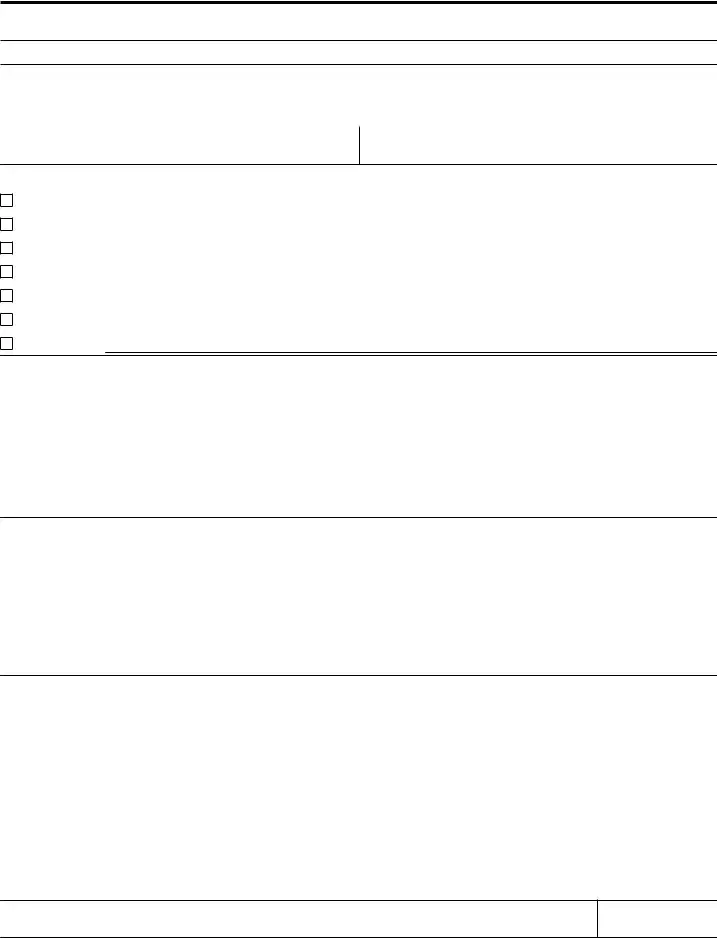
1.Reason for denial (check all that apply)
Accommodation Ineffective/Inappropriate Accommodation Would Cause Undue Hardship
Employee did not accept an alternative accommodation offered Medical Documentation Inadequate
Accommodation Would Require Removal of Essential Function
Accommodation offered to Applicant/Employee
Accommodation Would Require Lowering of Performance or Production Standard
Other (Identify)
2.Detailed reason(s) for the denial of reasonable accommodation (e.g., why accommodation is ineffective or causes undue hardship)
3.If the individual did not accept an alternative accommodation, explain how the alternative accommodation addresses the limitation, and why you believe the chosen accommodation would be effective
4.Appeal Process:
•Refer to IRM 1.20.2.
•A request to the Deciding Official for reconsideration based on new medical documentation or other previously unavailable information may be made within 15 business days of receipt of this denial.
•An appeal to the Business Unit Chief/Commissioner may be initiated within 15 business days of the denial of accommodation or within 15 business days of a denial of a request for reconsideration by the Deciding Official, unless an alternative effective accommodation has been offered.
•To initiate an EEO complaint contact an EEO counselor within the IRS within 45 calendar days of an allegedly discriminatory action/event.
•Bargaining Unit employees may file a grievance in accordance with the terms of the collective bargaining agreement.
•An appeal to the Merit Systems Protection Board may be filed within 30 calendar days of an adverse action as defined in 5 C.F.R. 1201.3.
Signature of Deciding Official (If denied)
Date signed
eFAX
Form 13661 (Rev. |
Catalog Number 39619X |
publish.no.irs.gov |
Department of the Treasury - Internal Revenue Service |
Part IV
| Fact Name | Fact Description |
|---|---|
| Purpose | The 13661 form is used to request reasonable accommodations for employees or applicants with disabilities. |
| Parts | The form consists of four parts: Written Request, Deciding Official Documentation, Medical Documentation, and Denial of Request. |
| Privacy Act Statement | Information collected is authorized by Section 501 of the Rehabilitation Act and may be disclosed to relevant agencies for investigations or claims. |
| GINA Compliance | The form complies with the Genetic Information Nondiscrimination Act (GINA), prohibiting the request for genetic information unless allowed by law. |
| Submission Instructions | Completed forms should be returned via fax or to the assigned Reasonable Accommodation Coordinator. |
| Medical Documentation | Health Care Practitioners must complete sections that confirm the applicant's medical condition and its impact on major life activities. |
| Denial Process | If a request is denied, the Deciding Official must document the reasons in Part IV of the form. |
| State-Specific Laws | State laws governing reasonable accommodations may vary; refer to local regulations for specific requirements. |
| Importance of Completeness | Failure to fully complete the form may result in a breakdown of the accommodation process and denial of the request. |
Filling out Form 13661 is a crucial step in the process of requesting reasonable accommodation due to a medical condition. This form must be completed accurately to ensure that your request is properly documented and reviewed. Below are the steps to fill out the form effectively.
Once the form is completed, submit it to the appropriate contact as specified in the instructions. Ensure that any additional information or attachments are included if there is not enough space on the form itself.
Form 13661 is used to request reasonable accommodations in the workplace for individuals with disabilities. It serves as a formal document for employees, applicants, or IRS officials to detail their needs related to a medical condition that limits their ability to perform job functions. The form facilitates communication between the employee and management, ensuring that the necessary adjustments can be made to support the employee's performance and participation in the workplace.
Form 13661 consists of several parts, each designated for different individuals:
In Part I, the applicant or employee must provide personal information, including their name, contact details, and job-related information. They should describe their medical condition and how it affects their job functions. Additionally, the individual must specify the accommodations they believe would help them perform their job effectively. If there is not enough space to provide detailed information, they are encouraged to attach additional documentation.
If a reasonable accommodation request is denied, the Deciding Official must complete Part IV of the form. This section documents the reasons for the denial and provides the applicant with an understanding of the decision. It is important for the employee to know their rights and options following a denial, including the possibility of appealing the decision or seeking further clarification.
The Genetic Information Nondiscrimination Act (GINA) prohibits employers from requesting genetic information about employees or their family members, with specific exceptions. When completing Form 13661, individuals should refrain from providing any genetic information unless it is explicitly allowed under GINA. This ensures that personal medical information is protected while still allowing for necessary accommodations to be made based on legitimate medical needs.
Filling out Form 13661 can be a critical step in obtaining reasonable accommodations, but many people make mistakes that can delay or complicate the process. Here are nine common errors to avoid.
One frequent mistake is incomplete information. Applicants often fail to provide all required details, such as their contact information or medical condition. Omitting this information can lead to processing delays. Ensure that every section is fully filled out before submission.
Another common issue is not clearly describing the medical condition. When detailing the condition that necessitates accommodation, vague descriptions do not help decision-makers understand the need. Be specific about how the condition affects job performance and daily activities.
Some applicants neglect to specify the accommodation requested. Simply stating that an accommodation is needed without providing examples can lead to confusion. Clearly outline what adjustments would help you perform your job effectively.
Additionally, many individuals fail to attach necessary medical documentation. If the medical condition is not obvious, supporting documents from a healthcare professional are essential. Without this documentation, the request may be denied.
Another mistake involves not keeping copies of submitted forms. Applicants often overlook the importance of maintaining records of their requests. Keeping a copy can be invaluable if there are questions or disputes later on.
Some people also make the error of submitting the form to the wrong contact person. Ensure that you send your request to the designated Reasonable Accommodation Coordinator. Sending it to the wrong office can result in unnecessary delays.
Another common oversight is misunderstanding the submission method. Some applicants fail to follow the instructions for faxing or emailing the form. Be sure to use the correct method as specified in the guidelines to avoid complications.
Moreover, applicants sometimes do not provide alternative accommodation suggestions. If the requested accommodation cannot be granted, having alternatives ready can facilitate the process. Consider what other adjustments might work for you.
Finally, many individuals do not take the time to review their forms before submission. Errors in spelling or grammar may seem minor, but they can affect the clarity of your request. A thorough review can help ensure that your message is communicated effectively.
Avoiding these mistakes can make a significant difference in the outcome of your reasonable accommodation request. Take the time to fill out Form 13661 carefully and completely.
The 13661 form is a key document used to request reasonable accommodations in the workplace. Alongside this form, several other documents are commonly utilized to support the accommodation process. Each of these documents serves a distinct purpose and helps ensure that the accommodation request is properly evaluated and documented.
These documents collectively support the reasonable accommodation process, ensuring that requests are thoroughly reviewed and that individuals receive the necessary support in the workplace. Proper completion and submission of these forms are essential for a smooth and effective accommodation experience.
The Form 13661, which is a Reasonable Accommodation Request, shares similarities with several other documents that address employee rights and accommodations in the workplace. Below is a list of these similar documents and how they relate to Form 13661.
When filling out the 13661 form, it is important to follow certain guidelines to ensure your request for reasonable accommodation is processed smoothly. Here are five things you should and shouldn't do:
Following these guidelines will help ensure that your request is clear and that you receive the necessary accommodations in a timely manner.
Misconceptions about the 13661 form can lead to confusion regarding its purpose and use. Below are ten common misconceptions along with clarifications.
When filling out and using the 13661 form for reasonable accommodation requests, consider the following key points:
Act promptly to ensure that your request is processed efficiently. Delays in submission can hinder your ability to receive necessary accommodations.