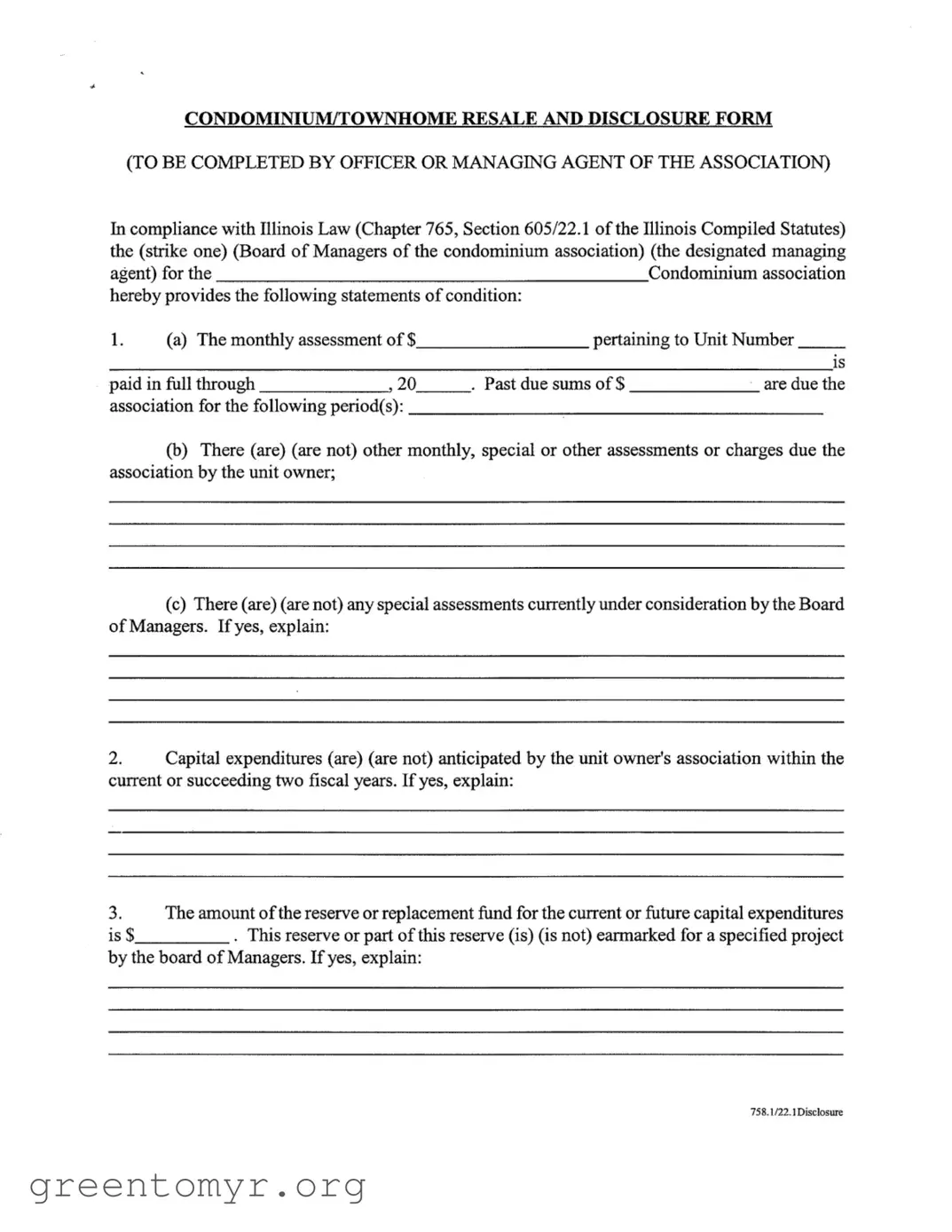
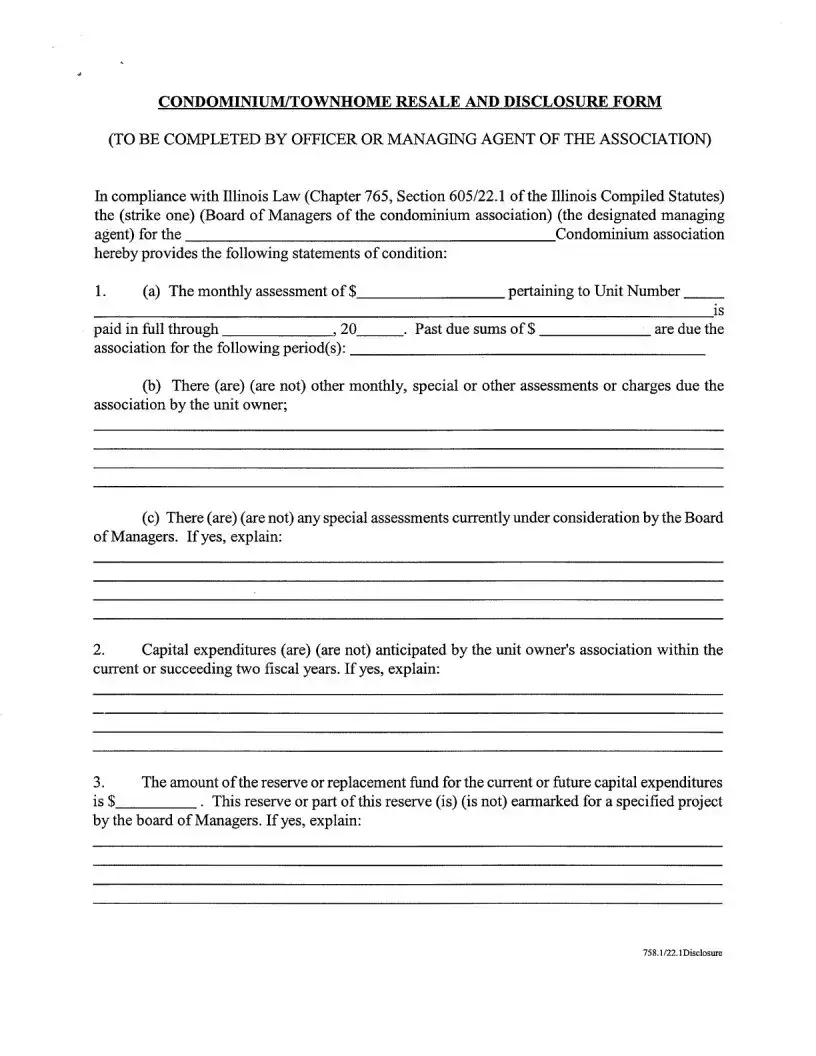
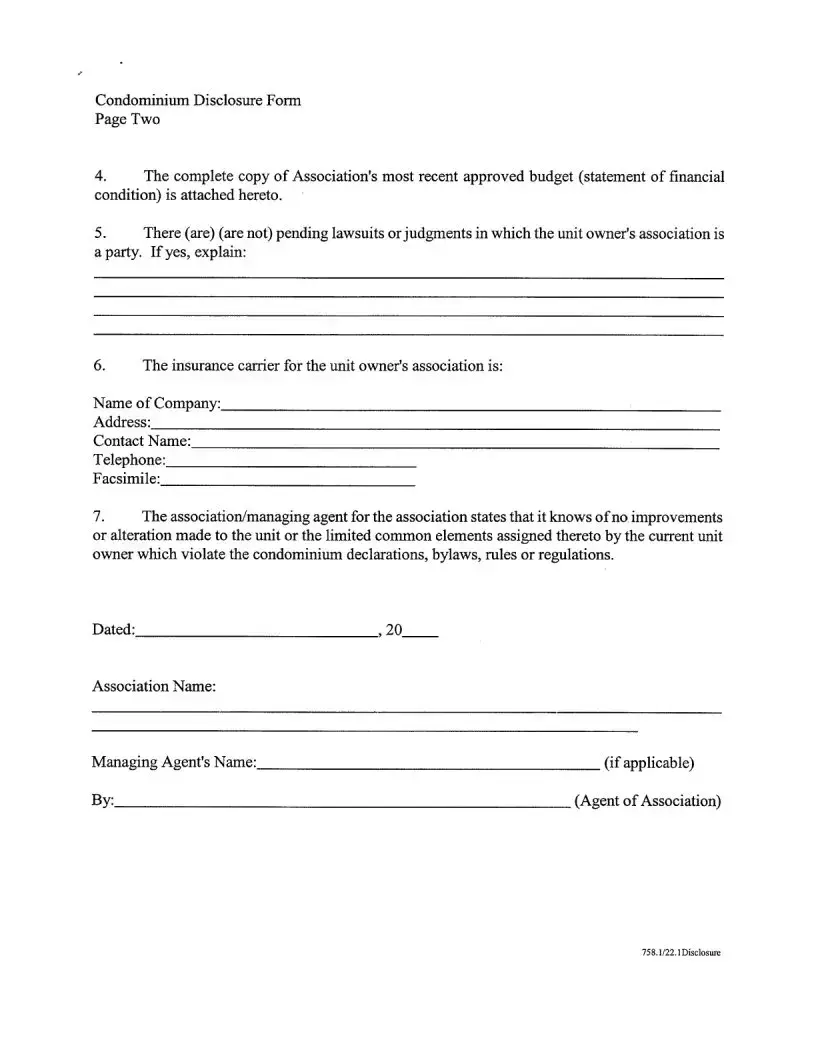
The Act 221 Disclosure form plays a crucial role in the real estate process for condominium and townhome transactions in Illinois. This form, mandated by state law, ensures transparency between the seller and potential buyers regarding the financial health and operational status of the condominium association. It requires the officer or managing agent of the association to provide detailed information about various aspects of the property, including the current status of monthly assessments, any past due amounts, and the presence of special assessments. Additionally, it addresses anticipated capital expenditures and the status of the reserve fund, which is essential for maintaining the property. Buyers will find information about pending lawsuits, the association's insurance coverage, and any alterations made to the unit that may violate existing regulations. By gathering this information, the Act 221 Disclosure form empowers buyers to make informed decisions, fostering trust and clarity in the transaction process.
| Fact Name | Details |
|---|---|
| Purpose | The Act 221 Disclosure form is designed to inform potential buyers about the financial and legal status of a condominium or townhome association. |
| Governing Law | This form is governed by Illinois Law, specifically Chapter 765, Section 605/22.1 of the Illinois Compiled Statutes. |
| Monthly Assessments | The form requires disclosure of whether the monthly assessments for a specific unit are paid in full and if there are any past due amounts. |
| Special Assessments | It asks if there are any special assessments currently under consideration, providing insight into potential future costs for unit owners. |
| Capital Expenditures | The form addresses anticipated capital expenditures, helping buyers understand potential future financial obligations. |
| Pending Lawsuits | Disclosure of any pending lawsuits involving the association is required, which can affect the overall financial health and stability of the community. |
| Insurance Information | The form must include details about the association's insurance carrier, ensuring buyers are aware of coverage in place for the property. |
Completing the Act 221 Disclosure form is essential for ensuring compliance with Illinois law regarding condominium and townhome resales. This form must be filled out by an officer or managing agent of the association. Once completed, it will provide important information to potential buyers about the financial and legal status of the condominium association.
The Act 221 Disclosure form serves to provide essential information about a condominium or townhome unit to potential buyers. It is a legal requirement in Illinois, ensuring transparency regarding the financial status of the condominium association and any relevant conditions that may affect ownership. The form includes details about monthly assessments, special assessments, pending lawsuits, and the association's budget, all of which are crucial for informed decision-making by prospective buyers.
The form contains several key pieces of information, including:
This information is crucial for potential buyers to understand their financial obligations and any risks associated with the property.
The form must be completed by an officer or managing agent of the condominium association. This ensures that the information provided is accurate and reflects the official stance of the association. It is important that the designated individual has a comprehensive understanding of the association's financial and legal status to provide potential buyers with reliable information.
The Act 221 Disclosure form plays a significant role in the buying process by equipping potential buyers with necessary information. Buyers can use the details provided to assess the financial health of the condominium association and to understand any potential liabilities. If any issues arise from the disclosure, such as pending lawsuits or significant assessments, buyers can make informed decisions about whether to proceed with the purchase or negotiate terms. Ultimately, this form promotes transparency and helps prevent future disputes between buyers and the association.
Filling out the Act 221 Disclosure form is a crucial step for any condominium or townhome association. However, many individuals make common mistakes that can lead to confusion or even legal issues down the line. One frequent error is not providing complete or accurate information about the monthly assessments. It’s essential to ensure that the amounts are filled in correctly, including any past due sums. Incomplete or incorrect figures can mislead potential buyers and create distrust.
Another mistake often seen is failing to indicate whether there are any pending special assessments. This section requires careful attention. If there are special assessments currently under consideration, it’s important to provide a clear explanation. Omitting this information can lead to significant misunderstandings for future owners, who may be unprepared for unexpected costs.
Many individuals also overlook the importance of the reserve or replacement fund details. The form asks whether this fund is earmarked for specific projects. Not specifying this can create ambiguity about the financial health of the association. Buyers need to know how funds are allocated, as this impacts their future financial obligations.
Another common oversight is neglecting to attach the most recent approved budget. This document is vital for potential buyers to assess the financial stability of the association. Without it, the disclosure is incomplete, and buyers may feel hesitant to proceed with their purchase.
Lastly, failing to disclose any pending lawsuits or judgments is a significant mistake. This information is crucial for potential buyers to understand any legal risks associated with the property. Transparency in this area fosters trust and ensures that buyers are fully informed about their potential investment.
When buying or selling a condominium or townhome, several documents complement the Act 221 Disclosure form. These documents provide essential information about the property, the association, and the financial health of the community. Understanding these forms can help both buyers and sellers make informed decisions.
Having these documents on hand can significantly aid in the buying or selling process. They provide clarity and assurance, allowing all parties to navigate the complexities of condominium ownership with confidence.
The Act 221 Disclosure form is a crucial document in real estate transactions involving condominiums and townhomes in Illinois. It provides essential information about the financial and legal status of a condominium association. Several other documents serve similar purposes in different contexts. Below is a list of five such documents, along with a brief explanation of their similarities to the Act 221 Disclosure form.
When filling out the Act 221 Disclosure form, it’s important to be thorough and accurate. Here are four things you should and shouldn't do:
Understanding the Act 221 Disclosure form is crucial for anyone involved in the purchase or sale of a condominium or townhome in Illinois. However, several misconceptions can lead to confusion. Here are four common misunderstandings:
Many believe that the Act 221 Disclosure form provides a warranty for the condition of the property. In reality, it merely outlines the current status of assessments, reserves, and pending legal matters. Buyers should conduct their own inspections and due diligence.
Some assume that every condominium association will disclose identical details. However, the information varies significantly from one association to another. Each form reflects the unique circumstances of that specific association, including financial health and potential assessments.
There is a belief that sellers can choose whether or not to complete the form. This is incorrect. Illinois law mandates that the Act 221 Disclosure form be provided to potential buyers to ensure transparency and informed decision-making.
Some buyers think that the disclosure form addresses every possible concern regarding the property. This is misleading. The form focuses on specific financial and legal aspects but does not encompass all potential property defects or neighborhood issues.
When filling out and using the Act 221 Disclosure form, it is essential to understand its significance and requirements. Here are key takeaways to consider:
Understanding these key points can help both sellers and buyers navigate the complexities of condominium and townhome transactions effectively.