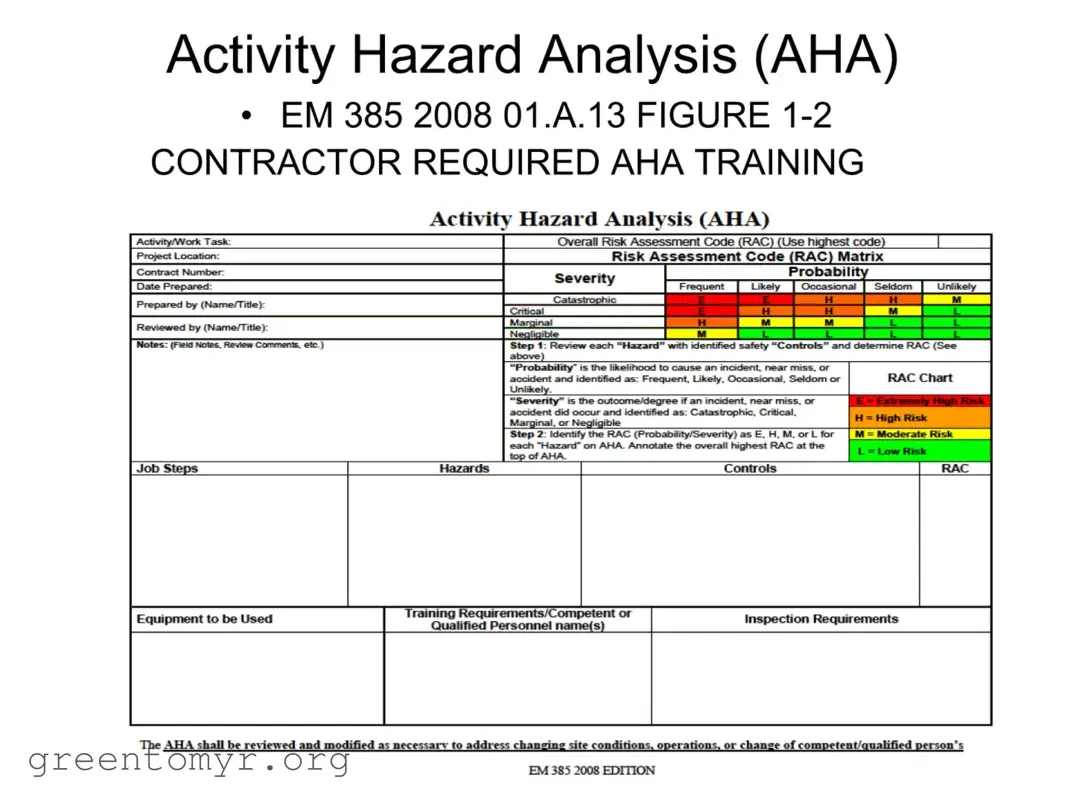
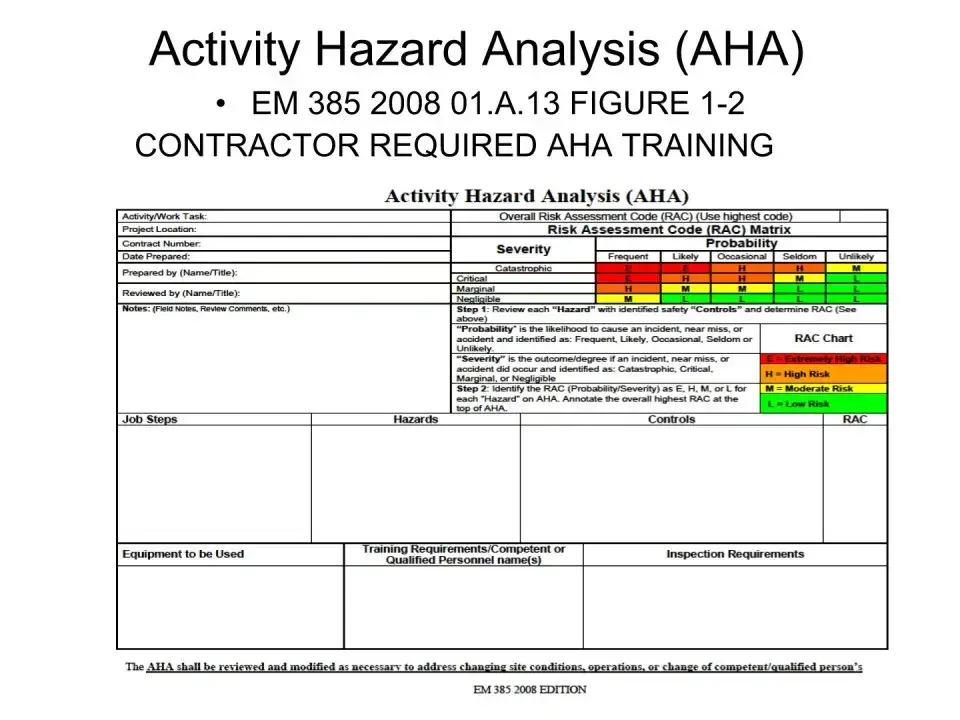
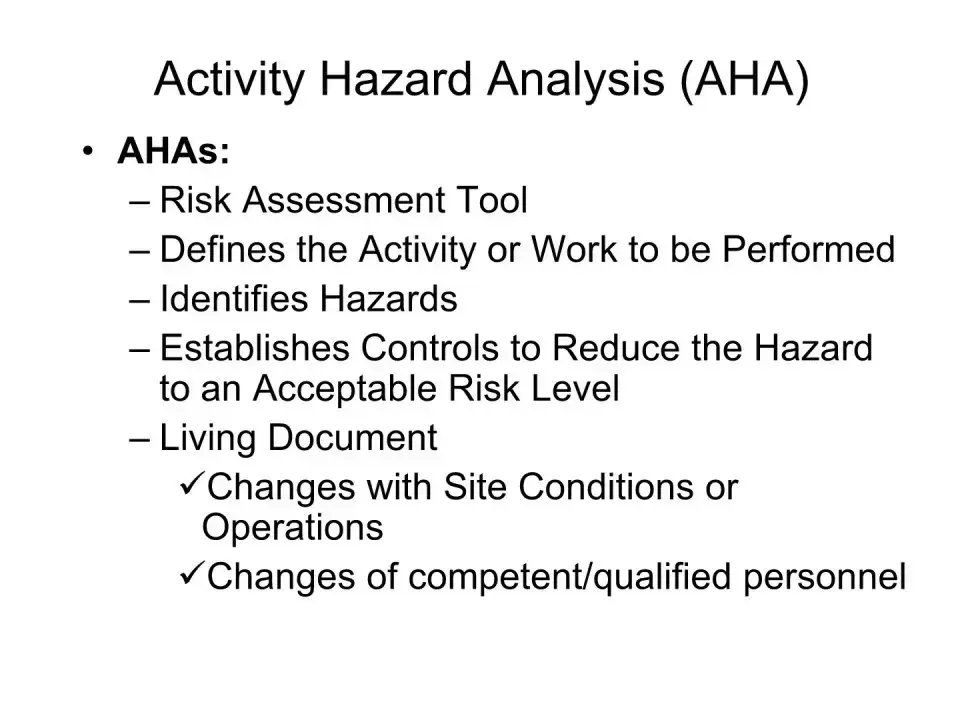
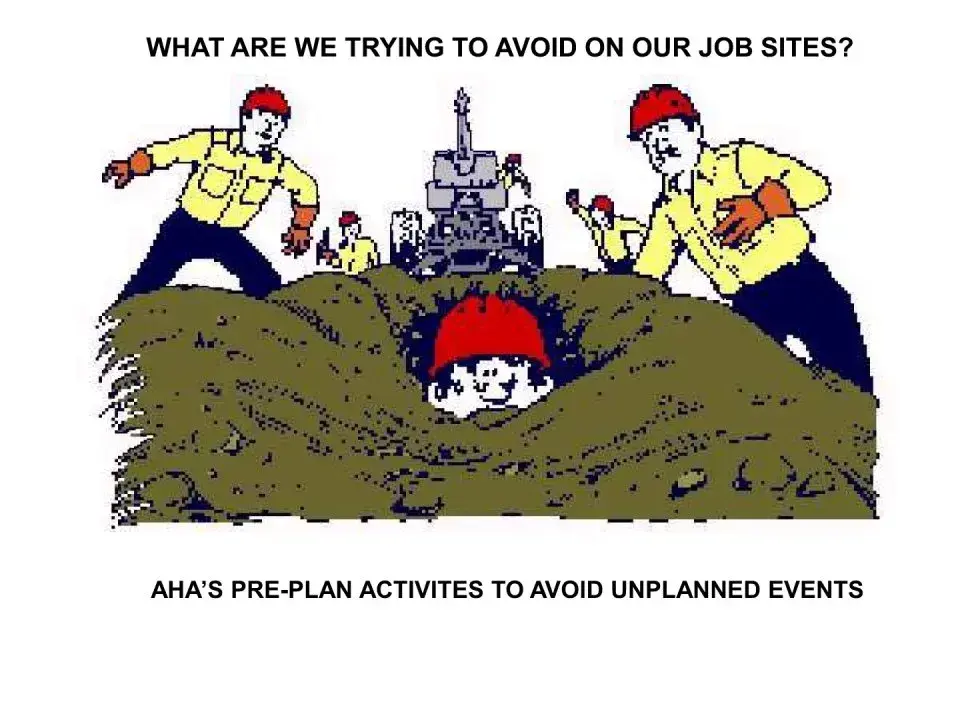
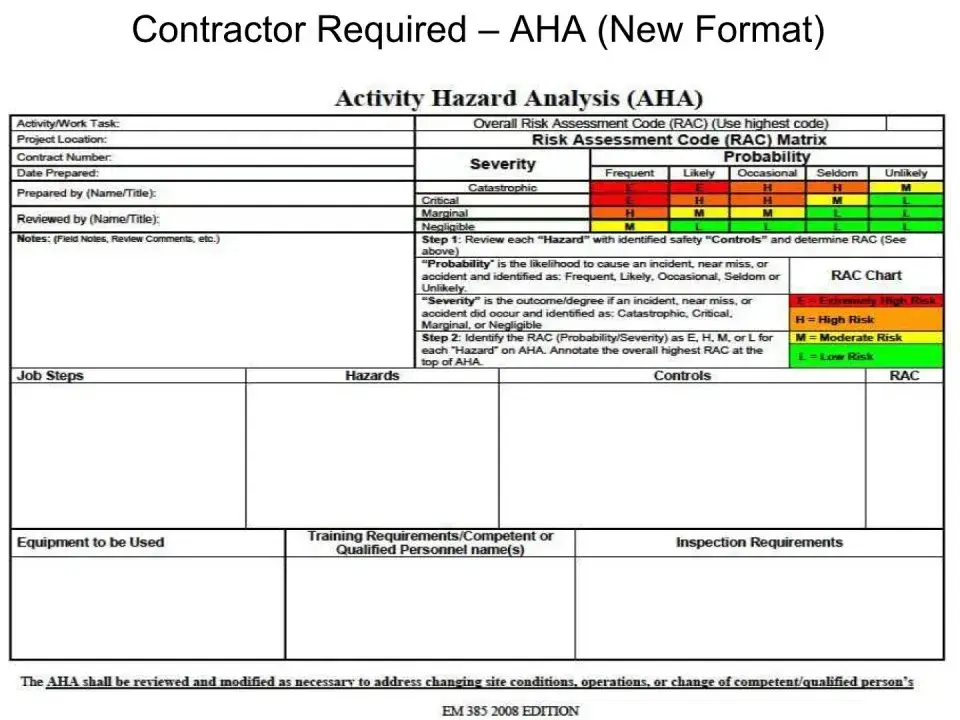
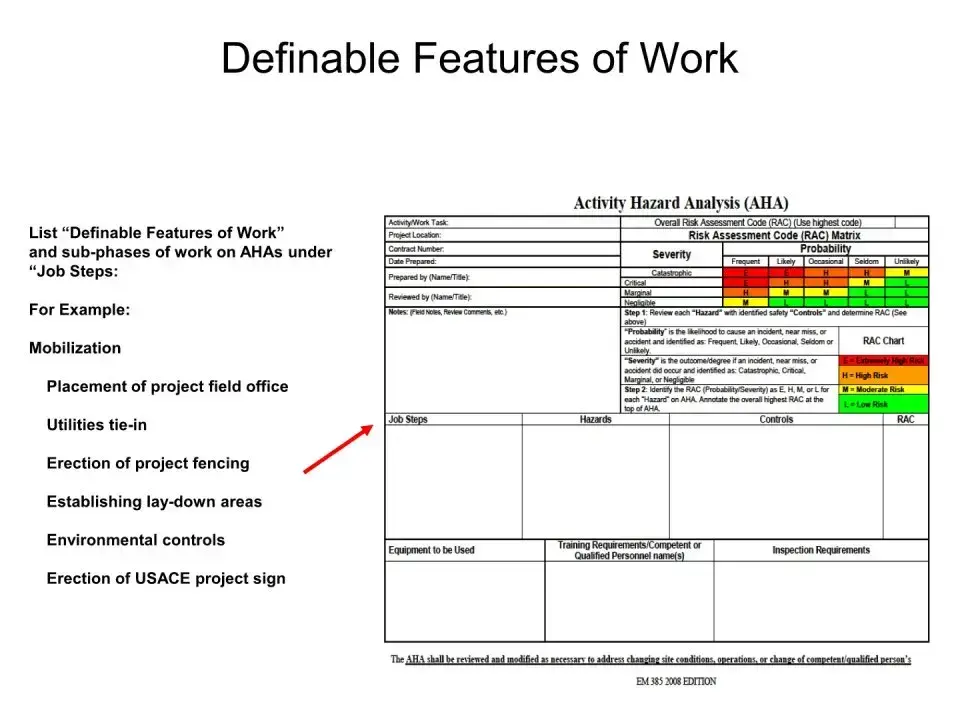
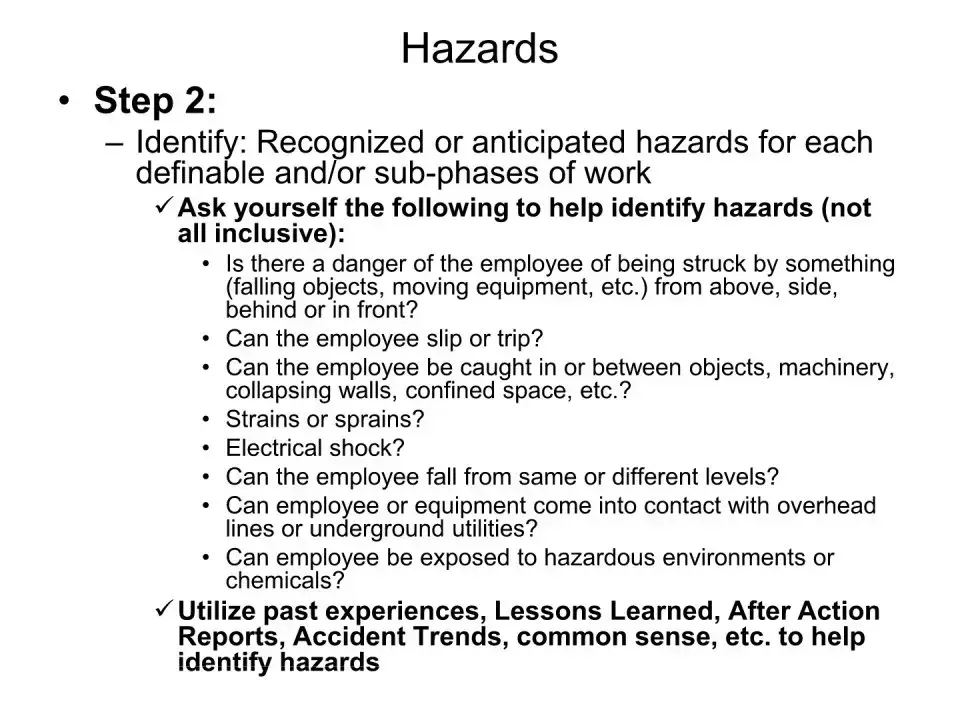
The AHA EM 385 form plays a critical role in ensuring safety on construction sites and other work environments. This form is designed to facilitate an Activity Hazard Analysis (AHA), which identifies potential hazards associated with specific tasks and outlines the necessary controls to mitigate risks. At its core, the AHA form requires users to assess various job steps, pinpoint hazards, and establish safety controls, all while assigning a Risk Assessment Code (RAC) that reflects the severity and probability of potential incidents. Each AHA must be prepared with essential details such as the project location, contract number, and the names of qualified personnel responsible for overseeing safety measures. Importantly, the AHA is not a static document; it is intended to be a living tool that evolves with changing site conditions or operations. This adaptability ensures that safety protocols remain relevant and effective, ultimately aiming to prevent unplanned events and maintain a safe working environment. Before any work commences, the AHA must be reviewed and accepted by the designated authority, ensuring that all parties involved are informed and prepared to follow the outlined safety measures.
| Fact Name | Fact Details |
|---|---|
| Purpose | The AHA EM 385 form is designed to identify hazards and establish controls for work activities. |
| Risk Assessment Code (RAC) | The form uses a Risk Assessment Code (RAC) to categorize hazards based on severity and probability. |
| Living Document | The AHA is a living document that must be updated to reflect changing site conditions or personnel. |
| Training Requirements | Training requirements for personnel must be clearly outlined in the AHA to ensure safety compliance. |
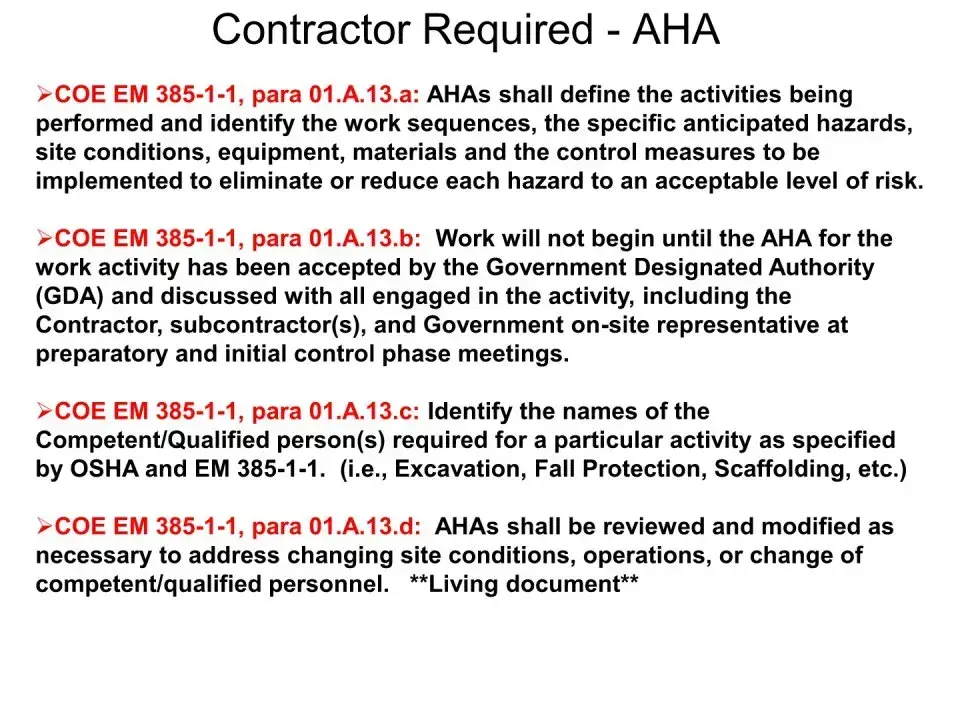
| Government Acceptance | Work cannot commence until the AHA has been accepted by the Government Designated Authority (GDA). |
| Competent Personnel | Names of competent or qualified personnel must be specified for activities like excavation or fall protection. |
| Inspection Requirements | The AHA should include inspection requirements to ensure ongoing safety throughout the project. |
| Governing Laws | COE EM 385-1-1 outlines the requirements and responsibilities for completing the AHA. |
| Severity and Probability | Severity is classified as catastrophic, critical, marginal, or negligible, while probability is rated as frequent, likely, occasional, seldom, or unlikely. |
Filling out the Aha Em 385 form is a crucial step in ensuring safety on job sites. This form allows you to assess potential hazards and establish controls to mitigate risks associated with various activities. Follow the steps below to complete the form accurately.
The AHA EM 385 form is an Activity Hazard Analysis document used to identify potential hazards associated with specific work tasks. It outlines safety controls to mitigate these hazards and assesses the overall risk through a Risk Assessment Code (RAC). This form is essential for ensuring a safe working environment on construction and other job sites.
The Risk Assessment Code (RAC) indicates the level of risk associated with a specific hazard. It is determined by evaluating both the probability of an incident occurring and the severity of its potential outcome. The RAC is categorized as High (H), Moderate (M), Low (L), or Extreme (E). The highest RAC should be noted at the top of the AHA form.
Contractors are required to complete the AHA EM 385 form before beginning any work activity. The form must be accepted by the Government Designated Authority (GDA) and discussed with all personnel involved in the activity, including subcontractors and on-site representatives.
The AHA should be reviewed regularly and modified as necessary. Changes in site conditions, operations, or personnel may require updates to ensure that the document remains relevant and effective in mitigating risks.
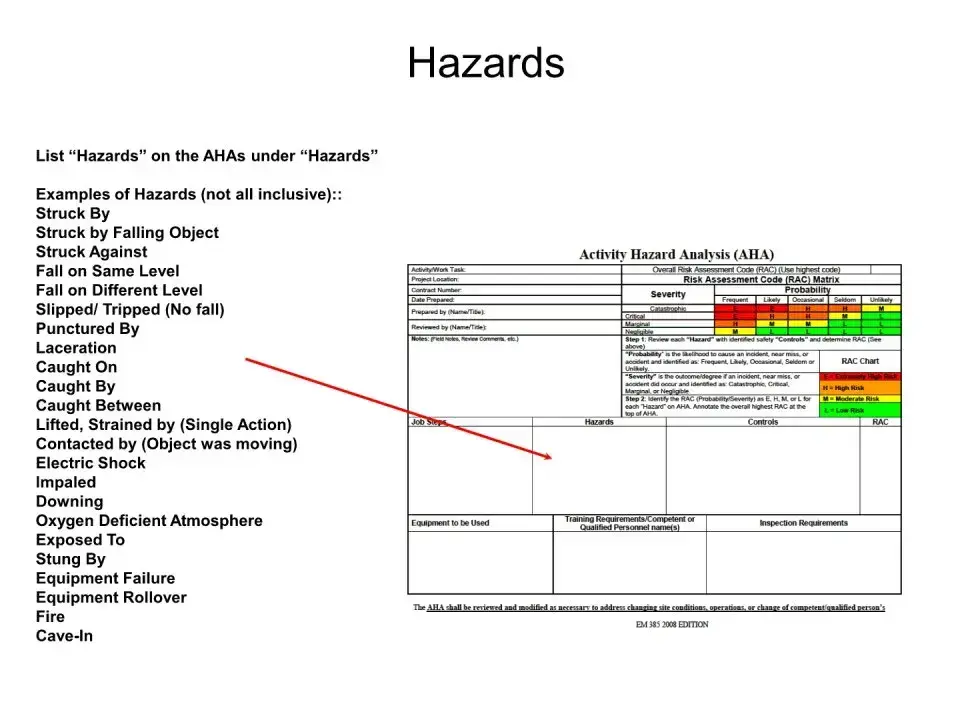
The AHA identifies various types of hazards, including but not limited to:
Each hazard must have corresponding safety controls established to reduce risk to an acceptable level.
Personnel involved in the AHA process must have appropriate training relevant to the tasks they will perform. This includes being a Competent or Qualified Person as defined by OSHA and EM 385-1-1 standards. Specific training may be required for tasks such as excavation, fall protection, and scaffolding.
The AHA is considered a "living document" because it must be continuously updated to reflect current site conditions, operations, and personnel changes. This adaptability ensures that the AHA remains effective in managing risks and maintaining safety throughout the duration of the project.
Filling out the AHA EM 385 form is a crucial step in ensuring safety on job sites. However, several common mistakes can lead to confusion and potential hazards. Understanding these mistakes can help improve the process and enhance safety measures.
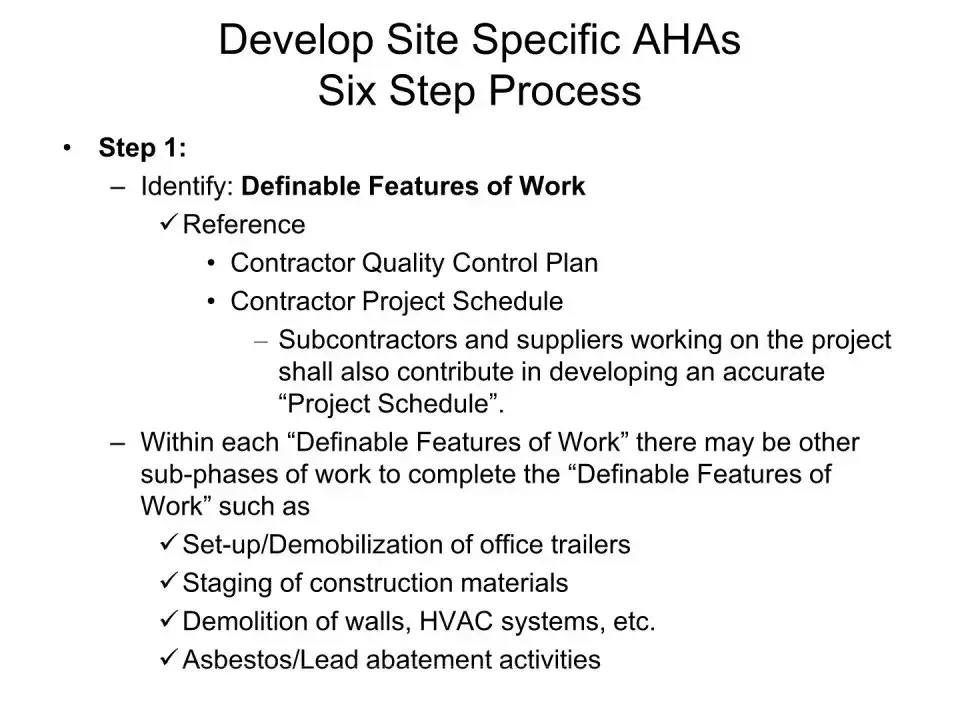
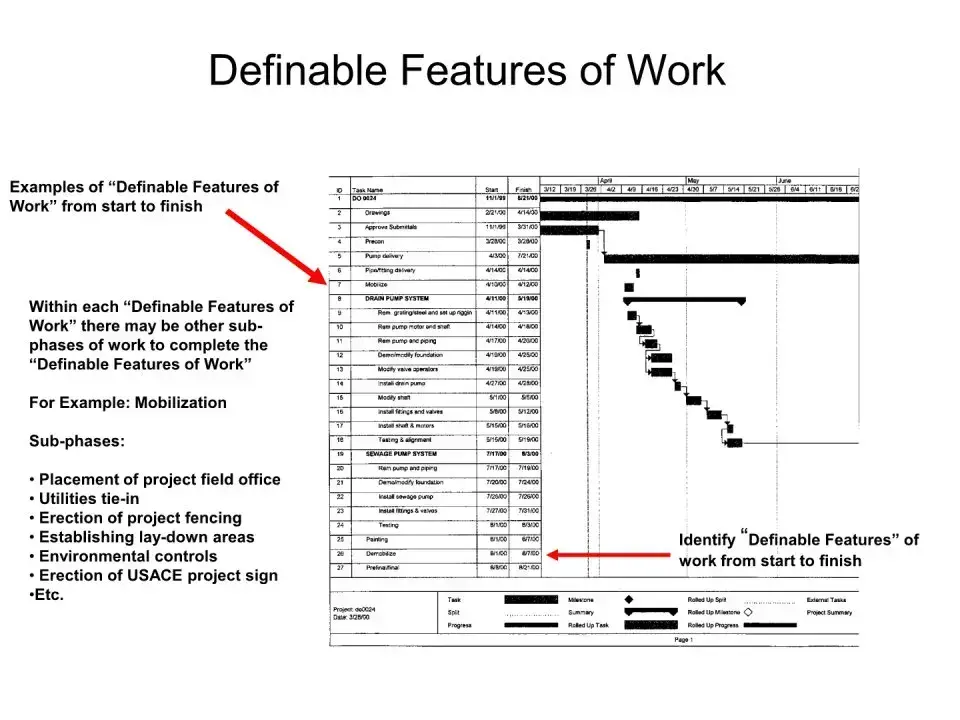
One common mistake is not clearly identifying the activity or work task. Each task must be specifically defined to ensure that all potential hazards are recognized. A vague description can lead to oversight of critical risks, making it difficult to implement effective safety controls.
Another frequent error involves improperly assessing the Risk Assessment Code (RAC). It is essential to use the highest code when evaluating risks. Failing to do so can underestimate the severity of potential hazards and lead to inadequate safety measures.
Many people also overlook the importance of detailing the controls for each identified hazard. Simply listing hazards without corresponding controls fails to provide a comprehensive safety plan. Each control should directly address the specific hazard it is meant to mitigate.
Additionally, individuals often neglect to include the names of competent or qualified personnel. This omission can create confusion regarding who is responsible for ensuring safety measures are implemented correctly. It is vital to specify who is qualified to oversee each task.
Another mistake is not reviewing the AHA regularly. The AHA is a living document that must be updated as site conditions or operations change. Failing to modify the AHA can lead to outdated information, which may not reflect current risks or safety protocols.
Some individuals also forget to include training requirements for personnel involved in the task. Proper training is essential to ensure that everyone understands the hazards and controls. Without this information, there may be gaps in safety knowledge.
Lastly, people sometimes fail to engage all relevant parties in the discussion of the AHA. It is crucial to communicate with contractors, subcontractors, and on-site representatives to ensure that everyone understands the safety measures in place. This collaboration fosters a safer work environment.
By being aware of these common mistakes, individuals can take proactive steps to ensure that the AHA EM 385 form is completed accurately and effectively. This diligence not only promotes safety but also fosters a culture of care and responsibility on job sites.
The AHA EM 385 form plays a crucial role in maintaining safety standards on construction sites. However, several other documents complement this form to ensure comprehensive safety management. Below are five key forms and documents that are often used alongside the AHA EM 385 form.
Utilizing these documents alongside the AHA EM 385 form enhances safety protocols and promotes a proactive approach to risk management on job sites. Together, they form a comprehensive framework that helps protect workers and ensure compliance with safety regulations.
The AHA EM 385 form is essential for ensuring safety on job sites. Several other documents serve similar purposes, focusing on risk assessment and hazard management. Here are six documents that share similarities with the AHA EM 385 form:
When filling out the AHA EM 385 form, keep these important guidelines in mind:
Conversely, avoid these common pitfalls:
This form is required for all activities, regardless of perceived risk levels. It helps identify potential hazards and establish controls.
The AHA is a living document. It must be reviewed and modified as site conditions or operations change.
All parties involved in the work, including subcontractors and government representatives, must engage with the AHA process.
A qualified person must be identified for each activity, as specified by OSHA and EM 385-1-1 guidelines.
The AHA plays a crucial role in identifying hazards and implementing controls to ensure a safer work environment.
It also includes establishing controls to reduce identified hazards to an acceptable risk level.
While the goal is to reduce risks, some hazards may remain. The AHA helps manage those risks effectively.
Work cannot begin until the AHA has been accepted by the Government Designated Authority (GDA).
It requires ongoing assessment and updates to remain relevant and effective as conditions change.
Here are some key takeaways for filling out and using the AHA EM 385 form: