When navigating the complexities of divorce, a Divorce Settlement Agreement form plays a crucial role in outlining the terms of the separation. This document serves as a comprehensive agreement between both parties, detailing essential elements such as the division of assets and debts, child custody arrangements, visitation rights, and spousal support. Each aspect is vital to ensure that both individuals understand their rights and responsibilities moving forward. The form not only helps to clarify financial obligations but also addresses the emotional well-being of any children involved, making it a key component in the divorce process. By addressing these critical areas, the Divorce Settlement Agreement aims to provide a clear framework for both parties, ultimately facilitating a smoother transition into post-divorce life.
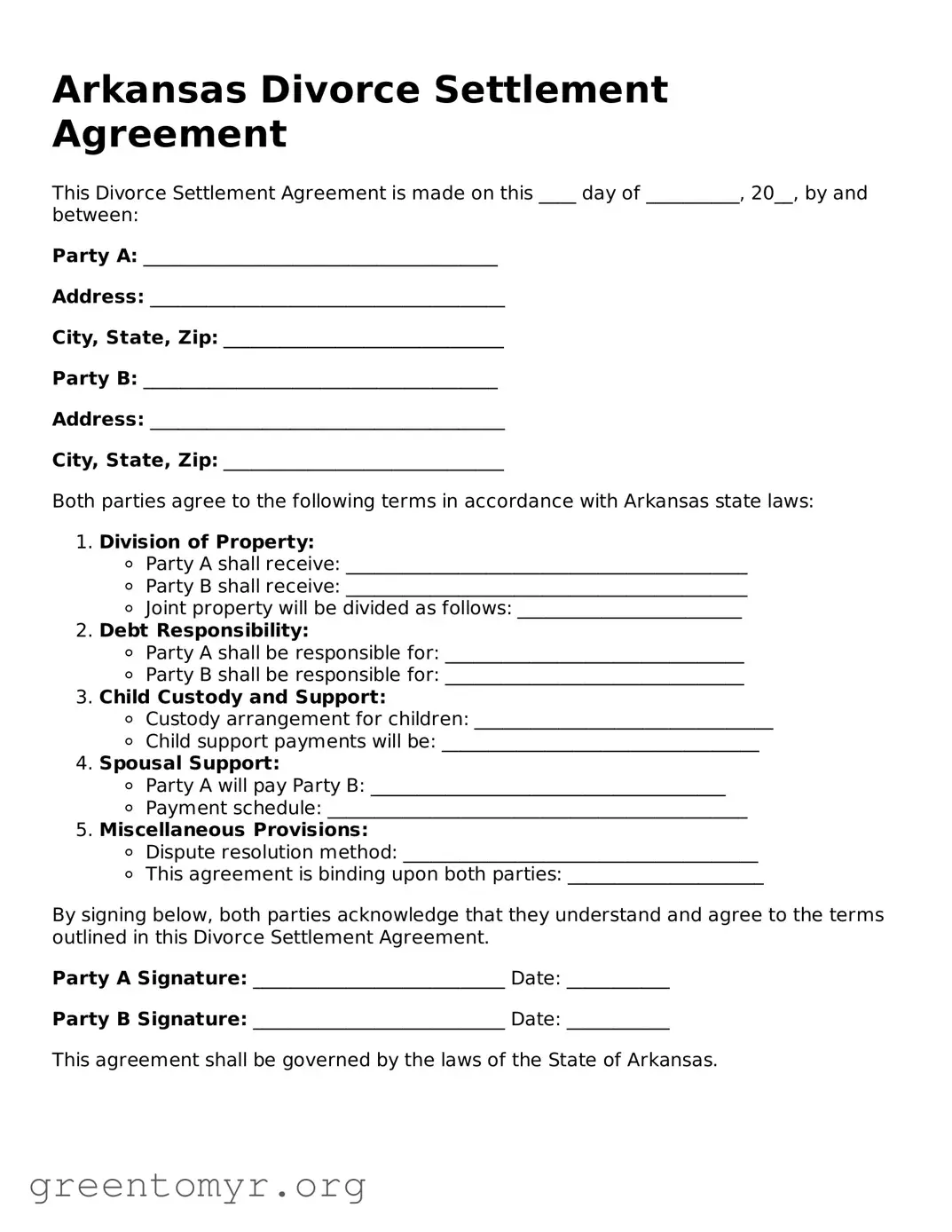
Arkansas Divorce Settlement Agreement
This Divorce Settlement Agreement is made on this ____ day of __________, 20__, by and between:
Party A: ______________________________________
Address: ______________________________________
City, State, Zip: ______________________________
Party B: ______________________________________
Address: ______________________________________
City, State, Zip: ______________________________
Both parties agree to the following terms in accordance with Arkansas state laws:
By signing below, both parties acknowledge that they understand and agree to the terms outlined in this Divorce Settlement Agreement.
Party A Signature: ___________________________ Date: ___________
Party B Signature: ___________________________ Date: ___________
This agreement shall be governed by the laws of the State of Arkansas.
| Fact Name | Description |
|---|---|
| Governing Law | The Arkansas Divorce Settlement Agreement is governed by Arkansas state law. |
| Purpose | This form outlines the terms agreed upon by both parties during a divorce. |
| Mutual Agreement | Both spouses must mutually agree to the terms laid out in the agreement. |
| Property Division | The form includes details on how marital property will be divided. |
| Child Custody | If applicable, the agreement addresses child custody and visitation rights. |
| Child Support | The form specifies any child support obligations that one parent must fulfill. |
| Spousal Support | Provisions for spousal support or alimony can also be included. |
| Signatures Required | Both parties must sign the agreement for it to be valid. |
| Filing | The completed agreement must be filed with the court to finalize the divorce. |
After you complete the Arkansas Divorce Settlement Agreement form, you will need to submit it to the appropriate court. Ensure that all parties involved have a copy of the signed agreement. This document will help finalize the divorce process.
The Arkansas Divorce Settlement Agreement form is a legal document that outlines the terms agreed upon by both parties during a divorce. This agreement typically covers important aspects such as property division, child custody, child support, and alimony. It serves as a binding contract that helps ensure both parties adhere to the agreed-upon terms post-divorce.
Both spouses involved in the divorce must fill out the Arkansas Divorce Settlement Agreement form. It is essential that both parties agree on the terms included in the document to avoid potential disputes in the future. If children are involved, it is particularly important to address custody and support arrangements in this agreement.
The agreement should include several key components:
While it is not legally required to have an attorney when completing the Arkansas Divorce Settlement Agreement form, it is highly advisable. An attorney can provide guidance, ensure that the agreement is fair, and help you understand your rights. Having legal representation can also prevent misunderstandings and complications down the line.
Once the Arkansas Divorce Settlement Agreement form is completed and signed by both parties, it should be submitted to the court handling your divorce case. Typically, you will file it along with your divorce petition or as part of your final divorce paperwork. Check with your local court for specific filing procedures and requirements.
If both parties cannot reach an agreement, the court may intervene. A judge will then make decisions regarding property division, custody, and support based on the best interests of the children and the circumstances of both parties. Mediation may also be recommended to help facilitate an agreement.
Yes, the Arkansas Divorce Settlement Agreement can be modified after it is finalized, but only under certain circumstances. Changes in financial situations, relocation, or changes in the needs of the children may warrant a modification. Both parties must agree to the changes, and a court may need to approve the modifications.
If one party fails to comply with the terms of the Arkansas Divorce Settlement Agreement, the other party can seek enforcement through the court. This may involve filing a motion to compel compliance or seeking a modification if circumstances have changed. Courts take these agreements seriously, and there can be legal consequences for non-compliance.
Yes, there may be fees associated with filing the Arkansas Divorce Settlement Agreement form, as well as other divorce-related documents. These fees vary by county and can change over time. It is advisable to check with the local court for the most current fee schedule.
The Arkansas Divorce Settlement Agreement form can typically be found on the official website of the Arkansas judiciary or at your local courthouse. Additionally, many legal aid organizations and family law attorneys can provide you with the necessary forms and guidance on how to fill them out correctly.
Filling out the Arkansas Divorce Settlement Agreement form can be a daunting task. Many individuals make mistakes that can lead to complications down the line. Understanding these common errors can help ensure a smoother process.
One frequent mistake is failing to provide complete and accurate information. Each section of the form requires specific details, and incomplete entries can delay the process. Double-checking all personal information, including names and addresses, is crucial.
Another common error is neglecting to address all assets and debts. It’s essential to list everything, including bank accounts, real estate, and any liabilities. Omitting significant assets or debts can lead to disputes later. Both parties should agree on what is included in the settlement.
People often overlook the importance of clarity in the terms of the agreement. Vague language can lead to misunderstandings. Clearly defining terms related to custody, support, and division of property helps prevent future conflicts.
Additionally, some individuals forget to consider tax implications. Certain assets may have tax consequences that affect their value. Consulting with a financial advisor can provide insights that lead to a more equitable settlement.
Another mistake is failing to sign and date the document properly. Without the necessary signatures, the agreement may not be enforceable. It’s important to ensure that both parties sign in the designated areas and that the dates are accurate.
Some individuals do not seek legal advice before submitting the form. While it is possible to complete the form without an attorney, professional guidance can help avoid pitfalls. A lawyer can provide valuable insights into the implications of various terms.
Moreover, people sometimes ignore the requirement for notarization. In Arkansas, certain agreements must be notarized to be valid. Skipping this step can invalidate the entire agreement.
Lastly, failing to keep copies of the completed form can lead to confusion later. It’s wise to maintain a record of all documents submitted. This ensures that both parties have access to the same information if questions arise in the future.
By being aware of these common mistakes, individuals can navigate the Arkansas Divorce Settlement Agreement form with greater confidence and accuracy.
The Arkansas Divorce Settlement Agreement form is a crucial document in the divorce process, outlining the terms agreed upon by both parties. However, several other forms and documents are often used in conjunction with this agreement to ensure a comprehensive resolution of all relevant issues. Below is a list of these documents, along with brief descriptions of their purposes.
Utilizing these documents in conjunction with the Arkansas Divorce Settlement Agreement ensures that all aspects of the divorce are addressed. Each form serves a specific purpose, contributing to a smoother and more organized divorce process.
The Divorce Settlement Agreement form shares similarities with several other legal documents. Each of these documents serves a distinct purpose but often addresses similar issues related to family law, property division, and financial responsibilities. Below is a list of six documents that are comparable to the Divorce Settlement Agreement:
When filling out the Arkansas Divorce Settlement Agreement form, it’s essential to approach the process with care and attention to detail. This document can have significant implications for your future. Here are seven important dos and don’ts to keep in mind.
By following these guidelines, you can navigate the process more smoothly and ensure that your interests are protected. It is a challenging time, but being organized and informed can make a significant difference.
Understanding the Arkansas Divorce Settlement Agreement form is crucial for anyone going through a divorce in the state. However, several misconceptions can lead to confusion. Here are nine common misconceptions about this form:
This is not true. Even in uncontested divorces, where both parties agree on terms, a Divorce Settlement Agreement form is essential to outline the specifics of the settlement.
While having a completed form can streamline the process, other factors, such as court schedules and required waiting periods, can still affect the timeline.
Although it is possible to fill out the form independently, seeking legal advice is advisable. Understanding your rights and obligations can prevent future disputes.
This is a misconception. While the agreement is binding once approved by the court, modifications can be made later if both parties agree and the court approves.
Not all issues may be addressed in the Divorce Settlement Agreement. Matters like child custody and support may require additional documentation or court orders.
Both parties must sign the Divorce Settlement Agreement for it to be valid. This ensures that both individuals agree to the terms laid out.
The form should be tailored to fit the specific circumstances of the couple. Each divorce has unique factors that should be reflected in the agreement.
Using the most current version of the Divorce Settlement Agreement form is essential. Laws and requirements can change, making outdated forms potentially invalid.
This is misleading. While the agreement is enforceable, circumstances may change, allowing for modifications through the court if justified.
By addressing these misconceptions, individuals can approach the Arkansas Divorce Settlement Agreement form with a clearer understanding, ultimately leading to a more informed and smoother divorce process.
When completing the Arkansas Divorce Settlement Agreement form, it's important to understand several key aspects to ensure the process goes smoothly. Here are some essential takeaways: