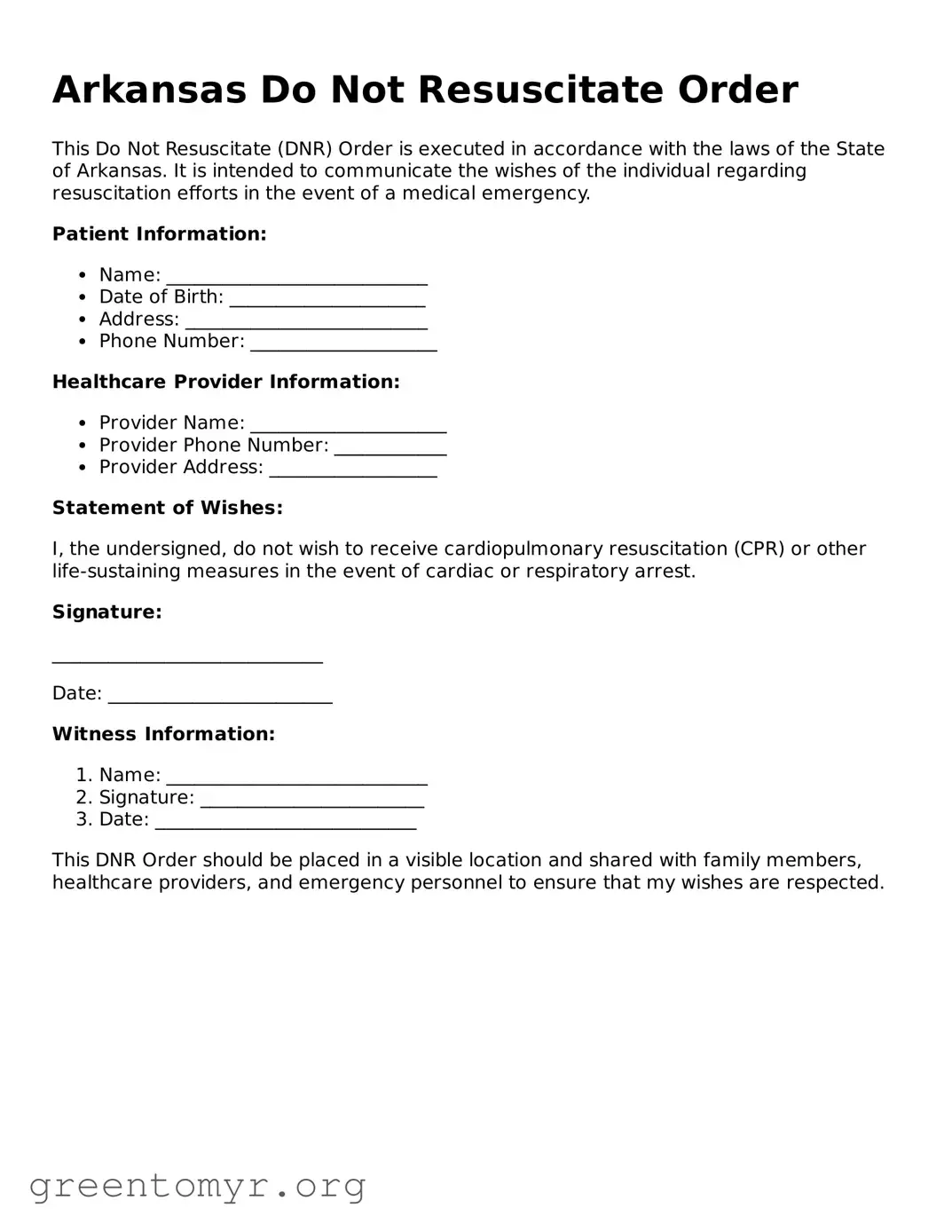
The Arkansas Do Not Resuscitate (DNR) Order form is a critical document that allows individuals to express their wishes regarding medical treatment in the event of a life-threatening situation. This form is particularly significant for patients with terminal illnesses or those who wish to avoid aggressive medical interventions that may not align with their values or desires. It is designed to ensure that healthcare providers respect the patient's decision not to undergo cardiopulmonary resuscitation (CPR) or other life-saving measures. The DNR Order must be completed and signed by a physician, and it should be readily available to medical personnel in emergencies. In addition, individuals can discuss their preferences with family members and healthcare proxies to ensure that everyone is aware of their wishes. Understanding the nuances of this form can empower patients and their loved ones to make informed decisions about end-of-life care, ultimately providing peace of mind during challenging times.
Arkansas Do Not Resuscitate Order
This Do Not Resuscitate (DNR) Order is executed in accordance with the laws of the State of Arkansas. It is intended to communicate the wishes of the individual regarding resuscitation efforts in the event of a medical emergency.
Patient Information:
Healthcare Provider Information:
Statement of Wishes:
I, the undersigned, do not wish to receive cardiopulmonary resuscitation (CPR) or other life-sustaining measures in the event of cardiac or respiratory arrest.
Signature:
_____________________________
Date: ________________________
Witness Information:
This DNR Order should be placed in a visible location and shared with family members, healthcare providers, and emergency personnel to ensure that my wishes are respected.
| Fact Name | Description |
|---|---|
| Purpose | The Arkansas Do Not Resuscitate (DNR) Order form is designed to communicate a patient's wishes regarding resuscitation efforts in the event of a medical emergency. |
| Governing Law | The DNR Order in Arkansas is governed by the Arkansas Code Annotated § 20-13-2201 et seq. |
| Eligibility | Any adult patient can complete a DNR Order, or a legally authorized representative may do so on their behalf. |
| Signature Requirement | The form must be signed by the patient or their representative, as well as a physician to be considered valid. |
| Form Availability | The Arkansas DNR Order form is available online and can also be obtained from healthcare providers. |
| Revocation | A DNR Order can be revoked at any time by the patient or their representative, verbally or in writing. |
Filling out the Arkansas Do Not Resuscitate Order form is an important step in expressing your healthcare wishes. Once completed, this document guides medical professionals in understanding your preferences regarding resuscitation efforts in case of a medical emergency. Here’s how to fill it out properly.
Once you have filled out the form, it is crucial to share your wishes with your loved ones and healthcare team. This ensures that everyone understands your preferences and can act accordingly in an emergency.
A Do Not Resuscitate Order is a legal document that allows a person to refuse cardiopulmonary resuscitation (CPR) and other life-saving measures in the event of a medical emergency. This decision is made to ensure that individuals receive care aligned with their wishes regarding end-of-life treatment.
In Arkansas, a DNR Order can be requested by a competent adult or by a legal representative on behalf of a person who is unable to make decisions. This could include a family member or a designated healthcare proxy. It's important that the person requesting the order understands the implications of this decision.
You can obtain a DNR Order form through several sources:
The DNR Order form typically requires the following information:
Yes, a properly completed DNR Order is valid in all medical settings, including hospitals, nursing homes, and at home. However, it is crucial to ensure that copies of the DNR Order are readily available and accessible to healthcare providers in case of an emergency.
Yes, a DNR Order can be revoked at any time by the patient or their legal representative. To revoke the order, simply destroy the original document and inform your healthcare providers about the change in your wishes.
Before completing a DNR Order, it’s essential to have an open conversation with your healthcare provider. Discuss your health condition, treatment options, and your values regarding end-of-life care. This will help ensure that your DNR Order reflects your wishes accurately.
Filling out the Arkansas Do Not Resuscitate (DNR) Order form can be a critical task for individuals wishing to express their end-of-life care preferences. However, mistakes can happen, and these errors may lead to confusion or unwanted medical interventions. Here are eight common mistakes people make when completing this important document.
One significant mistake is not consulting with a healthcare professional before completing the form. It’s essential to understand the implications of a DNR order. Without guidance, individuals may overlook important medical considerations that could affect their choices.
Another common error is failing to sign the form. A DNR order is only valid if it is properly signed by the patient or their authorized representative. Forgetting this step can render the document ineffective, leading to unwanted resuscitation efforts during a medical emergency.
People often neglect to discuss their wishes with family members. Open conversations about end-of-life preferences can help ensure that loved ones understand and respect the individual’s choices. Without this dialogue, family members may be caught off guard and unsure of what to do in a crisis.
Inaccurate or incomplete information is another frequent issue. Filling out the form with incorrect personal details, such as name, date of birth, or contact information, can lead to confusion and difficulties in executing the order when needed. Double-checking these details is crucial.
Some individuals mistakenly believe that verbal agreements are sufficient. A DNR order must be documented in writing to be legally recognized. Relying solely on verbal communication can lead to misunderstandings and potential conflicts in a medical setting.
Another pitfall is not keeping copies of the DNR order. It’s vital to have multiple copies accessible to healthcare providers and family members. This ensures that the order can be easily located and followed when necessary, avoiding any delays in care.
People sometimes forget to update their DNR order as their health status changes. A DNR order should reflect current medical conditions and preferences. Regularly reviewing and revising the document can help ensure it remains relevant and effective.
Lastly, individuals may overlook the importance of storing the DNR order in a visible location. Keeping the document in an easily accessible spot, such as with medical records or on the refrigerator, can facilitate prompt action by emergency responders when the time comes.
By being aware of these common mistakes, individuals can better navigate the process of completing a DNR order in Arkansas. Taking the time to understand the form and its implications can lead to more informed decisions and peace of mind for both the individual and their loved ones.
The Arkansas Do Not Resuscitate (DNR) Order form is an important document that outlines a person's wishes regarding resuscitation efforts in case of a medical emergency. Along with this form, there are several other documents that can help ensure a person's healthcare preferences are respected. Below is a list of related forms and documents commonly used in conjunction with the DNR Order.
Having these documents in place can provide clarity and peace of mind for both patients and their families. They help ensure that healthcare providers respect the individual's wishes in critical situations.
A Do Not Resuscitate (DNR) Order form is a critical document that outlines a person's wishes regarding medical treatment in emergencies. Several other documents serve similar purposes in guiding healthcare decisions. Here are six documents that share similarities with a DNR Order:
Understanding these documents can help individuals and their families make informed decisions about healthcare preferences. Each serves a unique purpose but ultimately aims to honor the wishes of the person involved.
When filling out the Arkansas Do Not Resuscitate (DNR) Order form, it’s essential to approach the process with care. Here’s a list of things you should and shouldn’t do:
Understanding the Arkansas Do Not Resuscitate (DNR) Order form is crucial for patients and their families. However, several misconceptions can cloud its purpose and usage. Here are five common misunderstandings:
By clarifying these misconceptions, individuals can make informed decisions about their healthcare preferences and ensure their wishes are respected.
Filling out and using the Arkansas Do Not Resuscitate (DNR) Order form is an important process for individuals who wish to express their preferences regarding resuscitation efforts in medical emergencies. Here are some key takeaways to consider:
Understanding these points can help ensure that your healthcare preferences are respected and followed in accordance with your wishes.