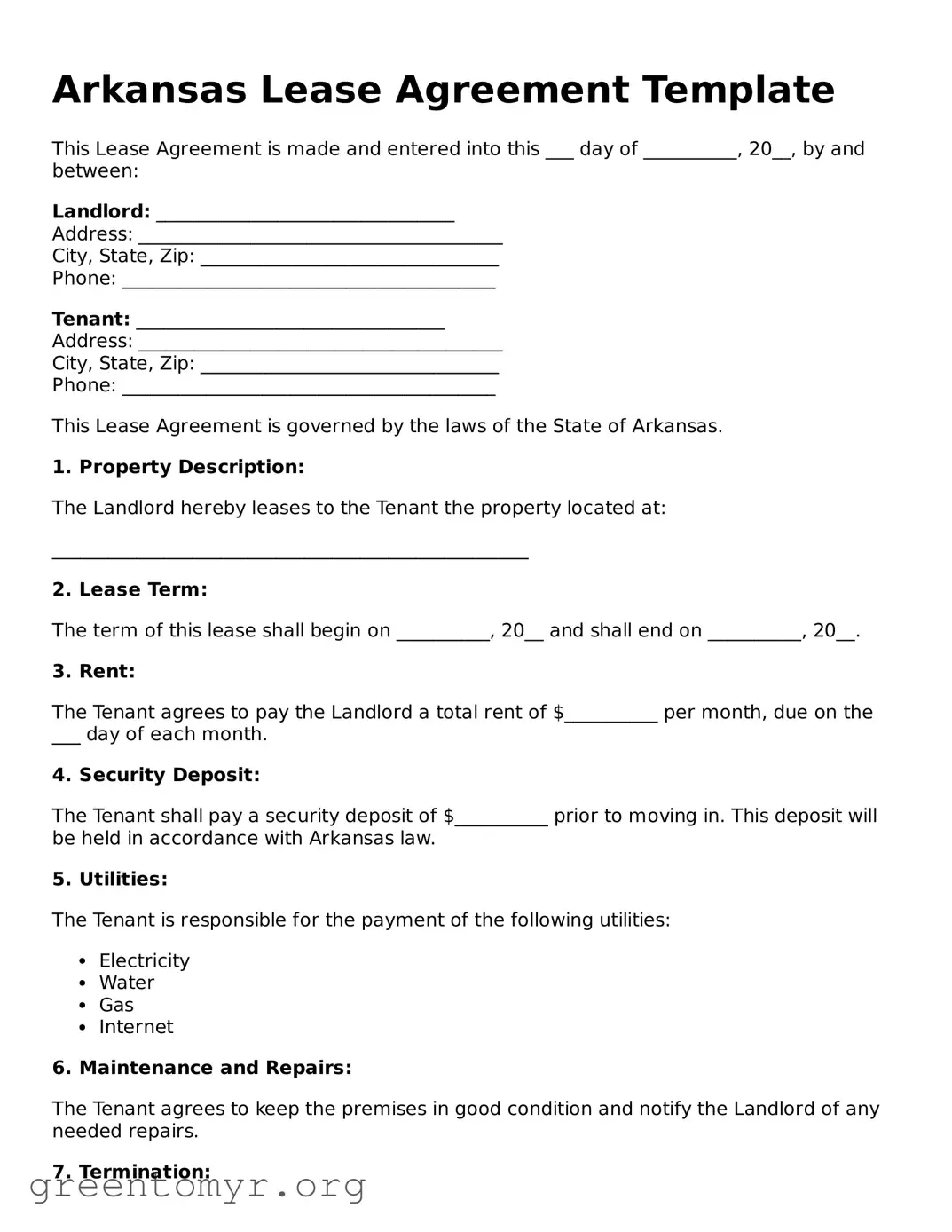
The Arkansas Lease Agreement form serves as a vital document in the landlord-tenant relationship, establishing clear expectations and responsibilities for both parties involved. This form outlines essential terms such as the duration of the lease, rental payment details, and security deposit requirements. It also addresses maintenance responsibilities, pet policies, and the procedures for terminating the lease. By providing a structured framework, the agreement helps prevent misunderstandings and disputes. Additionally, it includes provisions for late fees and the handling of property damages, ensuring that both landlords and tenants understand their rights and obligations. Overall, the Arkansas Lease Agreement form is designed to foster a respectful and legally compliant rental experience for all parties involved.
Arkansas Lease Agreement Template
This Lease Agreement is made and entered into this ___ day of __________, 20__, by and between:
Landlord: ________________________________
Address: _______________________________________
City, State, Zip: ________________________________
Phone: ________________________________________
Tenant: _________________________________
Address: _______________________________________
City, State, Zip: ________________________________
Phone: ________________________________________
This Lease Agreement is governed by the laws of the State of Arkansas.
1. Property Description:
The Landlord hereby leases to the Tenant the property located at:
___________________________________________________
2. Lease Term:
The term of this lease shall begin on __________, 20__ and shall end on __________, 20__.
3. Rent:
The Tenant agrees to pay the Landlord a total rent of $__________ per month, due on the ___ day of each month.
4. Security Deposit:
The Tenant shall pay a security deposit of $__________ prior to moving in. This deposit will be held in accordance with Arkansas law.
5. Utilities:
The Tenant is responsible for the payment of the following utilities:
6. Maintenance and Repairs:
The Tenant agrees to keep the premises in good condition and notify the Landlord of any needed repairs.
7. Termination:
Either party may terminate this lease with a written notice of ___ days prior to the intended termination date.
8. Governing Law:
This Lease Agreement shall be governed by the laws of the State of Arkansas.
IN WITNESS WHEREOF, the parties hereto have executed this Lease Agreement as of the day and year first above written.
Landlord Signature: ___________________________ Date: ________________
Tenant Signature: ____________________________ Date: ________________
| Fact Name | Description |
|---|---|
| Governing Law | The Arkansas Lease Agreement is governed by the Arkansas Code Annotated, Title 18, Chapter 16. |
| Types of Leases | This form can be used for residential leases, commercial leases, and agricultural leases. |
| Duration | The lease term can vary, typically ranging from month-to-month to one year or longer. |
| Security Deposit | Landlords may require a security deposit, which is generally limited to two months' rent for residential leases. |
| Notice Requirements | Both landlords and tenants must provide written notice for lease termination, typically 30 days in advance. |
| Repairs and Maintenance | The lease should specify the responsibilities of both parties regarding repairs and maintenance of the property. |
| Dispute Resolution | Disputes arising from the lease agreement may be resolved through mediation or legal proceedings, as outlined in the lease. |
Filling out the Arkansas Lease Agreement form is a straightforward process. This document is essential for establishing the terms between a landlord and tenant. By following the steps below, you can ensure that all necessary information is accurately provided.
Once you have completed the form, make sure to keep a copy for your records. It’s also a good idea to provide a copy to the other party involved. This ensures everyone is on the same page regarding the lease terms.
The Arkansas Lease Agreement form is a legal document that outlines the terms and conditions under which a landlord agrees to rent a property to a tenant. This agreement includes essential details such as the duration of the lease, the amount of rent, security deposit requirements, and the responsibilities of both the landlord and tenant. By having a written lease, both parties have a clear understanding of their rights and obligations, which helps prevent disputes in the future.
An Arkansas Lease Agreement typically includes the following key components:
If a tenant violates the lease agreement, the landlord has several options depending on the nature of the violation. Common violations include not paying rent on time, damaging the property, or violating rules outlined in the lease. The landlord may choose to:
It is essential for both landlords and tenants to understand the terms of the lease and the consequences of violations to maintain a positive rental relationship.
Filling out the Arkansas Lease Agreement form can seem straightforward, but many people make common mistakes that can lead to misunderstandings or disputes later on. One significant error is not providing complete information. Renters and landlords often overlook filling in essential details, such as the full names of all tenants or the exact address of the rental property. Missing this information can create confusion regarding who is legally bound by the lease.
Another frequent mistake is failing to read the entire agreement before signing. Many individuals skim through the document, assuming they understand the terms. However, this can lead to surprises down the line. Important clauses regarding security deposits, maintenance responsibilities, or lease termination conditions may be buried within the text. Taking the time to read and comprehend every section is crucial for both parties.
Additionally, people often neglect to specify the lease duration. While many assume that a lease automatically defaults to a standard term, this is not always the case. Without clearly stating the start and end dates, tenants and landlords might face issues regarding the length of occupancy and renewal terms. This oversight can create uncertainty and potential legal disputes in the future.
Finally, many individuals fail to include or understand the consequences of breaking the lease. Not all lease agreements have the same terms regarding early termination. Some may impose hefty penalties or require notice periods that are not immediately apparent. By not addressing these points upfront, both landlords and tenants risk facing unexpected financial consequences.
When entering into a rental agreement in Arkansas, several forms and documents may accompany the Lease Agreement. Each of these documents plays a crucial role in ensuring that both landlords and tenants understand their rights and responsibilities. Below is a list of common forms that may be used alongside the Arkansas Lease Agreement.
Understanding these documents can empower both landlords and tenants to navigate their rental agreements more effectively. Each form serves a specific purpose, contributing to a clearer and more organized rental experience. By being informed, both parties can foster a positive rental relationship and minimize potential conflicts.
When completing the Arkansas Lease Agreement form, it is important to follow certain guidelines to ensure accuracy and compliance with legal standards. Here is a list of actions to take and avoid:
Adhering to these guidelines can help ensure a smoother leasing process and protect the rights of both tenants and landlords.
Understanding the Arkansas Lease Agreement form is essential for both landlords and tenants. However, several misconceptions can lead to confusion. Below is a list of common misunderstandings about this important document.
Being informed about these misconceptions can help both landlords and tenants navigate their responsibilities and rights more effectively. It is always advisable to review the lease agreement carefully and seek clarification on any unclear terms.
When filling out and using the Arkansas Lease Agreement form, it is essential to understand several key aspects to ensure a smooth rental experience. Here are four important takeaways: