When planning for a future together, couples often consider a variety of factors, including financial stability and asset protection. In Arkansas, a prenuptial agreement serves as a valuable tool for individuals who wish to clarify their financial rights and responsibilities before entering into marriage. This legal document outlines how assets will be divided in the event of divorce or separation, helping to prevent disputes and misunderstandings down the line. It can also address issues such as spousal support and the management of debts. By discussing these matters openly and honestly, couples can foster a sense of security and trust. While the specifics of the agreement can vary based on individual circumstances, it is essential that both parties fully disclose their financial situations and agree to the terms in order for the agreement to be enforceable. Understanding the importance of this form can help couples navigate their financial future with confidence.
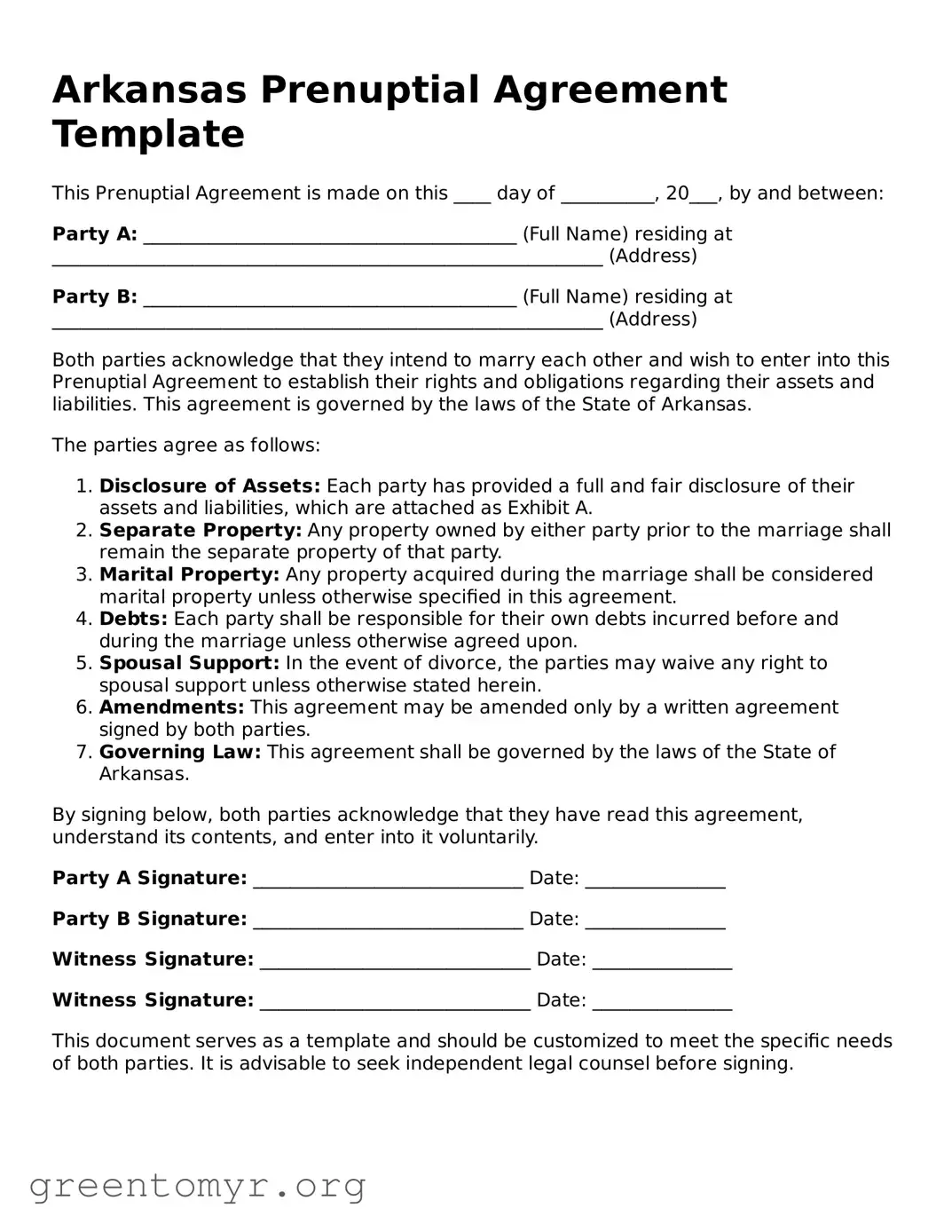
Arkansas Prenuptial Agreement Template
This Prenuptial Agreement is made on this ____ day of __________, 20___, by and between:
Party A: ________________________________________ (Full Name) residing at ___________________________________________________________ (Address)
Party B: ________________________________________ (Full Name) residing at ___________________________________________________________ (Address)
Both parties acknowledge that they intend to marry each other and wish to enter into this Prenuptial Agreement to establish their rights and obligations regarding their assets and liabilities. This agreement is governed by the laws of the State of Arkansas.
The parties agree as follows:
By signing below, both parties acknowledge that they have read this agreement, understand its contents, and enter into it voluntarily.
Party A Signature: _____________________________ Date: _______________
Party B Signature: _____________________________ Date: _______________
Witness Signature: _____________________________ Date: _______________
Witness Signature: _____________________________ Date: _______________
This document serves as a template and should be customized to meet the specific needs of both parties. It is advisable to seek independent legal counsel before signing.
| Fact Name | Details |
|---|---|
| Definition | A prenuptial agreement in Arkansas is a legal contract between two individuals planning to marry, outlining the division of assets and responsibilities in the event of divorce or separation. |
| Governing Law | Arkansas Code Annotated § 9-11-401 governs prenuptial agreements in the state, providing the legal framework for their creation and enforcement. |
| Requirements | For a prenuptial agreement to be enforceable in Arkansas, it must be in writing and signed by both parties. Full disclosure of assets is also recommended. |
| Limitations | Certain provisions, such as those affecting child custody or child support, may not be enforceable in a prenuptial agreement, as the court prioritizes the best interests of the child. |
Filling out the Arkansas Prenuptial Agreement form is an important step for couples planning to marry. This document helps outline financial arrangements and responsibilities. It’s essential to complete the form accurately to ensure that both parties understand their rights and obligations.
A prenuptial agreement, often referred to as a prenup, is a legal document that a couple creates before marriage. It outlines the division of assets and responsibilities in the event of divorce or separation. In Arkansas, this agreement can help protect individual assets and clarify financial responsibilities, making it an important consideration for many couples.
Couples may choose to create a prenuptial agreement for various reasons, including:
Ultimately, a prenup can provide peace of mind and clarity for both partners.
An effective prenuptial agreement in Arkansas typically includes:
It’s essential to be thorough and transparent when drafting these agreements.
Yes, prenuptial agreements are generally enforceable in Arkansas, provided they meet certain legal standards. The agreement must be in writing, signed by both parties, and entered into voluntarily. Additionally, it should not be unconscionable or based on fraud.
Yes, a prenuptial agreement can be modified or revoked after marriage. Both parties must agree to the changes, and it is advisable to document any modifications in writing to ensure clarity and enforceability.
While it is not legally required for both parties to have separate legal representation, it is highly recommended. Having independent legal counsel helps ensure that both partners fully understand the agreement and its implications, which can prevent disputes later on.
If a couple does not have a prenuptial agreement and later divorces, Arkansas law will govern the division of assets and debts. This may lead to an outcome that neither party desires, as the court will determine the distribution based on state laws rather than the couple's preferences.
To begin creating a prenuptial agreement, couples should:
Starting the conversation early can lead to a smoother process.
No, prenuptial agreements are not just for wealthy individuals. They can benefit anyone who wants to clarify financial matters and protect personal assets, regardless of income level. In fact, having a prenup can be especially important for those with significant debt or specific financial concerns.
Many resources are available for obtaining a prenuptial agreement form in Arkansas. You can find templates online, but it is advisable to consult a legal professional to ensure that the agreement complies with state laws and adequately addresses your specific situation.
Filling out a prenuptial agreement can feel daunting, especially in a state like Arkansas where the rules and expectations might differ from what you’re used to. Unfortunately, many individuals make common mistakes that can lead to complications down the line. Here are seven mistakes to avoid when completing the Arkansas Prenuptial Agreement form.
First and foremost, failing to disclose all assets and debts is a significant oversight. Transparency is key in any relationship, and this holds true for prenuptial agreements. If one partner hides assets or debts, it can lead to disputes later. Full disclosure helps both parties understand what they are entering into and can prevent misunderstandings in the future.
Another frequent error is not considering future financial changes. Life is unpredictable. You may experience changes in income, inheritance, or other financial situations after marriage. It’s important to think about how these changes might affect your agreement. Addressing potential future scenarios can provide a safety net for both partners.
Many people also overlook the importance of legal advice. While it might seem tempting to draft the agreement without professional help, this can lead to issues. A knowledgeable attorney can ensure that the agreement complies with Arkansas laws and meets the specific needs of both parties. Their expertise can save you from costly mistakes later on.
Additionally, using vague language can create confusion. Clarity is essential in any legal document. When terms are ambiguous, it opens the door to different interpretations. Be specific about how assets will be divided and what each party’s responsibilities are. Clear language can help avoid disputes and miscommunication.
Another mistake is not updating the agreement as life evolves. Once the prenuptial agreement is signed, it’s easy to forget about it. However, significant life events—such as the birth of a child or a major career change—may necessitate revisions. Regularly reviewing and updating the agreement can ensure it remains relevant and effective.
Some individuals also neglect to include a dispute resolution clause. It’s wise to plan for the possibility of disagreements. Including a section that outlines how disputes will be resolved can save time, money, and emotional stress. Whether through mediation, arbitration, or another method, having a plan in place can ease tensions if issues arise.
Finally, not having both parties sign the agreement can invalidate it. Both partners must willingly agree to the terms and sign the document for it to be enforceable. This step is crucial, and it’s important to ensure that both individuals understand and consent to the terms laid out in the agreement.
By being aware of these common pitfalls, you can approach the prenuptial agreement process with confidence and clarity. A well-crafted prenuptial agreement can provide peace of mind and a solid foundation for your future together.
A prenuptial agreement is an important document for couples planning to marry. It outlines the financial arrangements and property rights in the event of a divorce. Along with this agreement, several other forms and documents may be necessary to ensure a comprehensive understanding of each party's rights and responsibilities. Below is a list of commonly used documents that complement the Arkansas Prenuptial Agreement.
These documents work together to provide clarity and security for both parties entering into a marriage. Understanding each form's purpose can help couples navigate their financial futures more confidently.
When filling out the Arkansas Prenuptial Agreement form, there are important considerations to keep in mind. Below is a list of dos and don'ts to help ensure that the process goes smoothly.
When considering a prenuptial agreement in Arkansas, it's important to address common misconceptions that may arise. Here are nine of those misconceptions, clarified for better understanding:
Understanding these misconceptions can help you make informed decisions about prenuptial agreements. Open discussions with your partner about financial matters can lead to a healthier and more secure marriage.
When considering a prenuptial agreement in Arkansas, it's important to keep a few key points in mind. This legal document can help protect your assets and clarify financial responsibilities in the event of a divorce. Here are some essential takeaways: