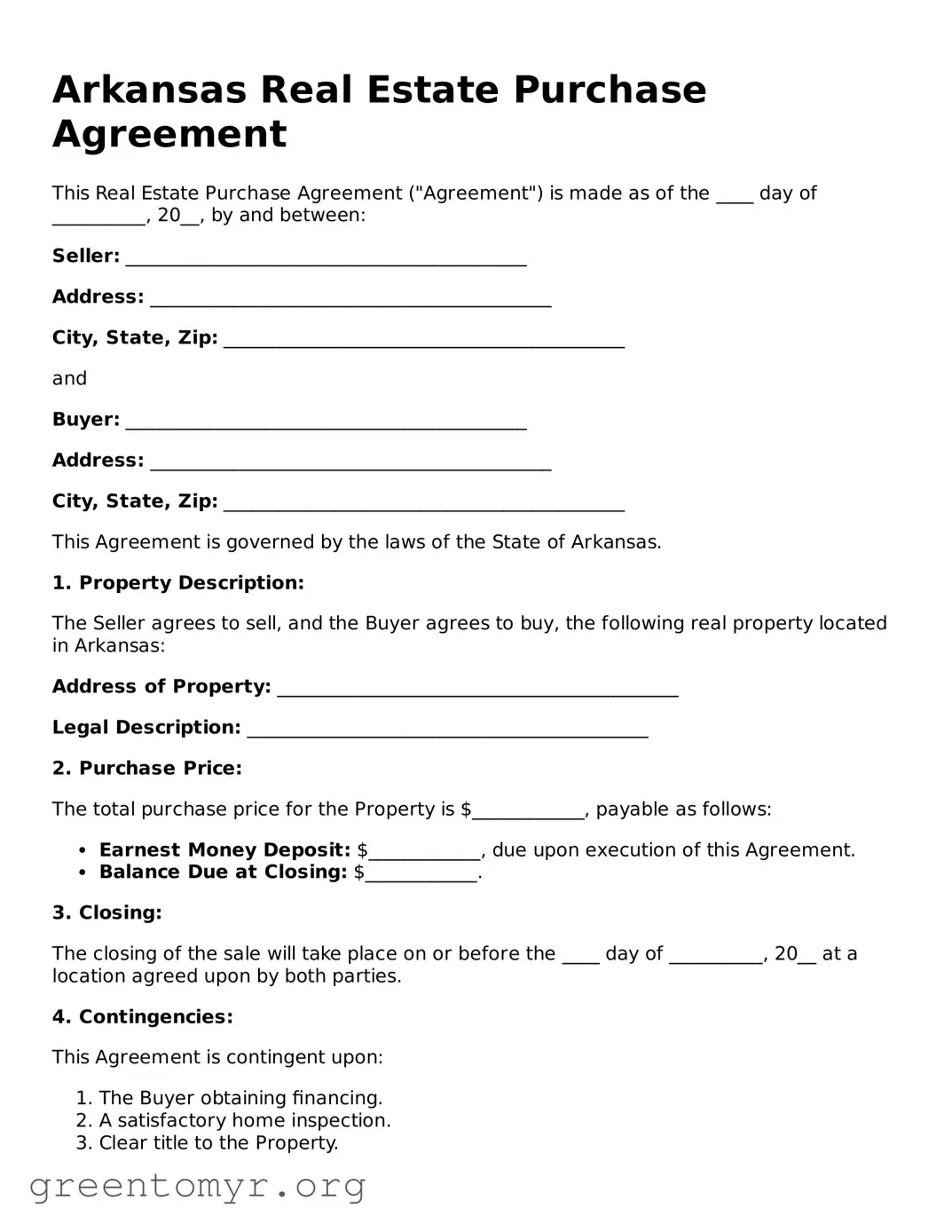
The Arkansas Real Estate Purchase Agreement form serves as a critical document in the process of buying and selling property within the state. This form outlines essential details such as the purchase price, financing terms, and property description, ensuring all parties have a clear understanding of the transaction. It includes provisions for earnest money deposits, contingencies related to inspections and financing, and timelines for closing. Additionally, the agreement specifies the responsibilities of both the buyer and seller, addressing issues like property disclosures and title transfer. By establishing these key elements, the form helps protect the interests of both parties and facilitates a smoother transaction process. Understanding the nuances of this agreement is vital for anyone involved in real estate transactions in Arkansas, as it lays the groundwork for a legally binding commitment to buy or sell property.
Arkansas Real Estate Purchase Agreement
This Real Estate Purchase Agreement ("Agreement") is made as of the ____ day of __________, 20__, by and between:
Seller: ___________________________________________
Address: ___________________________________________
City, State, Zip: ___________________________________________
and
Buyer: ___________________________________________
Address: ___________________________________________
City, State, Zip: ___________________________________________
This Agreement is governed by the laws of the State of Arkansas.
1. Property Description:
The Seller agrees to sell, and the Buyer agrees to buy, the following real property located in Arkansas:
Address of Property: ___________________________________________
Legal Description: ___________________________________________
2. Purchase Price:
The total purchase price for the Property is $____________, payable as follows:
3. Closing:
The closing of the sale will take place on or before the ____ day of __________, 20__ at a location agreed upon by both parties.
4. Contingencies:
This Agreement is contingent upon:
5. Additional Terms:
__________________________________________________________________________
__________________________________________________________________________
6. Signatures:
By signing below, both parties agree to the terms outlined in this Agreement.
Seller's Signature: ___________________________ Date: ____________
Buyer's Signature: ___________________________ Date: ____________
This Agreement constitutes the entire agreement between the parties and supersedes all prior negotiations or agreements.
Each party acknowledges that they have read and understood this Agreement.
| Fact Name | Description |
|---|---|
| Purpose | The Arkansas Real Estate Purchase Agreement form is used to outline the terms and conditions of a real estate transaction between a buyer and a seller. |
| Governing Laws | This agreement is governed by the laws of the State of Arkansas, specifically under the Arkansas Code Annotated Title 18, which pertains to property law. |
| Essential Elements | The form typically includes details such as the purchase price, property description, closing date, and any contingencies that must be met. |
| Contingencies | Common contingencies in the agreement may include financing, inspections, and the sale of the buyer's current home. |
| Signatures | Both the buyer and seller must sign the agreement for it to be legally binding, indicating their acceptance of the terms. |
| Amendments | Any changes to the agreement must be made in writing and signed by both parties to ensure clarity and enforceability. |
After obtaining the Arkansas Real Estate Purchase Agreement form, you will need to complete it carefully to ensure all necessary details are accurately captured. This will help facilitate a smooth transaction process.
Once the form is completed, it is advisable to review it thoroughly before submitting it to ensure all information is correct and complete. This will help avoid any potential issues during the transaction process.
The Arkansas Real Estate Purchase Agreement form is a legally binding document used in real estate transactions within the state of Arkansas. It outlines the terms and conditions under which a buyer agrees to purchase a property from a seller. This agreement typically includes details such as the purchase price, closing date, and any contingencies that must be met before the sale can be finalized.
This form is intended for use by individuals or entities involved in a real estate transaction in Arkansas. This includes:
The Arkansas Real Estate Purchase Agreement typically includes several important components, such as:
Contingencies are specific conditions outlined in the purchase agreement that must be met for the sale to proceed. Common contingencies include financing approval, home inspections, and the sale of the buyer's current home. They are important because they protect both parties by ensuring that certain criteria are satisfied before the transaction is completed.
While there may be variations in the form, many real estate professionals in Arkansas use standardized templates. These templates help ensure that all necessary information is included and that the document complies with state laws. However, parties may customize the agreement to suit their specific needs, as long as the changes are legally permissible.
The execution of the Arkansas Real Estate Purchase Agreement typically involves both the buyer and seller signing the document. Once signed, it becomes legally binding. It is advisable for both parties to retain a copy of the signed agreement for their records. In some cases, witnesses or notarization may be required, depending on the specifics of the transaction.
If one party fails to fulfill their obligations under the agreement, this is considered a breach. The non-breaching party may have several options, including:
It is often advisable to consult with a legal professional to understand the best course of action in such situations.
Yes, the Arkansas Real Estate Purchase Agreement can be modified after it has been signed, but both parties must agree to the changes. Modifications should be documented in writing and signed by both parties to ensure clarity and enforceability. Verbal agreements regarding changes may not be legally binding.
The Arkansas Real Estate Purchase Agreement form can be obtained from various sources, including:
It is essential to ensure that the form you are using is up-to-date and compliant with current Arkansas laws.
When completing the Arkansas Real Estate Purchase Agreement form, individuals often overlook critical details that can lead to complications. One common mistake is failing to accurately identify the parties involved in the transaction. This includes not only the buyers and sellers but also any agents representing them. It is essential to provide full names and contact information to ensure clarity and avoid disputes later on.
Another frequent error occurs in the property description section. Buyers and sellers may neglect to include specific details such as the property's legal description, address, and any relevant parcel numbers. This omission can create confusion regarding the exact property being sold and may result in legal challenges down the line.
Additionally, many individuals make the mistake of not clearly stating the purchase price and terms of payment. It is important to outline the total purchase price, any deposits, and the financing arrangements. Vague language or missing information in this section can lead to misunderstandings and potential financial disputes.
Lastly, failing to include contingencies can be detrimental. Buyers often forget to specify conditions that must be met for the sale to proceed, such as inspections or financing approvals. Without these contingencies, buyers may find themselves in a precarious situation if issues arise after the agreement is signed.
When engaging in real estate transactions in Arkansas, several key documents often accompany the Real Estate Purchase Agreement. Each of these documents plays a vital role in ensuring a smooth process and protecting the interests of all parties involved. Below is a list of common forms and documents used alongside the purchase agreement.
Understanding these documents can greatly enhance your experience in the real estate market. Each form serves a specific purpose and helps protect the rights and interests of everyone involved in the transaction. Always consider consulting with a legal professional to ensure you are fully informed and prepared.
When filling out the Arkansas Real Estate Purchase Agreement form, it is essential to follow specific guidelines to ensure accuracy and compliance. Below is a list of things you should and shouldn't do during this process.
By adhering to these guidelines, individuals can help ensure a smoother transaction process and reduce the likelihood of disputes or misunderstandings later on.
Understanding the Arkansas Real Estate Purchase Agreement form is crucial for anyone involved in a real estate transaction in the state. However, several misconceptions often arise. Here are six common misunderstandings:
By addressing these misconceptions, parties can better navigate the complexities of real estate transactions in Arkansas.
When filling out and using the Arkansas Real Estate Purchase Agreement form, several key points should be considered to ensure a smooth transaction. Below are essential takeaways that can guide you through the process:
By keeping these points in mind, individuals can navigate the process of completing the Arkansas Real Estate Purchase Agreement with greater confidence and clarity.