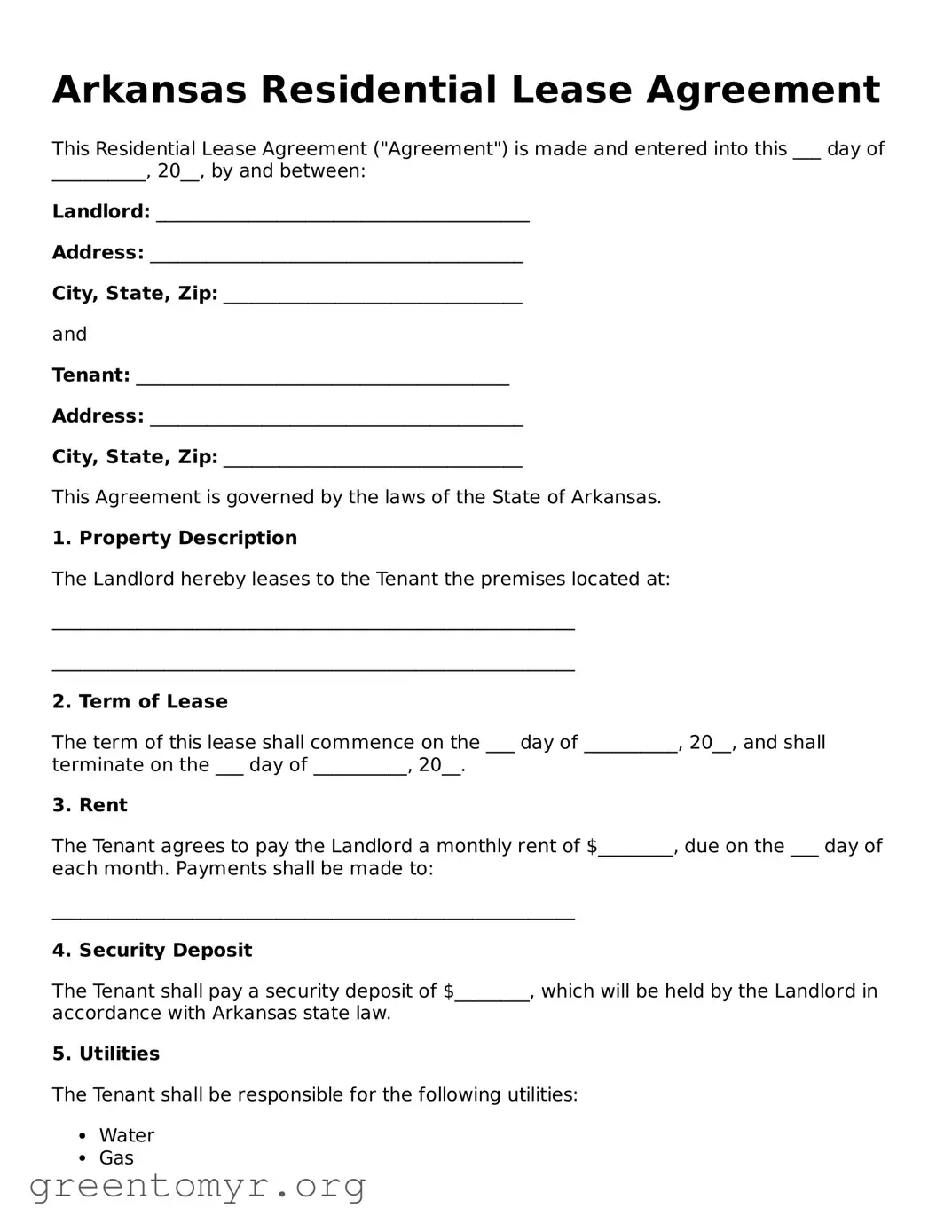
When entering into a rental agreement in Arkansas, understanding the Arkansas Residential Lease Agreement form is crucial for both landlords and tenants. This comprehensive document outlines the rights and responsibilities of both parties, ensuring a clear understanding of the rental terms. Key elements include the duration of the lease, the amount of rent due, and the methods of payment. Additionally, it addresses security deposits, maintenance responsibilities, and rules regarding pets, providing clarity on what is expected throughout the tenancy. The form also includes provisions for termination, ensuring that both parties are aware of the notice requirements and conditions under which the lease can be ended. By familiarizing yourself with these major aspects, you can navigate the rental process with confidence, minimizing potential disputes and fostering a positive landlord-tenant relationship.
Arkansas Residential Lease Agreement
This Residential Lease Agreement ("Agreement") is made and entered into this ___ day of __________, 20__, by and between:
Landlord: ________________________________________
Address: ________________________________________
City, State, Zip: ________________________________
and
Tenant: ________________________________________
Address: ________________________________________
City, State, Zip: ________________________________
This Agreement is governed by the laws of the State of Arkansas.
1. Property Description
The Landlord hereby leases to the Tenant the premises located at:
________________________________________________________
________________________________________________________
2. Term of Lease
The term of this lease shall commence on the ___ day of __________, 20__, and shall terminate on the ___ day of __________, 20__.
3. Rent
The Tenant agrees to pay the Landlord a monthly rent of $________, due on the ___ day of each month. Payments shall be made to:
________________________________________________________
4. Security Deposit
The Tenant shall pay a security deposit of $________, which will be held by the Landlord in accordance with Arkansas state law.
5. Utilities
The Tenant shall be responsible for the following utilities:
6. Maintenance and Repairs
The Tenant shall keep the premises in a clean and sanitary condition. Any necessary repairs should be reported to the Landlord promptly.
7. Termination
Upon termination of this lease, the Tenant agrees to vacate the premises and return all keys to the Landlord.
8. Governing Law
This Agreement shall be governed by the laws of the State of Arkansas.
9. Signatures
By signing below, both parties agree to the terms of this Residential Lease Agreement.
Landlord Signature: ___________________________ Date: __________
Tenant Signature: ___________________________ Date: __________
| Fact Name | Description |
|---|---|
| Governing Law | The Arkansas Residential Lease Agreement is governed by the Arkansas Code Annotated, Title 18, Chapter 17. |
| Duration of Lease | Leases can be for a fixed term, typically ranging from six months to one year, or they can be month-to-month. |
| Security Deposit | Landlords may require a security deposit, which cannot exceed two months' rent for unfurnished properties. |
| Notice to Terminate | For month-to-month leases, either party must provide a written notice of at least 30 days to terminate the lease. |
| Habitability Standards | Landlords must maintain the property in a habitable condition, ensuring it meets health and safety standards. |
| Disclosures Required | Landlords are required to disclose specific information, such as the presence of lead-based paint in properties built before 1978. |
Filling out the Arkansas Residential Lease Agreement form is an important step in establishing the terms of a rental arrangement. This process ensures that both the landlord and tenant understand their rights and responsibilities. Follow these steps carefully to complete the form accurately.
Once the form is completed, it’s a good idea to keep a copy for your records. Both parties should have a signed copy to refer to in the future, ensuring clarity and understanding throughout the lease term.
An Arkansas Residential Lease Agreement is a legally binding contract between a landlord and a tenant. This document outlines the terms and conditions of renting a residential property. It includes details such as the rental amount, duration of the lease, responsibilities of both parties, and rules regarding the property. Having a written agreement helps protect the rights of both landlords and tenants.
A comprehensive lease agreement typically includes the following elements:
In Arkansas, lease terms can vary widely based on the agreement between the landlord and tenant. Common lease terms include:
It is essential for both parties to agree on the duration to avoid misunderstandings.
Generally, a landlord cannot raise the rent during a fixed-term lease unless the lease agreement explicitly allows for such increases. For month-to-month leases, landlords can increase rent by providing proper notice, typically 30 days in Arkansas. Tenants should review their lease for specific terms regarding rent increases.
If a tenant wishes to terminate the lease before its expiration, they should first review the lease agreement for any early termination clauses. Many leases include penalties or require notice to be given a certain number of days in advance. In some cases, tenants may be able to negotiate with the landlord for an early release from the lease.
Yes, tenants in Arkansas have specific rights that are protected by state law. These include the right to:
Understanding these rights is crucial for tenants to ensure they are treated fairly.
If a tenant encounters problems with their landlord, such as unaddressed maintenance issues or unlawful eviction attempts, they should take the following steps:
Taking these steps can help tenants navigate disputes effectively.
Filling out the Arkansas Residential Lease Agreement can be a straightforward process, but mistakes often happen. One common error is not including all required information. Tenants and landlords alike sometimes forget to fill in crucial details, such as the names of all parties involved or the property address. This can lead to confusion later on.
Another mistake is overlooking the lease term. Some people may write in a lease duration that does not match their intentions. For example, a tenant might want a month-to-month lease but mistakenly indicate a year-long term. This can create misunderstandings about the length of the rental agreement.
Many individuals also fail to read the fine print. Each section of the lease has specific rules and requirements. Ignoring these details can result in unexpected obligations or rights. It’s important to understand what you are agreeing to before signing.
Additionally, people often neglect to initial or sign all required places on the form. Missing initials can invalidate parts of the agreement. It’s essential to double-check that all necessary signatures are present to avoid issues in the future.
Another frequent oversight is not addressing security deposits. Some landlords forget to specify the amount or terms regarding the deposit. Tenants might also overlook asking about the return of the deposit. Clarity on this point is vital for both parties.
Lastly, many people do not keep a copy of the signed agreement. After the lease is signed, it’s crucial to have a copy for personal records. Without it, disputes can arise, and having no documentation can complicate matters.
When entering into a rental agreement in Arkansas, several additional forms and documents may be necessary to ensure clarity and compliance. These documents help both landlords and tenants understand their rights and responsibilities. Below is a list of commonly used forms that often accompany the Arkansas Residential Lease Agreement.
Using these forms alongside the Arkansas Residential Lease Agreement can help facilitate a smooth rental process. It is essential for both parties to understand these documents to protect their interests and maintain a positive landlord-tenant relationship.
When filling out the Arkansas Residential Lease Agreement form, it’s important to follow certain guidelines. Here are four things you should and shouldn't do:
Understanding the Arkansas Residential Lease Agreement is essential for both landlords and tenants. However, there are several misconceptions that can lead to confusion. Here are seven common misunderstandings:
Many people believe that all lease agreements are identical. In reality, each lease can vary significantly based on the specific terms negotiated between the landlord and tenant.
Some individuals think that a verbal agreement is enough to establish a lease. However, written agreements provide clarity and legal protection for both parties.
There is a common belief that security deposits cannot be refunded. In Arkansas, landlords must return the security deposit within a specified time frame, minus any legitimate deductions.
It is often assumed that tenants can leave a lease whenever they wish. However, breaking a lease can lead to financial penalties and legal consequences unless specific conditions are met.
Some tenants think that landlords have unrestricted access to their rental units. In Arkansas, landlords must provide reasonable notice before entering the property, except in emergencies.
While landlords are generally responsible for major repairs, tenants may also have obligations to maintain the property and report issues in a timely manner.
Many people mistakenly believe that lease agreements are informal and not enforceable. In fact, once signed, a lease is a legally binding contract that outlines the rights and responsibilities of both parties.
Being aware of these misconceptions can help ensure a smoother rental experience for everyone involved.
When filling out and using the Arkansas Residential Lease Agreement form, several important points should be considered to ensure clarity and legality. Here are some key takeaways:
By paying attention to these key aspects, both landlords and tenants can foster a smoother rental experience and minimize potential conflicts.