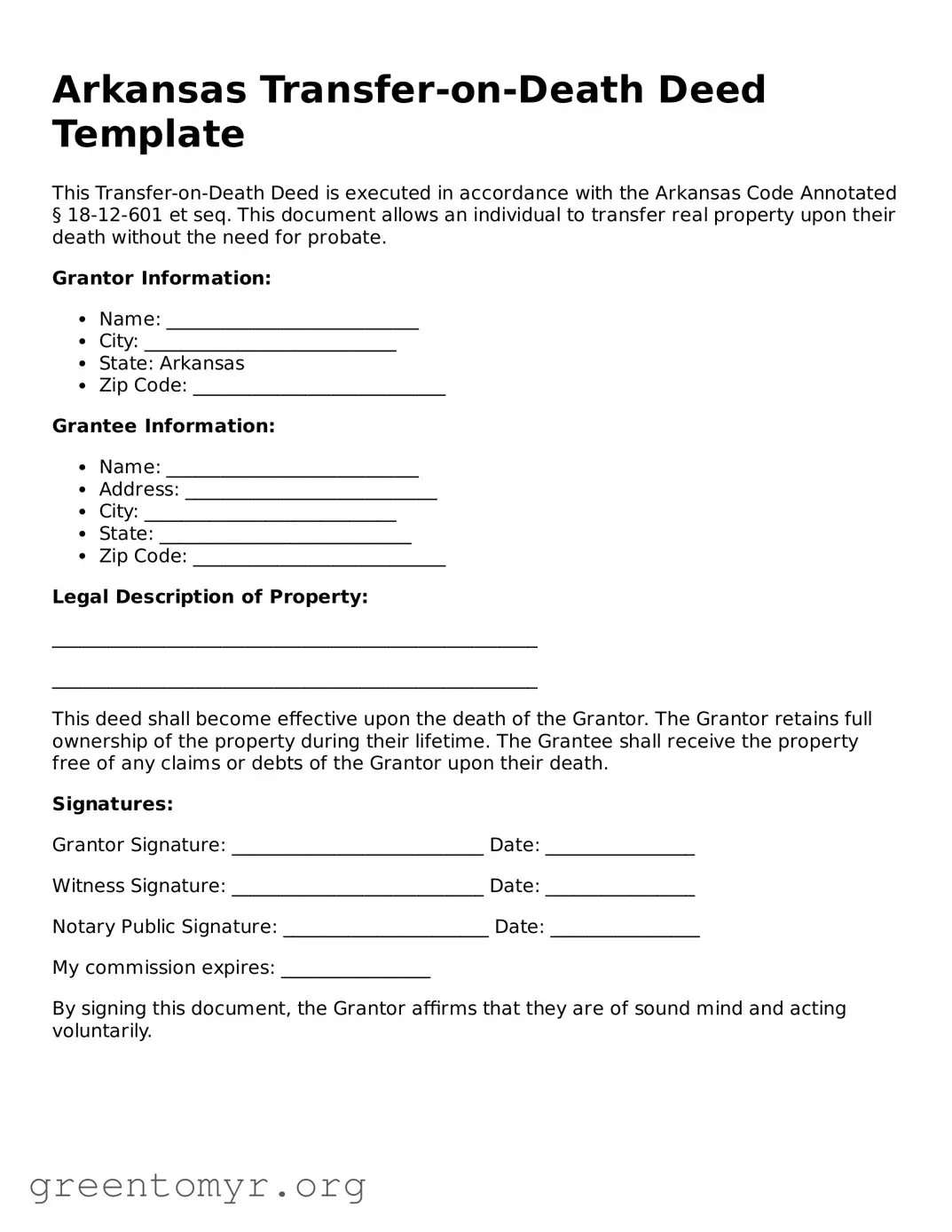
The Arkansas Transfer-on-Death Deed form offers a straightforward method for property owners to transfer their real estate to designated beneficiaries upon their death, ensuring a smooth transition of ownership without the need for probate. This legal tool allows individuals to retain full control of their property during their lifetime, as the transfer does not take effect until after their passing. By completing this form, property owners can specify who will receive their property, providing clarity and reducing potential disputes among heirs. The process is relatively simple, requiring basic information about the property and the beneficiaries, as well as the signature of the property owner. Importantly, the deed must be properly recorded with the county clerk to be effective. Understanding the nuances of the Transfer-on-Death Deed can empower property owners in Arkansas to make informed decisions about their estate planning and ensure that their wishes are honored after they are gone.
Arkansas Transfer-on-Death Deed Template
This Transfer-on-Death Deed is executed in accordance with the Arkansas Code Annotated § 18-12-601 et seq. This document allows an individual to transfer real property upon their death without the need for probate.
Grantor Information:
Grantee Information:
Legal Description of Property:
____________________________________________________
____________________________________________________
This deed shall become effective upon the death of the Grantor. The Grantor retains full ownership of the property during their lifetime. The Grantee shall receive the property free of any claims or debts of the Grantor upon their death.
Signatures:
Grantor Signature: ___________________________ Date: ________________
Witness Signature: ___________________________ Date: ________________
Notary Public Signature: ______________________ Date: ________________
My commission expires: ________________
By signing this document, the Grantor affirms that they are of sound mind and acting voluntarily.
| Fact Name | Description |
|---|---|
| Definition | A Transfer-on-Death Deed allows property owners to transfer real estate to beneficiaries upon their death without going through probate. |
| Governing Law | The Arkansas Transfer-on-Death Deed is governed by Arkansas Code Annotated § 18-12-601 to § 18-12-608. |
| Eligibility | Any individual who owns real property in Arkansas can create a Transfer-on-Death Deed. |
| Beneficiaries | Property owners can name one or more beneficiaries in the deed. |
| Revocation | The deed can be revoked at any time before the owner's death by creating a new deed or a revocation document. |
| Filing Requirements | The deed must be recorded in the county where the property is located to be valid. |
| No Immediate Transfer | Ownership does not transfer to the beneficiary until the property owner passes away. |
| Tax Implications | Beneficiaries may be subject to taxes upon receiving the property, but it avoids probate taxes. |
| Legal Assistance | While legal assistance is not required, it is often recommended to ensure all details are correct. |
| Limitations | This deed cannot be used for transferring personal property or for property held in joint tenancy. |
After obtaining the Arkansas Transfer-on-Death Deed form, you will need to complete it accurately to ensure it reflects your wishes regarding property transfer. Follow these steps to fill out the form correctly.
Once you have filled out and filed the form, it will be recorded in public records. This ensures that your wishes regarding the transfer of property will be honored upon your passing.
A Transfer-on-Death Deed (TODD) allows an individual to transfer real estate to a beneficiary upon their death without going through probate. This deed provides a straightforward way to pass property directly to heirs while retaining control during the grantor's lifetime.
Any individual who is the owner of real property in Arkansas can create a TODD. This includes single owners, joint owners, and those holding property in trust. However, the property must be titled in the individual's name at the time of the deed's execution.
To ensure a TODD is valid, it must meet the following criteria:
Yes, a Transfer-on-Death Deed can be revoked or changed at any time before the grantor's death. This can be done by creating a new deed or by formally revoking the existing deed. It is essential to follow the same formalities as the original deed for any changes to be valid.
If the beneficiary named in the TODD dies before the grantor, the property will not automatically transfer to the beneficiary's heirs. Instead, the deed becomes ineffective. To avoid complications, the grantor should consider naming alternate beneficiaries in the deed.
Yes, the TODD must be recorded with the county clerk's office where the property is located. This recording is crucial for the deed to be effective upon the grantor's death. It is advisable to file the deed as soon as it is executed.
Generally, transferring property via a TODD does not trigger immediate tax consequences. The property is not considered part of the grantor's estate for estate tax purposes. However, beneficiaries may be subject to capital gains tax upon selling the property, depending on the property's value at the time of the grantor's death.
A TODD can only be used for real estate, such as land and buildings. It cannot be used for personal property, bank accounts, or other assets. If you wish to transfer other types of assets, consider other estate planning tools.
While it is possible to create a TODD without legal assistance, consulting with an attorney is advisable. An attorney can ensure that the deed is properly executed, compliant with state laws, and aligns with your overall estate planning goals.
Filling out the Arkansas Transfer-on-Death Deed form can be a straightforward process, but there are common mistakes that many people make. Understanding these pitfalls can help ensure that your deed is filled out correctly and serves its intended purpose. One of the most frequent errors is failing to include the legal description of the property. This description is crucial, as it identifies the specific property being transferred. Without it, the deed may not be valid.
Another mistake is not properly identifying the beneficiaries. It is essential to provide the full names of all individuals who will receive the property upon your passing. Omitting a beneficiary or using nicknames instead of legal names can lead to confusion and potential disputes in the future.
Many individuals also overlook the importance of signing the deed in the presence of a notary public. This step is necessary to validate the document. If the deed is not notarized, it may not be recognized by the courts or financial institutions, which could create complications for the beneficiaries.
Additionally, people often forget to date the deed. A date is important because it establishes when the transfer becomes effective. Without a date, it may be challenging to determine the timing of the transfer, leading to potential legal issues.
Another common error is failing to record the deed with the appropriate county office. Even though the deed is executed, it must be filed to be enforceable. If it is not recorded, the transfer may not be recognized, and the property could be subject to probate proceedings.
Some individuals make the mistake of using the wrong form altogether. It is crucial to ensure that you are using the correct Transfer-on-Death Deed form specific to Arkansas. Using an outdated or incorrect form can invalidate the transfer.
People also sometimes neglect to consider the tax implications of transferring property in this manner. While a Transfer-on-Death Deed can avoid probate, it is wise to consult with a tax professional to understand any potential tax consequences for the beneficiaries.
Another mistake is not reviewing the deed after completion. It is essential to double-check all the information for accuracy. Errors in names, property descriptions, or other details can lead to significant problems down the line.
Finally, individuals may fail to communicate their intentions with the beneficiaries. It is important to discuss the deed and the transfer with those involved. Open communication can prevent misunderstandings and ensure that everyone is aware of their rights and responsibilities regarding the property.
The Arkansas Transfer-on-Death Deed form allows property owners to designate beneficiaries who will receive the property upon their death, without going through probate. This form is often accompanied by other legal documents that help facilitate the transfer process and ensure clarity in property ownership. Below are four commonly used forms and documents associated with the Transfer-on-Death Deed in Arkansas.
Understanding these documents can help ensure a smoother transition of property ownership and clarify the intentions of the property owner. Proper documentation is essential for avoiding disputes and ensuring that beneficiaries receive their intended inheritance efficiently.
When filling out the Arkansas Transfer-on-Death Deed form, it is essential to approach the task with care. This document allows property owners to designate beneficiaries who will inherit the property upon their death, avoiding probate. Below are ten important dos and don'ts to consider during the process.
By following these guidelines, you can ensure a smoother process when completing the Arkansas Transfer-on-Death Deed form. Proper attention to detail can help prevent potential issues in the future.
Understanding the Arkansas Transfer-on-Death Deed form is crucial for effective estate planning. However, several misconceptions can lead to confusion. Here are six common myths and the facts that clarify them:
This is incorrect. The deed only becomes effective upon the death of the property owner, but it must be properly executed and recorded before the owner’s death.
This is not true. The property owner retains full control of the property during their lifetime. They can sell, mortgage, or change the beneficiaries as they wish.
This is misleading. While the deed may help avoid probate, it does not exempt the estate from taxes. Beneficiaries may still face tax implications.
This is false. The deed can be used for most real property, including residential homes and land, but there are exceptions.
This is incorrect. The property owner can revoke or change the deed at any time before their death, as long as they follow the proper procedures.
This is a misconception. Beneficiaries are not personally responsible for the deceased's debts unless they co-signed or are otherwise legally obligated.
Clarifying these misconceptions can help individuals make informed decisions about their estate planning. It is advisable to consult with a professional to ensure the deed is executed correctly.
When considering the Arkansas Transfer-on-Death Deed, it's important to understand its implications and how to properly fill out the form. Here are some key takeaways:
Understanding these points can help ensure that your intentions for property transfer are honored and that your loved ones are taken care of after your passing.