The Army Leaders Book form serves as an essential tool for Noncommissioned Officers (NCOs) in managing their responsibilities and supporting their soldiers. This comprehensive document includes key sections such as personal data, battle focus, equipment data, training management, and scheduled events, all designed to facilitate effective leadership and organization within a unit. At the forefront of the Leaders Book is the Creed of the Noncommissioned Officer, which emphasizes professionalism, accountability, and the unwavering commitment to soldier welfare. The form also incorporates a daily personnel status, counseling records, and awards documentation, ensuring that NCOs have a complete overview of their soldiers’ needs and achievements. Furthermore, it features a section dedicated to the chain of command and a phone listing for quick communication, reinforcing the importance of connectivity in military operations. By maintaining this structured and detailed record, NCOs can enhance their leadership capabilities, foster a positive environment for their soldiers, and uphold the esteemed traditions of the Army. The Army Leaders Book is not just a form; it is a vital resource that embodies the principles of leadership and camaraderie essential to military service.

Leader’s Book
NAME
UNIT
PHONE #

Creed of the Noncommissioned Officer
Creed of the Noncommissioned Officer
No one is more professional than I. I am a
Noncommissioned Officer, a leader of soldiers. As a
Noncommissioned Officer, I realize that I am a member of a time honored Corps, which is known as “The Backbone of the Army.”
I am proud of the Corps of Noncommissioned officers and will at all times conduct myself so as to bring credit upon the Corps, the Military Service and my country regardless of the situation in which I find myself. I will not use my grade or position to attain pleasure, profit or personal safety.
Competence is my
responsibilities will always be uppermost in my mind- accomplishment of my mission and the welfare of my soldiers. I will strive to remain tactically and technically proficient. I am aware of my role as a Noncommissioned Officer. I will fulfill my responsibilities inherent in that role. All soldiers are entitled to outstanding leadership; I will provide that leadership. I know my soldiers and I will always place their needs above my own. I will communicate with my soldiers and never leave them uninformed. I will be fair and impartial when recommending both punishment and rewards.
Officers in my unit will have maximum time to accomplish their duties; they will not have to accomplish mine. I will earn their respect and confidence as well as those of my soldiers. I will be loyal to those with whom I serve; seniors, peers and subordinates alike. I will exercise initiative by taking the appropriate action in the absence of orders. I will not compromise my integrity nor my moral courage. I will not forget, nor will I allow my comrades to forget that we are professionals, Noncommissioned officers, leaders!

E C0 702d MSB
Chapter Index
1.Personal Data
2.Battle Focus
3.Equipment Data
4.Training Management
4
16
27
29
40 5. Scheduled Events
41 6. Chain of Command
45 7. Phone Listing
50 8. References
Leader’s Book |
3 |

|
|
|
CHAPTER |
|
|
|
|
|
|
|
1 |
|
|
|
|
|
Personal Data |
|
|
|
According to Polybius [c. 200 BC], the men the Romans chose as their centurions were those who |
|
|
|
could keep cool in an emergency. |
|
|
|
- The Army of the Caesars, p.xxxiii |
|
|
|
Soldier’s Privacy Act Statement |
5 |
|
|
Daily Personnel Status |
6 |
|
|
Soldier’s Personal Data Sheet |
7 |
|
|
Counseling |
8 |
|
|
NCOER |
9 |
|
|
Awards |
10 |
|
|
Unresolved Soldier Issues |
11 |
|
|
Section Strip Map to Home |
12 |
|
|
Platoon Sergeant’s Duties |
13 |
|
|
Platoon Leader’s Duties |
14 |
|
|
Leader’s Biography |
15 |
|
|
|
|
|

E C0 702d MSB
SOLDIER’S PRIVACY ACT STATEMENT
The personnel listed below authorized ______________________ to maintain their
SSN and personal information in his/her Leader’s Book with the understanding that this information will not be disclosed except in the line of his/her official duties.
NAME
SSN
SIGNATURE
DATE
Leader’s Book |
5 |
DAILY PERSONNEL STATUS
Date: ___________
|
Off |
NCO |
ENL |
Total |
Authorized |
_____ |
_____ |
_____ |
_____ |
Assigned |
_____ |
_____ |
_____ |
_____ |
Present for Duty |
_____ |
_____ |
_____ |
_____ |
Absent from Duty |
_____ |
_____ |
_____ |
_____ |
TDY |
___________ |
Other |
___________ |
Unsat |
___________ |
On Duty |
___________ |
PASS |
___________ |
Out Processing |
___________ |
In Processing |
___________ |
Hospital |
___________ |
Profile |
___________ |
Conv Leave |
___________ |
Appt |
___________ |
WIA |
___________ |
KIA |
___________ |
AWOL |
___________ |
MIA |
___________ |
LEAVE |
___________ |

E C0 702d MSB
SOLDIER’S PERSONAL DATA SHEET
NAME : _________________________ RANK : ______ |
DOR : _________________ SSN : __________________ |
||
BASD : ________________ ETS : __________________ |
DOB : _________________ MOS : _________________ |
||
TIG : __________________ TIS : __________________ |
PROMOTABLE : YES / NO POINTS : _____________ |
||
WEIGHT : ________ HEIGHT : ________ HAIR : ___________ EYES : ___________ AGE : ____________ |
|||
MARITAL STATUS : MARRIED / SINGLE / DIVORCED / SEPERATED |
|
|
|
SPOUSE’S NAME : ________________________________ |
|
|
EFMP : YES / NO |
CHILD’S NAME : _________________________________ |
AGE : ____ |
MALE / FEMALE |
EFMP : YES / NO |
CHILD’S NAME : _________________________________ |
AGE : ____ |
MALE / FEMALE |
EFMP : YES / NO |
CHILD’S NAME : _________________________________ |
AGE : ____ |
MALE / FEMALE |
EFMP : YES / NO |
CHILD’S NAME : _________________________________ |
AGE : ____ |
MALE / FEMALE |
EFMP : YES / NO |
HOME PHONE : __________________________ |
ADDRESS : _____________________________________________ |
|||||||||
RELIGION : ___________ |
BLOOD TYPE : ___ |
WEAPON # : _______ |
WEAPON SERIAL # : ____________ |
|||||||
MASK # : _________ |
INSERT REQUIRED : YES / NO |
DATE NBC PROF : __________ |
CONF : __________ |
|||||||
DATE WEAPON QUAL : ______________ |
TYPE : _____________ |
QUALIFIED : MARK / SHARP / EXPERT |
||||||||
DATE LAST APFT : _____________ |
SCORE : _______ |
|||||||||
DATE |
BODY FAT % : _____ |
PROFILE : T / P _______________________________ |
||||||||
DATE CTT TEST : ___________ |
GO / NOGO |
DATE DRIVERS TRAINING : ___________________________ |
||||||||
DATE QUALIFIED CREW SERVED WEAPON : ____________ TYPE/S : _________________________________ |
||||||||||
NBC SUIT SIZE : _______ |
MASK SIZE : __________ |
BDU COAT SIZE : ______ TROUSER SIZE : _______ |
||||||||
HAT SIZE : _______ |
BOOT SIZE : _____ |
DATE PLDC : _____ |
BNCOC : _________ |
ANCOC : _________ |
||||||
AWARDS: __________________________________________________________________________________________ |
||||||||||
DATE LAST GCM : _____________ |
|
DATE LAST NCOER : ___________ |
NEXT OF KIN : _________________ |
|||||||
ADDRESS : ____________________________________________________ PHONE NO. : _____________________ |
||||||||||
POV MAKE : ___________________ |
MODEL : ________________________________________________________ |
|||||||||
YEAR : ________________________ |
|
COLOR : _______________________ |
LIC PLATE # : __________________ |
|||||||
POST DECAL # : ________________ |
INS COMPANY : ________________ |
EXP DATE : ____________________ |
||||||||
ANTHRAX SHOT # : _____________________________ |
ANTHRAX DATE : _______________________________ |
|||||||||
|
|
|
|
|
|
|
|
|
|
|
REMARKS |
|
|
|
|
|
|
|
|
|
|
Leader’s Book |
7 |

RANK
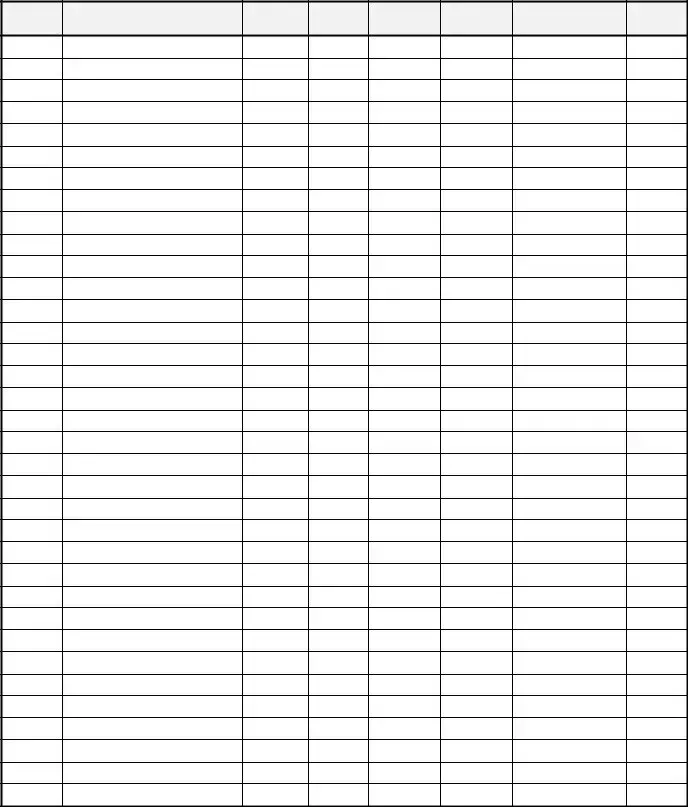
COUNSELING
|
|
|
|
|
|
|
|
|
|
NEXT |
|
|
NAME |
|
|
INITIAL |
|
|
PERFORMANCE |
|
|
PERFORMANCE |
|
|
|
|
COUNSELING DATE |
|
|
COUNSELING DATE |
|
|
COUNSELING DATE |
|
|
|
|
|
|
|
|
|
|
|
|||
|
|
|
|
|
|
|
|
|
|
DUE |
|
|
|
|
|
|
|
|
|
|
|
|
|
|
|
|
|
|
|
|
|
|
|
|
|
E C0 702d MSB
NCOER
RANK
NAME
DEROS
TYPE
LAST
THRU
SUS TO COMPANY
STATUS
Leader’s Book |
9 |

AWARDS
RANK
NAME
DEROS
MSM
85 DAYS
ARCOM 75 DAYS
AAM
40 DAYS
DATE TO COMPANY
TYPE
STATUS
REMARKS
| Fact Name | Description |
|---|---|
| Purpose | The Army Leaders Book serves as a centralized resource for Noncommissioned Officers (NCOs) to manage essential information about their soldiers and unit. |
| Contents | It includes sections for personal data, battle focus, equipment data, training management, and more, ensuring comprehensive oversight of soldier and unit needs. |
| Creed Inclusion | The Leaders Book prominently features the Creed of the Noncommissioned Officer, emphasizing the values and responsibilities inherent in the role of an NCO. |
| Privacy Protection | Under the Soldier’s Privacy Act Statement, personal information such as Social Security Numbers (SSNs) is protected and can only be accessed for official duties. |
| State-Specific Forms | In some states, specific governing laws may apply to the handling of personal data in military records, including privacy and data protection regulations. |
| Chain of Command | The Leaders Book outlines the chain of command, which is crucial for maintaining order and communication within the unit. |
| Training Management | It includes a section dedicated to training management, allowing NCOs to track and plan training events effectively. |
| Daily Personnel Status | A daily personnel status report is a key feature, helping NCOs keep track of soldier readiness and welfare on a day-to-day basis. |
After gathering the necessary information, you can begin filling out the Army Leaders Book form. Ensure that all details are accurate and complete to maintain the integrity of the document.
The Army Leaders Book form is a comprehensive tool designed for Noncommissioned Officers (NCOs) to manage and document essential information about their soldiers and unit. It includes personal data, training management, scheduled events, and other critical elements that support effective leadership.
All Noncommissioned Officers are required to maintain a Leader’s Book. This tool helps them fulfill their responsibilities as leaders, ensuring they have the necessary information to support their soldiers and accomplish their missions.
The Leader’s Book includes various sections such as:
This information is crucial for effective leadership and unit cohesion.
The Leader’s Book emphasizes the welfare of soldiers by ensuring that NCOs have up-to-date information about their team. This allows NCOs to communicate effectively, provide necessary support, and address any unresolved soldier issues promptly.
The Creed of the Noncommissioned Officer outlines the core values and responsibilities of NCOs. It serves as a guiding principle, reminding leaders of their commitment to professionalism, integrity, and the welfare of their soldiers.
Personal data is collected and maintained in accordance with the Soldier’s Privacy Act. NCOs are responsible for safeguarding this information and ensuring it is only disclosed in the line of official duties.
Using a Leader’s Book offers several benefits, including:
Yes, the Leader’s Book should be updated regularly to reflect changes in personnel, training schedules, and other relevant information. Keeping it current ensures that NCOs have access to the most accurate data when making decisions.
If a soldier's information changes, it is the NCO's responsibility to update the Leader’s Book immediately. This may include changes in contact information, training status, or any other relevant personal data.
The Leader’s Book facilitates communication by providing NCOs with key information about their soldiers. This allows for timely updates, effective counseling, and the ability to address soldier needs promptly. Regular communication helps build trust and cohesion within the unit.
Filling out the Army Leaders Book form is a crucial task that requires attention to detail. One common mistake is failing to include all necessary personal data. When soldiers do not provide their full names, units, and phone numbers, it can lead to confusion and hinder effective communication. Accurate information is essential for maintaining accountability.
Another frequent error is neglecting to update the contact information. Soldiers may change units or phone numbers, but if this information is not updated in the Leaders Book, it can create significant challenges in reaching them during critical situations. Keeping this data current is vital for operational effectiveness.
Some individuals overlook the importance of the Soldier’s Privacy Act Statement. This section is designed to protect sensitive information. If it is not completed correctly, it could lead to unauthorized disclosures, compromising the privacy of soldiers. Attention to this detail is essential for maintaining trust and confidentiality.
Additionally, many people make the mistake of skipping the Creed of the Noncommissioned Officer. This creed serves as a guiding principle for leadership. Omitting it can signal a lack of commitment to the values and responsibilities that come with the role of a Noncommissioned Officer. Including this creed reinforces the importance of leadership and accountability.
Another error involves incomplete or inaccurate entries in the Daily Personnel Status section. This information is crucial for tracking the readiness and welfare of soldiers. Inaccuracies can lead to mismanagement of personnel and affect unit cohesion. It is important to ensure that all entries are correct and up-to-date.
Some individuals fail to provide signatures and dates where required. This oversight can render the form incomplete and may lead to delays in processing important information. Signatures serve as a confirmation of the accuracy of the information provided, and their absence can raise questions about accountability.
People often neglect to include a chain of command listing. This section is vital for understanding the hierarchy within the unit. Without it, soldiers may struggle to identify their superiors and understand the lines of communication. Providing this information fosters clarity and enhances operational efficiency.
Another common mistake is not utilizing the references section effectively. This section can provide additional context and support for the information listed in the Leaders Book. Failing to include relevant references can weaken the overall integrity of the document and may hinder decision-making processes.
Lastly, some individuals do not take the time to review the completed form before submission. This can lead to simple errors that could have been easily corrected. A thorough review helps ensure that all information is accurate and complete, ultimately reflecting professionalism and commitment to duty.
The Army Leaders Book is an essential tool for Noncommissioned Officers (NCOs), helping them manage various aspects of their unit and personnel effectively. Alongside this form, several other documents are frequently utilized to support the leadership and administrative functions within the Army. Below is a list of related forms that can enhance the NCO's ability to lead and maintain organization.
Utilizing these forms in conjunction with the Army Leaders Book can significantly enhance an NCO's ability to lead effectively and maintain a well-organized unit. Each document plays a vital role in ensuring that soldiers receive the support and guidance they need to succeed.
The Army Leaders Book form serves as a vital tool for noncommissioned officers (NCOs) to manage their responsibilities and the welfare of their soldiers. Several other documents share similarities with the Army Leaders Book, each serving specific functions within military operations. Below is a list of seven such documents and how they relate to the Army Leaders Book:
When filling out the Army Leaders Book form, it is essential to follow specific guidelines to ensure accuracy and compliance. Below is a list of six recommendations regarding what to do and what to avoid during this process.
By adhering to these guidelines, the integrity of the Army Leaders Book form can be maintained, promoting effective leadership and communication within the unit.
Here are ten common misconceptions about the Army Leaders Book form, along with clarifications for each:
Filling out and using the Army Leaders Book form is an essential task for Noncommissioned Officers (NCOs). Here are some key takeaways to keep in mind:
By following these takeaways, you can effectively utilize the Army Leaders Book form to enhance leadership, communication, and soldier welfare within your unit.