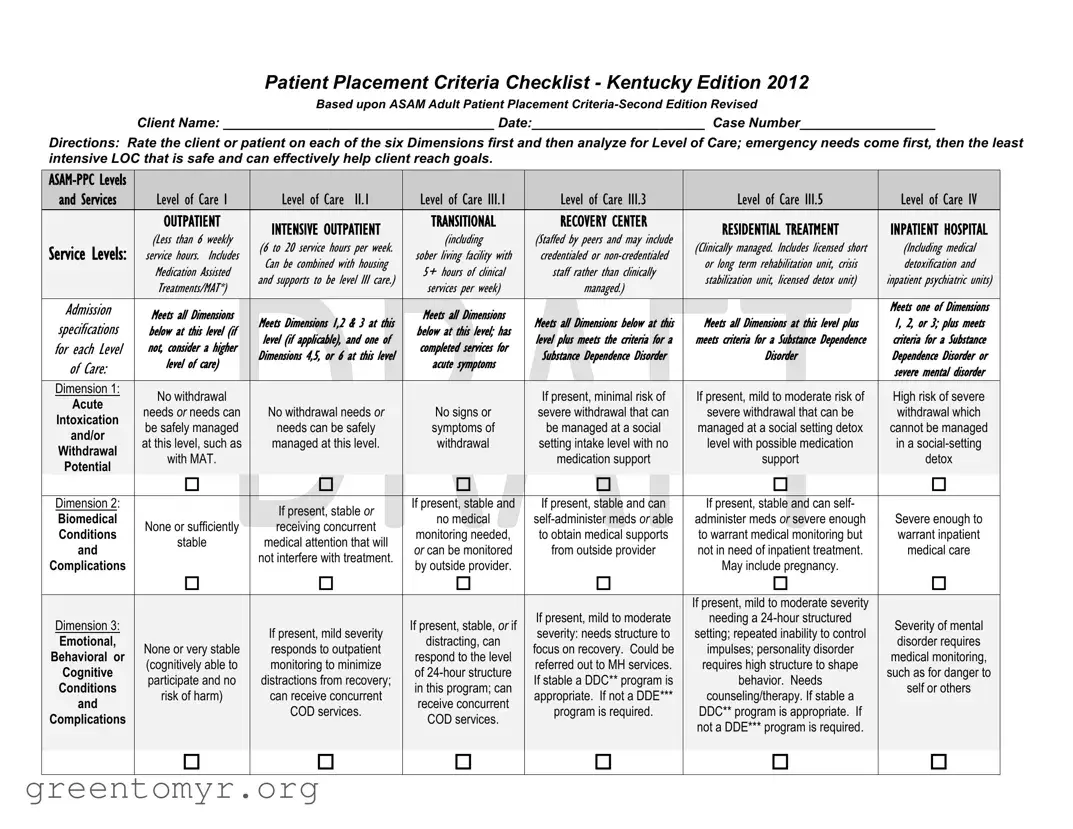
The ASAM Level of Care Cheat Sheet is an essential tool designed to guide healthcare professionals in making informed decisions regarding patient placement for substance use treatment. This comprehensive form is based on the American Society of Addiction Medicine (ASAM) Adult Patient Placement Criteria, specifically tailored for Kentucky. It consists of six key dimensions that assess various aspects of a patient's needs, ranging from withdrawal symptoms to social support systems. Each dimension requires careful evaluation, allowing clinicians to determine the most appropriate level of care, whether that be outpatient services, intensive outpatient programs, residential treatment, or inpatient hospitalization. The form emphasizes prioritizing emergency needs and aims to identify the least intensive level of care that can effectively support the patient's recovery goals. By utilizing this cheat sheet, providers can ensure that their patients receive the right level of care, which is crucial for successful treatment outcomes.

Patient Placement Criteria Checklist - Kentucky Edition 2012
Based upon ASAM Adult Patient Placement
Client Name: ____________________________________ Date:_______________________ Case Number__________________
Directions: Rate the client or patient on each of the six Dimensions first and then analyze for Level of Care; emergency needs come first, then the least intensive LOC that is safe and can effectively help client reach goals.
|
|
|
|
|
|
|
|
|
|
|
|
|
|
|
|
|
|
|
|
|
|
|
|
|
|
|
|
|
|
|
|
|
and Services |
|
|
Level of Care I |
|
|
Level of Care |
II.1 |
|
|
Level of |
Care III.1 |
|
|
Level of |
Care III.3 |
|
|
Level of Care III.5 |
|
|
Level of |
Care IV |
|
|||||||
|
|
|
|
OUTPATIENT |
|
|
|
|
|
|
|
|
TRANSITIONAL |
|
|
RECOVERY CENTER |
|
|
|
|
|
|
|
|
|
|
|||||
|
|
|
|
|
|
INTENSIVE OUTPATIENT |
|
|
|
|
RESIDENTIAL TREATMENT |
|
|
INPATIENT HOSPITAL |
|
||||||||||||||||
|
|
|
|
(Less |
than 6 |
weekly |
|
|
|
|
|
(including |
|
|
(Staffed by peers and may include |
|
|
|
|
|
|||||||||||
|
Service Levels: |
|
|
|
|
(6 to 20 service hours per week. |
|
|
|
|
|
|
|
(Clinically managed. Includes licensed short |
|
|
(Including medical |
|
|||||||||||||
|
|
|
|
|
|
|
|
|
|
|
|
||||||||||||||||||||
|
|
|
service |
hours. |
Includes |
|
|
|
|
sober |
living |
facility with |
|
|
credentialed or |
|
|
|
|
|
|||||||||||
|
|
|
|
|
Can be combined |
with |
housing |
|
|
|
|
or long term |
rehabilitation |
unit, crisis |
|
|
detoxification and |
|
|||||||||||||
|
|
|
|
Medication Assisted |
|
|
|
|
5+ |
hours |
of clinical |
|
|
staff rather |
than clinically |
|
|
|
|
|
|||||||||||
|
|
|
|
|
|
|
|
|
|
|
|
||||||||||||||||||||
|
|
|
|
|
|
and supports to be |
level |
III care.) |
|
|
|
|
|
|
stabilization |
unit, licensed |
detox unit) |
|
|
inpatient psychiatric units) |
|
||||||||||
|
|
|
|
Treatments/MAT*) |
|
|
|
|
services per week) |
|
|
managed.) |
|
|
|
|
|
||||||||||||||
|
|
|
|
|
|
|
|
|
|
|
|
|
|
|
|
|
|
|
|
|
|
|
|
||||||||
|
Admission |
|
|
Meets |
all Dimensions |
|
|
|
|
|
|
|
Meets all |
Dimensions |
|
|
|
|
|
|
|
|
|
|
Meets one of Dimensions |
||||||
|
|
|
|
|
Meets Dimensions 1,2 & 3 at this |
|
|
Meets all Dimensions below at this |
|
Meets all Dimensions at this level plus |
|
1, 2, or 3; plus meets |
|||||||||||||||||||
|
specifications |
|
|
below |
at this |
level (if |
|
|
below |
at this level; has |
|
|
|
||||||||||||||||||
|
for each Level |
|
|
not, consider |
a higher |
|
level (if applicable), |
and one of |
|
completed |
services for |
|
level plus meets |
the criteria for a |
|
meets criteria for a Substance Dependence |
|
criteria for |
a Substance |
||||||||||||
|
|
|
|
Dimensions 4,5, or |
6 at this level |
|
|
Substance Dependence Disorder |
|
|
Disorder |
|
|
|
Dependence |
Disorder or |
|||||||||||||||
|
of Care: |
|
|
level of care) |
|
|
acute symptoms |
|
|
|
|
|
|
||||||||||||||||||
|
|
|
|
|
|
|
|
|
|
|
|
|
|
|
|
|
|
|
|
severe mental disorder |
|||||||||||
|
|
|
|
|
|
|
|
|
|
|
|
|
|
|
|
|
|
|
|
|
|
|
|
|
|
|
|
||||
|
Dimension 1: |
|
|
No withdrawal |
|
|
|
|
|
|
|
|
|
|
|
|
|
If present, minimal risk of |
|
|
If present, mild to moderate risk of |
|
|
High risk of severe |
|
||||||
|
|
|
|
|
|
|
|
|
|
|
|
|
|
|
|
|
|
|
|
|
|||||||||||
|
|
|
|
|
|
|
|
|
|
|
|
|
|
|
|
|
|
|
|
|
|||||||||||
|
Acute |
|
|
|
|
|
|
|
|
|
|
|
|
|
|
|
|
|
|
|
|
||||||||||
|
|
|
needs OR needs can |
|
|
No withdrawal needs OR |
|
|
No signs or |
|
|
severe withdrawal that can |
|
|
severe withdrawal that can be |
|
|
withdrawal which |
|
||||||||||||
|
Intoxication |
|
|
|
|
|
|
|
|
|
|
|
|
|
|||||||||||||||||
|
|
|
be safely managed |
|
|
needs can be safely |
|
|
symptoms of |
|
|
be managed at a social |
|
|
managed at a social setting detox |
|
|
cannot be managed |
|
||||||||||||
|
and/or |
|
|
|
|
|
|
|
|
|
|
|
|
|
|||||||||||||||||
|
|
|
at this level, such as |
|
|
managed at this level. |
|
|
withdrawal |
|
|
setting intake level with no |
|
|
level with possible medication |
|
|
in a |
|
||||||||||||
|
Withdrawal |
|
|
|
|
|
|
|
|
|
|
|
|
|
|||||||||||||||||
|
|
|
|
|
|
|
|
|
|
|
|
|
|
|
|
|
|
|
|
|
|
|
|
|
|
|
|
|
|
|
|
|
|
|
with MAT. |
|
|
|
|
|
|
|
|
|
|
|
|
|
medication support |
|
|
|
support |
|
|
|
detox |
|
|||||
|
Potential |
|
|
|
|
|
|
|
|
|
|
|
|
|
|
|
|
|
|
|
|
|
|
||||||||
|
|
|
|
|
|
|
|
|
|
|
|
|
|
|
|
|
|
|
|
|
|
|
|
|
|
|
|
|
|
|
|
|
|
|
|
|
|
|
|
|
|
|
|
|
|
|
|
|
|
|
|
|
|
|
|
|
|
|
|
|
|
|
|
|
|
|
|
|
|
|
|
|
|
|
|
|
|
|
|
|
|
|
|
|
|
|
|
|
|
||||||
|
Dimension 2: |
|
|
|
|
|
|
|
If present, stable OR |
|
If present, stable and |
|
If present, stable and can |
|
If present, stable and can self- |
|
|
|
|
||||||||||||
|
Biomedical |
|
|
|
|
|
|
|
|
no medical |
|
|
administer meds OR severe enough |
|
Severe enough to |
||||||||||||||||
|
|
|
None or sufficiently |
|
receiving concurrent |
|
|
|
|
||||||||||||||||||||||
|
Conditions |
|
|
|
|
monitoring needed, |
|
to obtain medical supports |
|
to warrant medical monitoring but |
|
warrant inpatient |
|||||||||||||||||||
|
|
|
|
stable |
|
medical attention that will |
|
|
|
|
|||||||||||||||||||||
|
and |
|
|
|
|
|
OR can be monitored |
|
from outside provider |
|
not in need of inpatient treatment. |
|
medical care |
||||||||||||||||||
|
|
|
|
|
|
|
|
not interfere with treatment. |
|
|
|
|
|||||||||||||||||||
|
Complications |
|
|
|
|
|
|
|
|
by outside provider. |
|
|
|
|
|
May include pregnancy. |
|
|
|
|
|||||||||||
|
|
|
|
|
|
|
|
|
|
|
|
|
|
|
|
|
|
|
|
|
|
|
|||||||||
|
|
|
|
|
|
|
|
|
|
|
|
|
|
|
|
|
|
|
|
|
|
|
|
|
|
||||||
|
|
|
|
|
|
|
|
|
|
|
|
|
|
|
|
|
|
|
|
|
|
|
|
If present, mild to moderate severity |
|
|
|
|
|
||
|
Dimension 3: |
|
|
|
|
|
|
|
|
|
|
|
|
|
If present, stable, OR if |
|
|
If present, mild to moderate |
|
|
needing a |
|
|
Severity of mental |
|
||||||
|
|
|
|
|
|
|
|
|
|
|
|
|
|
|
|
|
|
|
|||||||||||||
|
|
|
|
|
|
|
|
|
|
|
|
|
|
|
|
|
|
|
|
|
|
|
|
|
|
||||||
|
|
|
|
|
|
|
|
If present, mild severity |
|
|
|
severity: needs structure to |
|
|
setting; repeated inability to control |
|
|
||||||||||||||
|
Emotional, |
|
|
|
|
|
|
|
|
|
distracting, can |
|
|
|
|
|
|
disorder requires |
|
||||||||||||
|
|
|
None or very stable |
|
|
responds to outpatient |
|
|
|
|
focus on recovery. Could be |
|
|
impulses; personality disorder |
|
|
|
||||||||||||||
|
Behavioral or |
|
|
|
|
|
|
respond to the level |
|
|
|
|
|
|
medical monitoring, |
|
|||||||||||||||
|
|
|
(cognitively able to |
|
|
monitoring to minimize |
|
|
|
|
referred out to MH services. |
|
|
requires high structure to shape |
|
|
|
||||||||||||||
|
Cognitive |
|
|
|
|
|
|
of |
|
|
|
|
|
|
such as for danger to |
|
|||||||||||||||
|
|
|
participate and no |
|
|
distractions from recovery; |
|
|
|
|
If stable a DDC** program is |
|
|
behavior. Needs |
|
|
|
||||||||||||||
|
Conditions |
|
|
|
|
|
|
in this program; can |
|
|
|
|
|
|
self or others |
|
|||||||||||||||
|
|
|
risk of harm) |
|
|
can receive concurrent |
|
|
|
|
appropriate. If not a DDE*** |
|
|
counseling/therapy. If stable a |
|
|
|
||||||||||||||
|
and |
|
|
|
|
|
|
receive concurrent |
|
|
|
|
|
|
|
|
|
||||||||||||||
|
|
|
|
|
|
|
|
COD services. |
|
|
|
|
program is required. |
|
|
DDC** program is appropriate. If |
|
|
|
|
|
||||||||||
|
Complications |
|
|
|
|
|
|
|
|
|
COD services. |
|
|
|
|
|
|
|
|
|
|||||||||||
|
|
|
|
|
|
|
|
|
|
|
|
|
|
|
|
|
|
|
|
not a DDE*** program is required. |
|
|
|
|
|
||||||
|
|
|
|
|
|
|
|
|
|
|
|
|
|
|
|
|
|
|
|
|
|
|
|
|
|
|
|
|
|||
|
|
|
|
|
|
|
|
|
|
|
|
|
|
|
|
|
|
|
|
|
|
|
|
|
|
|
|
|
|
||
|
|
|
|
|
|
|
|
|
|
|
|
|
|
|
|
|
|
|
|
|
|
|
|
|
|
||||||

CLIENT NAME:________________________________________________ DATE: _____________________ CASE NUMBER:________________________ ____
|
|
|
|
|
|
|
|
|
|
|
|
|
|
|
|
|
|
|
|
|
|
|
|
|
|
|
|
|
|
|
|
|
|
|
Level of Care I |
|
|
Level of |
Care |
II.1 |
|
|
Level of |
Care III.1 |
|
|
Level of Care III.3 |
|
|
|
Level of Care III.5 |
|
Level of Care IV |
|
|||||||
|
|
|
|
|
|
|
||||||||||||||||||||||||
|
|
|
|
OUTPATIENT |
|
|
INTENSIVE OUTPATIENT |
|
|
|
Transitional |
|
|
RECOVERY CENTER |
|
|
RESIDENTIAL TREATMENT |
|
INPATIENT HOSPITAL |
|
||||||||||
|
|
|
|
|
|
|
|
|
|
|
|
|
|
|
||||||||||||||||
|
|
|
|
(Less |
than 6 |
weekly |
|
|
(6 to |
20 service hours per |
|
|
|
(including |
|
|
(Staffed by peers and may include |
|
|
|
|
|||||||||
|
|
|
|
|
|
|
|
|
|
|
|
|
(Clinically |
managed. Includes |
licensed short |
|
(Including medical |
|
||||||||||||
|
Service Levels: |
|
|
|
|
|
|
|
|
|
|
|
|
|
|
|
|
|
|
|
|
|
|
|
|
|||||
|
|
|
service |
hours. |
Includes |
|
|
week. Can |
be combined |
|
|
sober |
living |
facility with |
|
|
credentialed or |
|
|
|
|
|||||||||
|
|
|
|
|
|
|
|
|
|
|
or long |
term |
rehabilitation |
unit, crisis |
|
detoxification and |
|
|||||||||||||
|
|
|
|
Medication Assisted |
|
|
with |
housing |
and |
supports |
|
|
5+ |
hours |
of |
clinical |
|
|
staff rather than clinically |
|
|
|
|
|||||||
|
|
|
|
|
|
|
|
|
|
|
|
stabilization |
unit, licensed |
detox unit) |
|
inpatient psychiatric units) |
|
|||||||||||||
|
|
|
|
Treatments/MAT*) |
|
|
to |
be level III |
care.) |
|
|
services per |
week) |
|
|
managed.) |
|
|
|
|
||||||||||
|
|
|
|
|
|
|
|
|
|
|
|
|
|
|
|
|
|
|
||||||||||||
|
|
|
Ready to change and |
|
Has marked difficulty with or |
|
|
Willing to cooperate |
Resistance is high |
Has little awareness & needs |
opposition to treatment, with |
||
|
cooperate at this |
|||||
|
or is ambivalent and |
enough to require |
interventions available only |
dangerous consequences; or there |
||
Dimension 4: |
level, OR externalizes |
|||||
needs motivation, |
structured program, |
at this level to engage & stay |
is high severity in this dimension but |
|||
Readiness to |
problems and needs |
|||||
recovery support, |
but not so high as to |
in recovery. May have |
not others. The client therefore |
|||
Change |
this level of structure, |
|||||
and monitoring |
render outpatient |
external leverage to support |
needs a motivational enhancement |
|||
|
motivation and |
|||||
|
strategies |
treatment ineffective. |
participation. |
program with 24 hour structure. |
||
|
support. |
|||||
|
|
|
|
|
||
|
|
|
|
|
|
|
|
|
|
|
|
|
|
|
|
|
|
Has little awareness & needs |
|
|
|
|
|
|
|
|
|
|
|
Intensification of |
|
|
Client is at high risk |
|
intervention available only at |
|
Has little awareness & needs |
|
|
|
|
|
|
Able to maintain |
|
|
|
|
for imminent relapse |
|
this level to prevent |
|
intervention available only at this |
|
|
|
|
|
|
|
|
|
symptoms despite |
|
|
|
|
|
|
||||
|
Dimension 5: |
|
abstinence and |
|
|
|
|
with dangerous |
|
continued use, with |
|
level to prevent continued use, with |
|
|
||
|
|
|
|
active participation in |
|
|
|
|
|
|
||||||
|
Relapse, |
|
recovery goals or |
|
|
|
|
consequences. Client |
|
dangerous consequences to |
|
dangerous consequences to self or |
|
|
||
|
|
|
|
Outpatient, OR high |
|
|
|
|
|
|
||||||
|
Continued Use or |
|
achieve awareness |
|
|
|
|
needs |
|
self or others. |
|
others. |
|
|
||
|
|
|
|
|
|
|
|
|
|
|||||||
|
|
|
|
likelihood of relapse |
|
|
|
|
|
|
||||||
|
Continued |
|
of a substance use |
|
|
|
|
structure and support |
|
Does not recognize triggers, |
|
Does not recognize triggers, unable |
|
|
||
|
|
|
|
without close |
|
|
|
|
|
|
||||||
|
Problem Potential |
|
problem with minimal |
|
|
|
|
OR needs this support |
|
unable to control use, in |
|
to control use, in danger of relapse |
|
|
||
|
|
|
|
monitoring and |
|
|
|
|
|
|
||||||
|
|
|
|
support |
|
|
|
|
to transition into |
|
danger of relapse without |
|
without close |
|
|
|
|
|
|
|
|
|
support |
|
|
|
|
|
|
||||
|
|
|
|
|
|
|
|
|
community. |
|
close |
|
and structure. |
|
|
|
|
|
|
|
|
|
|
|
|
|
|
|
|
|
|||
|
|
|
|
|
|
|
|
|
|
|
|
and structure. |
|
|
|
|
|
|
|
|
|
|
|
|
|
|
|
|
|
|
|
|
|
|
|
|
|
|
|
|
|
|
|
Has a using, |
|
|
|
|
|
|
|
|
|
|
Supportive recovery |
|
|
Lacks social contacts |
|
|
unsupportive, |
|
Homelessness or lack of |
|
|
|
|
|
|
|
|
|
|
|
|
|
|
|
|
|
||||
|
|
|
|
|
|
|
|
|
|
|
|
|
||||
|
|
|
|
|
|
|
|
|
|
|
|
|
|
|
|
|
|
|
|
|
environment OR |
|
|
or social contacts |
|
|
dangerous, or |
|
|
Environment is dangerous or |
|
|
|
|
Dimension 6: |
|
|
|
|
|
|
|
safe, supportive recovery |
|
|
|
||||
|
|
|
willingness to obtain |
|
|
aren’t conducive to |
|
|
victimizing social |
|
|
unsupportive of recovery and client |
|
|
||
|
Recovery |
|
|
|
|
|
|
|
environment and client |
|
|
|
||||
|
|
|
|
|
|
|
|
|
|
|
||||||
|
|
|
such OR supports |
|
|
recovery, but with |
|
|
network, or lacks a |
|
|
lacks skills to cope outside of highly |
|
|
||
|
Environment |
|
|
|
|
|
|
|
needs |
|
|
|
||||
|
|
|
need professional |
|
|
structure or support, |
|
|
social network, |
|
|
structured |
|
|
||
|
|
|
|
|
|
|
|
|
learn to cope. |
|
|
|
||||
|
|
|
|
interventions. |
|
|
the patient can cope |
|
|
requiring this level of |
|
|
|
|
|
|
|
|
|
|
|
|
|
|
|
|
|
|
|
|
|||
|
|
|
|
|
|
|
|
|
|
|
|
|
|
|
|
|
|
|
|
|
|
|
|
|
|
|
|
|
|
|
|
|
|
|
|
|
|
|
|
|
|
|
|
|
|
|||||
|
|
|
|
|
|
|
|
|
|
|
|
|
|
|
|
|
*Medication Assisted Treatments (MAT) can occur at any level of care and includes methadone, buprenorphine, and medications to control cravings and withdrawal when other criteria are met for level of care. Methadone and Suboxone clinics are generally outpatient, but clients on MAT may sometimes need a higher level of care.
**DDC: Dual Diagnosis Capable Program - has a primary target population of individuals with substance related disorders but also has an expectation and willingness to treat individuals with
referral to concurrent mental health services.
***DDE: Dual Diagnosis Enhanced Program – the program has the combined capacity to treat both mental health and substance related disorders equally.
Rater’s Signature: ____________________________________________________________
Last revision:
| Fact Name | Fact Description |
|---|---|
| Form Title | Patient Placement Criteria Checklist - Kentucky Edition 2012 |
| Governing Laws | This form is governed by Kentucky state laws regarding substance use treatment and patient care. |
| Dimensions | The form evaluates clients based on six dimensions that assess their needs and risks. |
| Levels of Care | There are six levels of care, ranging from outpatient services to inpatient hospital care. |
| Emergency Needs | Emergency needs are prioritized in the assessment process to ensure safety. |
| Rate Client | Clients are rated on each dimension before determining the appropriate level of care. |
| Medication Assisted Treatment | MAT can be utilized at any level of care, depending on client needs. |
| Client Information | Essential client details, such as name and case number, must be filled out at the top of the form. |
| Signature Requirement | A rater's signature is required to validate the assessment and recommendations. |
| Last Revision Date | The last revision of the form occurred on April 3, 2012. |
Filling out the ASAM Level of Care Cheat Sheet form requires careful attention to detail and a clear understanding of the patient's needs. This process involves assessing various dimensions of the client's condition to determine the appropriate level of care they require. Here are the steps to guide you through completing the form effectively.
Once the form is completed, it will serve as a crucial tool in guiding the treatment plan and ensuring that the client receives the appropriate level of care tailored to their specific needs.
The ASAM Level of Care Cheat Sheet is designed to assist healthcare professionals in evaluating a patient's needs based on the ASAM Adult Patient Placement Criteria. By assessing six key dimensions, this tool helps determine the most appropriate level of care for individuals seeking treatment for substance use disorders. The goal is to ensure that patients receive the right level of support to effectively meet their recovery objectives.
To use the cheat sheet, start by rating the patient on each of the six dimensions outlined in the tool. Each dimension addresses critical aspects of the patient's condition, such as withdrawal symptoms, medical needs, and readiness for change. After completing the ratings, analyze the results to identify the most suitable level of care. Prioritize emergency needs first, and then select the least intensive level of care that is safe and effective for the patient’s recovery journey.
The ASAM framework includes several levels of care, each designed to address varying degrees of need:
Each dimension evaluates specific factors that contribute to the patient's overall condition:
This cheat sheet is beneficial for a variety of professionals involved in substance use treatment, including clinicians, case managers, and counselors. Additionally, it can serve as a helpful resource for patients and their families to understand the treatment process better. By using this tool, all parties can work together to ensure that individuals receive the appropriate level of care tailored to their unique needs.
When completing the ASAM Level of Care Cheat Sheet form, individuals often make several common mistakes that can lead to inaccurate assessments. One frequent error is failing to provide complete client information. Missing details such as the client’s name, date, or case number can cause confusion later in the process. Ensuring that all fields are filled out accurately is crucial for proper placement and care.
Another mistake is not thoroughly rating each of the six dimensions. Some people may rush through this section, providing superficial assessments rather than taking the time to evaluate each dimension carefully. Each dimension plays a critical role in determining the appropriate level of care. Inadequate ratings can result in a mismatch between the client’s needs and the services provided.
A third common error involves misunderstanding the criteria for each level of care. The ASAM levels are designed to guide treatment decisions based on specific criteria. If individuals do not fully grasp these criteria, they may select an inappropriate level of care. This can lead to either insufficient support for the client or unnecessary hospitalization, both of which could hinder recovery efforts.
Lastly, overlooking the importance of clinical input is a significant mistake. The form is designed to be filled out with input from qualified professionals who understand the complexities of addiction and mental health. Relying solely on personal judgment without consulting with clinicians can result in critical oversights. Collaboration is key to ensuring the client receives the best possible care tailored to their unique situation.
The ASAM Level of Care Cheat Sheet is a valuable tool for assessing the appropriate level of care for individuals with substance use disorders. Alongside this form, several other documents are commonly used to ensure a comprehensive evaluation and treatment plan. Below is a list of these forms, each serving a distinct purpose in the assessment process.
Utilizing these documents in conjunction with the ASAM Level of Care Cheat Sheet enhances the assessment process, leading to better outcomes for individuals seeking treatment for substance use disorders.
When filling out the ASAM Level Of Care Cheat Sheet form, it is essential to approach the task with care and attention. Here’s a list of things to do and avoid to ensure accuracy and clarity.
By following these guidelines, you can help ensure that the ASAM Level Of Care Cheat Sheet form is completed accurately and effectively, supporting the client’s needs in their treatment journey.
Misconceptions about the ASAM Level of Care Cheat Sheet Form
This form covers various levels of care, including outpatient and intensive outpatient services. It helps assess a client's needs, regardless of their treatment setting.
While it contains detailed criteria, the ASAM Cheat Sheet is designed for clarity. Each dimension is straightforward, allowing for a systematic evaluation of the client's needs.
Anyone familiar with the client's situation can contribute to the assessment. Collaboration between professionals and support staff enhances accuracy and comprehensiveness.
The levels of care are guidelines, not strict rules. Clinicians can use their judgment to determine the best level of care based on individual client circumstances.
The form specifically addresses co-occurring mental health and substance use disorders. It includes criteria for dual diagnosis capable and enhanced programs, ensuring comprehensive care planning.
When using the ASAM Level of Care Cheat Sheet form, keep these key takeaways in mind: