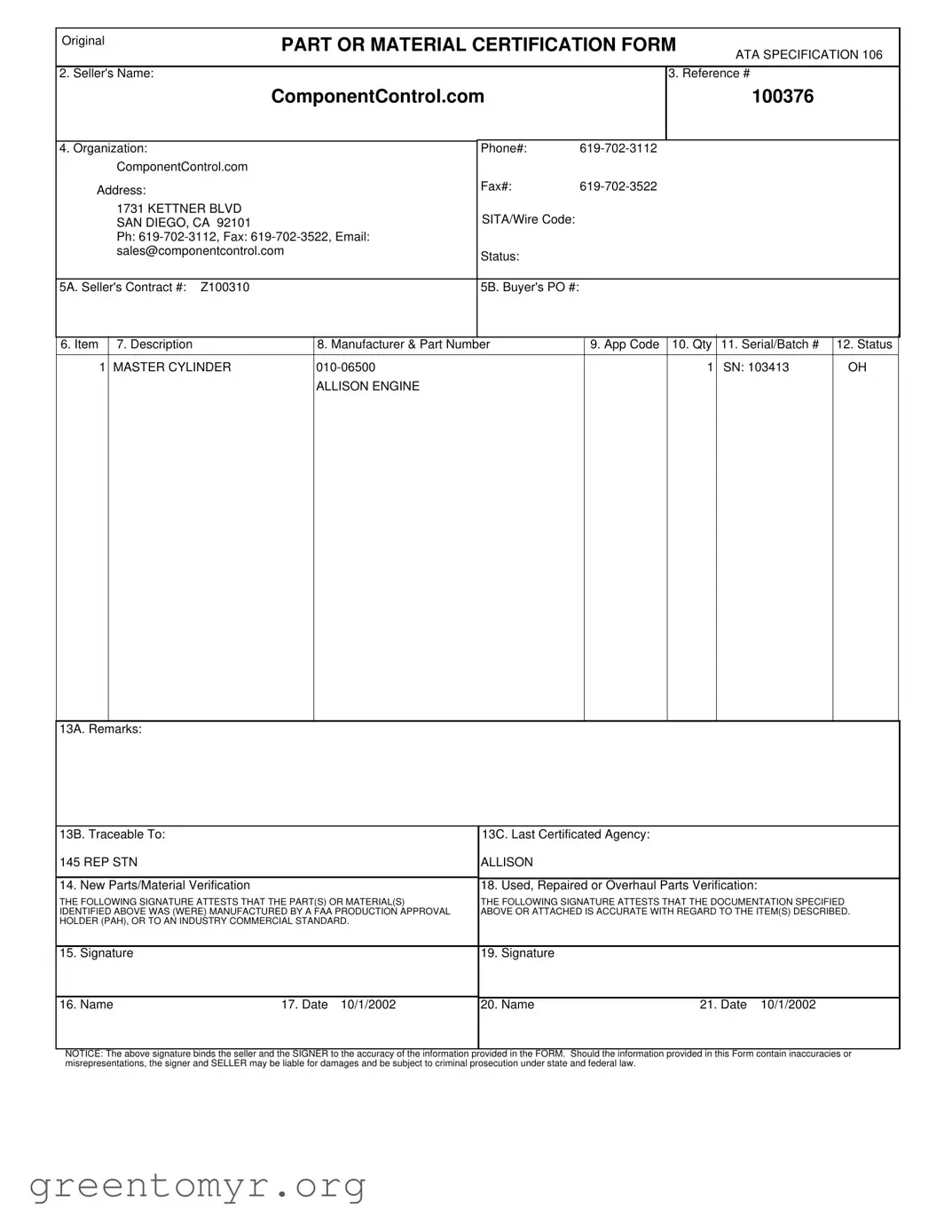
The ATA 106 form serves as an essential document for certifying the authenticity and compliance of parts or materials within the aviation industry. This form is crucial for sellers and buyers alike, as it provides a structured way to verify that components meet industry standards. Key elements of the form include the seller's and buyer's information, such as names, addresses, and contact details, along with specific details about the item being certified. Each entry includes the manufacturer's part number, description, quantity, and serial or batch number. Additionally, the form requires verification of whether the parts are new, used, or have undergone repairs or overhauls. Signatures from authorized representatives bind the parties to the accuracy of the information provided, emphasizing the importance of transparency and accountability in transactions. The form also includes a notice regarding the potential legal implications of inaccuracies, ensuring that all parties understand their responsibilities. Overall, the ATA 106 form plays a pivotal role in maintaining safety and compliance in the aviation sector.
Original |
PART OR MATERIAL CERTIFICATION FORM |
|
|
ATA SPECIFICATION 106 |
|
|
|
|
|
|
|
2. Seller's Name:
ComponentControl.com
3. Reference #
100376
4.Organization:
ComponentControl.com
Address:
1731 KETTNER BLVD SAN DIEGO, CA 92101
Ph:
Phone#:619-702-3112
Fax#:619-702-3522
SITA/Wire Code:
Status:
5A. Seller's Contract #: Z100310
5B. Buyer's PO #:
6. Item 7. Description |
8. Manufacturer & Part Number |
9. App Code 10. Qty |
11. Serial/Batch # |
12. Status |
|
|
|
|
|
1 MASTER CYLINDER |
1 |
SN: 103413 |
OH |
|
|
ALLISON ENGINE |
|
|
|
13A. |
Remarks: |
|
|
|
|
|
|
|
|
|
|
||
13B. |
Traceable To: |
|
13C. Last Certificated Agency: |
|
||
145 REP STN |
|
ALLISON |
|
|||
|
|
|
|
|
||
14. |
New Parts/Material Verification |
|
18. |
Used, Repaired or Overhaul Parts Verification: |
||
THE FOLLOWING SIGNATURE ATTESTS THAT THE PART(S) OR MATERIAL(S) |
THE FOLLOWING SIGNATURE ATTESTS THAT THE DOCUMENTATION SPECIFIED |
|||||
IDENTIFIED ABOVE WAS (WERE) MANUFACTURED BY A FAA PRODUCTION APPROVAL |
ABOVE OR ATTACHED IS ACCURATE WITH REGARD TO THE ITEM(S) DESCRIBED. |
|||||
HOLDER (PAH), OR TO AN INDUSTRY COMMERCIAL STANDARD. |
|
|
|
|||
|
|
|
|
|
|
|
15. |
Signature |
|
19. |
Signature |
|
|
|
|
|
|
|
|
|
16. |
Name |
17. Date 10/1/2002 |
20. |
Name |
21. Date 10/1/2002 |
|
|
|
|
|
|
|
|
NOTICE: The above signature binds the seller and the SIGNER to the accuracy of the information provided in the FORM. Should the information provided in this Form contain inaccuracies or misrepresentations, the signer and SELLER may be liable for damages and be subject to criminal prosecution under state and federal law.
| Fact Name | Details |
|---|---|
| Form Purpose | The ATA 106 form is used for certifying the authenticity and compliance of parts or materials in the aviation industry. |
| Seller Information | Seller's name is ComponentControl.com, located at 1731 Kettner Blvd, San Diego, CA 92101. |
| Contact Details | The seller can be reached at phone number 619-702-3112 or via email at [email protected]. |
| Contract and PO Numbers | The form includes the seller's contract number (Z100310) and the buyer's purchase order number. |
| Item Description | The form specifies the item as a master cylinder with part number 010-06500. |
| Serial Number | Each item must include a serial or batch number, which in this case is SN: 103413. |
| Verification of Parts | Sections 14 and 18 confirm whether the parts are new or have been used, repaired, or overhauled. |
| Signature Requirement | The form requires signatures from both the seller and the buyer, attesting to the accuracy of the information provided. |
| Legal Implications | Inaccuracies in the form can lead to liability for damages and potential criminal prosecution under state and federal law. |
Filling out the ATA 106 form is an important step in ensuring compliance with industry standards. This form requires specific information about the parts or materials being certified. Follow these steps carefully to complete the form accurately.
The ATA 106 form is used for certifying the authenticity and compliance of parts or materials in the aviation industry. It ensures that the items listed meet FAA production approval standards or industry commercial standards. This form serves as a declaration from the seller regarding the quality and traceability of the parts provided.
The seller of the aviation parts or materials is responsible for completing the ATA 106 form. This includes providing details such as the seller's name, contract number, and information about the items being sold. The form must be signed by authorized personnel to validate the accuracy of the information provided.
Key details required on the ATA 106 form include:
This information ensures that the parts are traceable and compliant with regulatory standards.
Inaccuracies or misrepresentations on the ATA 106 form can lead to serious consequences. The signer and seller may be held liable for damages. Additionally, they could face criminal prosecution under both state and federal law. It is crucial to ensure that all information is accurate and truthful to avoid legal repercussions.
The ATA 106 form can typically be obtained from the seller or manufacturer of the aviation parts. It may also be available through industry associations or regulatory bodies involved in aviation standards. Ensure that you have the most current version of the form to comply with regulatory requirements.
Filling out the ATA 106 form can seem straightforward, but many people make common mistakes that can lead to delays or complications. One frequent error is failing to provide complete information. Each section of the form is designed to capture specific details about the parts or materials being certified. Leaving any fields blank, such as the seller's contract number or the buyer's purchase order number, can create confusion and hinder the processing of the form.
Another mistake is not double-checking the accuracy of the information entered. Even minor typos in the part number or serial number can lead to significant issues down the line. It’s essential to verify that all details match the corresponding documents and records. This includes ensuring that the manufacturer and part number are correctly listed, as discrepancies can result in the rejection of the certification.
Many individuals also overlook the importance of signatures. The ATA 106 form requires signatures from both the seller and the buyer, along with their printed names and dates. Failing to include one of these signatures or providing an illegible name can invalidate the form. It is crucial to ensure that all signatures are clear and that the dates are accurate, reflecting the actual signing date.
In addition, some people neglect to provide the necessary remarks or traceability information. Sections 13A and 13B are vital for confirming the origin and history of the parts. Without this information, the form may lack the necessary context for verification, which could lead to compliance issues later on.
Another common pitfall is misunderstanding the distinction between new and used parts. Section 14 requires a clear indication of whether the parts are new or have been used, repaired, or overhauled. Misclassifying a part can lead to regulatory complications and potential liability. It’s important to accurately reflect the condition of the parts being certified.
Lastly, individuals sometimes underestimate the legal implications of the ATA 106 form. The notice at the bottom of the form indicates that the signer is responsible for the accuracy of the information provided. Misrepresentations can lead to legal repercussions, including potential criminal charges. Being aware of these responsibilities can help ensure that the form is completed with the utmost care and accuracy.
The ATA 106 form is an important document used in aviation to certify parts and materials. Along with this form, several other documents are often utilized to ensure compliance and maintain accurate records. Below is a list of these related forms and documents.
Each of these documents plays a crucial role in the aviation industry. They help ensure safety, compliance, and reliability in aircraft operations. Keeping accurate records and certifications is essential for both manufacturers and operators alike.
Filling out the ATA 106 form correctly is essential for ensuring compliance and accuracy. Here’s a list of things to do and avoid when completing this important document.
By following these guidelines, you can help ensure that your ATA 106 form is filled out correctly and effectively. Attention to detail is key in avoiding potential issues down the line.
The ATA 106 form is an important document in the aviation industry, specifically for certifying parts and materials. However, several misconceptions surround its use. Here are five common misunderstandings:
Understanding these misconceptions can help individuals and organizations navigate the complexities of aviation regulations more effectively. Proper use of the ATA 106 form is crucial for ensuring safety and compliance in the industry.
When filling out and using the ATA 106 form, it’s essential to ensure accuracy and compliance. Here are some key takeaways to keep in mind:
By following these guidelines, you can effectively complete the ATA 106 form and ensure compliance with relevant regulations.