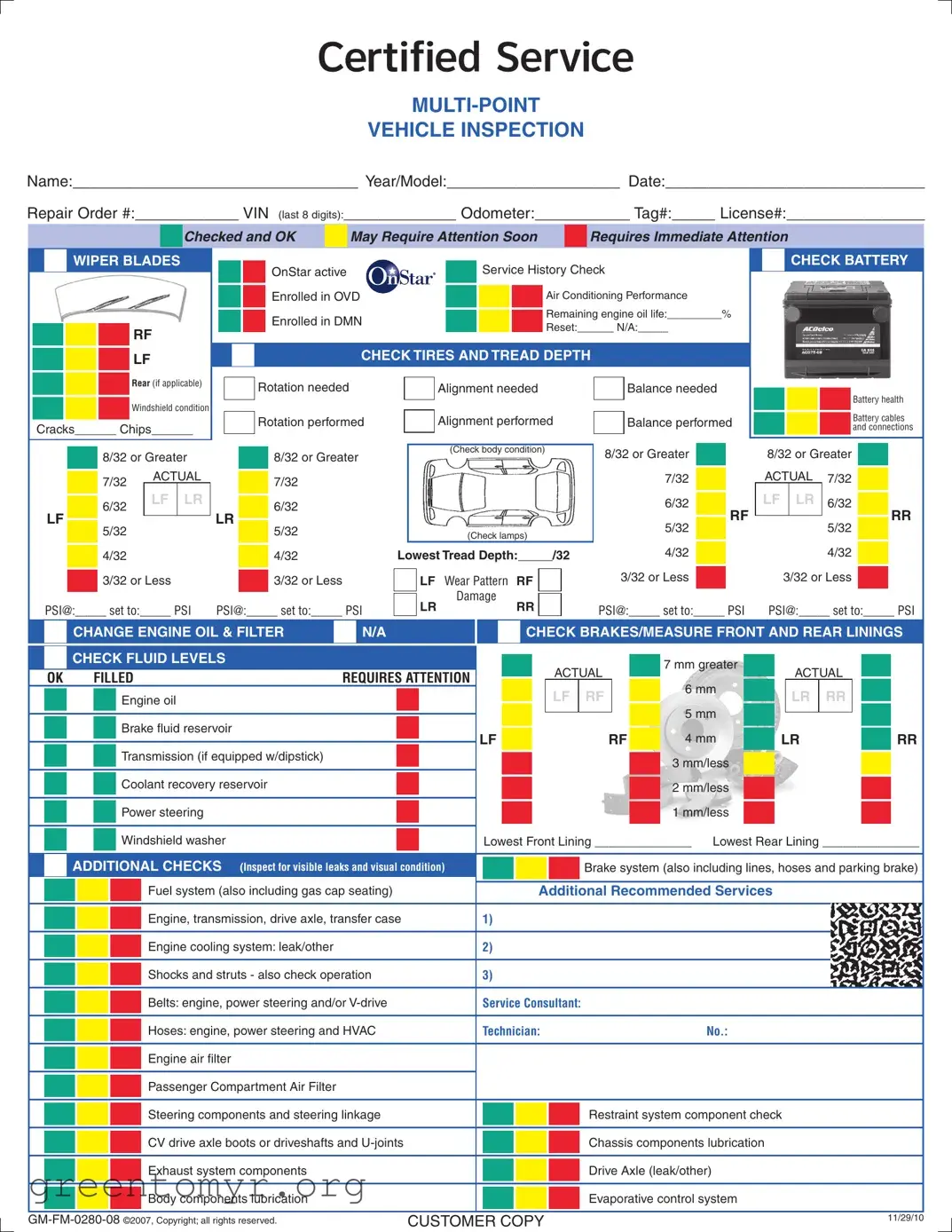
The Automobile Service Checklist form serves as a comprehensive guide for vehicle maintenance, ensuring that all essential components of a car are thoroughly inspected and evaluated. This form is structured to facilitate a multi-point vehicle inspection, beginning with basic vehicle identification details such as the owner's name, vehicle year and model, and the unique vehicle identification number (VIN). It includes a systematic approach to checking various critical systems, such as the wiper blades, air conditioning performance, and battery health. Tire condition is meticulously assessed, with attention to tread depth and pressure, while the engine oil level and brake linings are also monitored for optimal performance. Additionally, fluid levels for essential systems like coolant and power steering are checked, highlighting any areas that may require immediate attention or further maintenance. The checklist encourages regular upkeep by suggesting monthly and annual checks for the vehicle owner, emphasizing the importance of proactive maintenance to enhance vehicle longevity and safety. By utilizing this form, both service technicians and vehicle owners can collaborate effectively, ensuring that all necessary repairs and services are documented and addressed in a timely manner.
VEHICLE INSPECTION
Name:_________________________________ Year/Model:____________________ Date:______________________________
Repair Order #:____________ VIN (last 8 digits):_____________ Odometer:___________ Tag#:_____ License#:________________
|
|
Checked and OK |
|
May Require Attention Soon |
|
Requires Immediate Attention |
|
|
|
|
|
|
|
WIPER BLADES
RF LF
OnStar active |
|
|
Service History Check |
|||
Enrolled in OVD |
|
|
|
|
|
Air Conditioning Performance |
|
|
|
|
|
||
Enrolled in DMN |
|
|
|
|
|
Remaining engine oil life:_________% |
|
|
|
|
|
||
|
|
|
|
|
Reset:______ N/A:_____ |
|
|
|
|
|
|
|
|
CHECK TIRES AND TREAD DEPTH
CHECK BATTERY
Rear (if applicable) Windshield condition
Cracks______ Chips______
8/32 or Greater
7/32 ACTUAL
6/32 LF LR
LF
5/32
4/32
3/32 or Less PSI@:_____ set to:_____ PSI
Rotation needed
Rotation performed
8/32 or Greater 7/32
6/32
LR
5/32
4/32
3/32 or Less
PSI@:_____ set to:_____ PSI
Alignment needed
Alignment performed
(Check body condition)
(Check lamps)
Lowest Tread Depth:_____/32
LF Wear Pattern RF
Damage
LRRR
Balance needed
Balance performed
8/32 or Greater 7/32
6/32
RF
5/32
4/32 3/32 or Less
PSI@:_____ set to:_____ PSI
Battery health
Battery cables and connections
8/32 or Greater ACTUAL 7/32
LF LR 6/32
RR
5/32
4/32 3/32 or Less
PSI@:_____ set to:_____ PSI
|
|
CHANGE ENGINE OIL & FILTER |
N/A |
|
CHECK BRAKES/MEASURE FRONT AND REAR LININGS |
||||||||||||||||||||||||
|
|
|
|
|
|
|
|
|
|
|
|
|
|
|
|
|
|
|
|
|
|
|
|
|
|
|
|
|
|
|
|
CHECK FLUID LEVELS |
|
|
|
|
|
|
ACTUAL |
|
7 mm greater |
|
|
ACTUAL |
|
|
|||||||||||||
|
|
|
|
|
|
|
|
|
|
|
|
|
|||||||||||||||||
|
|
|
|
|
|
|
|
|
|
|
|
|
|
|
|
|
|
|
|
|
|||||||||
|
OK |
|
|
|
FILLED |
REQUIRES ATTENTION |
|
|
|
|
6 mm |
|
|
|
|
||||||||||||||
|
|
|
|
|
|
|
|
|
|||||||||||||||||||||
|
|
|
|
|
|
|
LF |
|
RF |
|
|
|
|
LR |
RR |
|
|
|
|||||||||||
|
|
|
|
|
|
|
|
Engine oil |
|
|
|
|
|
|
|
|
|
|
|
|
|
|
|||||||
|
|
|
|
|
|
|
|
|
|
|
|
|
|
|
|
|
|
|
|
||||||||||
|
|
|
|
|
|
|
|
|
|
|
|
|
|
|
|
|
5 mm |
|
|
|
|
|
|||||||
|
|
|
|
|
|
|
|
|
|
|
|
|
|
|
|
||||||||||||||
|
|
|
|
|
|
|
|
Brake fluid reservoir |
|
|
|
|
|
|
|
|
|
|
|
|
|
|
|
|
|
|
|
||
|
|
|
|
|
|
|
|
|
|
|
LF |
|
|
|
|
RF |
|
4 mm |
|
LR |
|
|
|
|
RR |
||||
|
|
|
|
|
|
|
|
|
|
|
|
|
|
|
|
|
|
|
|
|
|||||||||
|
|
|
|
|
|
|
|
|
|
|
|
|
|
|
|
|
|
|
|
|
|||||||||
|
|
|
|
|
|
|
|
|
|
|
|
|
|
|
|
|
|
|
|
|
|
|
|||||||
|
|
|
|
|
|
|
|
Transmission (if equipped w/dipstick) |
|
|
|
|
|||||||||||||||||
|
|
|
|
|
|
|
|
|
|
|
|
|
|
|
|
|
|
|
3 mm/less |
|
|
|
|
|
|
|
|
||
|
|
|
|
|
|
|
|
|
|
|
|
|
|
|
|
|
|
|
|
|
|
|
|
|
|
|
|
|
|
|
|
|
|
|
|
|
|
Coolant recovery reservoir |
|
|
|
|
|
|
|
|
|
|
|
2 mm/less |
|
|
|
|
|
|
|
|
|
|
|
|
|
|
|
|
|
|
|
|
|
|
|
|
|
|
|
|
|
|
|
|
|
|
|
|
|||
|
|
|
|
|
|
|
|
|
|
|
|
|
|
|
|
|
|
|
|
|
1 mm/less |
|
|
|
|
|
|
|
|
|
|
|
|
|
|
|
|
Power steering |
|
|
|
|
|
|
|
|
|
|
|
|
|
|
|
|
|
|
|
||
|
|
|
|
|
|
|
|
|
|
|
|
|
|
|
|
|
|
|
|
|
|
|
|
|
|
|
|||
|
|
|
|
|
|
|
|
|
|
|
|
|
|
|
|
|
|
|
|
|
|
|
|
|
|
|
|
|
|
|
|
|
|
|
|
|
|
Windshield washer |
|
|
|
Lowest Front Lining ______________ Lowest Rear Lining ______________ |
|||||||||||||||||
|
|
|
|
|
|
|
|
|
|
|
|
|
|
|
|
|
|
|
|
|
|
|
|
|
|
|
|
|
|
|
|
ADDITIONAL CHECKS (Inspect for visible leaks and visual condition) |
|
|
|
|
|
Brake system (also including lines, hoses and parking brake) |
|||||||||||||||||||||
|
|
|
|
|
|
|
|
|
|
|
|
|
|
|
|
|
|
|
|
|
|
|
|
|
|
|
|||
|
|
|
|
|
|
|
|
|
Fuel system (also including gas cap seating) |
|
|
Additional Recommended Services |
|
|
|
|
|
|
|
||||||||||
|
|
|
|
|
|
|
|
|
|
|
|
|
|
|
|
|
|
|
|
|
|
|
|
|
|
|
|
|
|
|
|
|
|
|
|
|
|
|
Engine, transmission, drive axle, transfer case |
1) |
|
|
|
|
|
|
|
|
|
|
|
|
|
|
|
|
|||
|
|
|
|
|
|
|
|
|
|
|
|
|
|
|
|
|
|
|
|
|
|
|
|
|
|
|
|
|
|
|
|
|
|
|
|
|
|
|
Engine cooling system: leak/other |
|
|
|
2) |
|
|
|
|
|
|
|
|
|
|
|
|
|
|
|
|
|
|
|
|
|
|
|
|
|
|
|
|
|
|
|
|
|
|
|
|
|
|
|
|
|
|
|
|
||
|
|
|
|
|
|
|
|
|
|
|
|
|
|
|
|
|
|
|
|
|
|
|
|
|
|
|
|
|
|
|
|
|
|
|
|
|
|
|
Shocks and struts - also check operation |
3) |
|
|
|
|
|
|
|
|
|
|
|
|
|
|
|
|
|||
|
|
|
|
|
|
|
|
|
|
|
|
|
|
|
|
|
|
|
|
|
|
|
|
|
|||||
|
|
|
|
|
|
|
|
|
|
|
|
|
|
|
|
|
|
|
|
|
|
|
|
|
|
|
|
|
|
|
|
|
|
|
|
|
|
|
Belts: engine, power steering and/or |
Service Consultant: |
|
|
|
|
|
|
|
|
|
|
|
|
|||||||
|
|
|
|
|
|
|
|
|
|
|
|
|
|
|
|
|
|
|
|
|
|||||||||
|
|
|
|
|
|
|
|
|
|
|
|
|
|
|
|
|
|
|
|
|
|
|
|
|
|
|
|
|
|
|
|
|
|
|
|
|
|
|
Hoses: engine, power steering and HVAC |
Technician: |
|
|
|
No.: |
|
|
|
|
|
|
|
||||||||
|
|
|
|
|
|
|
|
|
|
|
|
|
|
|
|
|
|
|
|||||||||||
|
|
|
|
|
|
|
|
|
|
|
|
|
|
|
|
|
|
|
|
|
|
|
|
|
|
|
|
|
|
|
|
|
|
|
|
|
|
|
Engine air filter |
|
|
|
|
|
|
|
|
|
|
|
|
|
|
|
|
|
|
|
|
|
|
|
|
|
|
|
|
|
|
|
|
|
|
|
|
|
|
|
|
|
|
|
|
|
|
|
|
|
|
|
|
|
|
|
|
|
|
|
|
|
|
|
|
|
|
|
|
|
|
|
|
|
|
|
|
|
|
|
|
|
|
|
|
|
|
|
|
|
Passenger Compartment Air Filter |
|
|
|
|
|
|
|
|
|
|
|
|
|
|
|
|
|
|
|
|
|
|
|
|
|
|
|
|
|
|
|
|
|
|
|
|
|
|
|
|
|
|
|
|
|
|
|
|
|
|
|
|
|
|
|
|
|
|
|
|
|
|
|
|
|
|
|
|
|
|
|
|
|
|
|
|||||
|
|
|
|
|
|
|
|
|
Steering components and steering linkage |
|
|
|
|
|
Restraint system component check |
|
|
|
|
|
|||||||||
|
|
|
|
|
|
|
|
|
|
|
|
|
|
|
|
|
|
|
|||||||||||
|
|
|
|
|
|
|
|
|
|
|
|
|
|
|
|
|
|
|
|
|
|
|
|
|
|
||||
|
|
|
|
|
|
|
|
|
CV drive axle boots or driveshafts and |
|
|
|
|
|
Chassis components lubrication |
|
|
|
|
|
|
|
|||||||
|
|
|
|
|
|
|
|
|
|
|
|
|
|
|
|
|
|
|
|
|
|||||||||
|
|
|
|
|
|
|
|
|
|
|
|
|
|
|
|
|
|
|
|
|
|
|
|
|
|
|
|
|
|
|
|
|
|
|
|
|
|
|
Exhaust system components |
|
|
|
|
|
|
|
|
Drive Axle (leak/other) |
|
|
|
|
|
|
|
||||
|
|
|
|
|
|
|
|
|
|
|
|
|
|
|
|
|
|
|
|
|
|
|
|
||||||
|
|
|
|
|
|
|
|
|
|
|
|
|
|
|
|
|
|
|
|
|
|
|
|
|
|
|
|
|
|
|
|
|
|
|
|
|
|
|
Body components lubrication |
|
|
|
|
|
|
|
|
Evaporative control system |
|
|
|
|
|
|
|
||||
|
|
|
|
|
|
|
|
|
|
|
|
|
|
|
|
|
|
|
|
|
|
|
|
||||||
|
|
|
|
|
|
|
|
|
|
|
|
|
|
|
|
|
|
|
|
|
|
|
|
|
|
|
|
|
|
CUSTOMER COPY |
11/29/10 |
|
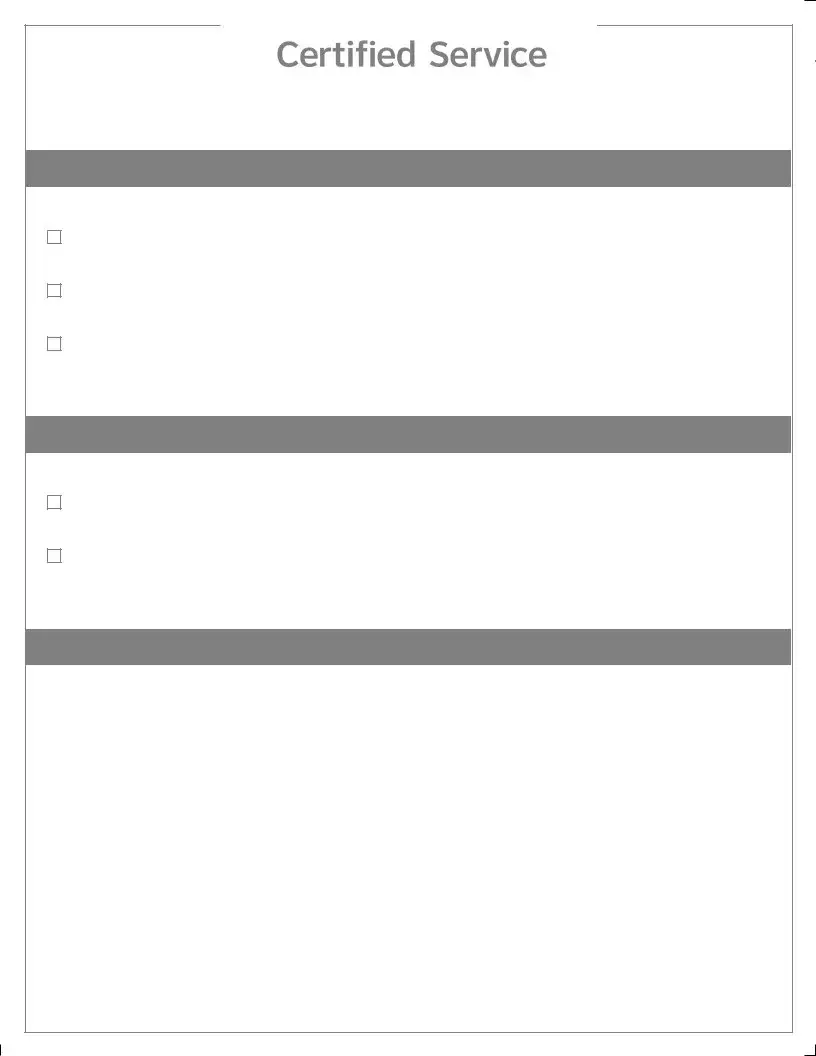
VEHICLE OWNER CHECKLIST
AT EACH FUEL STOP
Engine oil level check
Engine coolant level check
Windshield washer fluid level check
ONCE A MONTH
Tire inflation check
Tire wear inspection
ONCE A YEAR
Refer to your vehicle owner’s manual for additional required services. Visit your GM Goodwrench Dealer’s Service Department to assist you with these maintenance needs.
| Fact Name | Description |
|---|---|
| Purpose | The Automobile Service Checklist is designed to ensure comprehensive vehicle inspections, promoting safety and performance. |
| Components | It includes checks for wiper blades, tires, brakes, fluid levels, and battery health among others. |
| Categories | Each inspection item is categorized into three statuses: Checked and OK, May Require Attention Soon, and Requires Immediate Attention. |
| Maintenance Frequency | Regular checks are recommended at each fuel stop, monthly, and annually, as per the vehicle owner’s manual. |
| State-Specific Forms | Some states may require specific forms governed by local vehicle maintenance laws, such as California Vehicle Code § 24002. |
| Consultation | The form encourages consultation with a certified technician for optimal vehicle maintenance and service recommendations. |
Filling out the Automobile Service Checklist form is a straightforward process. This form helps keep track of your vehicle’s maintenance and service needs. By following the steps below, you can ensure that all necessary information is accurately recorded.
The Automobile Service Checklist form is designed to help vehicle owners keep track of their car's maintenance needs. It provides a structured way to assess the condition of various components, such as tires, brakes, and fluid levels. By using this checklist, vehicle owners can identify issues that may require immediate attention or those that may need attention soon, ensuring their vehicle remains safe and reliable.
To fill out the form, start by entering your vehicle's information, including the name, year, model, and VIN. As you or a technician inspect each component, mark the appropriate box to indicate its condition. Use the categories: "Checked and OK," "May Require Attention Soon," and "Requires Immediate Attention." This will help prioritize any maintenance or repairs needed.
It is recommended to use the checklist during regular maintenance visits, typically every 5,000 to 7,500 miles, depending on your vehicle's requirements. Additionally, you should conduct a quick inspection at each fuel stop for critical items like oil and coolant levels. Monthly tire checks and annual inspections as outlined in your vehicle owner's manual are also advisable.
The checklist covers several key areas, including:
Each section prompts you to assess the condition and note any required actions.
If the checklist indicates that your vehicle requires immediate attention, it is crucial to address the issue as soon as possible. This may involve scheduling a visit to a mechanic or service center. Ignoring these warnings can lead to more severe problems, increased repair costs, and safety hazards.
Yes, the Automobile Service Checklist can be used for various vehicle models. However, it is important to refer to your specific vehicle owner's manual for any unique maintenance requirements or recommendations. This ensures that you are following the best practices for your particular make and model.
Completing the Automobile Service Checklist form is crucial for ensuring vehicle safety and performance. However, individuals often make several common mistakes that can lead to incomplete or inaccurate information. One frequent error is neglecting to fill in the vehicle identification number (VIN). This number is essential for tracking the vehicle's service history and ensuring that the correct vehicle is being referenced.
Another mistake is failing to provide the odometer reading. This information is necessary for assessing the vehicle's usage and determining when certain maintenance tasks should be performed. Without this detail, service providers may struggle to offer the most accurate recommendations.
Many people also overlook the importance of checking the tire pressure. Inaccurate tire pressure can lead to safety hazards and decreased fuel efficiency. When filling out the form, it is vital to measure and record the PSI for each tire accurately. Skipping this step can result in missed maintenance opportunities.
In addition, individuals sometimes forget to indicate whether certain items require attention. The checklist includes sections for items that are "Checked and OK," "May Require Attention Soon," and "Requires Immediate Attention." Failing to mark these appropriately can lead to critical issues being overlooked.
Another common oversight is neglecting to check the fluid levels thoroughly. The checklist prompts users to inspect engine oil, brake fluid, coolant, and other essential fluids. Incomplete checks may result in potential vehicle malfunctions that could have been prevented.
Some users may also misinterpret the instructions for measuring brake linings. It is crucial to follow the guidelines precisely to ensure accurate measurements. Misunderstanding this process can lead to safety risks if the brakes are not adequately maintained.
Additionally, individuals often fail to document the service history accurately. This information is vital for understanding the vehicle's maintenance needs and can help identify recurring issues. Omitting this detail can hinder effective communication with service providers.
Lastly, a frequent mistake is not signing or dating the form. Completing the checklist is not just about filling in the blanks; it is also about confirming that the information provided is accurate and up to date. A signature and date affirm the commitment to proper vehicle maintenance.
The Automobile Service Checklist form is an essential tool for vehicle maintenance, ensuring that all critical components of a vehicle are inspected regularly. However, it is often accompanied by various other forms and documents that enhance the service experience and provide valuable information for both service providers and vehicle owners. Below is a list of documents that are commonly used alongside the Automobile Service Checklist.
By utilizing these documents in conjunction with the Automobile Service Checklist, both service providers and vehicle owners can foster a clearer understanding of vehicle maintenance needs. This collaborative approach enhances the overall service experience and promotes the longevity of the vehicle.
When filling out the Automobile Service Checklist form, it’s important to approach the task with care. Here are six things you should and shouldn’t do:
Misconceptions about the Automobile Service Checklist form can lead to misunderstandings regarding vehicle maintenance. Here are ten common misconceptions, along with clarifications:
Understanding these misconceptions is vital for effective vehicle maintenance. Regularly reviewing the checklist can help ensure that your vehicle remains in optimal condition.