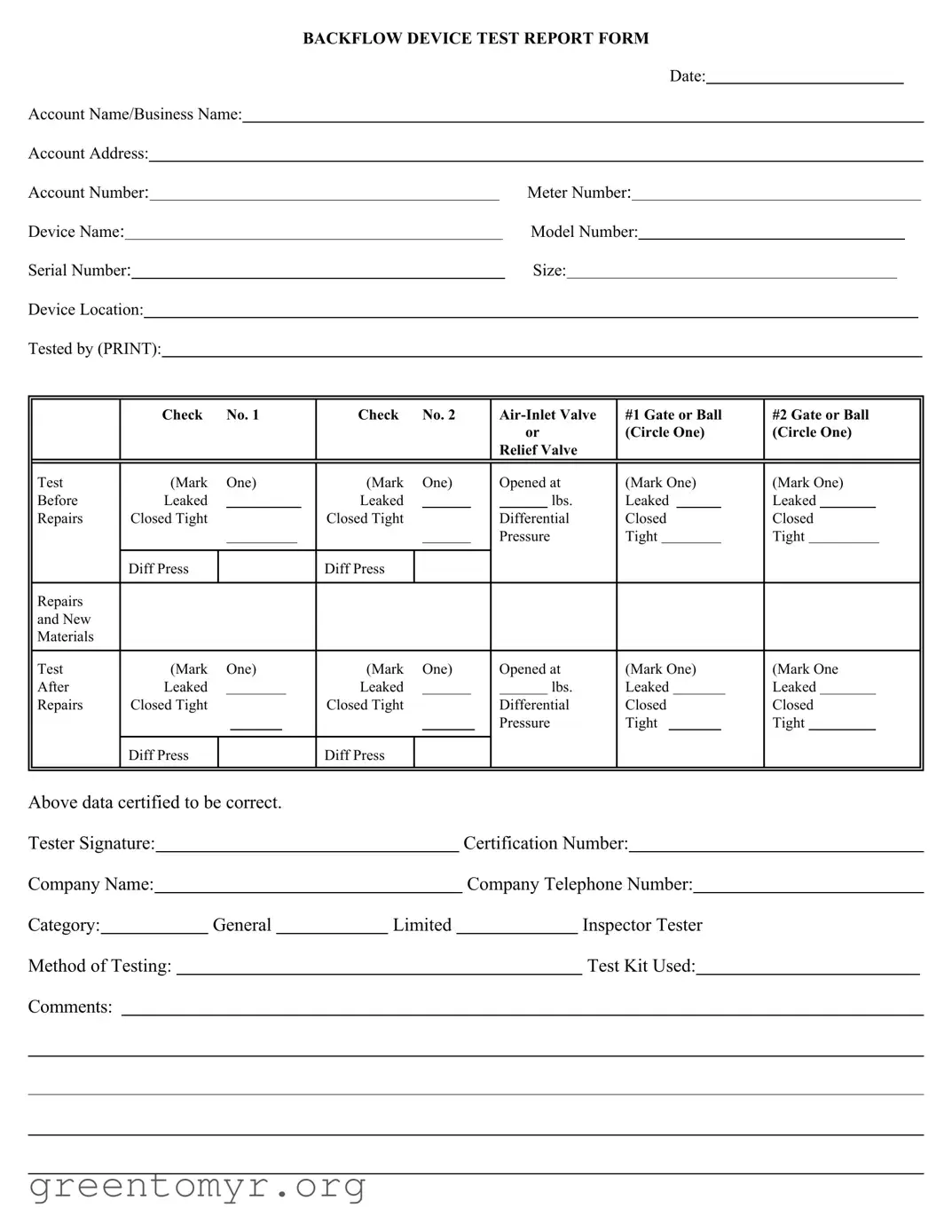
The Backflow Test Report form serves as a crucial document in ensuring the safety and integrity of a water supply system. It captures essential information related to the testing of backflow prevention devices, which are designed to prevent the reverse flow of contaminated water into clean water supplies. Key details recorded on the form include the date of the test, the account name and address, and specific identifiers such as the account number and meter number. Additionally, the form requires information about the backflow device itself, including its name, model number, serial number, and size, along with the location where the device is installed. The tester's name, certification number, and company details are also documented to ensure accountability. Various test results are meticulously recorded, including the performance of air-inlet valves and relief valves, with options to indicate whether each component leaked or remained closed tight. The form also provides space for noting any repairs made and the method of testing employed. By compiling all this information, the Backflow Test Report form not only helps maintain compliance with local regulations but also safeguards public health by ensuring that backflow prevention devices function correctly.

BACKFLOW DEVICE TEST REPORT FORM
Date:
Account Name/Business Name:
Account Address:
Account Number: |
|
|
|
|
|
|
|
|
|
|
|
|
|
|
|
|
|
|
|
|
Meter Number: |
|
|
|
|
|
|
|
|
||||||||||||||||||||||
Device Name: |
|
|
|
|
|
|
|
|
|
|
|
|
|
|
|
|
|
|
|
|
|
|
|
|
|
|
Model Number: |
|
|
|
|
|
|
|
|
||||||||||||||||
Serial Number: |
|
|
|
|
|
|
|
|
|
|
|
|
|
|
|
|
|
|
|
|
Size: |
|
|
|
|
|
|
|
|
|
|
|
|
|
|
|
|
|
|
|
|
|
|||||||||
Device Location: |
|
|
|
|
|
|
|
|
|
|
|
|
|
|
|
|
|
|
|
|
|
|
|
|
|
|
|
|
|
|
|
|
|
|
|
|
|
|
|
|
|
|
|
||||||||
Tested by (PRINT): |
|
|
|
|
|
|
|
|
|
|
|
|
|
|
|
|
|
|
|
|
|
|
|
|
|
|
|
|
|
|
|
|
|
|
|
|
|
|
|
|
|
|
|||||||||
|
|
|
|
|
|
|
|
|
|
|
|
|
|
|
|
|
|
|
|
|
|
|
|
|
|
|
|
|
|
|
|
|
|
|
|
|
|
|
|
|
|
|
|
|
|
|
|
|
|
|
|
|
|
|
|
|
|
|
|
CHECK |
|
|
NO. 1 |
CHECK |
|
NO. 2 |
|
|
|
|
#1 GATE OR BALL |
#2 GATE OR BALL |
|||||||||||||||||||||||||||||||
|
|
|
|
|
|
|
|
|
|
|
|
|
|
|
|
|
|
|
|
|
|
|
|
|
|
|
|
|
OR |
|
|
(CIRCLE ONE) |
(CIRCLE ONE) |
||||||||||||||||||
|
|
|
|
|
|
|
|
|
|
|
|
|
|
|
|
|
|
|
|
|
|
|
|
|
|
|
RELIEF VALVE |
|
|
|
|
|
|
|
|
|
|
|
|
|
|
|
|
|
|
|
|
||||
|
|
|
|
|
|
|
|
|
|
|
|
|
|
|
|
|
|
|
|
|
|
|
|
|
|
|
|
|
|
|
|
|
|
|
|
|
|
|
|
|
|
|
|
|
|
|
|
|
|
|
|
Test |
|
|
|
|
|
|
(Mark |
|
|
One) |
(Mark |
|
One) |
|
|
|
|
Opened at |
|
|
(Mark One) |
(Mark One) |
|||||||||||||||||||||||||||||
Before |
|
|
|
|
|
|
Leaked |
|
|
|
|
|
|
|
|
|
Leaked |
|
|
|
|
|
|
|
|
|
lbs. |
|
|
Leaked |
|
|
Leaked |
|
|
||||||||||||||||
Repairs |
|
Closed Tight |
|
|
|
|
|
|
|
|
|
Closed Tight |
|
|
|
|
|
|
Differential |
|
|
Closed |
Closed |
||||||||||||||||||||||||||||
|
|
|
|
|
|
|
|
|
|
|
|
|
|
|
|
|
|
|
|
|
|
|
|
|
|
|
Pressure |
|
|
Tight |
Tight |
||||||||||||||||||||
|
|
|
|
|
|
|
|
|
|
|
|
|
|
|
|
|
|
|
|
|
|
|
|
|
|
|
|
|
|
|
|
|
|
|
|
|
|
|
|
|
|
|
|
|
|
|
|
|
|
|
|
|
|
|
Diff Press |
|
|
|
|
|
|
|
|
|
Diff Press |
|
|
|
|
|
|
|
|
|
|
|
|
|
|
|
|
|
|
|
|
|
|
|
|
|
|
|
|
|
|
|
|||||||
|
|
|
|
|
|
|
|
|
|
|
|
|
|
|
|
|
|
|
|
|
|
|
|
|
|
|
|
|
|
|
|
|
|
|
|
|
|
|
|
|
|
|
|
|
|
|
|
|
|
|
|
Repairs |
|
|
|
|
|
|
|
|
|
|
|
|
|
|
|
|
|
|
|
|
|
|
|
|
|
|
|
|
|
|
|
|
|
|
|
|
|
|
|
|
|
|
|
|
|
|
|
|
|
|
|
and New |
|
|
|
|
|
|
|
|
|
|
|
|
|
|
|
|
|
|
|
|
|
|
|
|
|
|
|
|
|
|
|
|
|
|
|
|
|
|
|
|
|
|
|
|
|
|
|
|
|
|
|
Materials |
|
|
|
|
|
|
|
|
|
|
|
|
|
|
|
|
|
|
|
|
|
|
|
|
|
|
|
|
|
|
|
|
|
|
|
|
|
|
|
|
|
|
|
|
|
|
|
|
|
|
|
|
|
|
|
|
|
|
|
|
|
|
|
|
|
|
|
|
|
|
|
|
|
|
|
|
|
|
|
|
|
|
|
|
|
|
|
|
|
|
|
|
|
|
|
|
|
|
|
|
|
|
|
Test |
|
|
|
|
|
|
(Mark |
|
|
One) |
(Mark |
|
One) |
|
|
|
|
Opened at |
|
|
(Mark One) |
(Mark One |
|||||||||||||||||||||||||||||
After |
|
|
|
|
|
|
Leaked |
|
|
|
|
|
|
|
|
|
Leaked |
|
|
|
|
|
|
|
|
|
lbs. |
|
|
Leaked |
|
|
Leaked |
|
|
||||||||||||||||
Repairs |
|
Closed Tight |
|
|
|
|
|
|
|
|
|
Closed Tight |
|
|
|
|
|
|
Differential |
|
|
Closed |
Closed |
||||||||||||||||||||||||||||
|
|
|
|
|
|
|
|
|
|
|
|
|
|
|
|
|
|
|
|
|
|
|
|
|
|
|
Pressure |
|
|
Tight |
Tight |
||||||||||||||||||||
|
|
|
|
|
|
|
|
|
|
|
|
|
|
|
|
|
|
|
|
|
|
|
|
|
|
|
|
|
|
|
|
|
|
|
|
|
|
|
|
|
|
|
|
|
|
|
|
|
|
|
|
|
|
|
Diff Press |
|
|
|
|
|
|
|
|
|
Diff Press |
|
|
|
|
|
|
|
|
|
|
|
|
|
|
|
|
|
|
|
|
|
|
|
|
|
|
|
|
|
|
|
|||||||
|
|
|
|
|
|
|
|
|
|
|
|
|
|
|
|
|
|
|
|
|
|
|
|
|
|
|
|
|
|
|
|
|
|
|
|
|
|
|
|
|
|
|
|
|
|
|
|
|
|
||
|
|
|
|
|
|
|
|
|
|
|
|
|
|
|
|
|
|
|
|
|
|
|
|
|
|
|
|
|
|
|
|
|
|
|
|
|
|
|
|
|
|
|
|
|
|
|
|
|
|
|
|
Above data certified to be correct. |
|
|
|
|
|
|
|
|
|
|
|
|
|
|
|
|
|
|
|
|
|
|
|
|
|
|
|
|
|
|
|
|
|
||||||||||||||||||
Tester Signature: |
|
|
|
|
|
|
|
|
|
|
|
|
|
Certification Number: |
|
|
|
|
|
|
|
||||||||||||||||||||||||||||||
|
|
|
|
|
|
|
|
|
|
|
|
|
|
|
|
|
|
|
|
|
|
|
|
|
|
|
|
|
|||||||||||||||||||||||
Company Name: |
|
|
|
|
|
|
|
|
|
|
|
|
|
|
Company Telephone Number: |
|
|
|
|
|
|
|
|||||||||||||||||||||||||||||
|
|
|
|
|
|
|
|
|
|
|
|
|
|
|
|
|
|
|
|
|
|
|
|
|
|
|
|
|
|
|
|
|
|||||||||||||||||||
Category: |
|
|
|
|
|
|
|
|
General |
|
|
Limited |
|
|
|
|
|
|
|
|
|
Inspector Tester |
|
|
|
|
|
|
|
||||||||||||||||||||||
Method of Testing: |
|
|
|
|
|
|
|
|
|
|
|
|
|
|
|
|
|
|
|
|
|
|
|
Test Kit Used: |
|
|
|
|
|
|
|
||||||||||||||||||||
Comments: |
|
|
|
|
|
|
|
|
|
|
|
|
|
|
|
|
|
|
|
|
|
|
|
|
|
|
|
|
|
|
|
|
|
|
|
|
|
|
|
|
|
|
|
|
|
|
|
|
|
||
|
|
|
|
|
|
|
|
|
|
|
|
|
|
|
|
|
|
|
|
|
|
|
|
|
|
|
|
|
|
|
|
|
|
|
|
|
|
|
|
|
|
|
|
|
|
|
|
|
|
|
|
|
|
|
|
|
|
|
|
|
|
|
|
|
|
|
|
|
|
|
|
|
|
|
|
|
|
|
|
|
|
|
|
|
|
|
|
|
|
|
|
|
|
|
|
|
|
|
|
|
|
|
|
|
|
|
|
|
|
|
|
|
|
|
|
|
|
|
|
|
|
|
|
|
|
|
|
|
|
|
|
|
|
|
|
|
|
|
|
|
|
|
|
|
|
|
|
|
|
|
|
|
|
|
|
|
|
|
|
|
|
|
|
|
|
|
|
|
|
|
|
|
|
|
|
|
|
|
|
|
|
|
|
|
|
|
|
|
|
|
|
|
|
|
|
|
|
|
|
|
|
|
|
|
|
|
|
| Fact Name | Description |
|---|---|
| Purpose | The Backflow Test Report form is used to document the testing of backflow prevention devices, ensuring they function correctly to protect water supply systems. |
| Required Information | The form requires details such as the date, account name, account address, and device specifications including model and serial numbers. |
| Testing Process | During testing, the technician checks various components of the device, marking whether they opened, leaked, or closed tightly. |
| Certification | The tester must sign the report, certifying that the data provided is accurate. A certification number is also required for validation. |
| Governing Laws | In many states, backflow testing is governed by local plumbing codes and regulations. For example, California's law requires annual testing of backflow devices. |
| Categories of Testers | The form distinguishes between different categories of testers, including general inspectors and certified testers, each with specific qualifications. |
| Comments Section | A comments section is included for additional notes or observations made by the tester during the inspection. |
Completing the Backflow Test Report form is an essential step in ensuring the safety and functionality of backflow prevention devices. After filling out this form, it will be submitted to the appropriate regulatory authority to confirm that the testing has been performed according to the required standards.
The Backflow Test Report form is used to document the testing of backflow prevention devices. It ensures that these devices are functioning correctly to prevent contaminated water from flowing back into the clean water supply. Proper documentation is essential for compliance with local regulations and for maintaining public health standards.
The form requires several key pieces of information, including:
Only certified professionals can conduct backflow tests. These individuals may be inspectors or testers who have completed the necessary training and hold a valid certification. It is crucial to ensure that the person performing the test is qualified to guarantee accurate results.
Backflow tests should typically be conducted annually. However, local regulations may vary, and some jurisdictions may require more frequent testing. It is essential to check with local authorities to determine the specific requirements for your area.
The test results indicate whether the backflow prevention device is functioning properly. The form includes sections to note if the device leaked, if it opened and closed tightly, and if any repairs were needed. A properly functioning device will show no leaks and will maintain the required pressure levels.
If repairs are indicated on the report, they should be addressed promptly. The tester will usually provide recommendations for repairs or replacements. Once repairs are made, the device must be retested to ensure it meets the required standards.
The Backflow Test Report form is designed for a single device. If you have multiple devices to test, you will need to complete a separate form for each one. This ensures that all necessary information is accurately recorded for each device.
After completing the Backflow Test Report form, it should be submitted to the appropriate local authority or water department. Some jurisdictions may also require a copy to be kept on file at the business or property where the device is located.
The form includes a section for comments. You can use this space to provide any additional information that may be relevant to the test or the device. This could include notes about the testing conditions, any unusual findings, or specific recommendations from the tester.
Filling out the Backflow Test Report form correctly is crucial for ensuring compliance and safety. However, many people make common mistakes that can lead to issues down the line. Here are five frequent errors to avoid.
One major mistake is not providing complete information. Each section of the form requires specific details, such as the account name, address, and device information. Omitting any of this data can create confusion and may delay processing. Always double-check that every field is filled out accurately.
Another common error is failing to mark the test results correctly. When indicating whether components like the air-inlet valve or relief valve leaked, it's essential to mark the appropriate boxes clearly. Misinterpretation of these results can lead to incorrect conclusions about the backflow device's functionality. Take your time to ensure that each check is made accurately.
People often overlook the importance of the tester’s signature. This signature certifies that the information provided is accurate and that the testing was conducted properly. Without it, the report may be deemed invalid. Ensure that the tester prints their name and signs the document before submission.
In addition, many individuals forget to include the certification number of the tester. This number is essential for verifying the credentials of the person conducting the test. If this detail is missing, it may raise questions about the legitimacy of the test results. Always include this number to avoid complications.
Lastly, some people neglect to add comments or notes regarding the testing process. This section can provide valuable context, especially if any issues arose during testing or if repairs were made. Including this information can help clarify the report and provide insights for future reference. Make sure to utilize this space effectively.
When dealing with backflow prevention systems, several documents accompany the Backflow Test Report form to ensure compliance and proper record-keeping. Each of these documents plays a crucial role in maintaining water safety and system integrity. Below are some key forms that are often used alongside the Backflow Test Report.
Each of these documents contributes to a comprehensive understanding of the backflow prevention system's status and compliance. Proper documentation not only helps ensure safety but also aids in regulatory compliance and maintenance of high standards in water management.
The Backflow Test Report form serves a specific purpose in documenting the testing of backflow prevention devices. Several other documents share similarities in structure and function. Below are four such documents:
When filling out the Backflow Test Report form, attention to detail is crucial. Here are some important do's and don'ts to keep in mind:
By following these guidelines, you can help ensure that the Backflow Test Report is filled out correctly and efficiently.
Understanding the Backflow Test Report form is essential for both property owners and professionals involved in maintaining water safety. However, several misconceptions can lead to confusion. Here are ten common misunderstandings:
By dispelling these misconceptions, property owners and testers can ensure they are compliant with regulations and maintain safe water systems.
Filling out and using the Backflow Test Report form is straightforward. Here are some key takeaways to keep in mind: