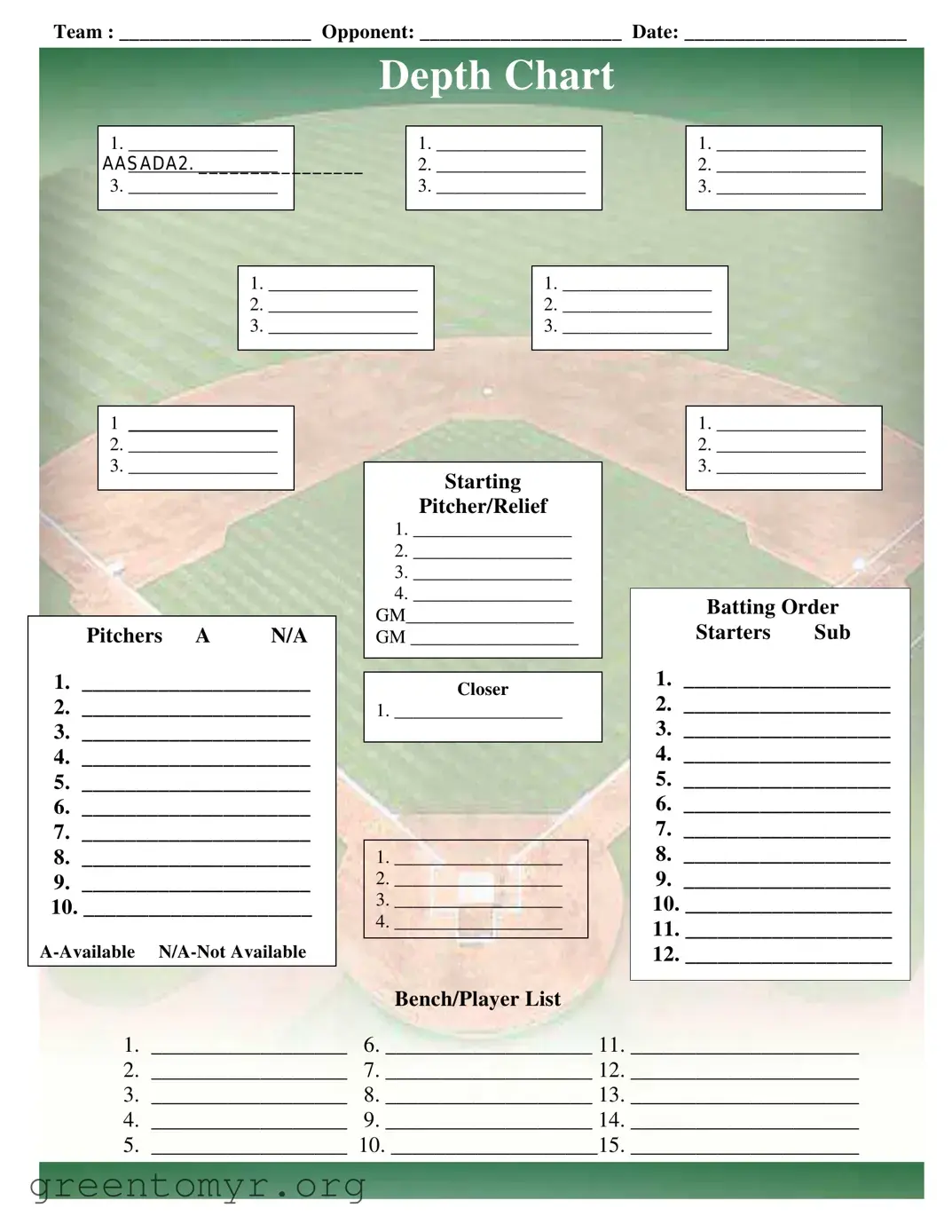
The Baseball Field Lineup form serves as a crucial tool for coaches and team managers, providing a structured way to organize players and strategize for upcoming games. At the top of the form, essential details such as the team name, opponent, and date set the stage for the match. Below this, the lineup section allows coaches to list players in a specific batting order, ensuring that each athlete knows their role on game day. The depth chart further aids in planning by categorizing players into different positions, from starters to substitutes, which helps in making quick decisions during the game. Additionally, a designated area for pitchers highlights their availability, categorizing them as either available or not available, which is vital for managing pitching rotations effectively. The form also includes sections for the starting pitcher, relief pitchers, and closers, ensuring that every aspect of the pitching strategy is well thought out. Finally, the bench/player list allows for a comprehensive overview of all team members, ensuring that no player is overlooked. This form not only streamlines communication but also enhances the overall efficiency of game preparation.
Team : ___________________ Opponent: ____________________ Date: ______________________
|
|
|
Depth Chart |
||
|
|
|
|
|
|
1. ________________ |
|
|
1. ________________ |
|
|
AASADA2. |
. ________________ |
|
2. ________________ |
|
|
3. ________________ |
|
|
3. ________________ |
|
|
|
|
|
|
|
|
1.________________
2.________________
3.________________
1.________________
2.________________
3.________________
1.________________
2.________________
3.________________
1________________
2.________________
3.________________
Pitchers A |
N/A |
1._____________________
2._____________________
3._____________________
4._____________________
5._____________________
6._____________________
7._____________________
8._____________________
9._____________________
10. _____________________
Starting
Pitcher/Relief
1._________________
2._________________
3._________________
4._________________
GM__________________
GM __________________
Closer
1.__________________
__________________
1.__________________
2.__________________
3.__________________
4.__________________
1.________________
2.________________
3.________________
Batting Order
Starters Sub
1.___________________
2.___________________
3.___________________
4.___________________
5.___________________
6.___________________
7.___________________
8.___________________
9.___________________
10. ___________________
11. ___________________
12. ___________________
Bench/Player List
1.__________________ 6. ___________________ 11. _____________________
2.__________________ 7. ___________________ 12. _____________________
3.__________________ 8. ___________________ 13. _____________________
4.__________________ 9. ___________________ 14. _____________________
5.__________________ 10. ___________________15. _____________________
| Fact Name | Detail |
|---|---|
| Purpose | The Baseball Field Lineup form is used to organize player positions and roles for a game. |
| Team Information | Teams must fill in their name and the opponent’s name for clarity. |
| Date Requirement | The date of the game is required to maintain accurate records. |
| Depth Chart | Coaches list players in a depth chart to indicate their order of play and backup options. |
| Pitchers Section | This section identifies available pitchers, including a starting pitcher and relief options. |
| Availability Codes | Players are marked as "A" for available or "N/A" for not available. |
| Batting Order | The form includes a section for organizing the batting order, which is crucial for gameplay strategy. |
| Bench/Player List | A comprehensive list of players includes starters and substitutes to ensure all players are accounted for. |
| State-Specific Forms | Some states may have specific regulations governing the use of lineup forms; check local sports laws. |
| Record Keeping | Accurate completion of the form aids in record-keeping for future games and player statistics. |
Filling out the Baseball Field Lineup form is a straightforward process that ensures your team is organized and ready for the game. Follow the steps below to complete the form accurately.
The Baseball Field Lineup form is designed to organize and document the players participating in a game. It helps coaches and team managers keep track of the starting lineup, depth chart, pitching assignments, and batting order. This ensures that all players are accounted for and that the game runs smoothly.
At the top of the form, you will see fields labeled "Team" and "Opponent." Simply write the name of your team in the "Team" field and the name of the opposing team in the "Opponent" field. Additionally, include the date of the game in the designated space to provide context for the lineup.
The Depth Chart section allows you to list players in order of their positions and roles on the team. You should include at least three players for each position. This helps coaches understand the available options for substitutions and strategic decisions during the game. For example, if a starter is unavailable, you can quickly refer to the depth chart for alternatives.
In the Pitchers section of the form, you will see designations for "A" (Available) and "N/A" (Not Available). Next to each player’s name, mark whether they are available to pitch. This is crucial for planning your pitching strategy, as it allows you to know who can be called upon during the game.
The Starting Pitcher section is meant for the player who will begin the game on the mound. In contrast, the Relief section is for pitchers who may come in later to replace the starting pitcher. It is essential to differentiate between these roles, as it impacts game strategy and player management.
The Batting Order section is where you will list your players in the order they will bat during the game. You can include up to twelve players in this section. Start with your best hitters at the top of the order, as they will have the most opportunities to score runs. Ensure that the order reflects the strengths and weaknesses of your players for optimal performance.
When filling out the Baseball Field Lineup form, individuals often overlook crucial details that can lead to confusion or miscommunication during the game. One common mistake is failing to clearly write the team name and opponent’s name. Without this information, it becomes challenging to identify the context of the lineup, especially if the form is reviewed later. Ensuring that these fields are filled out legibly helps everyone involved understand the specifics of the matchup.
Another frequent error is neglecting to include the date of the game. This detail is vital for record-keeping and scheduling purposes. If the date is missing, players and coaches may find it difficult to track their performance over time or prepare adequately for upcoming games. Always double-check that the date is entered correctly to avoid any confusion.
Additionally, some people fail to organize the depth chart effectively. The depth chart is designed to show the hierarchy of players and their respective positions. If the order is mixed up or players are placed in incorrect slots, it can lead to misunderstandings about who is available to play and in what capacity. Properly filling this section ensures that everyone knows their roles and responsibilities during the game.
Another common oversight involves the pitcher section. Players sometimes forget to indicate whether a pitcher is available or not, which can create last-minute surprises. The notation of "A" for available and "N/A" for not available must be used consistently. This clarity is essential for coaches to make informed decisions about game strategy.
Moreover, when listing the batting order, individuals often skip players or repeat names. This inconsistency can disrupt the flow of the game and lead to confusion among players and umpires alike. It is crucial to ensure that each player is listed only once and in the correct order to maintain a smooth game operation.
Lastly, many people overlook the importance of including the bench/player list. This section is just as critical as the starters. By failing to list all players, including substitutes, the team may find itself in a bind if someone gets injured or is unable to play. A complete roster allows for better planning and strategy adjustments throughout the game.
The Baseball Field Lineup form is a crucial document for organizing a baseball team's game day. However, several other forms and documents complement it, ensuring that all aspects of team management and game preparation are covered. Below is a list of commonly used documents that work alongside the Baseball Field Lineup form.
Each of these documents plays a vital role in the successful management of a baseball team. By utilizing them alongside the Baseball Field Lineup form, teams can enhance their organization and performance on game day.
The Baseball Field Lineup form serves a specific purpose in organizing team information, but it shares similarities with several other important documents used in sports and team management. Here are seven documents that are akin to the Baseball Field Lineup form:
Filling out the Baseball Field Lineup form accurately is essential for a smooth game day. Here are some helpful tips on what to do and what to avoid:
By following these guidelines, you can help ensure that your lineup is ready for the game without any hitches. Good luck!
Here are six misconceptions about the Baseball Field Lineup form:
Filling out the Baseball Field Lineup form is an essential task for coaches and team managers. This form helps organize the players, their positions, and other important details for a game. Here are some key takeaways to keep in mind:
By following these guidelines, coaches can effectively manage their teams and enhance performance during games. The form serves as a vital tool for communication and organization, ultimately contributing to a successful baseball season.