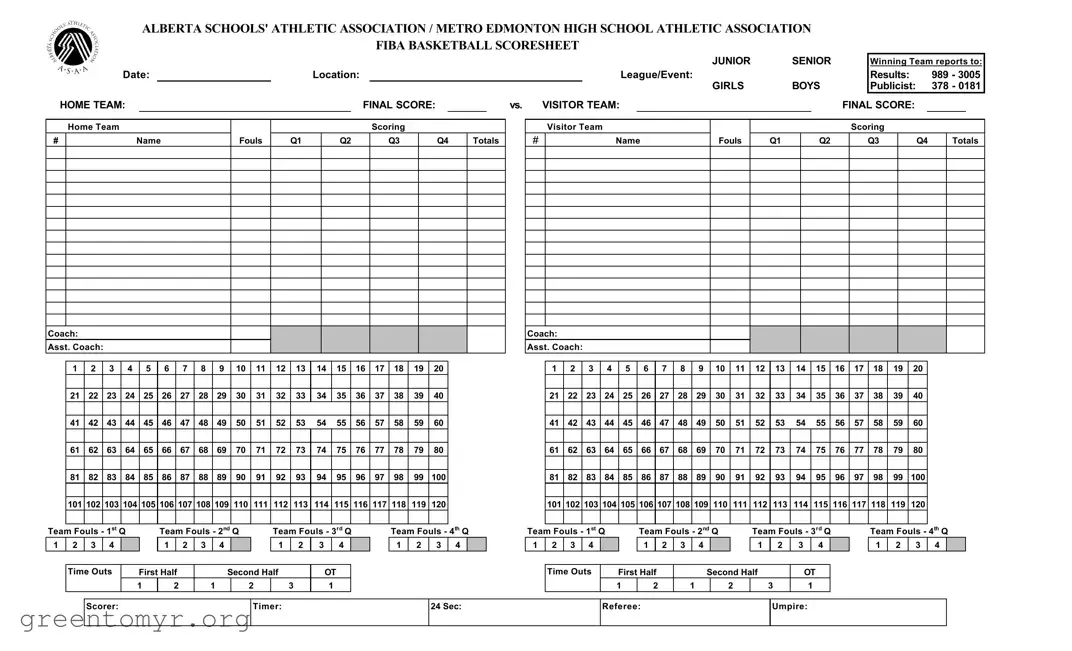
The Basketball Scoresheet form is an essential tool for recording and tracking the details of a basketball game. It captures vital information such as the teams involved, the date, and the location of the event, ensuring that all participants have a clear record of the game. The form is divided into sections for both the home and visitor teams, allowing for easy comparison of scores and fouls throughout the quarters. Each player's performance is meticulously documented, including points scored and fouls committed, giving coaches and players valuable insights into the game. Additionally, the scoresheet includes space for timeouts, which helps teams manage their strategies effectively during critical moments. With designated areas for the names of coaches, assistants, and officials, the form promotes accountability and organization. Overall, the Basketball Scoresheet is not just a record; it serves as a comprehensive overview of the game, making it an invaluable resource for teams and fans alike.
ALBERTA SCHOOLS' ATHLETIC ASSOCIATION / METRO EDMONTON HIGH SCHOOL ATHLETIC ASSOCIATION
FIBA BASKETBALL SCORESHEET
|
|
|
|
|
|
|
|
|
|
JUNIOR |
SENIOR |
|
Winning Team reports to: |
|||
Date: |
|
Location: |
|
|
|
League/Event: |
|
|
|
Results: |
989 - 3005 |
|||||
|
|
|
|
|
|
|
|
|
|
GIRLS |
BOYS |
|
Publicist: |
378 - 0181 |
||
HOME TEAM: |
|
|
|
FINAL SCORE: |
|
vs. |
VISITOR TEAM: |
|
|
|
FINAL SCORE: |
|
|
|||
|
Home Team |
|
|
|
Scoring |
|
|
# |
Name |
Fouls |
Q1 |
Q2 |
Q3 |
Q4 |
Totals |
|
|
|
|
|
|
|
|
|
|
|
|
|
|
|
|
|
|
|
|
|
|
|
|
|
|
|
|
|
|
|
|
|
|
|
|
|
|
|
|
|
|
|
|
|
|
|
|
|
|
|
|
|
|
|
|
|
|
|
|
|
|
|
|
|
|
|
|
|
|
|
|
|
|
|
|
|
|
|
|
|
|
|
|
|
|
|
|
|
|
|
|
|
|
|
|
|
|
|
|
|
|
|
|
|
|
|
|
|
|
|
|
|
|
|
|
|
|
|
|
Coach:
Asst. Coach:
|
1 |
2 |
3 |
4 |
5 |
6 |
7 |
8 |
9 |
10 |
11 |
12 |
13 |
14 |
15 |
16 |
17 |
18 |
19 |
20 |
|
|
|
|
|
|
|
|
|
|
|
|
|
|
|
|
|
|
|
|
|
|
|
|
|
|
21 |
22 |
23 |
24 |
25 |
26 |
27 |
28 |
29 |
30 |
31 |
32 |
33 |
34 |
35 |
36 |
37 |
38 |
39 |
40 |
|
|
|
|
|
|
|
|
|
|
|
|
|
|
|
|
|
|
|
|
|
|
|
|
|
|
41 |
42 |
43 |
44 |
45 |
46 |
47 |
48 |
49 |
50 |
51 |
52 |
53 |
54 |
55 |
56 |
57 |
58 |
59 |
60 |
|
|
|
|
|
|
|
|
|
|
|
|
|
|
|
|
|
|
|
|
|
|
|
|
|
|
61 |
62 |
63 |
64 |
65 |
66 |
67 |
68 |
69 |
70 |
71 |
72 |
73 |
74 |
75 |
76 |
77 |
78 |
79 |
80 |
|
|
|
|
|
|
|
|
|
|
|
|
|
|
|
|
|
|
|
|
|
|
|
|
|
|
81 |
82 |
83 |
84 |
85 |
86 |
87 |
88 |
89 |
90 |
91 |
92 |
93 |
94 |
95 |
96 |
97 |
98 |
99 |
100 |
|
|
|
|
|
|
|
|
|
|
|
|
|
|
|
|
|
|
|
|
|
|
|
|
|
|
101 |
102 |
103 |
104 |
105 |
106 |
107 |
108 |
109 |
110 |
111 |
112 |
113 |
114 |
115 |
116 |
117 |
118 |
119 |
120 |
|
|
|
|
|
|
|
|
|
|
|
|
|
|
|
|
|
|
|
|
|
|
|
|
|
Team Fouls - 1st Q |
|
Team Fouls - 2nd Q |
|
Team Fouls - 3rd Q |
|
|
Team Fouls - 4th Q |
|||||||||||||||
1 |
2 |
3 |
4 |
|
|
1 |
2 |
3 |
4 |
|
|
1 |
2 |
3 |
4 |
|
|
1 |
2 |
3 |
4 |
|
|
Visitor Team |
|
|
|
Scoring |
|
|
# |
Name |
Fouls |
Q1 |
Q2 |
Q3 |
Q4 |
Totals |
|
|
|
|
|
|
|
|
|
|
|
|
|
|
|
|
|
|
|
|
|
|
|
|
|
|
|
|
|
|
|
|
|
|
|
|
|
|
|
|
|
|
|
|
|
|
|
|
|
|
|
|
|
|
|
|
|
|
|
|
|
|
|
|
|
|
|
|
|
|
|
|
|
|
|
|
|
|
|
|
|
|
|
|
|
|
|
|
|
|
|
|
|
|
|
|
|
|
|
|
|
|
|
|
|
|
|
|
|
|
|
|
|
|
|
|
|
|
|
|
Coach:
Asst. Coach:
|
1 |
2 |
3 |
4 |
5 |
6 |
7 |
8 |
9 |
10 |
11 |
12 |
13 |
14 |
15 |
16 |
17 |
18 |
19 |
20 |
|
|
|
|
|
|
|
|
|
|
|
|
|
|
|
|
|
|
|
|
|
|
|
|
|
|
21 |
22 |
23 |
24 |
25 |
26 |
27 |
28 |
29 |
30 |
31 |
32 |
33 |
34 |
35 |
36 |
37 |
38 |
39 |
40 |
|
|
|
|
|
|
|
|
|
|
|
|
|
|
|
|
|
|
|
|
|
|
|
|
|
|
41 |
42 |
43 |
44 |
45 |
46 |
47 |
48 |
49 |
50 |
51 |
52 |
53 |
54 |
55 |
56 |
57 |
58 |
59 |
60 |
|
|
|
|
|
|
|
|
|
|
|
|
|
|
|
|
|
|
|
|
|
|
|
|
|
|
61 |
62 |
63 |
64 |
65 |
66 |
67 |
68 |
69 |
70 |
71 |
72 |
73 |
74 |
75 |
76 |
77 |
78 |
79 |
80 |
|
|
|
|
|
|
|
|
|
|
|
|
|
|
|
|
|
|
|
|
|
|
|
|
|
|
81 |
82 |
83 |
84 |
85 |
86 |
87 |
88 |
89 |
90 |
91 |
92 |
93 |
94 |
95 |
96 |
97 |
98 |
99 |
100 |
|
|
|
|
|
|
|
|
|
|
|
|
|
|
|
|
|
|
|
|
|
|
|
|
|
|
101 |
102 |
103 |
104 |
105 |
106 |
107 |
108 |
109 |
110 |
111 |
112 |
113 |
114 |
115 |
116 |
117 |
118 |
119 |
120 |
|
|
|
|
|
|
|
|
|
|
|
|
|
|
|
|
|
|
|
|
|
|
|
|
|
Team Fouls - 1st Q |
|
Team Fouls - 2nd Q |
|
Team Fouls - 3rd Q |
|
|
Team Fouls - 4th Q |
|||||||||||||||
1 |
2 |
3 |
4 |
|
|
1 |
2 |
3 |
4 |
|
|
1 |
2 |
3 |
4 |
|
|
1 |
2 |
3 |
4 |
|
Time Outs |
First Half |
|
Second Half |
|
OT |
|
|
Time Outs |
First Half |
|
Second Half |
|
|
OT |
|
|||||||||
|
|
1 |
2 |
1 |
|
2 |
|
3 |
1 |
|
|
|
1 |
|
2 |
1 |
|
2 |
|
3 |
1 |
|
||
|
|
|
|
|
|
|
|
|
|
|
|
|
|
|
|
|
|
|
|
|
|
|
||
|
Scorer: |
|
|
|
|
|
Timer: |
|
|
|
24 Sec: |
Referee: |
|
|
|
|
|
|
Umpire: |
|
||||
|
|
|
|
|
|
|
|
|
|
|
|
|
|
|
|
|
|
|
|
|
|
|
|
|
| Fact Name | Description |
|---|---|
| Governing Body | The Alberta Schools' Athletic Association oversees the use of this scoresheet for high school basketball events in Alberta. |
| Event Types | This scoresheet is applicable for both junior and senior basketball games, allowing for comprehensive tracking of player performance. |
| Team Identification | Each team is clearly identified as either the home or visitor team, ensuring accurate reporting of scores and fouls. |
| Scoring Sections | The scoresheet includes dedicated sections for scoring breakdowns per quarter, facilitating detailed performance analysis. |
| Fouls Tracking | Fouls are tracked for each player, allowing coaches to manage player participation effectively throughout the game. |
| Time Outs | Coaches can record timeouts taken during the first half, second half, and any overtime periods, which is crucial for strategic planning. |
| Official Signatures | The scoresheet requires signatures from the scorer, timer, referee, and umpire, ensuring accountability and accuracy in the recorded results. |
Completing the Basketball Scoresheet form is essential for accurately recording the details of a basketball game. This form captures vital information, including team names, scores, and player statistics, which can later be referenced for various purposes, such as analyzing performance or resolving disputes. To ensure clarity and accuracy, it is important to follow the steps outlined below when filling out the form.
The Basketball Scoresheet form serves as an official record of the game. It tracks scoring, fouls, and timeouts for both teams. Coaches and officials use this document to ensure accurate statistics and maintain the integrity of the game. It is essential for reporting results to leagues and for future reference.
To complete the scoresheet, follow these steps:
Ensure that all entries are clear and legible to avoid confusion later.
The winning team is typically responsible for reporting the results. This includes submitting the completed scoresheet to the league or designated authority. It is crucial to submit the scoresheet promptly after the game to ensure accurate record-keeping.
If you notice an error on the scoresheet, address it as soon as possible. Make corrections directly on the form, clearly indicating the changes. Both coaches should initial any amendments to confirm agreement. If significant errors occur, contact the league for guidance on how to proceed.
Yes, the Basketball Scoresheet form is designed for both junior and senior games. Ensure that you select the appropriate section for the game type you are documenting. This ensures that all relevant statistics are recorded accurately for the respective age group.
For each player, the following information is recorded:
This data helps in analyzing player performance and is essential for coaching and reporting purposes.
Filling out the Basketball Scoresheet form accurately is essential for maintaining the integrity of the game. One common mistake is failing to include the date and location of the game. These details provide context and are crucial for record-keeping. Without them, it becomes challenging to track the history of games, which can lead to confusion down the line.
Another frequent error involves neglecting to record the final scores for both the home and visitor teams. This oversight can create discrepancies in the official records. It’s important to double-check that these scores are accurately entered at the end of the game. A simple mistake in this area can affect standings and statistics, which are vital for league management.
Participants often forget to fill in the team fouls for each quarter. Each quarter has a designated space for team fouls, and overlooking this can result in an inaccurate representation of the game. Team fouls are important for understanding the dynamics of the match and can influence the strategies employed by coaches during the game.
Additionally, not recording the scorers and their fouls can lead to confusion. Each player’s contributions are vital, and failing to note their fouls can affect their eligibility to play in future games. Coaches rely on this information to make informed decisions about player rotations and strategies.
Finally, many people forget to designate the timeout counts for both halves and any overtime periods. Timeouts are critical in basketball, allowing teams to regroup and strategize. Accurate documentation of timeouts helps ensure that teams adhere to the rules regarding their use. Missing this information can lead to misunderstandings during the game.
The Basketball Scoresheet form is an essential document used during games to track scores, fouls, and other critical statistics. However, several other forms and documents complement this scoresheet, ensuring a comprehensive record of the game and its proceedings. Below is a list of five such documents, each serving a unique purpose in the context of basketball events.
These documents work together to enhance the overall management of basketball games, providing a clear and organized way to track performance, maintain player eligibility, and address any issues that may arise. Proper documentation contributes to a smoother experience for players, coaches, and officials alike.
When filling out the Basketball Scoresheet form, consider the following guidelines to ensure accuracy and clarity.
Understanding the Basketball Scoresheet form is essential for accurate record-keeping during games. However, several misconceptions can lead to confusion. Here are five common misunderstandings:
This is not true. While the official scorekeeper uses the scoresheet, coaches, players, and even spectators can benefit from understanding how to fill it out. It serves as a comprehensive record of the game.
Many people believe that tracking just the points is enough. In reality, the scoresheet also requires recording fouls, timeouts, and player statistics. This information is crucial for analyzing team performance.
This is a common assumption. Different leagues may have specific requirements or formats for their scoresheets. It's important to use the correct version, such as the one provided by the Alberta Schools' Athletic Association or Metro Edmonton High School Athletic Association.
Some may think that completing the scoresheet is not mandatory. However, it is essential for maintaining official records and ensuring fair play. In many leagues, failing to submit a completed scoresheet can lead to penalties.
This is a misunderstanding. Both teams are responsible for submitting their scoresheets after the game. This practice ensures that all statistics are accurate and that there is a record of the game from both perspectives.
Filling out and using the Basketball Scoresheet form is essential for accurate game tracking. Here are some key takeaways to ensure you do it correctly:
By following these guidelines, you can effectively use the Basketball Scoresheet form to keep an accurate record of the game.