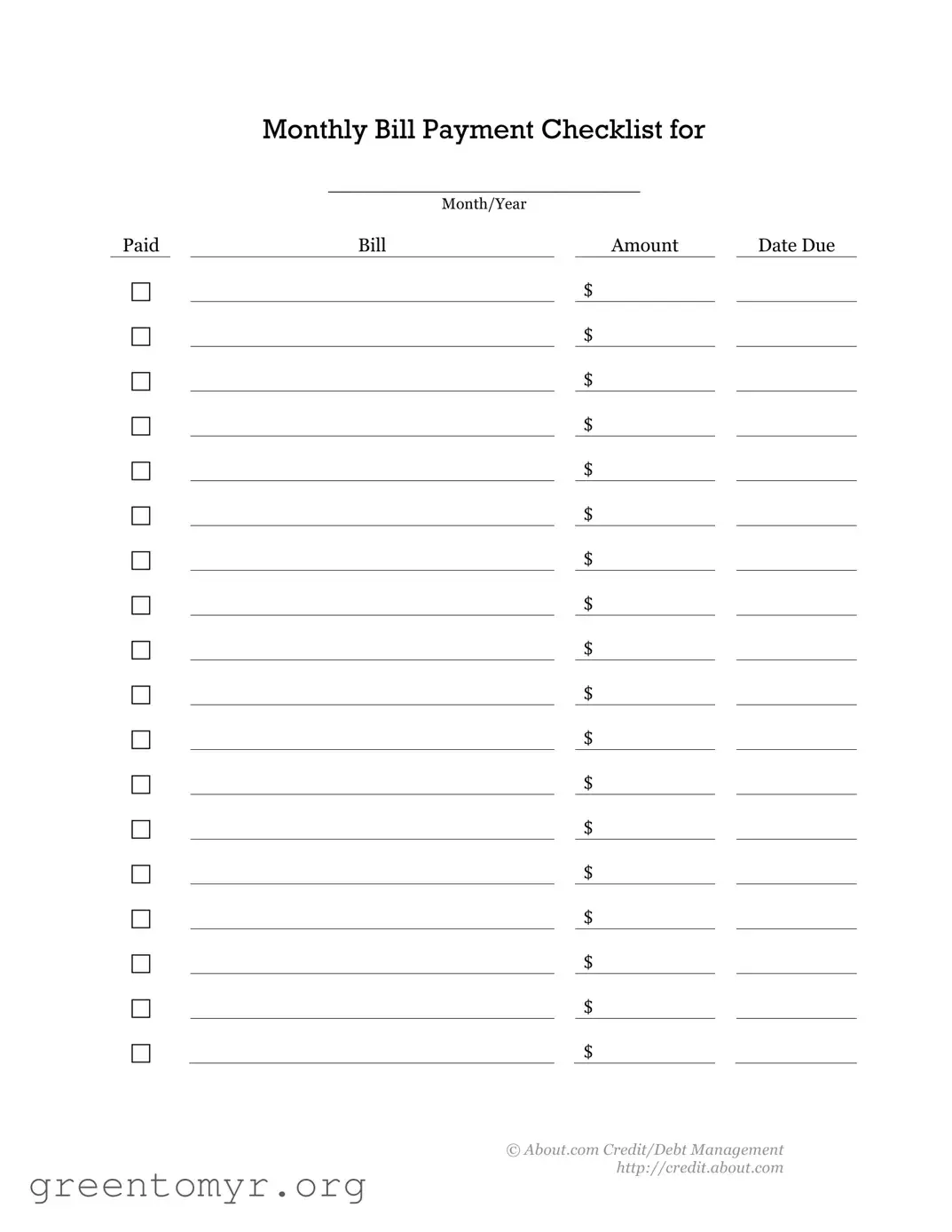
The Bill Payment Checklist form serves as an essential tool for individuals looking to manage their monthly expenses effectively. This form is designed to help users keep track of various bills, ensuring that payments are made on time and that no financial obligations are overlooked. Each entry includes spaces for the bill amount and the due date, allowing users to clearly see their financial commitments for the month. Additionally, the checklist features a section for marking bills as "PAID," which helps in maintaining an organized overview of completed payments. This structure not only aids in budgeting but also reduces the stress associated with missed deadlines. By utilizing this checklist, individuals can streamline their financial management process, making it easier to stay on top of their monthly bills and avoid late fees.

PAID
Monthly Bill Payment Checklist for
__________________________
MONTH/YEAR
|
BILL |
|
AMOUNT |
|
DATE DUE |
|
|
|
|
||
|
|
|
$ |
|
|
|
|
|
|
|
|
|
|
|
|
||
|
|
|
$ |
|
|
|
|
|
|
|
|
|
|
|
|
||
|
|
|
$ |
|
|
|
|
|
|
|
|
|
|
|
|
||
|
|
|
$ |
|
|
|
|
|
|
|
|
|
|
|
|
||
|
|
|
$ |
|
|
|
|
|
|
|
|
|
|
|
|
||
|
|
|
$ |
|
|
|
|
|
|
|
|
|
|
|
|
||
|
|
|
$ |
|
|
|
|
|
|
|
|
|
|
|
|
||
|
|
|
$ |
|
|
|
|
|
|
|
|
|
|
|
|
||
|
|
|
$ |
|
|
|
|
|
|
|
|
|
|
|
|
||
|
|
|
$ |
|
|
|
|
|
|
|
|
|
|
|
|
||
|
|
|
$ |
|
|
|
|
|
|
|
|
|
|
|
|
||
|
|
|
$ |
|
|
|
|
|
|
|
|
|
|
|
|
||
|
|
|
$ |
|
|
|
|
|
|
|
|
|
|
|
|
||
|
|
|
$ |
|
|
|
|
|
|
|
|
|
|
|
|
||
|
|
|
$ |
|
|
|
|
|
|
|
|
|
|
|
|
||
|
|
|
$ |
|
|
|
|
|
|
|
|
|
|
|
|
||
|
|
|
$ |
|
|
|
|
|
|
|
|
|
|
|
|
||
|
|
|
$ |
|
|
|
|
|
|
|
|
©About.com Credit/Debt Management http://credit.about.com
| Fact Name | Description |
|---|---|
| Purpose | The Bill Payment Checklist form helps individuals track and manage their monthly bill payments effectively. |
| Structure | The form includes spaces for listing the bill amount, due date, and a checkbox to mark payments as completed. |
| Customization | Users can personalize the checklist by filling in their name and the specific month and year for which they are tracking payments. |
| Usage Frequency | This checklist is typically used on a monthly basis, making it a valuable tool for budgeting and financial planning. |
| Governing Law | While the form is applicable in various states, it is essential to refer to state-specific regulations regarding financial management and consumer rights. |
| Accessibility | The form is designed to be user-friendly, allowing individuals of all financial backgrounds to easily manage their bills. |
Once you have the Bill Payment Checklist form in front of you, it’s time to fill it out. This form will help you track your monthly bills, ensuring you stay organized and on top of your payments. Follow the steps below to complete the form accurately.
After completing these steps, you’ll have a clear overview of your monthly bills. Keeping this checklist updated will help you manage your finances effectively.
The Bill Payment Checklist form is designed to help individuals manage their monthly bills effectively. By providing a structured way to list each bill, its amount, and the due date, users can keep track of their financial obligations. This organization can prevent late payments, reduce stress, and improve overall financial health.
To fill out the Bill Payment Checklist form, follow these steps:
Following these steps will help you maintain a clear overview of your financial responsibilities.
Yes, you can customize the Bill Payment Checklist form to better suit your needs. Feel free to add additional lines for more bills or modify the layout to include specific categories, such as utilities, credit cards, or loans. The goal is to create a tool that works best for you.
It is recommended to use the Bill Payment Checklist form on a monthly basis. Before the start of each month, review your upcoming bills and update the checklist accordingly. This proactive approach helps ensure that you are aware of your financial commitments and can budget effectively.
If you miss a payment, first assess the situation. Contact the service provider or creditor as soon as possible to explain the oversight. Many companies may offer grace periods or payment arrangements. Additionally, update your Bill Payment Checklist to reflect the missed payment and adjust your budget to accommodate any late fees or penalties.
While the provided form is likely in a physical format, many individuals choose to create a digital version using spreadsheet software or budgeting apps. This allows for easy updates, calculations, and access from multiple devices. Consider utilizing technology to streamline your bill management process.
Filling out a Bill Payment Checklist form can be a straightforward task, but mistakes can easily occur. One common error is failing to include the month and year at the top of the form. This detail is essential for organizing payments and keeping track of which bills belong to which period. Without this information, it can be challenging to refer back to previous payments.
Another frequent mistake is neglecting to write down the bill amounts. Individuals might assume they will remember the amounts, but it’s easy to forget or miscalculate. This can lead to missed payments or overpayments, which can affect budgeting and financial planning.
Some people also forget to include the due dates for each bill. This oversight can result in late payments, which may incur fees or negatively impact credit scores. Keeping track of due dates is crucial for maintaining a good financial standing.
Additionally, not checking off the paid boxes can create confusion. If a payment is made but not marked as paid, it may lead to double payments or unnecessary stress when trying to remember which bills have been settled.
Another mistake is not updating the checklist regularly. Life can get busy, and forgetting to update the form after making payments can lead to discrepancies. Regular updates help ensure that the checklist remains an accurate reflection of one’s financial obligations.
Some individuals may also misplace the form or forget where they stored it. Keeping the checklist in a dedicated spot, such as a specific folder or digital file, can prevent this issue. Accessibility is key to managing bills effectively.
Failing to categorize bills can also be a problem. Grouping bills by type, such as utilities, loans, and subscriptions, can provide clarity and help prioritize payments. Without this organization, it might be easy to overlook certain bills.
People sometimes underestimate the importance of reviewing the checklist for accuracy. Errors in amounts or due dates can lead to complications. Taking a moment to double-check the entries can save time and money in the long run.
Another common oversight is not using the form consistently. Using a checklist sporadically can create gaps in tracking payments. Establishing a routine for filling out and reviewing the checklist can enhance financial management.
Lastly, some individuals may not keep a record of past payments. While the checklist is useful for current bills, maintaining a history of payments can help in future budgeting and financial planning. This practice can provide insight into spending patterns and help identify areas for improvement.
When managing monthly expenses, it is essential to have a clear understanding of your financial obligations. The Bill Payment Checklist form serves as a useful tool for tracking bills and ensuring timely payments. However, several other forms and documents complement this checklist, enhancing your ability to manage finances effectively.
Utilizing these forms and documents in conjunction with the Bill Payment Checklist can significantly enhance your financial management practices. By staying organized and proactive, you can navigate your financial responsibilities with confidence and ease.
When filling out the Bill Payment Checklist form, it’s important to follow some simple guidelines. Here’s a helpful list of things you should and shouldn’t do:
Understanding the Bill Payment Checklist form can help individuals manage their finances more effectively. However, several misconceptions can lead to confusion. Here are six common misunderstandings:
By addressing these misconceptions, individuals can use the Bill Payment Checklist form more effectively, leading to better financial management.
Filling out and utilizing the Bill Payment Checklist form can enhance financial management and ensure timely payments. Below are key takeaways regarding its use: