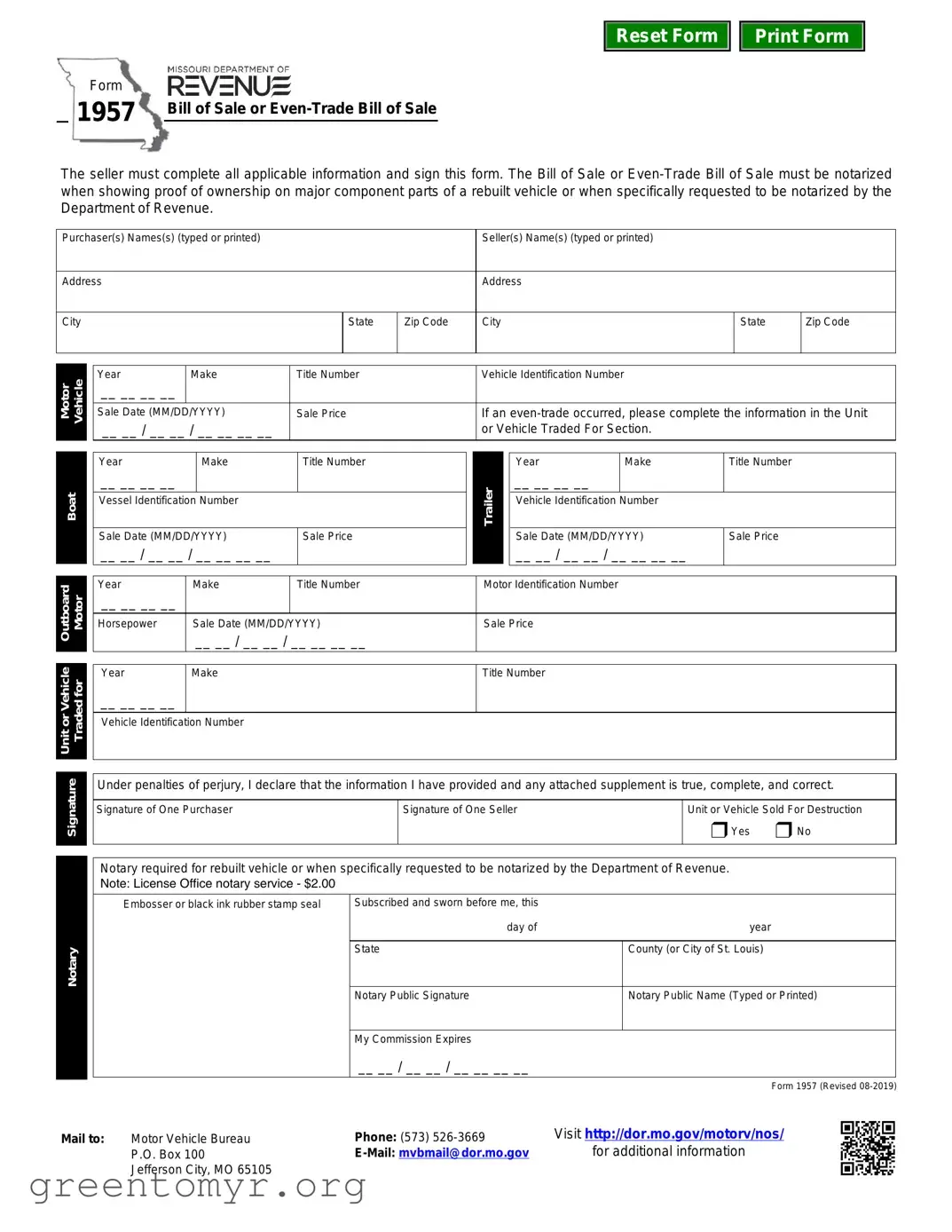
The BOS form, or Bill of Sale, serves as a crucial document in various transactions, particularly in the sale of goods and personal property. This form not only provides a written record of the transfer of ownership but also protects the rights of both the buyer and the seller. Essential elements of the BOS form include the names and addresses of the parties involved, a description of the item being sold, the purchase price, and the date of the transaction. Furthermore, it often includes a statement affirming that the seller has the right to sell the item, ensuring that the buyer receives clear title. In some cases, the BOS form may also require signatures from both parties, adding an extra layer of authenticity and legal weight. Understanding the importance of this document is vital for anyone engaged in buying or selling property, as it not only facilitates a smooth transaction but also serves as a safeguard against potential disputes in the future.
Reset Form
Form |
|
1957 |
Bill of Sale or |
|
Print Form
The seller must complete all applicable information and sign this form. The Bill of Sale or
Purchaser(s) Names(s) (typed or printed) |
|
|
|
Seller(s) Name(s) (typed or printed) |
|
|
|||
|
|
|
|
|
|
|
|
|
|
Address |
|
|
|
|
Address |
|
|
||
|
|
|
|
|
|
|
|
|
|
City |
|
|
|
State |
Zip Code |
City |
State |
Zip Code |
|
|
|
|
|
|
|
|
|
|
|
|
|
|
|
|
|
|
|
|
|
Motor Vehicle |
|
Year |
Make |
Title Number |
|
Vehicle Identification Number |
|
|
|
|
__ __ __ __ |
|
|
|
|
|
|
|
|
|
|
|
|
|
|
|
|
|
|
|
|
|
|
|
|
|
|||
|
|
Sale Date (MM/DD/YYYY) |
Sale Price |
|
If an |
||||
|
|
__ __ / __ __ / __ __ __ __ |
|
|
|
or Vehicle Traded For Section. |
|
|
|
Boat
Year |
Make |
Title Number |
|
|
__ __ __ __ |
|
|
|
Trailer |
Vessel Identification Number |
|
|
||
|
|
|
||
|
|
|
|
|
Sale Date (MM/DD/YYYY) |
Sale Price |
|
|
|
__ __ / __ __ / __ __ __ __ |
|
|
|
|
Year |
Make |
Title Number |
__ __ __ __ |
|
|
Vehicle Identification Number |
|
|
|
|
|
Sale Date (MM/DD/YYYY) |
Sale Price |
|
__ __ / __ __ / __ __ __ __ |
|
|
Outboard |
Motor |
|
Year |
Make |
Title Number |
|
Motor Identification Number |
|
|
|
__ __ __ __ |
|
|
|
|
|
|
||
|
|
|
|
|
|
|
|
|
|
|
|
|
Horsepower |
Sale Date (MM/DD/YYYY) |
|
Sale Price |
|
|
|
|
|
|
|
__ __ / __ __ / __ __ __ __ |
|
|
|
|
|
|
|
|
|
|
|
|
|
|
|
VehicleorUnit Tradedfor |
|
Year |
Make |
|
|
Title Number |
|
|
|
|
__ __ __ __ |
|
|
|
|
|
|
||
|
|
|
|
|
|
|
|
|
|
|
|
|
Vehicle Identification Number |
|
|
|
|
|
|
|
|
|
|
|
|
|
|
|
|
|
|
|
|
|
|
|
|||
Signature |
|
Under penalties of perjury, I declare that the information I have provided and any attached supplement is true, complete, and correct. |
|||||||
|
|
|
|
|
|
|
|
||
|
Signature of One Purchaser |
|
Signature of One Seller |
r Yes |
r No |
||||
|
|
|
|
Unit or Vehicle Sold For Destruction |
|||||
|
|
|
|
|
|
|
|
|
|
Notary required for rebuilt vehicle or when specifically requested to be notarized by the Department of Revenue.
Note: License Office notary service - $2.00
Notary
Embosser or black ink rubber stamp seal
Subscribed and sworn before me, this |
|
day of |
year |
|
|
State |
County (or City of St. Louis) |
|
|
Notary Public Signature |
Notary Public Name (Typed or Printed) |
|
|
My Commission Expires |
|
__ __ / __ __ / __ __ __ __ |
|
|
|
|
|
|
Form 1957 (Revised |
Mail to: |
Motor Vehicle Bureau |
Phone: (573) |
Visit http://dor.mo.gov/motorv/nos/ |
|
P.O. Box 100 |
for additional information |
|
|
Jefferson City, MO 65105 |
|
|
| Fact Name | Description |
|---|---|
| Purpose | The BOS form is used to facilitate the transfer of property ownership between parties. |
| Governing Law | Each state has specific laws that govern the use and requirements of the BOS form. |
| Signature Requirement | The form typically requires signatures from both the transferor and the transferee to be valid. |
| Notarization | In many states, notarization of the BOS form is necessary to ensure authenticity. |
| Filing | Some jurisdictions require the BOS form to be filed with the local government to effectuate the transfer. |
| State Variations | Different states may have unique versions of the BOS form, reflecting local laws and practices. |
Completing the BOS form is an important step in your process. After you fill it out, you will need to submit it to the appropriate office or agency. Ensure that all information is accurate and complete to avoid delays in processing.
The BOS form, or the Business Operating Statement form, is a document used by businesses to outline their operational details. It typically includes information about the company's structure, financial performance, and management practices. This form helps stakeholders understand how the business operates and its financial health.
Any business entity that is seeking funding, partnerships, or regulatory compliance may need to complete the BOS form. This includes small businesses, startups, and larger corporations. It is often required by banks, investors, and government agencies when assessing the viability of a business.
The BOS form usually contains several key sections, including:
To complete the BOS form, gather all necessary financial documents and operational information. Follow the instructions provided with the form carefully. Ensure that all sections are filled out accurately and completely. If unsure about specific details, consulting with a financial advisor or business consultant may be beneficial.
Deadlines for submitting the BOS form can vary depending on the context in which it is required. For instance, if you are applying for a loan, the lender will provide a specific deadline. Always check with the requesting party for their timeline to ensure timely submission.
Yes, the BOS form can and should be updated regularly. As your business grows or changes, it is important to reflect those changes in the form. Regular updates ensure that stakeholders have the most accurate and relevant information about your business.
If you discover a mistake after submitting the BOS form, contact the entity that requested it as soon as possible. They may allow you to submit a corrected version or provide guidance on how to proceed. It’s crucial to address errors quickly to maintain transparency and trust.
Templates for the BOS form can often be found online through business resources, financial institutions, or government websites. Many organizations provide free templates that can be customized to fit your specific business needs. Additionally, consulting with a business advisor can help you create a tailored version.
Filling out the BOS form can be a daunting task, and many people make common mistakes that can lead to delays or complications. One frequent error is not reading the instructions carefully. The guidelines provide essential information about how to complete the form correctly. Skipping this step can result in missing critical details.
Another mistake is providing incomplete information. Every section of the form is important. Leaving out even minor details can raise questions and lead to a rejection of the application. Ensure that all required fields are filled out completely.
People often overlook the importance of accuracy. Simple typos or incorrect information can cause significant issues down the line. Double-checking your entries can save time and trouble later. Take a moment to review your answers before submitting the form.
Many individuals fail to sign and date the form. This may seem trivial, but an unsigned form is often considered invalid. Make it a habit to check for your signature and the date to avoid unnecessary setbacks.
Another common mistake is submitting the form without the necessary documentation. Supporting documents may be required to validate the information provided. Make sure to gather all required attachments before sending in the BOS form.
Some people neglect to keep a copy of the completed form. Having a record of what was submitted can be invaluable if questions arise later. Always make a copy for your files before submission.
Misunderstanding deadlines is also a frequent issue. Many individuals fail to submit their forms on time, which can lead to missed opportunities. Mark your calendar with important dates to ensure compliance with all deadlines.
Lastly, not seeking help when needed can be a significant mistake. If you're unsure about how to fill out a section, consider reaching out for assistance. Whether it’s a friend or a professional, getting guidance can make a difference.
The Bill of Sale (BOS) form is commonly used in various transactions, especially when transferring ownership of personal property. Along with the BOS form, there are other documents that may be necessary to ensure a smooth transfer of ownership. Below is a list of these documents, each briefly described for clarity.
These documents can help facilitate a clear and legal transfer of ownership. Understanding each one is important for both buyers and sellers to ensure that all aspects of the transaction are properly handled.
The BOS form, or Bill of Sale, is a document used to transfer ownership of an item from one person to another. There are several other documents that serve a similar purpose. Here’s a list of ten such documents:
When filling out the BOS form, attention to detail is crucial. Here’s a helpful list of what to do and what to avoid:
By following these guidelines, you can help ensure that your BOS form is filled out correctly and efficiently. Taking the time to do it right can save you from potential delays or issues down the line.
Understanding the BOS form is essential for many individuals and businesses. However, several misconceptions can lead to confusion. Below is a list of common misunderstandings about the BOS form, along with clarifications to help you navigate this important document.
This is not true. The BOS form can be utilized by businesses of all sizes, including small businesses and sole proprietorships. It is designed to meet various needs.
While some entities may need to file annually, not all require yearly submissions. It depends on the specific regulations applicable to your business.
This is a common misconception. The BOS form serves a different purpose and is not a tax document. It is primarily used for business operations and compliance.
In reality, many industries may be required to complete the BOS form. The necessity is often based on local regulations rather than industry type.
This is misleading. In many jurisdictions, filing the BOS form is a requirement for maintaining business status. Failing to file can lead to penalties.
This is incorrect. If you need to make changes after submission, there are procedures in place to update your information as necessary.
This is a misconception. Established businesses must also stay compliant by submitting the BOS form as required by their local jurisdiction.
This is not accurate. While many jurisdictions offer online filing, you may also have the option to submit a paper form via mail or in person.
This is misleading. Depending on your location and business structure, you may need to file the BOS form periodically to maintain compliance.
Addressing these misconceptions can help ensure that you understand the importance of the BOS form and fulfill your obligations effectively. Always check with local regulations for the most accurate guidance.
When filling out and using the BOS form, keep the following key takeaways in mind: