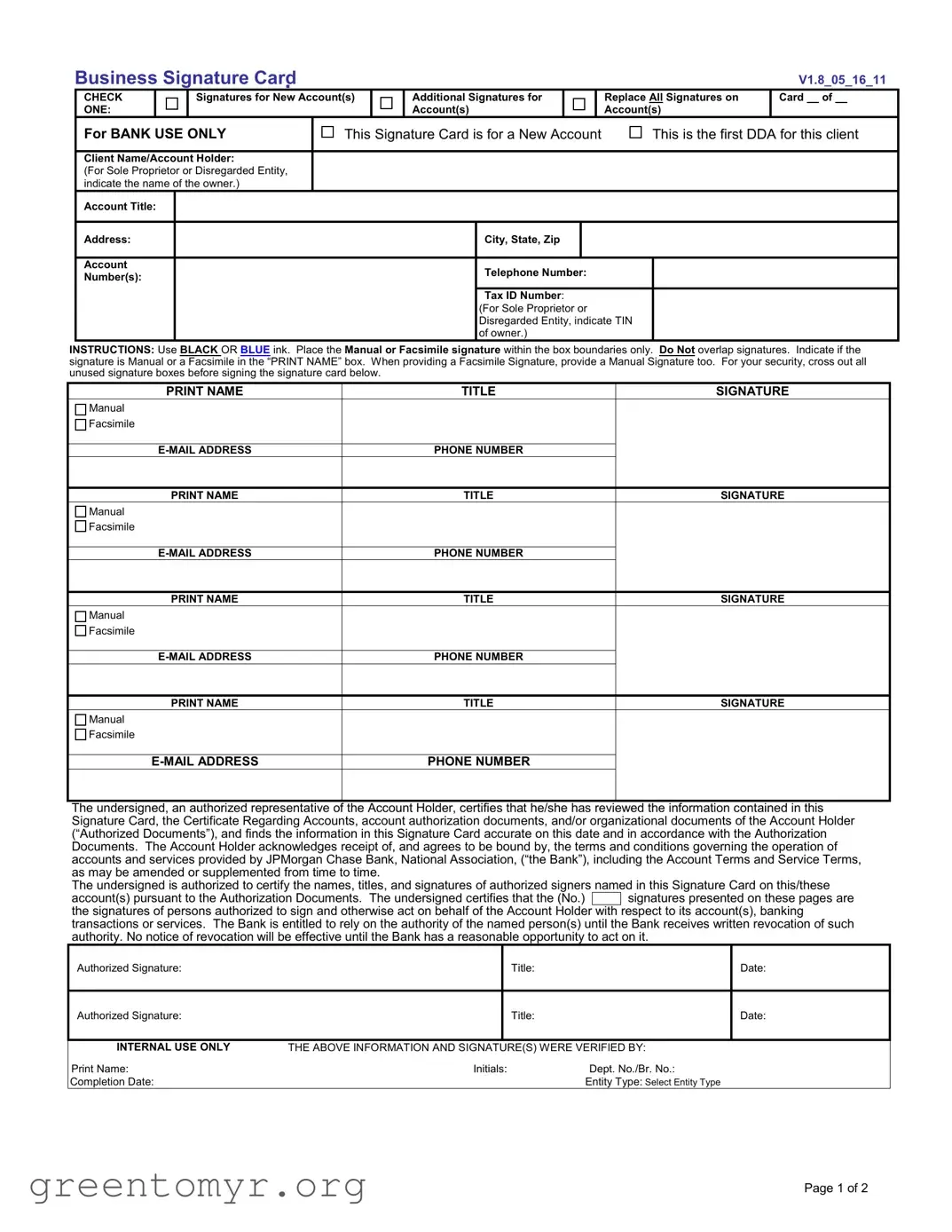
The Business Signature Card form serves as a crucial document for businesses establishing new accounts with financial institutions, particularly with banks like JPMorgan Chase. This form facilitates the identification and verification of individuals authorized to conduct banking transactions on behalf of the business. Key components of the form include spaces for the account holder's name, account title, and tax identification number, which are essential for ensuring accurate record-keeping. Additionally, it requires the manual or facsimile signatures of authorized representatives, emphasizing the need for clarity and precision in the signing process. The instructions are clear: signatures must fit within designated boxes, and any unused signature spaces should be crossed out for security purposes. Furthermore, the form includes a certification section where an authorized representative affirms the accuracy of the provided information and acknowledges the bank's terms and conditions. This not only protects the bank's interests but also establishes a formal agreement between the bank and the account holder regarding account management. Overall, the Business Signature Card form is a foundational element in the banking relationship, ensuring that only designated individuals can access and manage the business's financial resources.
Business Signature Card
|
CHECK |
|
Signatures for New Account(s) |
|
|
ONE: |
|
|
|
Additional Signatures for Account(s)
|
|
V1.8_05_16_11 |
|
|
|
|
Replace All Signatures on |
Card __ of __ |
|
Account(s) |
|
For BANK USE ONLY |
This Signature Card is for a New Account |
This is the first DDA for this client |
Client Name/Account Holder:
(For Sole Proprietor or Disregarded Entity, indicate the name of the owner.)
Account Title:
Address:
Account
Number(s):
City, State, Zip
Telephone Number:
Tax ID Number:
(For Sole Proprietor or Disregarded Entity, indicate TIN of owner.)
INSTRUCTIONS: Use BLACK OR BLUE ink. Place the Manual or Facsimile signature within the box boundaries only. Do Not overlap signatures. Indicate if the signature is Manual or a Facsimile in the “PRINT NAME” box. When providing a Facsimile Signature, provide a Manual Signature too. For your security, cross out all unused signature boxes before signing the signature card below.
|
PRINT NAME |
TITLE |
SIGNATURE |
|
Manual |
|
|
|
Facsimile |
|
|
|
|
|
|
|
PHONE NUMBER |
|
|
|
|
|
|
|
PRINT NAME |
TITLE |
SIGNATURE |
|
Manual |
|
|
|
Facsimile |
|
|
|
|
|
|
|
PHONE NUMBER |
|
|
|
|
|
|
|
PRINT NAME |
TITLE |
SIGNATURE |
|
Manual |
|
|
|
Facsimile |
|
|
|
|
|
|
|
PHONE NUMBER |
|
|
|
|
|
|
|
PRINT NAME |
TITLE |
SIGNATURE |
|
Manual |
|
|
|
Facsimile |
|
|
|
|
|
|
|
PHONE NUMBER |
|
|
|
|
|
|
The undersigned, an authorized representative of the Account Holder, certifies that he/she has reviewed the information contained in this Signature Card, the Certificate Regarding Accounts, account authorization documents, and/or organizational documents of the Account Holder (“Authorized Documents”), and finds the information in this Signature Card accurate on this date and in accordance with the Authorization Documents. The Account Holder acknowledges receipt of, and agrees to be bound by, the terms and conditions governing the operation of accounts and services provided by JPMorgan Chase Bank, National Association, (“the Bank”), including the Account Terms and Service Terms, as may be amended or supplemented from time to time.
The undersigned is authorized to certify the names, titles, and signatures of authorized signers named in this Signature Card on this/these
account(s) pursuant to the Authorization Documents. The undersigned certifies that the (No.) signatures presented on these pages are the signatures of persons authorized to sign and otherwise act on behalf of the Account Holder with respect to its account(s), banking transactions or services. The Bank is entitled to rely on the authority of the named person(s) until the Bank receives written revocation of such authority. No notice of revocation will be effective until the Bank has a reasonable opportunity to act on it.
Authorized Signature:
Authorized Signature:
Title: |
Date: |
Title: |
Date: |
|
|
INTERNAL USE ONLY |
THE ABOVE INFORMATION AND SIGNATURE(S) WERE VERIFIED BY: |
|
Print Name: |
Initials: |
Dept. No./Br. No.: |
Completion Date: |
|
Entity Type: Select Entity Type |
Page 1 of 2

Client Name/Account Holder:
Account Title: |
|
Tax ID Number: |
|
Card __ of __ |
|
|
|
|
|
Account |
|
Telephone Number: |
Date: |
|
Number(s): |
|
|
|
|
|
|
|
|
|
ADDITIONAL SIGNATURES
|
PRINT NAME |
TITLE |
SIGNATURE |
|
Manual |
|
|
|
Facsimile |
|
|
|
|
|
|
|
PHONE NUMBER |
|
|
|
|
|
|
|
PRINT NAME |
TITLE |
SIGNATURE |
|
Manual |
|
|
|
Facsimile |
|
|
|
|
|
|
|
PHONE NUMBER |
|
|
|
|
|
|
|
PRINT NAME |
TITLE |
SIGNATURE |
|
Manual |
|
|
|
Facsimile |
|
|
|
|
|
|
|
PHONE NUMBER |
|
|
|
|
|
|
|
PRINT NAME |
TITLE |
SIGNATURE |
|
Manual |
|
|
|
Facsimile |
|
|
|
|
|
|
|
PHONE NUMBER |
|
|
|
|
|
|
|
PRINT NAME |
TITLE |
SIGNATURE |
|
Manual |
|
|
|
Facsimile |
|
|
|
|
|
|
|
PHONE NUMBER |
|
|
|
|
|
|
|
PRINT NAME |
TITLE |
SIGNATURE |
|
Manual |
|
|
|
Facsimile |
|
|
|
|
|
|
|
PHONE NUMBER |
|
|
|
|
|
|
|
PRINT NAME |
TITLE |
SIGNATURE |
|
Manual |
|
|
|
Facsimile |
|
|
|
|
|
|
|
PHONE NUMBER |
|
|
|
|
|
|
Page 2 of 2
| Fact Name | Description |
|---|---|
| Purpose | The Business Signature Card is used to authorize individuals to sign on behalf of a business for banking transactions. |
| Signature Requirements | Signatures must be provided in either manual or facsimile form, with each signature box clearly marked and unused boxes crossed out for security. |
| Client Information | Clients must provide essential information, including the account holder's name, account title, and tax ID number. |
| Governing Laws | This form is governed by state banking laws and regulations, which may vary by state. For example, in California, it adheres to the California Financial Code. |
| Verification Process | The bank will verify the signatures and information provided before allowing access to the account. |
Completing the Business Signature Card form is a straightforward process that ensures your account is properly set up with the necessary signatures. Follow these steps carefully to provide accurate information and signatures.
After completing the form, review all entries for accuracy. Once satisfied, submit it to the bank for processing. This step is crucial in ensuring that your account is established correctly and that authorized signers are recognized by the bank.
The Business Signature Card form is used to establish authorized signatures for a new business account with the bank. It ensures that the bank has accurate and up-to-date information regarding who is authorized to conduct transactions on behalf of the business. This is crucial for maintaining security and accountability in banking operations.
When filling out the form, use black or blue ink. Signatures must be placed within the designated box boundaries without overlapping. Clearly indicate whether each signature is a manual or facsimile signature in the "PRINT NAME" box. If you provide a facsimile signature, it is necessary to include a manual signature as well. Additionally, cross out any unused signature boxes for security purposes.
The form requires several key pieces of information:
Completing this information accurately is essential for the bank to process your account effectively.
If there are changes to the authorized signers, a new Business Signature Card form must be completed and submitted to the bank. The bank will rely on the authority of the named individuals until a written revocation of authority is received. It is important to ensure that any changes are communicated promptly to avoid issues with account access.
Yes, it is necessary to provide both types of signatures. The inclusion of a manual signature alongside a facsimile signature adds an extra layer of verification. This requirement helps to ensure that the bank can authenticate the identity of the signers and maintain secure account operations.
Once the form is submitted, the bank will verify the information and signatures provided. This process includes confirming that the signatures match those on file and that the individuals listed are authorized to act on behalf of the business. After verification, the bank will update its records accordingly, allowing the authorized signers to conduct transactions on the account.
Filling out a Business Signature Card form is a crucial step for any new account holder. However, many individuals make common mistakes that can lead to delays or complications. One of the most frequent errors is failing to provide the correct Client Name/Account Holder. This should reflect the legal name of the business or individual, particularly for sole proprietors. Omitting or misspelling this information can create issues down the line.
Another common mistake is not indicating the Account Title clearly. This title should succinctly describe the purpose or nature of the account. If this section is left blank or filled out incorrectly, it may lead to confusion regarding the account's intended use. Clarity is key.
People often overlook the importance of providing a Tax ID Number. For sole proprietors or disregarded entities, this number must match the owner's information. Failing to include this can result in complications with tax reporting and compliance.
Using the wrong ink color is another simple yet significant mistake. The instructions clearly state to use BLACK OR BLUE ink. If someone submits the form in a different color, it could lead to rejection of the application. Following the guidelines precisely helps ensure a smooth process.
Another frequent error involves the signature itself. Signatures must be placed within the designated box boundaries, without any overlap. Overlapping signatures can create confusion about which signature is valid, potentially delaying account setup.
Additionally, individuals often forget to cross out unused signature boxes. This is a security measure designed to prevent unauthorized use of the form. Leaving these boxes unchecked can raise red flags during processing.
Finally, many people neglect to provide both a Manual and Facsimile Signature when required. If a facsimile signature is provided, it is essential to include a manual signature as well. Omitting one can lead to questions about the authenticity of the signatures provided.
By being mindful of these common mistakes, individuals can help ensure that their Business Signature Card form is completed accurately and efficiently. Taking the time to double-check the details can save significant time and effort in the long run.
When setting up a business bank account, several important documents work in tandem with the Business Signature Card. These documents help ensure that your account is properly authorized and managed. Here are four commonly used forms that you may encounter:
Having these documents ready can streamline the account setup process and provide clarity for all parties involved. Make sure to review each document carefully to ensure that all information is accurate and complete.
The Business Signature Card form is an essential document for establishing and managing bank accounts for businesses. It ensures that the bank has the necessary information about authorized signers. Several other documents serve similar purposes in different contexts. Here are eight documents that share similarities with the Business Signature Card form:
Understanding these documents can help business owners navigate their banking relationships more effectively. Each plays a critical role in establishing authority and ensuring that transactions are conducted smoothly and securely.
When filling out the Business Signature Card form, attention to detail is essential. Here are four important do's and don'ts to keep in mind:
This form can also be used to add or update signatures on existing accounts, not just for opening new ones.
Multiple signatures can be included on the card, depending on the number of authorized signers for the account.
Facsimile signatures are allowed, but a manual signature must also be provided for verification purposes.
The instructions specify using only black or blue ink for clarity and permanence.
For security, all unused signature boxes should be crossed out before signing the card.
It’s important to review and attach any necessary organizational documents or authorizations as specified.
The undersigned must certify that the information is accurate. The bank relies on this certification.
Any changes to authorized signatures must be submitted in writing to the bank for processing.
When filling out the Business Signature Card form, it's essential to pay attention to several key details to ensure a smooth banking experience. Here are some important takeaways:
By following these guidelines, you can help ensure that your Business Signature Card form is completed accurately and securely.