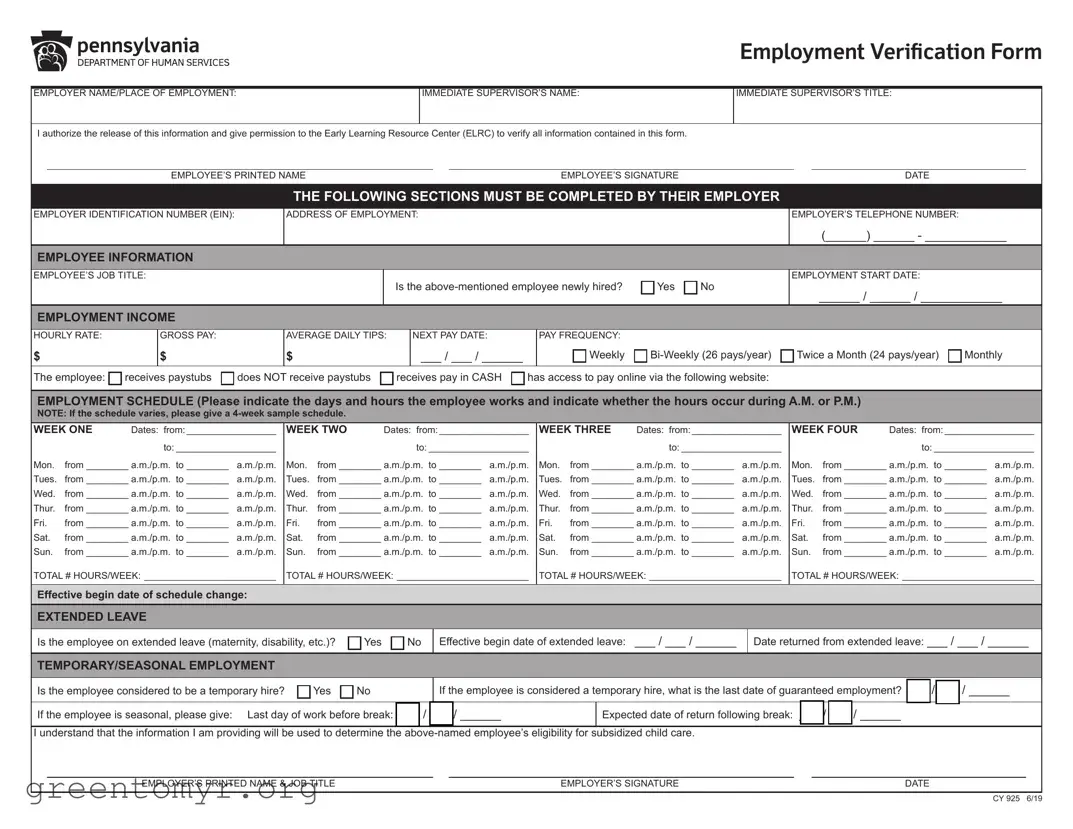
The CCIS Employment Verification Form plays a crucial role in determining an employee's eligibility for subsidized child care assistance. This form requires specific information from both the employer and the employee, ensuring a thorough verification process. Employers must provide essential details such as their name, address, and contact information, along with the employee's job title and employment start date. Additionally, the form captures vital financial data, including the employee's hourly rate, gross pay, and pay frequency. A comprehensive work schedule, detailing the days and hours worked, is also necessary. This information is vital as it helps the Early Learning Resource Center (ELRC) assess the employee's situation accurately. Employers need to complete this form accurately and submit it directly to the ELRC, emphasizing the importance of clear and precise documentation. By understanding the requirements and purpose of this form, employers can assist their employees in accessing essential child care support.
|
|
|
|
|
Employment Verification Form |
|||
|
|
|
||||||
EMPLOYER NAME/PLACE OF EMPLOYMENT: |
IMMEDIATE SUPERVISOR’S NAME: |
IMMEDIATE SUPERVISOR’S TITLE: |
||||||
|
|
|
|
|
|
|
|
|
I authorize the release of this information and give permission to the Early Learning Resource Center (ELRC) to verify all information contained in this form. |
|
|
|
|
||||
|
|
|
|
|
|
|
|
|
|
EMPLOYEE’S PRINTED NAME |
|
|
EMPLOYEE’S SIGNATURE |
|
|
DATE |
|
THE FOLLOWING SECTIONS MUST BE COMPLETED BY THEIR EMPLOYER
EMPLOYER IDENTIFICATION NUMBER (EIN):
ADDRESS OF EMPLOYMENT:
EMPLOYER’S TELEPHONE NUMBER:
(______) ______ - ____________
EMPLOYEE INFORMATION
EMPLOYEE’S JOB TITLE:
Is the |
Yes |
No |
EMPLOYMENT START DATE:
______ / ______ / ____________
EMPLOYMENT INCOME
HOURLY RATE: |
GROSS PAY: |
AVERAGE DAILY TIPS: |
NEXT PAY DATE: |
PAY FREQUENCY: |
|
|
|
$ |
$ |
$ |
___ / ___ / ______ |
Weekly |
Twice a Month (24 pays/year) |
Monthly |
The employee: receives paystubs does NOT receive paystubs receives pay in CASH has access to pay online via the following website:
EMPLOYMENT SCHEDULE (Please indicate the days and hours the employee works and indicate whether the hours occur during A.M. or P.M.)
NOTE: If the schedule varies, please give a
WEEK ONE |
Dates: from:__________________ |
||
|
|
to:____________________ |
|
Mon. |
from_________ a.m./p.m. to_________ |
a.m./p.m. |
|
Tues. |
from_________ a.m./p.m. to_________ |
a.m./p.m. |
|
Wed. |
from_________ a.m./p.m. to_________ |
a.m./p.m. |
|
Thur. |
from_________ a.m./p.m. to_________ |
a.m./p.m. |
|
Fri. |
from_________ a.m./p.m. to_________ |
a.m./p.m. |
|
Sat. |
from_________ a.m./p.m. to_________ |
a.m./p.m. |
|
Sun. |
from_________ a.m./p.m. to_________ |
a.m./p.m. |
|
TOTAL # HOURS/WEEK: _________________________
WEEK TWO |
Dates: from:__________________ |
||
|
|
to:____________________ |
|
Mon. |
from_________ a.m./p.m. to_________ |
a.m./p.m. |
|
Tues. |
from_________ a.m./p.m. to_________ |
a.m./p.m. |
|
Wed. |
from_________ a.m./p.m. to_________ |
a.m./p.m. |
|
Thur. |
from_________ a.m./p.m. to_________ |
a.m./p.m. |
|
Fri. |
from_________ a.m./p.m. to_________ |
a.m./p.m. |
|
Sat. |
from_________ a.m./p.m. to_________ |
a.m./p.m. |
|
Sun. |
from_________ a.m./p.m. to_________ |
a.m./p.m. |
|
TOTAL # HOURS/WEEK: _________________________
WEEK THREE |
Dates: from:__________________ |
||
|
|
to:____________________ |
|
Mon. |
from_________ a.m./p.m. to_________ |
a.m./p.m. |
|
Tues. |
from_________ a.m./p.m. to_________ |
a.m./p.m. |
|
Wed. |
from_________ a.m./p.m. to_________ |
a.m./p.m. |
|
Thur. |
from_________ a.m./p.m. to_________ |
a.m./p.m. |
|
Fri. |
from_________ a.m./p.m. to_________ |
a.m./p.m. |
|
Sat. |
from_________ a.m./p.m. to_________ |
a.m./p.m. |
|
Sun. |
from_________ a.m./p.m. to_________ |
a.m./p.m. |
|
TOTAL # HOURS/WEEK: _________________________
WEEK FOUR |
Dates: from:__________________ |
||
|
|
to:____________________ |
|
Mon. |
from_________ a.m./p.m. to_________ |
a.m./p.m. |
|
Tues. |
from_________ a.m./p.m. to_________ |
a.m./p.m. |
|
Wed. |
from_________ a.m./p.m. to_________ |
a.m./p.m. |
|
Thur. |
from_________ a.m./p.m. to_________ |
a.m./p.m. |
|
Fri. |
from_________ a.m./p.m. to_________ |
a.m./p.m. |
|
Sat. |
from_________ a.m./p.m. to_________ |
a.m./p.m. |
|
Sun. |
from_________ a.m./p.m. to_________ |
a.m./p.m. |
|
TOTAL # HOURS/WEEK: _________________________
Effective begin date of schedule change:
EXTENDED LEAVE
Is the employee on extended leave (maternity, disability, etc.)? |
Yes |
No |
Effective begin date of extended leave: ___ / ___ / ______
Date returned from extended leave: ___ / ___ / ______
TEMPORARY/SEASONAL EMPLOYMENT
Is the employee considered to be a temporary hire? |
Yes |
No |
If the employee is considered a temporary hire, what is the last date of guaranteed employment? ___ / ___ / ______
If the employee is seasonal, please give: Last day of work before break: ___ / ___ / ______ |
|
Expected date of return following break: ___ / ___ / ______ |
|
|
|||||
|
|
|
|
||||||
I understand that the information I am providing will be used to determine the |
subsidized child care. |
|
|
||||||
|
|
|
|
|
|
|
|
|
|
|
EMPLOYER’S PRINTED NAME & JOB TITLE |
|
|
EMPLOYER’S SIGNATURE |
|
|
DATE |
|
|
CY 925 6/19
Employment Verification Form
Dear Employer:
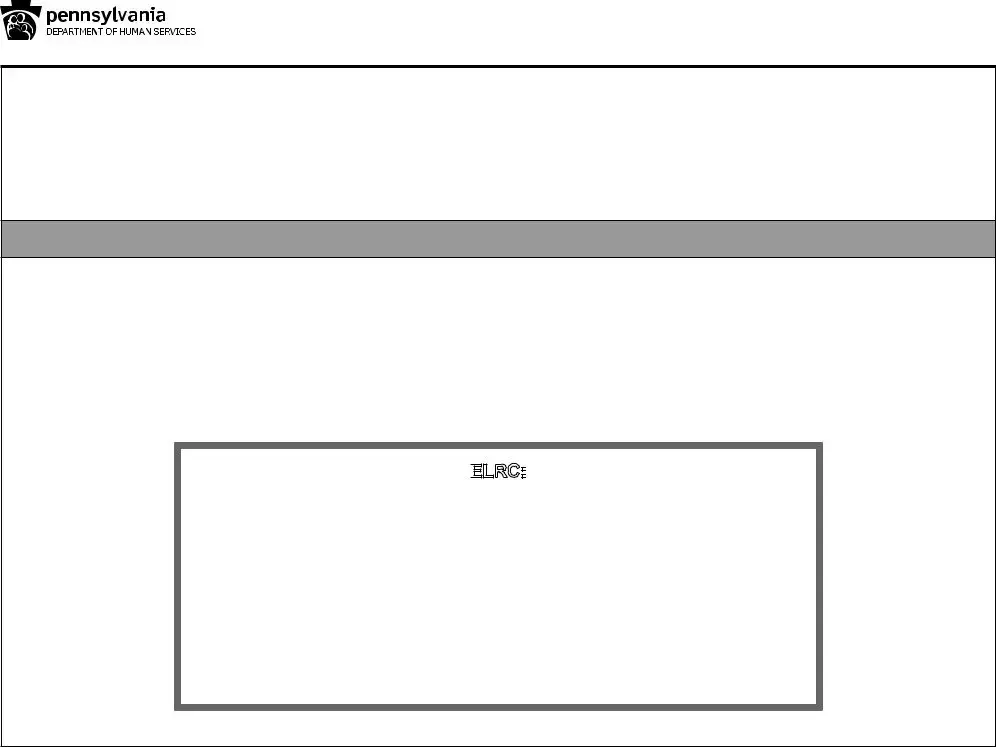
One of your employees has requested assistance paying his/her child care costs. We must verify his/her employment with you. This information will help us determine if this employee is eligible for the subsidized child care program. The form must be mailed directly to the Early Learning Resource Center (ELRC).
An authorized COMPANY REPRESENTATIVE (not the employee) must complete this form.
We must have an accurate record of your employee’s work schedule and employment income. Please complete the information on the back of this page. It is very important that the hours shown are specific and defined as either A.M. or P.M. (For example, 7:30 a.m. - 3:30 p.m.). If the employee’s schedule varies, please give a
Thank you for your time and assistance. If you have any questions about how to complete this form, please contact the ELRC listed below.
ELRC:
Early Learning Resource Center Region 17
PO Box 311
1430 DeKalb Street
Norristown, PA
(610)
CY 925 6/19
| Fact Name | Details |
|---|---|
| Purpose | The form verifies employment for employees seeking subsidized child care assistance. |
| Employer Requirement | An authorized company representative, not the employee, must complete the form. |
| Employee Information | Includes employee's name, job title, and employment start date. |
| Income Details | Employers must provide hourly rate, gross pay, and average daily tips. |
| Schedule Submission | A 4-week sample schedule is required if the employee's hours vary. |
| Extended Leave | Employers must indicate if the employee is on extended leave and provide relevant dates. |
| Temporary Employment | Employers must state if the employee is temporary or seasonal and provide end dates. |
| Submission Method | The completed form must be mailed directly to the Early Learning Resource Center (ELRC). |
| Governing Law | The form is governed by Pennsylvania state law regarding child care subsidies. |
Completing the Ccis Employment Verification form is essential for verifying an employee's eligibility for subsidized child care. Follow these steps to ensure the form is filled out correctly and completely.
After completing the form, ensure it is mailed directly to the Early Learning Resource Center (ELRC). This step is crucial for the employee's eligibility assessment. If there are any questions, reach out to the ELRC for assistance.
The CCIS Employment Verification form is designed to verify an employee's employment status and income. This information is essential for determining eligibility for subsidized child care assistance. Employers complete this form to provide accurate details about the employee's job title, income, and work schedule.
The form must be completed by an authorized company representative, not the employee themselves. This ensures that the information provided is accurate and reliable. The representative should be someone familiar with the employee's work situation, such as a supervisor or HR personnel.
Employers need to provide several key details, including:
Accurate and complete information is crucial for the verification process.
The work schedule should be detailed, indicating the days and hours the employee works. Each entry must specify whether the hours are in the A.M. or P.M. If the employee's schedule varies week to week, a four-week sample schedule must be provided.
If the employee is on extended leave, such as maternity or disability leave, this must be indicated on the form. Employers should provide the effective start date of the leave and the date the employee is expected to return. This information helps in assessing the employee's current work status.
The form must be mailed directly to the Early Learning Resource Center (ELRC). Electronic submissions are not accepted. This ensures that the information is processed correctly and securely.
Providing inaccurate information can lead to delays or denial of the employee's eligibility for subsidized child care. Employers should double-check all details before submitting the form to ensure accuracy and completeness.
If employers have questions about completing the form, they can contact the ELRC. The contact information is provided on the form, including phone numbers and a mailing address. Assistance is available to ensure that the form is filled out correctly.
Completing the CCIS Employment Verification form can be a straightforward process, but many people encounter common pitfalls that can lead to delays or complications. Here are eight mistakes to watch out for when filling out this important document.
First, one of the most frequent errors is failing to provide the correct employer identification number (EIN). This number is essential for identifying the business and ensuring that the employee's information is accurately linked to the correct employer. Double-checking this number can save time and avoid confusion.
Another mistake often made is neglecting to specify the employee's job title. This detail is crucial, as it helps the Early Learning Resource Center (ELRC) understand the employee's role and responsibilities. Omitting this information can lead to misunderstandings about the nature of the employment.
Additionally, some individuals forget to indicate whether the employee is newly hired. This question is straightforward but important. It helps the ELRC determine the employee's eligibility for assistance based on their employment status.
Providing an incomplete or inaccurate employment schedule is also a common error. It is vital to specify the days and hours the employee works, clearly indicating whether these hours fall in the A.M. or P.M. If the schedule varies, a four-week sample is required. Without this information, the ELRC cannot accurately assess the employee's situation.
Moreover, failing to indicate the pay frequency can lead to confusion. The form provides options such as weekly, bi-weekly, or monthly. Selecting the correct frequency ensures that the ELRC understands how often the employee receives their paycheck, which can affect their eligibility for financial assistance.
Another oversight is not providing the average daily tips if applicable. If the employee earns tips as part of their income, this information should be included. It contributes to a complete picture of the employee's earnings and can impact their eligibility for subsidized child care.
Some people also forget to sign and date the form. This step may seem minor, but without a signature, the form is incomplete and cannot be processed. Ensuring that all required signatures are present is essential for the form's acceptance.
Lastly, not mailing the form directly to the ELRC can cause significant delays. The instructions clearly state that the form must be sent directly from the employer. Following this directive helps expedite the verification process and ensures that the employee receives the assistance they need in a timely manner.
By being aware of these common mistakes and taking the time to review the form carefully, employers can help facilitate a smoother verification process. Attention to detail is key in ensuring that employees receive the support they need for their child care costs.
When completing the CCIS Employment Verification form, several other documents may be needed to provide additional context and support for the employment verification process. These documents help ensure that all necessary information is accurately captured and verified, aiding in the assessment of an employee's eligibility for subsidized child care. Below are some commonly used forms and documents that accompany the CCIS Employment Verification form.
Incorporating these documents along with the CCIS Employment Verification form can streamline the verification process and help ensure that all necessary information is available for review. This thorough approach not only aids in the determination of eligibility for subsidized child care but also fosters transparency and accuracy in employment verification.
When filling out the CCIS Employment Verification form, it is essential to follow certain guidelines to ensure accuracy and compliance. Here are some important dos and don'ts:
By adhering to these guidelines, you can help ensure that the employment verification process runs smoothly and efficiently.
Misconceptions about the Ccis Employment Verification form can lead to confusion for both employers and employees. Here are six common misconceptions explained:
Understanding these misconceptions can help streamline the verification process and ensure that employees receive the assistance they need.
Here are some key takeaways about filling out and using the CCIS Employment Verification form: