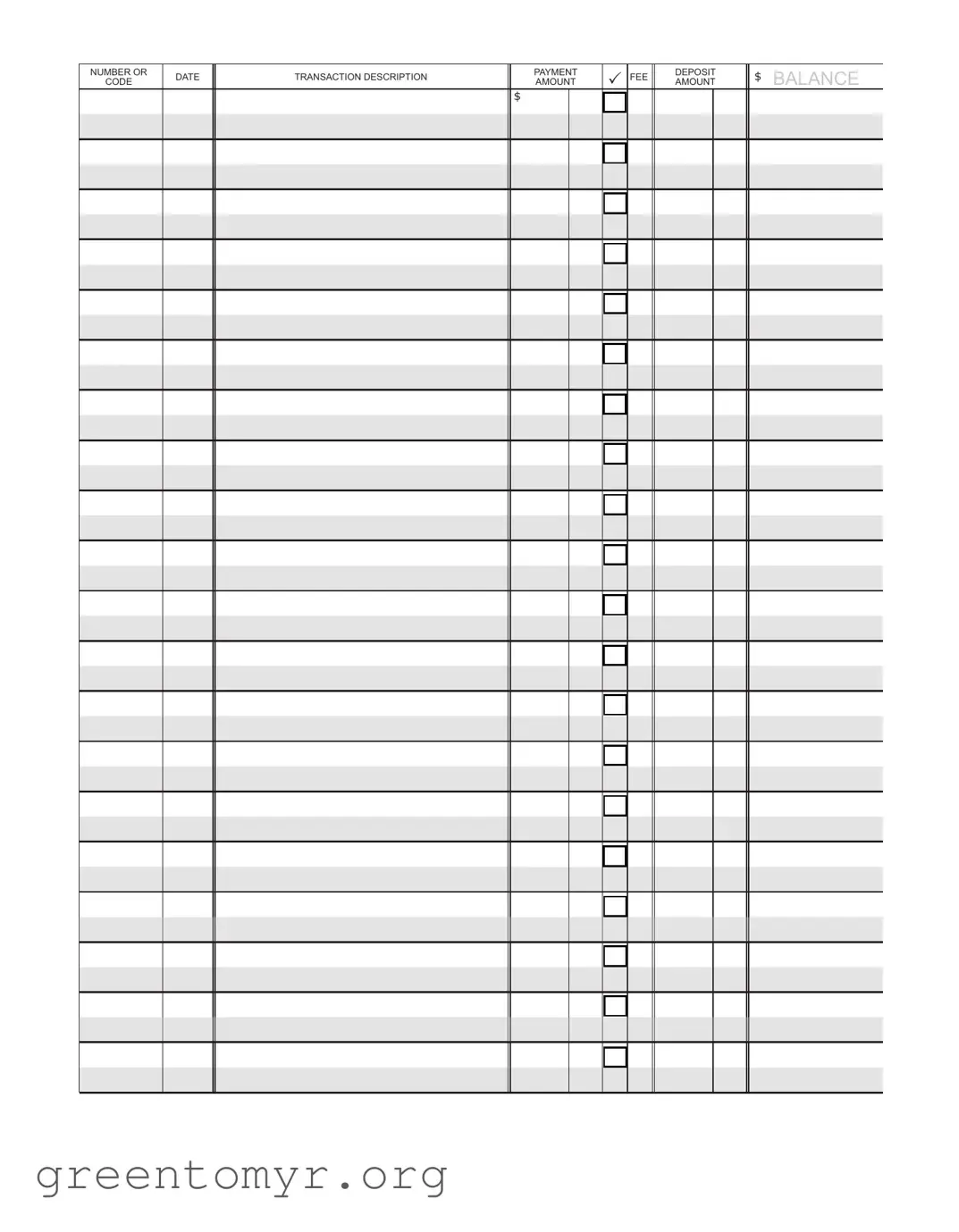
The Check Register form serves as a vital tool for individuals and businesses alike, facilitating the tracking of financial transactions associated with checking accounts. This form allows users to record essential details such as the date of each transaction, check numbers, payees, amounts, and the balance remaining after each entry. By maintaining an accurate check register, users can ensure they have a clear overview of their spending, avoid overdrafts, and manage their finances more effectively. Furthermore, this form assists in reconciling bank statements, providing a reliable record that can be compared against bank records to identify discrepancies. The Check Register is not merely a record-keeping tool; it empowers users to take control of their financial health by promoting awareness and accountability in their spending habits.
NUMBER OR |
DATE |
TRANSACTION DESCRIPTION |
PAYMENT |
|
FEE |
DEPOSIT |
$ BALANCE |
||
CODE |
AMOUNT |
AMOUNT |
|||||||
|
|
|
$ |
|
|
|
|
|
|
|
|
|
|
|
|
|
|
|
|
|
|
|
|
|
|
|
|
|
|
|
|
|
|
|
|
|
|
|
|
|
|
|
|
|
|
|
|
|
|
|
|
|
|
|
|
|
|
|
|
|
|
|
|
|
|
|
|
|
|
|
|
|
|
|
|
|
|
|
|
|
|
|
|
|
|
|
|
|
|
|
|
|
|
|
|
|
|
|
|
|
|
|
|
|
|
|
|
|
|
|
|
|
|
|
|
|
|
|
|
|
|
|
|
|
|
|
|
|
|
|
|
|
|
|
|
|
|
|
|
|
|
|
|
|
|
|
|
|
|
|
|
|
|
|
|
|
|
|
|
|
|
|
|
|
|
|
|
|
|
|
|
|
|
|
|
|
|
|
|
|
|
|
|
|
|
|
|
|
|
|
|
|
|
|
|
|
|
|
|
|
|
|
|
|
|
|
|
|
|
|
|
|
|
|
|
|
|
|
|
|
|
|
|
|
|
|
|
|
|
|
|
|
|
|
|
|
|
|
|
|
|
|
|
|
|
|
|
|
|
|
|
|
|
|
|
|
|
|
|
|
|
|
|
|
|
|
|
|
|
|
|
|
|
|
|
|
|
|
|
|
|
|
|
|
|
|
|
|
|
|
|
|
|
|
|
|
|
|
|
|
|
|
|
|
|
|
|
|
|
|
|
|
|
|
|
|
|
|
|
|
|
|
|
|
|
|
|
|
|
|
|
|
|
|
|
|
|
|
|
|
|
|
|
|
|
|
|
|
|
|
|
|
|
|
|
|
|
|
|
|
|
|
|
|
|
|
|
|
|
|
|
|
|
|
|
|
|
|
|
|
|
|
|
|
|
|
|
|
|
|
|
|
|
|
|
|
|
|
|
|
|
|
|
|
|
|
|
|
|
| Fact Name | Description |
|---|---|
| Purpose | The Check Register form is used to track and manage all checks written from a bank account. |
| Components | The form typically includes fields for the date, check number, payee, amount, and balance. |
| Record Keeping | Maintaining a check register helps individuals and businesses keep accurate financial records. |
| Reconciliation | Users can reconcile their check register with bank statements to ensure accuracy in their accounts. |
| State-Specific Forms | Some states may have specific requirements for check registers, governed by state banking laws. |
| Legal Importance | A check register can serve as evidence in legal matters related to financial transactions. |
| Digital Options | Many financial software programs offer digital check register forms for easier management. |
| Best Practices | Regularly updating the check register is recommended to avoid overdrafts and maintain financial control. |
Filling out the Check Register form is a straightforward process that helps you keep track of your financial transactions. Once you have the form ready, you can begin recording your checks, deposits, and other relevant information. This will help you maintain an accurate picture of your finances and ensure that you stay organized.
A Check Register form is a tool used to track all transactions made with a checking account. It helps individuals or businesses keep a detailed record of checks written, deposits made, and any other withdrawals. This form is essential for managing finances effectively and ensuring that the account balance is accurate.
Maintaining a Check Register is important for several reasons:
Filling out a Check Register form is straightforward. Follow these steps:
It is advisable to update your Check Register regularly. Ideally, you should do this every time you make a transaction. This practice ensures that your records are accurate and up to date. Additionally, reviewing your register weekly or monthly can help you catch any errors early.
If you find an error in your Check Register, take the following steps:
Yes, you can use a digital version of the Check Register. Many financial management apps and software programs offer templates that function similarly to a traditional check register. Digital registers can provide added features, such as automatic balance calculations and transaction categorization.
When using a Check Register, keep track of the following information:
To ensure your Check Register is accurate, follow these tips:
Filling out a Check Register form can seem straightforward, but many people make common mistakes that can lead to confusion and errors in their financial records. One frequent error is failing to record transactions promptly. When individuals delay entering checks or deposits, they risk losing track of their balance, which can result in overdrafts or bounced checks.
Another mistake often seen is neglecting to update the balance after each transaction. It’s crucial to recalculate the balance every time a check is written or a deposit is made. Without this step, the check register can quickly become inaccurate, leading to potential financial mismanagement.
People also tend to skip writing down the check number. This detail is important for tracking purposes. If a dispute arises regarding a particular transaction, having the check number can help clarify the situation. Omitting this information can create unnecessary complications.
In addition, some individuals forget to account for bank fees or service charges. These fees can add up over time and significantly affect the overall balance. By not including them in the check register, a person may mistakenly believe they have more funds available than they actually do.
Another common oversight is using incorrect dates. Recording the wrong date for a transaction can lead to confusion when reviewing past entries. It’s essential to ensure that each entry reflects the actual date of the transaction to maintain an accurate financial history.
People sometimes also miscalculate the amounts. Simple arithmetic errors can throw off the entire register. Double-checking each entry can help catch these mistakes before they become a larger issue.
Additionally, failing to reconcile the check register with bank statements can lead to discrepancies. It’s a good practice to compare the two regularly. This helps identify any errors or unauthorized transactions, ensuring that the records remain accurate and up to date.
Many individuals overlook the importance of using clear and legible handwriting. Illegible entries can lead to misunderstandings about the amounts or purposes of transactions. Taking the time to write clearly can prevent confusion down the line.
Lastly, people often forget to keep their check registers secure. Since these documents contain sensitive financial information, it’s vital to store them safely. This helps protect against identity theft and ensures that personal financial details remain confidential.
The Check Register form is a vital tool for tracking financial transactions. However, it is often used in conjunction with other important documents that help maintain accurate records and streamline financial management. Below are four common forms and documents that complement the Check Register form.
Utilizing these documents alongside the Check Register form enhances financial oversight and ensures clarity in managing funds. Keeping everything organized will lead to better financial decision-making and accountability.
The Check Register form is a valuable tool for tracking financial transactions. Several other documents serve similar purposes in managing finances. Here are seven documents that are comparable to the Check Register form:
When filling out the Check Register form, it’s important to follow certain guidelines to ensure accuracy and clarity. Here are six things you should and shouldn't do:
Following these guidelines will help maintain a clear and effective Check Register. Accuracy is key to managing your finances responsibly.
Many individuals have misunderstandings about the Check Register form. Here are four common misconceptions:
Filling out and using a Check Register form is an essential part of managing personal finances. Here are some key takeaways to keep in mind: