Content Navigation

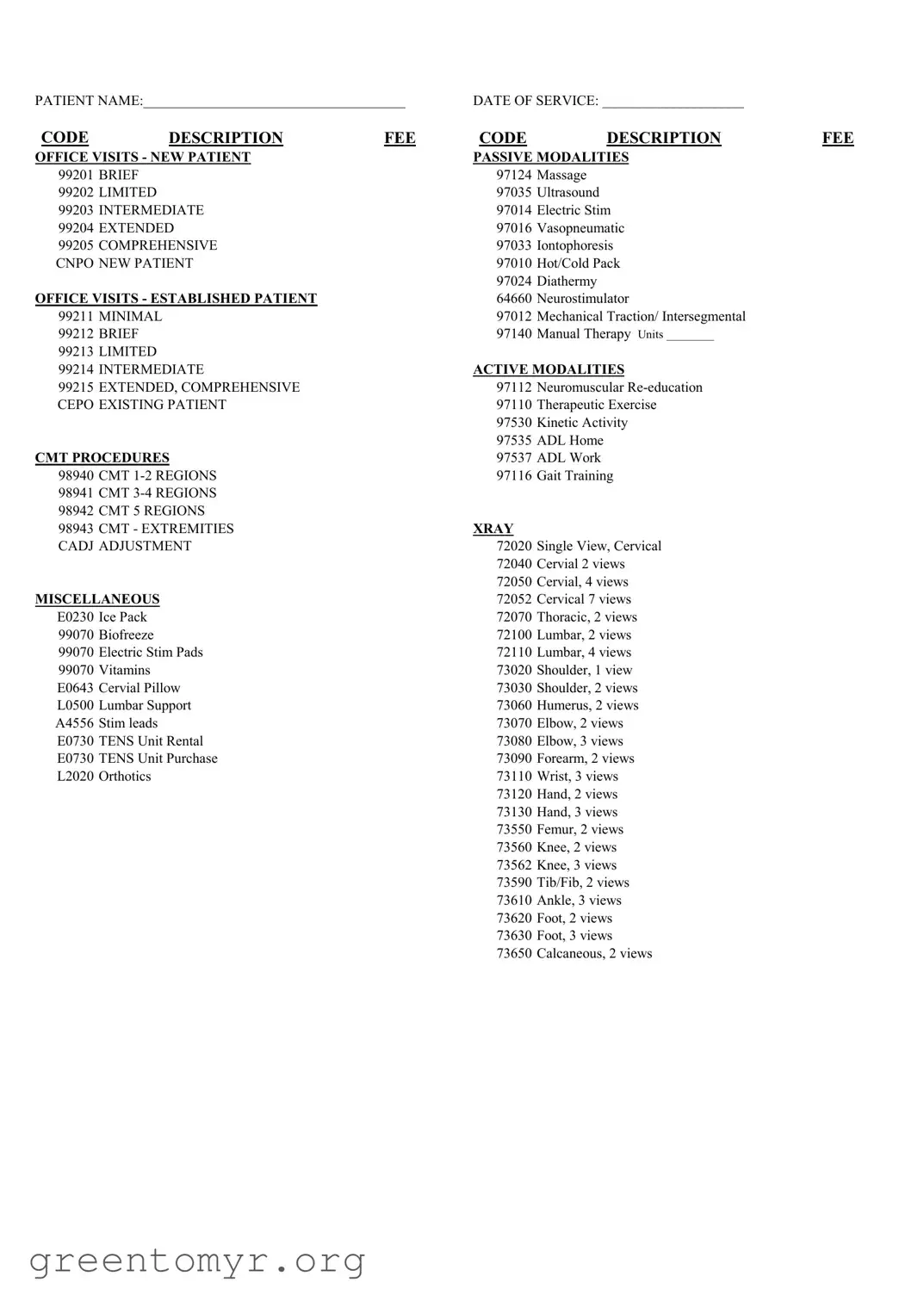
The Chiropractic Superbill form is an essential tool for both healthcare providers and patients, streamlining the process of documenting and billing chiropractic services. This comprehensive form captures crucial patient information, including the patient's name and date of service, while categorizing various treatment codes and their corresponding fees. It includes sections for office visits, distinguishing between new and established patients, and outlines a range of passive and active modalities such as massage, ultrasound, and therapeutic exercises. Additionally, the form details chiropractic manipulation treatment (CMT) procedures, specifying codes for different regions of the body. For diagnostic purposes, it incorporates x-ray codes that facilitate the billing of imaging services. Miscellaneous items like ice packs, electric stimulation pads, and other supportive equipment are also accounted for, ensuring that all aspects of patient care are documented and billed accurately. By using the Chiropractic Superbill, practitioners can enhance their administrative efficiency while providing clear and organized information to patients and insurance companies alike.

Chiropractic Superbill Example

PATIENT NAME:_____________________________________ DATE OF SERVICE: ____________________

CODE

DESCRIPTION

FEE

CODE

DESCRIPTION

FEE

OFFICE VISITS - NEW PATIENT


PASSIVE MODALITIES


99201

BRIEF


97124

Massage


99202

LIMITED


97035

Ultrasound


99203

INTERMEDIATE


97014

Electric Stim


99204

EXTENDED


97016

Vasopneumatic


99205

COMPREHENSIVE


97033

Iontophoresis


CNPO NEW PATIENT


97010

Hot/Cold Pack


97024

Diathermy


OFFICE VISITS - ESTABLISHED PATIENT


64660

Neurostimulator


99211

MINIMAL


97012

Mechanical Traction/ Intersegmental


99212

BRIEF


97140

Manual Therapy Units ________


99213

LIMITED


99214

INTERMEDIATE


ACTIVE MODALITIES


99215

EXTENDED, COMPREHENSIVE


97112

Neuromuscular Re-education


CEPO EXISTING PATIENT


97110

Therapeutic Exercise


97530

Kinetic Activity


97535

ADL Home


CMT PROCEDURES


97537

ADL Work


98940

CMT 1-2 REGIONS


97116

Gait Training


98941

CMT 3-4 REGIONS


98942

CMT 5 REGIONS


98943

CMT - EXTREMITIES


XRAY


CADJ ADJUSTMENT


72020

Single View, Cervical


72040

Cervial 2 views


72050

Cervial, 4 views


MISCELLANEOUS


72052

Cervical 7 views


E0230

Ice Pack


72070

Thoracic, 2 views


99070

Biofreeze


72100

Lumbar, 2 views


99070

Electric Stim Pads


72110

Lumbar, 4 views


99070

Vitamins


73020

Shoulder, 1 view


E0643

Cervial Pillow


73030

Shoulder, 2 views


L0500

Lumbar Support


73060

Humerus, 2 views


A4556

Stim leads


73070

Elbow, 2 views


E0730

TENS Unit Rental


73080

Elbow, 3 views


E0730

TENS Unit Purchase


73090

Forearm, 2 views


L2020

Orthotics


73110

Wrist, 3 views


73120

Hand, 2 views


73130

Hand, 3 views


73550

Femur, 2 views


73560

Knee, 2 views


73562

Knee, 3 views


73590

Tib/Fib, 2 views


73610

Ankle, 3 views


73620

Foot, 2 views


73630

Foot, 3 views


73650

Calcaneous, 2 views


File Breakdown

Fact Name Details
Purpose of the Superbill The Chiropractic Superbill is used to document services provided to patients, including the types of treatments and associated fees. It serves as a billing tool for insurance reimbursement.
Patient Information Each Superbill requires essential patient details, such as the patient's name and the date of service. This information is crucial for accurate record-keeping and billing.
Service Codes The form includes specific codes for various services, such as office visits and modalities. For instance, codes like 99201 to 99205 represent different levels of new patient visits.
State-Specific Regulations In many states, the use of the Superbill is governed by state laws regarding chiropractic practice and insurance billing. For example, California's Business and Professions Code regulates chiropractic billing practices.
Miscellaneous Items The Superbill may also include miscellaneous items such as supplies and equipment rentals. These items, like TENS unit rentals or cervical pillows, can be billed separately.

Guide to Using Chiropractic Superbill

Filling out the Chiropractic Superbill form is essential for accurate billing and documentation. Follow these steps carefully to ensure all necessary information is provided. Make sure to have the patient's details and service information ready before starting.

  1. Patient Name: Write the full name of the patient in the designated space.
  2. Date of Service: Enter the date when the service was provided.
  3. Office Visits: Select the appropriate code for the type of office visit (New Patient or Established Patient) and write it in the corresponding section. Choose from the codes listed (e.g., 99201 for brief, 99202 for limited, etc.).
  4. Passive Modalities: If applicable, select the appropriate modality code and description. Write the code and fee next to it.
  5. Active Modalities: If applicable, choose the correct active modality code and description, then write the code and fee next to it.
  6. CMT Procedures: For chiropractic manipulation treatment, select the appropriate code based on the number of regions treated (e.g., 98940 for 1-2 regions) and write it in the designated area.
  7. X-ray: If any X-rays were taken, select the appropriate code for the views performed and write it in the designated area.
  8. Miscellaneous: If any additional items were provided (e.g., ice packs, TENS units), select the appropriate codes and write them down with their fees.
  9. Final Review: Double-check all entries for accuracy. Ensure that all necessary codes and fees are filled in correctly.

Get Answers on Chiropractic Superbill

What is a Chiropractic Superbill?

A Chiropractic Superbill is an important document used by chiropractors to itemize the services provided to a patient during a visit. It serves as a detailed invoice that includes information such as the patient's name, date of service, and a breakdown of the services rendered along with their corresponding fees. This form is essential for patients who wish to submit claims to their insurance providers for reimbursement.

What information is included on a Chiropractic Superbill?

The Chiropractic Superbill contains several key components:

  1. Patient Information: The patient's name and the date of service.
  2. Service Codes: Each service has a specific code that identifies the type of treatment provided, such as office visits, passive modalities, and active modalities.
  3. Fees: The cost associated with each service, allowing for a clear understanding of the total charges.
  4. X-ray Codes: If any imaging was performed, the relevant codes and fees will be included.

This comprehensive information helps streamline the insurance claim process and ensures transparency regarding the services received.

How do I use a Chiropractic Superbill for insurance claims?

To use a Chiropractic Superbill for insurance claims, follow these steps:

  • Obtain the Superbill from your chiropractor after your visit.
  • Review the document for accuracy, ensuring that all services and fees are correctly listed.
  • Contact your insurance provider to understand their specific claim submission process.
  • Submit the Superbill along with any required forms to your insurance company.
  • Keep a copy of the Superbill for your records.

By following these steps, you can facilitate a smoother claims process and improve your chances of receiving reimbursement for the services rendered.

Can I use a Chiropractic Superbill for out-of-network benefits?

Yes, you can use a Chiropractic Superbill for out-of-network benefits. Many insurance plans offer partial reimbursement for services rendered by out-of-network providers. To maximize your chances of receiving reimbursement:

  • Check your insurance policy to understand your out-of-network benefits.
  • Ensure that the Superbill is complete and accurate.
  • Submit the Superbill along with any required documentation to your insurance provider.

It is advisable to contact your insurance company prior to your visit to confirm coverage and reimbursement rates for out-of-network chiropractic services.

Common mistakes

Filling out the Chiropractic Superbill form accurately is essential for proper billing and reimbursement. One common mistake is failing to include the patient's name and the date of service. Omitting this information can lead to delays in processing and confusion regarding the patient's treatment history. Always ensure that these fields are completed before submitting the form.

Another frequent error involves selecting incorrect codes for services rendered. Each service has a specific code that corresponds to its description. For instance, if a patient received a therapeutic exercise treatment, the correct code must be used to avoid billing issues. Double-checking the codes against the services provided can help prevent this mistake.

In addition, some individuals overlook the importance of documenting the fee for each service. Leaving this section blank may result in the claim being rejected or underpaid. It is advisable to fill in the fee for each service accurately to ensure that the billing reflects the actual charges incurred during the visit.

Another common mistake is misclassifying the type of patient, whether new or established. The billing codes differ based on the patient's status. For example, using an established patient code for a new patient visit can lead to significant discrepancies in billing. It is important to verify the patient's status before selecting the appropriate codes.

Finally, some individuals may neglect to include additional notes or explanations that could clarify the treatment provided. This information can be vital for insurance companies when reviewing claims. Including relevant notes can facilitate a smoother claims process and help ensure that the services are understood in context.

Documents used along the form

The Chiropractic Superbill is an essential document that helps healthcare providers bill insurance companies for services rendered. Along with the Superbill, there are several other forms and documents that are commonly used in the chiropractic field. Each of these documents plays a critical role in ensuring accurate billing and patient care.

  • Patient Intake Form: This form collects essential information about the patient, including medical history, current health issues, and insurance details. It helps the chiropractor understand the patient's background before treatment begins.
  • Informed Consent Form: Patients must sign this document to acknowledge that they understand the nature of chiropractic care, potential risks, and benefits. This form protects both the patient and the practitioner.
  • Progress Notes: These notes are used to document each visit, including treatments provided and the patient's response. They are crucial for tracking progress and justifying the necessity of ongoing care.
  • Insurance Claim Form (CMS-1500): This standardized form is used to submit claims to insurance companies. It details the services provided, diagnoses, and costs, ensuring proper reimbursement.
  • Referral Form: If a chiropractor refers a patient to another specialist, this form outlines the reasons for the referral and any relevant medical history. It facilitates communication between healthcare providers.
  • Authorization for Release of Information: This document allows the chiropractor to share the patient's medical information with other healthcare providers or insurance companies, ensuring compliance with privacy laws.
  • Financial Agreement: This form outlines the payment terms for services rendered, including co-pays, deductibles, and payment plans. It helps prevent misunderstandings regarding costs.
  • Termination of Care Form: In cases where care is discontinued, this form documents the reasons and ensures that the patient understands their options moving forward.
  • Patient Satisfaction Survey: This optional document collects feedback from patients about their experience. It can help improve services and patient care in the practice.

Each of these documents works together to create a comprehensive system for patient care and billing. Understanding their purpose can enhance the efficiency of a chiropractic practice and improve the overall experience for patients.

Similar forms

  • Medical Invoice: Like the Chiropractic Superbill, a medical invoice lists services provided to a patient, including codes and fees. Both documents are used for billing purposes and provide a detailed account of treatments received.
  • Insurance Claim Form: This form is submitted to insurance companies for reimbursement. Similar to the Chiropractic Superbill, it includes patient information, service codes, and descriptions to justify the claim.
  • Patient Statement: A patient statement summarizes what a patient owes for services rendered. It often includes details similar to those found on a Chiropractic Superbill, such as dates of service and itemized charges.
  • Receipt: A receipt confirms payment for services. While it may not include all the detailed codes found on a Chiropractic Superbill, it serves as proof of payment for the services listed.
  • Appointment Summary: This document outlines the services performed during a visit. It shares similarities with the Chiropractic Superbill in that it details the treatments and modalities used during the appointment.

Dos and Don'ts

When filling out the Chiropractic Superbill form, there are important guidelines to follow. Adhering to these can help ensure accuracy and efficiency in processing. Here’s a list of things to do and avoid:

  • Do write clearly and legibly. Use a black or blue pen to fill out the form.
  • Do double-check all codes for accuracy. Ensure that the codes match the services provided.
  • Do include the patient's full name and date of service at the top of the form.
  • Do provide detailed descriptions for each service rendered. This helps in clarifying the treatment provided.
  • Do keep a copy of the completed form for your records. This can be useful for future reference.
  • Do ask for assistance if you're unsure about any part of the form. It's better to clarify than to guess.
  • Don't leave any fields blank. If a section does not apply, indicate it clearly.
  • Don't use abbreviations or shorthand that may be unclear to others reviewing the form.
  • Don't forget to sign the form if required. An unsigned form may delay processing.
  • Don't rush through the process. Take your time to ensure all information is accurate.
  • Don't submit the form without verifying that all necessary documentation is attached.
  • Don't ignore the instructions provided with the form. They are there for a reason.

Misconceptions

Misconceptions about the Chiropractic Superbill form can lead to confusion for patients and providers alike. Here are eight common misconceptions explained:

  • The Superbill is only for new patients. This is not true. The Superbill is used for both new and established patients. It captures services rendered regardless of the patient's status.
  • All services are covered by insurance. Not every service listed on the Superbill is guaranteed to be covered by insurance. Coverage varies by plan, and patients should verify their benefits.
  • The Superbill is the same as a bill. A Superbill is not a final bill. It is a detailed receipt that includes codes and services for insurance reimbursement, while a bill typically reflects the amount owed by the patient.
  • Chiropractors can only bill for adjustments. Chiropractors can bill for a variety of services, including passive and active modalities, as well as diagnostic imaging, not just adjustments.
  • Patients do not need to keep a copy of the Superbill. Patients should keep a copy of the Superbill for their records. It can be helpful for tracking expenses and submitting claims to insurance.
  • The codes on the Superbill are universal. While many codes are standardized, they can vary by provider and insurance company. Patients should confirm the codes with their chiropractor.
  • All chiropractors use the same Superbill format. Each chiropractor may have a different format for their Superbill. It is important to review the specific details provided by the chiropractor.
  • The Superbill guarantees reimbursement. A Superbill does not guarantee that insurance will reimburse the patient. Reimbursement depends on the insurance provider's policies and the specifics of the patient's plan.

Key takeaways

When it comes to filling out the Chiropractic Superbill form, there are several important points to keep in mind. Here are some key takeaways to ensure you do it correctly:

  • Patient Information: Always start by filling in the patient's name and the date of service. This information is crucial for record-keeping.
  • Code Selection: Choose the correct codes for the services provided. Each code corresponds to a specific treatment or procedure.
  • Fee Structure: Be aware of the fees associated with each code. This helps in billing and understanding the costs involved.
  • New vs. Established Patients: Different codes apply to new patients and established patients. Make sure to select the appropriate category.
  • Active and Passive Modalities: Understand the difference between active and passive modalities. This distinction affects the codes you will use.
  • CMT Procedures: If chiropractic manipulative treatment (CMT) is provided, use the correct CMT codes based on the number of regions treated.
  • X-Ray Codes: If x-rays are taken, select the right code based on the type and number of views.
  • Miscellaneous Items: Keep track of any miscellaneous items used during treatment, such as ice packs or TENS units, and include their codes.
  • Review Before Submission: Always double-check the form for accuracy before submitting it to ensure proper processing.

By following these takeaways, you can fill out the Chiropractic Superbill form with confidence and ease.