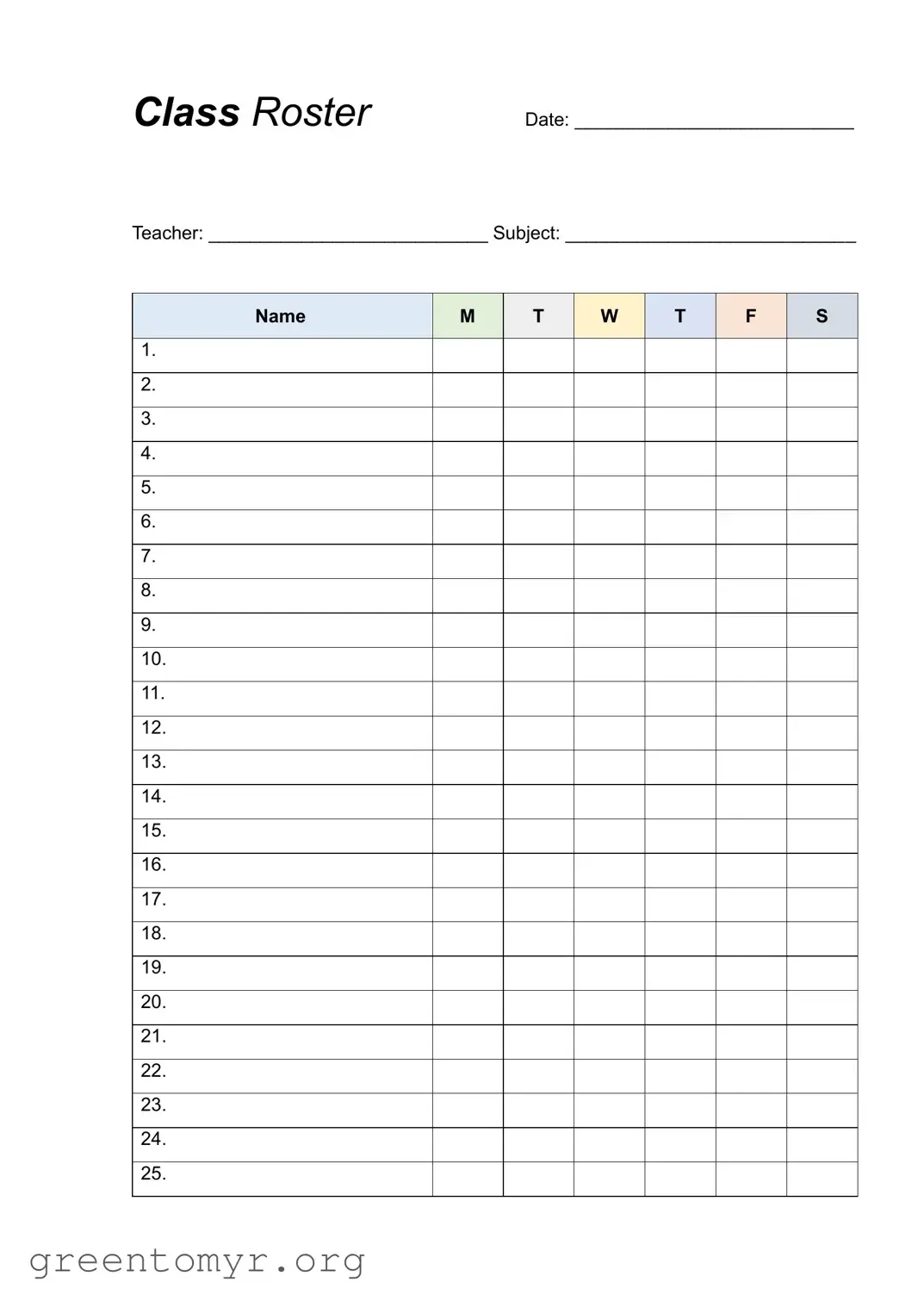
The Class List form serves as a vital tool in educational settings, facilitating the organization and management of student information within a classroom environment. This multipurpose document is designed to streamline various administrative tasks, making it easier for teachers to keep track of their students. At its core, the form includes essential fields for the teacher's name and the subject being taught, ensuring clarity and accountability. It features a numbered list where teachers can input student names, allowing for quick reference and efficient roll call procedures. The layout is straightforward, promoting ease of use, while also accommodating multiple classroom resources. The Class List form not only aids in attendance tracking but also supports broader classroom management efforts, contributing to a well-structured educational experience. With its emphasis on organization, this form exemplifies the importance of effective communication and documentation in the teaching profession.
Class Roster |
Date: ___________________________ |
Teacher: ___________________________ Subject: ____________________________
Name |
M |
T |
W |
T |
F |
S |
|
|
|
|
|
|
|
1.
2.
3.
4.
5.
6.
7.
8.
9.
10.
11.
12.
13.
14.
15.
16.
17.
18.
19.
20.
21.
22.
23.
24.
25.
| Fact Name | Description |
|---|---|
| Purpose | The Class List form is used to organize and track student names in a classroom setting. |
| Teacher Identification | The form requires the teacher's name to ensure accountability and clarity in class management. |
| Subject Specification | Teachers must specify the subject being taught, linking students to the correct curriculum. |
| Student Entries | There are spaces provided for up to 15 student names, allowing for easy roster management. |
| Reserved Rights | The form includes a notice about reserved rights, indicating ownership of the content. |
| Publisher Information | Prentice Hall is mentioned as the publisher, providing a point of reference for educational resources. |
| Copyright Notice | The form contains a copyright notice, protecting the intellectual property associated with it. |
| Multiple Use | This form is designed for multiple uses, catering to various classroom settings and subjects. |
| State-Specific Forms | Each state may have specific regulations governing the use of class lists, often found in education laws. |
| Accessibility | The form should be easily accessible to teachers and administrators for efficient classroom management. |
After completing the Class List form, the next steps involve submitting the document to the appropriate administrative office for processing. Ensure all information is accurate and legible to avoid any delays.
The Class List form serves as a tool for teachers to organize and track student information for a specific class. It helps in maintaining attendance, managing assignments, and facilitating communication with students and their guardians.
The form typically requires the following information:
You can list up to 15 students on the Class List form. This allows for effective management of smaller classes while ensuring all necessary details are captured.
Yes, you can modify the Class List form as needed. However, ensure that any changes do not compromise the clarity and usability of the form for tracking student information.
While there is no strict format, it is recommended to enter student names in the following order: first name followed by the last name. This helps in maintaining consistency and clarity.
If a student is added or removed, update the Class List form promptly. For an addition, simply fill in the next available space. For a removal, you may choose to cross out the name or leave it blank, depending on your preference.
If you need more space, consider using a separate sheet of paper to list additional students. You can attach this sheet to the original Class List form for easy reference.
To keep the Class List form secure, store it in a locked filing cabinet or a secure digital location. Limit access to individuals who need the information for educational purposes.
Submission deadlines may vary by institution. It is advisable to check with your school administration for specific timelines to ensure compliance with their requirements.
If you have questions, reach out to your school administration or a fellow educator. They can provide guidance and support to ensure you are using the form effectively.
Filling out the Class List form can seem straightforward, but several common mistakes can lead to confusion and delays. One frequent error is leaving the teacher's name blank. This information is crucial for identifying who is responsible for the class and ensuring proper communication.
Another mistake is failing to specify the subject being taught. Without this detail, it becomes challenging to organize classes effectively. Each subject may require different resources, and clarity is essential for planning.
Many people overlook the importance of numbering the students correctly. The form has designated spots for student names, but skipping numbers or using the same number for multiple students can create significant issues. Each student should have a unique identifier on the list.
Inaccurate spelling of student names is also a common problem. Even minor typos can lead to complications in record-keeping and communication. Double-checking names against official documents can help avoid this mistake.
Another issue arises when individuals forget to include all students. If a student is missing from the list, it can affect attendance records and resource allocation. Ensuring that every student is accounted for is vital.
Lastly, some people fail to review the entire form before submission. This oversight can lead to incomplete or incorrect information being sent. Taking a moment to verify all entries can prevent unnecessary complications down the line.
The Class List form serves as a vital tool for educators, enabling them to organize and manage student information efficiently. Alongside this form, several other documents are commonly utilized to enhance classroom administration and communication. Below is a list of these documents, each playing a unique role in the educational process.
Each of these documents complements the Class List form, creating a comprehensive system for managing classroom dynamics and fostering student success. Together, they contribute to a well-organized educational environment, ultimately benefiting both teachers and students.
The Class List form serves as a valuable tool in educational settings, but it shares similarities with several other documents. Each of these documents plays a unique role in organizing information, yet they all facilitate communication and record-keeping in a classroom environment. Below is a list of documents that are similar to the Class List form:
Each of these documents serves a distinct purpose, yet they all contribute to the effective management of a classroom and the overall educational experience for students.
When filling out the Class List form, it's important to approach the task with care. Here are some essential dos and don'ts to keep in mind:
By following these guidelines, you can ensure that your Class List form is completed accurately and effectively.
Misconceptions about the Class List form can lead to confusion and improper use. Here are five common misconceptions:
Here are some key takeaways about filling out and using the Class List form:
By following these guidelines, teachers can make the most of the Class List form.