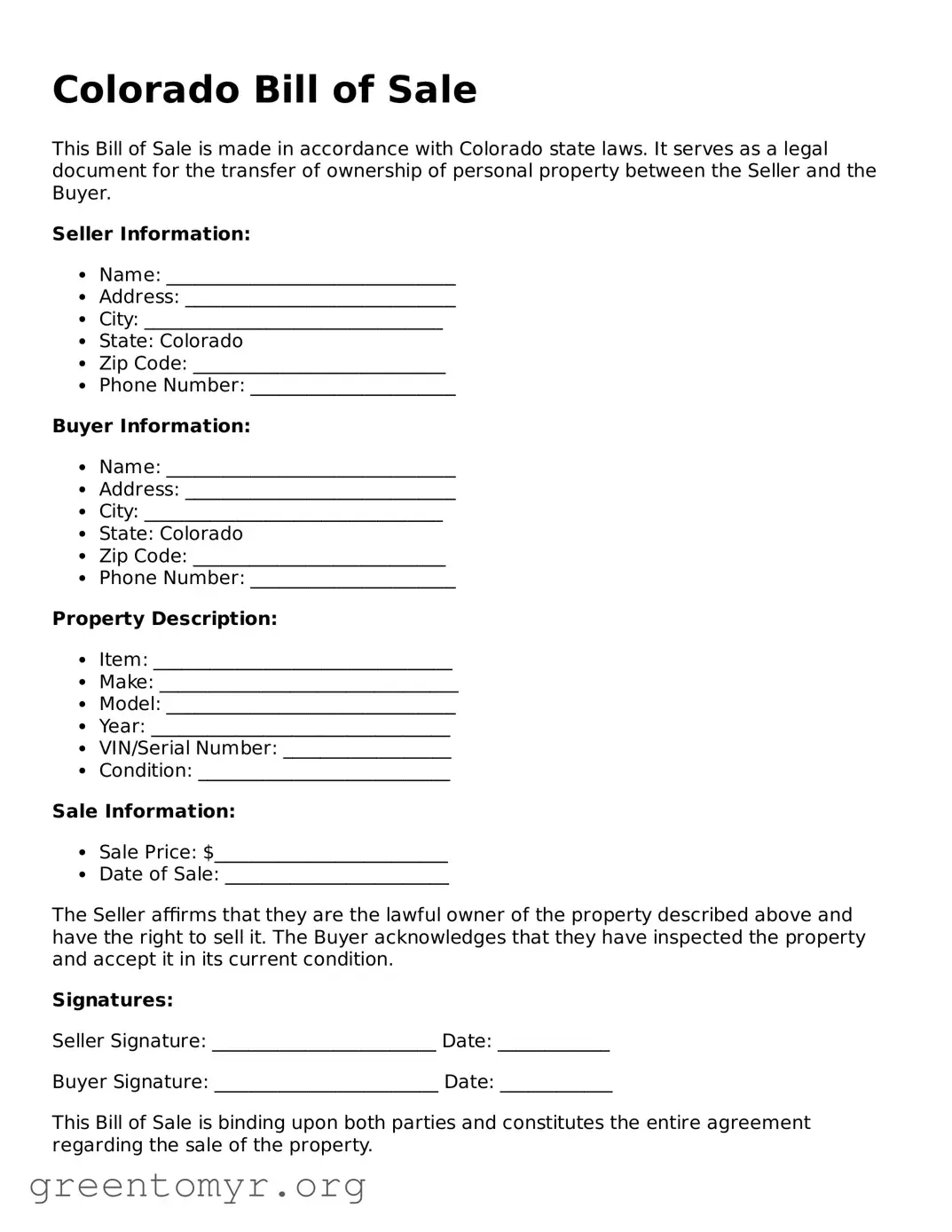
The Colorado Bill of Sale form serves as a crucial document in the transfer of ownership for personal property, including vehicles, boats, and other tangible items. It provides a written record of the transaction, ensuring that both the buyer and seller are protected under state law. This form typically includes essential information such as the names and addresses of both parties, a detailed description of the item being sold, the sale price, and the date of the transaction. In addition to these key elements, the Bill of Sale may also contain sections for signatures and notarization, which can add an extra layer of authenticity and legal standing. Understanding the importance of this document can help facilitate smoother transactions and provide peace of mind for all parties involved. Whether you are selling a cherished vehicle or purchasing a new piece of equipment, having a properly completed Bill of Sale is an important step in ensuring a clear and transparent exchange.
Colorado Bill of Sale
This Bill of Sale is made in accordance with Colorado state laws. It serves as a legal document for the transfer of ownership of personal property between the Seller and the Buyer.
Seller Information:
Buyer Information:
Property Description:
Sale Information:
The Seller affirms that they are the lawful owner of the property described above and have the right to sell it. The Buyer acknowledges that they have inspected the property and accept it in its current condition.
Signatures:
Seller Signature: ________________________ Date: ____________
Buyer Signature: ________________________ Date: ____________
This Bill of Sale is binding upon both parties and constitutes the entire agreement regarding the sale of the property.
| Fact Name | Description |
|---|---|
| Purpose | The Colorado Bill of Sale form is used to document the sale of personal property between a buyer and a seller. |
| Governing Law | The form is governed by Colorado Revised Statutes, Title 4, Article 9, which pertains to the Uniform Commercial Code. |
| Property Types | This form can be used for various types of personal property, including vehicles, boats, and equipment. |
| Signatures Required | Both the buyer and seller must sign the Bill of Sale to validate the transaction. |
| Date of Sale | The date of the transaction must be clearly indicated on the form. |
| Consideration | The purchase price or consideration for the property must be stated in the document. |
| Notarization | Notarization is not required for a Bill of Sale in Colorado, but it can provide additional legal protection. |
| Record Keeping | It is advisable for both parties to retain a copy of the Bill of Sale for their records. |
Once you have the Colorado Bill of Sale form in front of you, it’s essential to complete it accurately to ensure a smooth transaction. Follow these steps carefully to fill out the form correctly.
After completing the form, both parties should keep a copy for their records. This documentation serves as proof of the transaction and can be useful for future reference.
A Colorado Bill of Sale is a legal document that records the transfer of ownership of personal property from one person to another. It serves as proof of the transaction and outlines important details such as the buyer and seller's information, a description of the item being sold, and the sale price. This document can be used for various items, including vehicles, boats, and other personal goods.
While a Bill of Sale is not always legally required for every transaction in Colorado, it is highly recommended. Having a Bill of Sale provides a clear record of the sale and can protect both the buyer and seller in case of disputes. For vehicles, a Bill of Sale is often required when transferring ownership to ensure proper registration with the Department of Motor Vehicles (DMV).
A comprehensive Colorado Bill of Sale should include the following information:
Including these details helps ensure that the document is complete and legally binding.
Yes, a Bill of Sale is required for vehicle sales in Colorado. When you sell a vehicle, the Bill of Sale must be completed and signed by both the buyer and seller. This document is necessary for the buyer to register the vehicle in their name at the DMV. It helps to verify the sale and protect both parties involved in the transaction.
Yes, you can create your own Bill of Sale in Colorado. There are no specific state forms mandated, so you can draft one that suits your needs. However, it’s important to ensure that it includes all necessary information to be legally valid. You may also find templates online that can guide you in creating a comprehensive document.
After completing the Bill of Sale, both the buyer and seller should keep a copy for their records. The seller should also provide the buyer with any additional documents related to the sale, such as the vehicle title or maintenance records if applicable. If the sale involves a vehicle, the buyer must take the Bill of Sale to the DMV to register the vehicle in their name.
Filling out a Colorado Bill of Sale form can seem straightforward, but many people make common mistakes that can lead to complications down the line. One frequent error is failing to include all required information. This includes the names and addresses of both the buyer and seller, as well as a detailed description of the item being sold. Omitting any of these details can render the form incomplete.
Another mistake is not providing the correct date of the transaction. The date is crucial as it establishes when the sale took place. If the date is missing or incorrect, it could create confusion regarding ownership and liability. Always double-check this information before submitting the form.
Many individuals also overlook the importance of signatures. Both the buyer and seller must sign the Bill of Sale for it to be valid. A missing signature can lead to disputes about the sale. Ensure that both parties sign the document in the appropriate places.
Some people fail to provide a fair market value for the item being sold. This value is important for tax purposes and helps to establish the legitimacy of the transaction. Not listing a value can raise red flags with tax authorities.
Another common error is neglecting to check for any outstanding liens or loans on the item. If the item has a lien, the seller may not have the right to sell it. Buyers should always verify the status of the item before completing the sale.
In addition, individuals sometimes use vague descriptions of the item. A detailed description helps prevent misunderstandings about what is being sold. Include specifics such as the make, model, year, and condition of the item to avoid any potential disputes.
People often forget to make copies of the Bill of Sale for their records. Keeping a copy is essential for both parties to have proof of the transaction. Without a copy, it may be difficult to resolve any future issues that arise.
Another mistake is not considering the need for notarization. While notarization is not always required for a Bill of Sale in Colorado, having the document notarized can add an extra layer of protection for both parties. It can serve as proof that the signatures are legitimate.
Lastly, individuals may overlook the importance of reviewing the completed form for errors before submission. Simple typos or incorrect information can create significant issues later. Take the time to review the document carefully to ensure accuracy.
The Colorado Bill of Sale form is an important document for anyone looking to buy or sell personal property in Colorado. However, there are several other forms and documents that often accompany this transaction to ensure everything is legally sound and clear. Below is a list of five commonly used forms that can enhance the sale process.
Using these additional forms alongside the Colorado Bill of Sale can help facilitate a smoother transaction and provide peace of mind for both buyers and sellers. Always consider consulting with a legal expert if you have any questions or concerns about the process.
A Bill of Sale is a crucial document in the transfer of ownership for personal property, particularly vehicles and other tangible items. Several other documents serve similar purposes in various contexts. Here’s a look at eight documents that share similarities with a Bill of Sale:
Understanding these documents can help individuals navigate transactions more effectively, ensuring that ownership transfers are properly documented and legally recognized.
When filling out the Colorado Bill of Sale form, it is important to follow certain guidelines to ensure the document is valid and effective. Below are seven things you should and shouldn't do:
Misconception 1: A Bill of Sale is only necessary for vehicle transactions.
Many people believe that a Bill of Sale is only required when buying or selling a car. In reality, this document can be used for a variety of transactions, including the sale of boats, motorcycles, and even personal property like furniture or electronics. It serves as proof of ownership transfer, regardless of the item being sold.
Misconception 2: A Bill of Sale must be notarized to be valid.
Some individuals think that notarization is a requirement for a Bill of Sale to be legally binding. While having a notarized document can add an extra layer of protection, it is not always necessary. In Colorado, a Bill of Sale is valid as long as it is signed by both parties involved in the transaction.
Misconception 3: You don't need a Bill of Sale if you have a receipt.
While a receipt provides proof of payment, it does not necessarily document the transfer of ownership. A Bill of Sale includes specific details about the item, the parties involved, and the terms of the sale. This makes it a more comprehensive record of the transaction.
Misconception 4: A verbal agreement is sufficient without a Bill of Sale.
Some people believe that a verbal agreement is enough to finalize a sale. However, without a written Bill of Sale, it can be challenging to prove the terms of the agreement if a dispute arises. Having a written document protects both the buyer and the seller by clearly outlining the transaction details.
When using the Colorado Bill of Sale form, it is important to understand its purpose and how to complete it correctly. Here are some key takeaways:
Understanding these key points can help ensure a smooth transaction when using the Colorado Bill of Sale form.