When entering into a commercial lease agreement in Colorado, it's crucial to understand the various components that make up this important document. A Colorado Commercial Lease Agreement outlines the terms and conditions under which a landlord allows a tenant to occupy a commercial property. Key aspects include the identification of the parties involved, the description of the leased premises, and the duration of the lease. Additionally, the agreement details the rental amount, payment schedule, and any security deposits required. It also addresses maintenance responsibilities, permissible uses of the property, and the terms for renewal or termination. By carefully reviewing and negotiating these elements, both landlords and tenants can ensure a mutually beneficial arrangement that fosters a successful business environment.
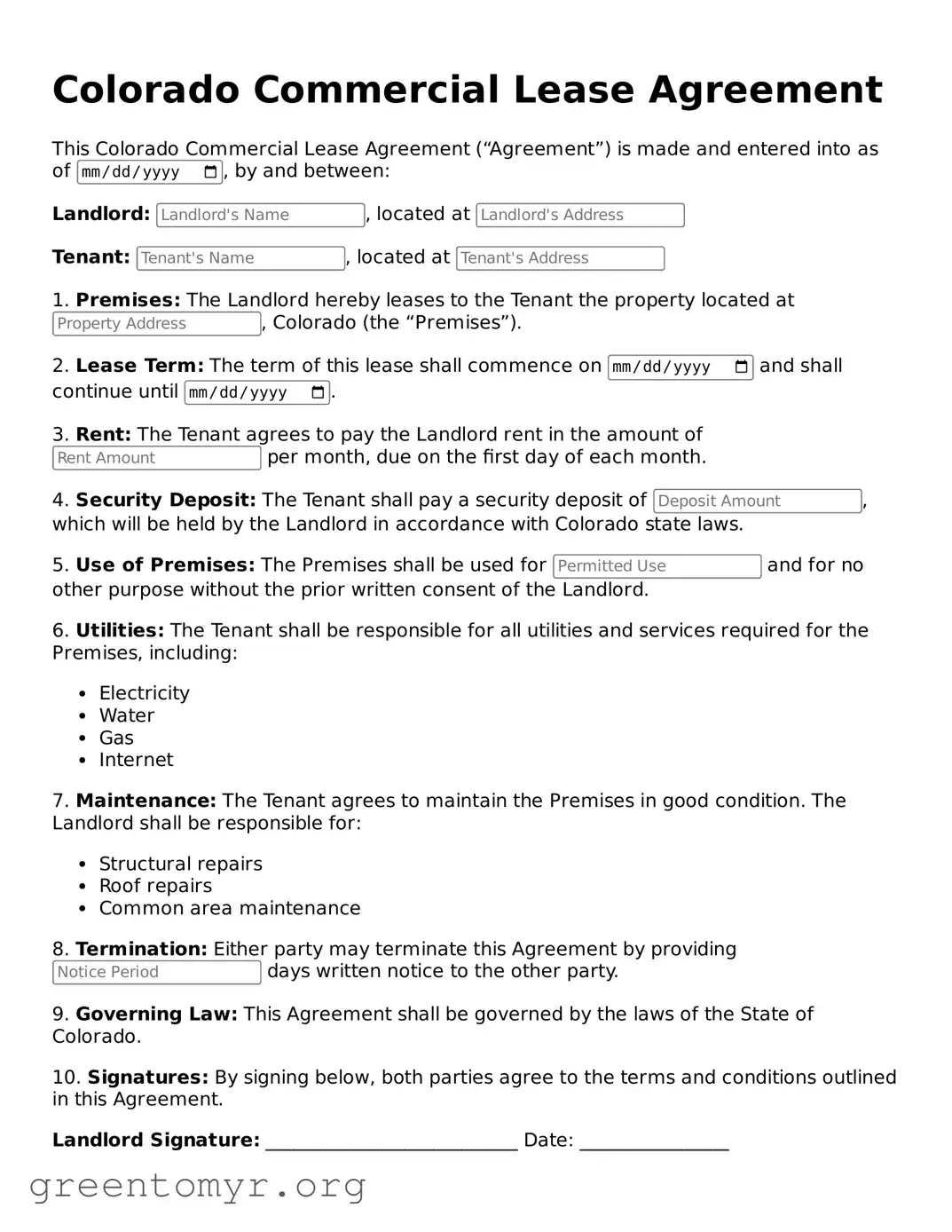
Colorado Commercial Lease Agreement
This Colorado Commercial Lease Agreement (“Agreement”) is made and entered into as of , by and between:
Landlord: , located at
Tenant: , located at
1. Premises: The Landlord hereby leases to the Tenant the property located at , Colorado (the “Premises”).
2. Lease Term: The term of this lease shall commence on and shall continue until .
3. Rent: The Tenant agrees to pay the Landlord rent in the amount of per month, due on the first day of each month.
4. Security Deposit: The Tenant shall pay a security deposit of , which will be held by the Landlord in accordance with Colorado state laws.
5. Use of Premises: The Premises shall be used for and for no other purpose without the prior written consent of the Landlord.
6. Utilities: The Tenant shall be responsible for all utilities and services required for the Premises, including:
7. Maintenance: The Tenant agrees to maintain the Premises in good condition. The Landlord shall be responsible for:
8. Termination: Either party may terminate this Agreement by providing days written notice to the other party.
9. Governing Law: This Agreement shall be governed by the laws of the State of Colorado.
10. Signatures: By signing below, both parties agree to the terms and conditions outlined in this Agreement.
Landlord Signature: ___________________________ Date: ________________
Tenant Signature: ___________________________ Date: ________________
| Fact Name | Details |
|---|---|
| Governing Law | The Colorado Commercial Lease Agreement is governed by the laws of the State of Colorado. |
| Parties Involved | The agreement typically involves a landlord (lessor) and a tenant (lessee). |
| Property Description | The lease must include a clear description of the commercial property being leased. |
| Lease Term | The duration of the lease should be specified, including start and end dates. |
| Rent Payment | The agreement outlines the rent amount, payment schedule, and accepted payment methods. |
| Maintenance Responsibilities | The lease should clarify which party is responsible for property maintenance and repairs. |
Filling out the Colorado Commercial Lease Agreement form is a straightforward process that requires attention to detail. By following the steps outlined below, you can ensure that all necessary information is included, which will help facilitate a smooth leasing experience.
Once the form is completed, both parties should retain a copy for their records. This will serve as a reference point throughout the lease term and can be crucial in case any disputes arise.
A Colorado Commercial Lease Agreement is a legally binding document that outlines the terms and conditions under which a landlord allows a tenant to occupy a commercial property. This agreement is crucial for defining the rights and responsibilities of both parties. It typically includes details such as the lease duration, rent amount, security deposit, maintenance responsibilities, and any restrictions on the use of the property. By clearly stating these terms, the lease helps to prevent disputes and provides a framework for resolving issues that may arise during the lease period.
When drafting a Colorado Commercial Lease Agreement, several key elements should be included to ensure clarity and protection for both the landlord and tenant:
Disputes may arise during the term of a commercial lease. The Colorado Commercial Lease Agreement typically includes a dispute resolution clause that outlines the process for handling conflicts. Common methods for resolving disputes include:
Yes, a Colorado Commercial Lease Agreement can be modified after it is signed, but both parties must agree to any changes. Modifications should be documented in writing and signed by both the landlord and tenant to ensure enforceability. Common reasons for modifications include changes in rental terms, alterations to the property, or adjustments to the lease duration. It is advisable to consult with a legal professional when making modifications to ensure compliance with state laws and to protect the interests of both parties.
Filling out the Colorado Commercial Lease Agreement can be straightforward, but many people make common mistakes that can lead to confusion or legal issues. One frequent error is failing to include all parties involved in the lease. Ensure that every individual or entity signing the lease is properly identified. Omitting a party can create problems later on.
Another common mistake is not specifying the lease term clearly. The start and end dates must be explicitly stated. Vague terms can lead to disputes about when the lease actually begins and ends. Always double-check these dates for accuracy.
People often overlook the importance of detailing the rental amount and payment terms. Be clear about the monthly rent, due dates, and acceptable payment methods. A lack of clarity here can result in missed payments or disagreements over amounts owed.
Additionally, failing to outline maintenance responsibilities is a significant oversight. Clearly define who is responsible for repairs and maintenance of the property. This can prevent disputes over who should handle repairs and associated costs.
Another mistake is neglecting to include any additional fees. If there are common area maintenance fees or other charges, list them in the agreement. Not doing so may lead to unexpected costs that could have been avoided.
Many people also forget to review the termination clause. This section should explain how either party can terminate the lease. Without a clear termination process, you may find yourself in a difficult situation if you need to exit the lease early.
It’s also crucial to ensure that the use of the property is clearly defined. If the lease does not specify what the property can be used for, it may lead to misunderstandings or violations of zoning laws.
Another frequent error is not including an option to renew. If you anticipate needing the space for a longer period, consider including a renewal option in the agreement. This can save you time and effort down the line.
Lastly, many individuals forget to have the lease reviewed by a legal professional. A qualified attorney can catch errors and ensure that the lease complies with local laws. This step can provide peace of mind and protect your interests.
When entering into a commercial lease agreement in Colorado, several additional forms and documents may be necessary to ensure that all aspects of the rental arrangement are clearly defined and legally binding. These documents help protect both the landlord's and the tenant's interests, providing clarity and structure to the leasing process.
Having these documents prepared and understood can significantly ease the leasing process. Each form plays a vital role in ensuring that both parties are protected and that the terms of the lease are clear and enforceable. Whether you are a landlord or a tenant, being aware of these additional documents can lead to a smoother and more successful leasing experience.
When filling out the Colorado Commercial Lease Agreement form, it’s important to keep a few key points in mind. Here’s a helpful list of things you should and shouldn’t do:
When dealing with a Colorado Commercial Lease Agreement, it's important to clarify some common misconceptions. Understanding the facts can help both landlords and tenants navigate the leasing process more smoothly.
In reality, commercial leases can vary significantly based on the type of business, property location, and specific terms negotiated between the parties involved. Each lease should be tailored to meet the unique needs of the situation.
While verbal agreements may seem convenient, they are not legally enforceable in many cases. A written lease provides clear terms and protects both parties in case of disputes.
Tenants are typically responsible for maintaining the premises and adhering to the terms of the lease. This can include paying rent on time, keeping the property in good condition, and following any additional rules outlined in the lease.
In most cases, landlords cannot increase rent until the lease term expires unless the lease specifically allows for rent increases during the term. It’s important to understand the terms regarding rent adjustments.
Security deposits can be refunded at the end of the lease term, provided the tenant has fulfilled their obligations and left the property in good condition. However, landlords may retain part of the deposit for damages beyond normal wear and tear.
Not all leases have an automatic renewal clause. Tenants should check their lease terms to determine if they need to take action to renew or if they will need to vacate the property at the end of the lease term.
Landlords typically need to provide notice before entering the leased premises, except in emergencies. This right of privacy is important for tenants to feel secure in their rented space.
While many commercial leases are long-term, there are also short-term leases available. These can be beneficial for businesses that need flexibility or are just starting out.
Negotiation is a common part of the leasing process. Tenants are encouraged to discuss terms that may better suit their needs, such as rent amounts, lease duration, and maintenance responsibilities.
While a lease is a binding agreement, it can be amended if both parties agree to the changes. It’s essential to document any modifications in writing to ensure clarity and enforceability.
Filling out a Colorado Commercial Lease Agreement can seem daunting, but understanding the key components can make the process smoother. Here are some essential takeaways to keep in mind:
By keeping these key points in mind, you can navigate the Colorado Commercial Lease Agreement process with confidence and clarity. Always consider seeking professional advice if you have specific questions or concerns.