In the journey of divorce, clarity and mutual understanding are paramount, and the Colorado Divorce Settlement Agreement form serves as a vital tool in achieving that goal. This form encapsulates the key elements that both parties must agree upon to finalize their divorce amicably. It addresses a range of critical aspects, including the division of marital assets and debts, child custody arrangements, visitation schedules, and spousal support obligations. By outlining these agreements in a structured manner, the form not only helps to prevent future disputes but also provides a clear roadmap for both parties moving forward. Moreover, this document must be signed by both spouses, ensuring that each individual acknowledges their understanding and acceptance of the terms laid out. As a result, the Divorce Settlement Agreement becomes not just a legal formality but a comprehensive representation of the couple's shared decisions, paving the way for a smoother transition into post-divorce life.
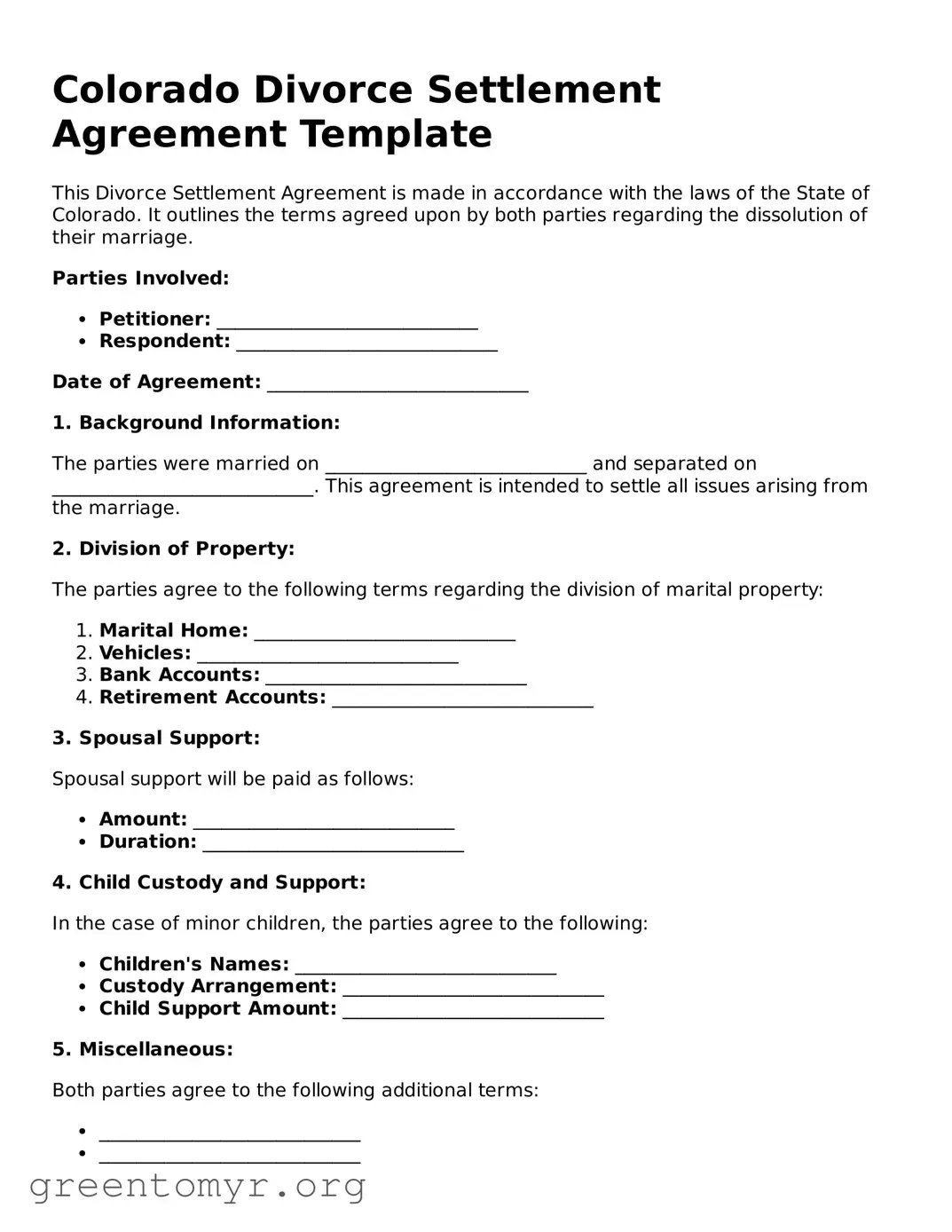
Colorado Divorce Settlement Agreement Template
This Divorce Settlement Agreement is made in accordance with the laws of the State of Colorado. It outlines the terms agreed upon by both parties regarding the dissolution of their marriage.
Parties Involved:
Date of Agreement: ____________________________
1. Background Information:
The parties were married on ____________________________ and separated on ____________________________. This agreement is intended to settle all issues arising from the marriage.
2. Division of Property:
The parties agree to the following terms regarding the division of marital property:
3. Spousal Support:
Spousal support will be paid as follows:
4. Child Custody and Support:
In the case of minor children, the parties agree to the following:
5. Miscellaneous:
Both parties agree to the following additional terms:
6. Signatures:
By signing below, both parties agree to the terms outlined in this Divorce Settlement Agreement.
Petitioner Signature: ____________________________ Date: ____________________________
Respondent Signature: ____________________________ Date: ____________________________
This agreement is effective as of the date last signed above.
| Fact Name | Details |
|---|---|
| Purpose | The Colorado Divorce Settlement Agreement form outlines the terms of the divorce, including asset division, child custody, and support obligations. |
| Governing Law | This form is governed by Colorado Revised Statutes, specifically Title 14, Article 10, which covers divorce and family law. |
| Filing Requirement | Both parties must sign the agreement, and it must be filed with the court as part of the divorce proceedings. |
| Modification | Once approved by the court, the terms of the agreement can only be modified through a subsequent court order. |
After gathering the necessary information, you are ready to fill out the Colorado Divorce Settlement Agreement form. Completing this form accurately is essential for ensuring that both parties agree on the terms of the divorce. Follow the steps below to fill out the form correctly.
Once you have filled out the form, make sure to keep copies for your records. You will then proceed to file the completed form with the appropriate court, along with any other required documents.
A Colorado Divorce Settlement Agreement is a legal document that outlines the terms of a divorce. It includes important details such as property division, child custody arrangements, and spousal support. This agreement is crucial for ensuring both parties understand their rights and responsibilities after the divorce is finalized.
Creating a Divorce Settlement Agreement involves several steps:
Yes, once both parties sign the Divorce Settlement Agreement and it is approved by the court, it becomes legally binding. This means that both parties are required to adhere to the terms outlined in the agreement. If one party fails to comply, the other can seek legal enforcement through the court.
If you and your spouse cannot reach an agreement, you may need to go to court. A judge will then make decisions regarding property division, child custody, and support. It’s often beneficial to attempt mediation or negotiation before resorting to litigation, as court proceedings can be lengthy and costly.
Yes, modifications to a Divorce Settlement Agreement can be made, but they require court approval. Common reasons for modification include changes in income, relocation, or changes in the needs of the children. Both parties must agree to the changes, and it’s advisable to document any modifications formally.
Filling out the Colorado Divorce Settlement Agreement form can be a complex process. Many individuals make common mistakes that can affect the outcome of their divorce proceedings. One frequent error is failing to provide complete and accurate information. Incomplete forms can lead to delays in the legal process, as the court may require additional documentation or clarification.
Another mistake is not clearly outlining the division of assets and debts. It is crucial to specify which party is responsible for particular debts and how assets will be divided. Ambiguities in these sections can lead to disputes later on, potentially resulting in further legal complications.
Many people also overlook the importance of including all relevant financial information. This includes income, expenses, and any other financial obligations. Omitting this information can skew the court's understanding of each party's financial situation and may lead to an unfair settlement.
Additionally, individuals often fail to consider the tax implications of their agreements. Certain assets may have different tax consequences, and not accounting for these can lead to unexpected financial burdens after the divorce is finalized. It is advisable to consult with a tax professional to understand these implications fully.
Another common mistake is neglecting to address spousal support or alimony. Some individuals assume that this will not be an issue, but it is essential to discuss and document any agreements regarding support. Failing to do so can result in one party feeling unfairly treated after the divorce is complete.
People frequently underestimate the importance of reviewing the agreement thoroughly before submission. Errors in spelling, grammar, or numerical values can undermine the document's professionalism and clarity. Such mistakes may also lead to misunderstandings or disputes in the future.
Moreover, individuals sometimes forget to include a provision for future modifications. Life circumstances can change, and it is wise to have a plan in place for how modifications to the agreement will be handled. This foresight can save time and stress down the road.
Lastly, many fail to seek legal advice when filling out the form. While it is possible to complete the agreement without an attorney, having legal guidance can help individuals navigate the complexities of divorce law. An attorney can provide insights that may prevent costly mistakes and ensure that the agreement is fair and enforceable.
When navigating the process of divorce in Colorado, several important documents accompany the Divorce Settlement Agreement. Each of these documents plays a crucial role in ensuring that all aspects of the divorce are addressed and that both parties understand their rights and obligations. Below is a list of commonly used forms and documents that you may encounter.
Understanding these documents is essential for a smooth divorce process. Each plays a vital role in ensuring that both parties are treated fairly and that all necessary matters are addressed. If you have questions about any of these forms, seeking guidance from a legal professional can provide clarity and support.
When completing the Colorado Divorce Settlement Agreement form, it's important to approach the task with care. Here are some guidelines to follow:
Following these steps can help ensure a smoother process as you navigate this important document.
Understanding the Colorado Divorce Settlement Agreement form is crucial for anyone navigating the divorce process. However, several misconceptions can lead to confusion. Here are five common misunderstandings:
By addressing these misconceptions, individuals can approach the Divorce Settlement Agreement with a clearer understanding and better preparation.
When filling out and using the Colorado Divorce Settlement Agreement form, it’s essential to understand the key aspects to ensure a smooth process. Here are some important takeaways:
By keeping these key points in mind, you can navigate the Colorado Divorce Settlement Agreement form more effectively, making the process less daunting.