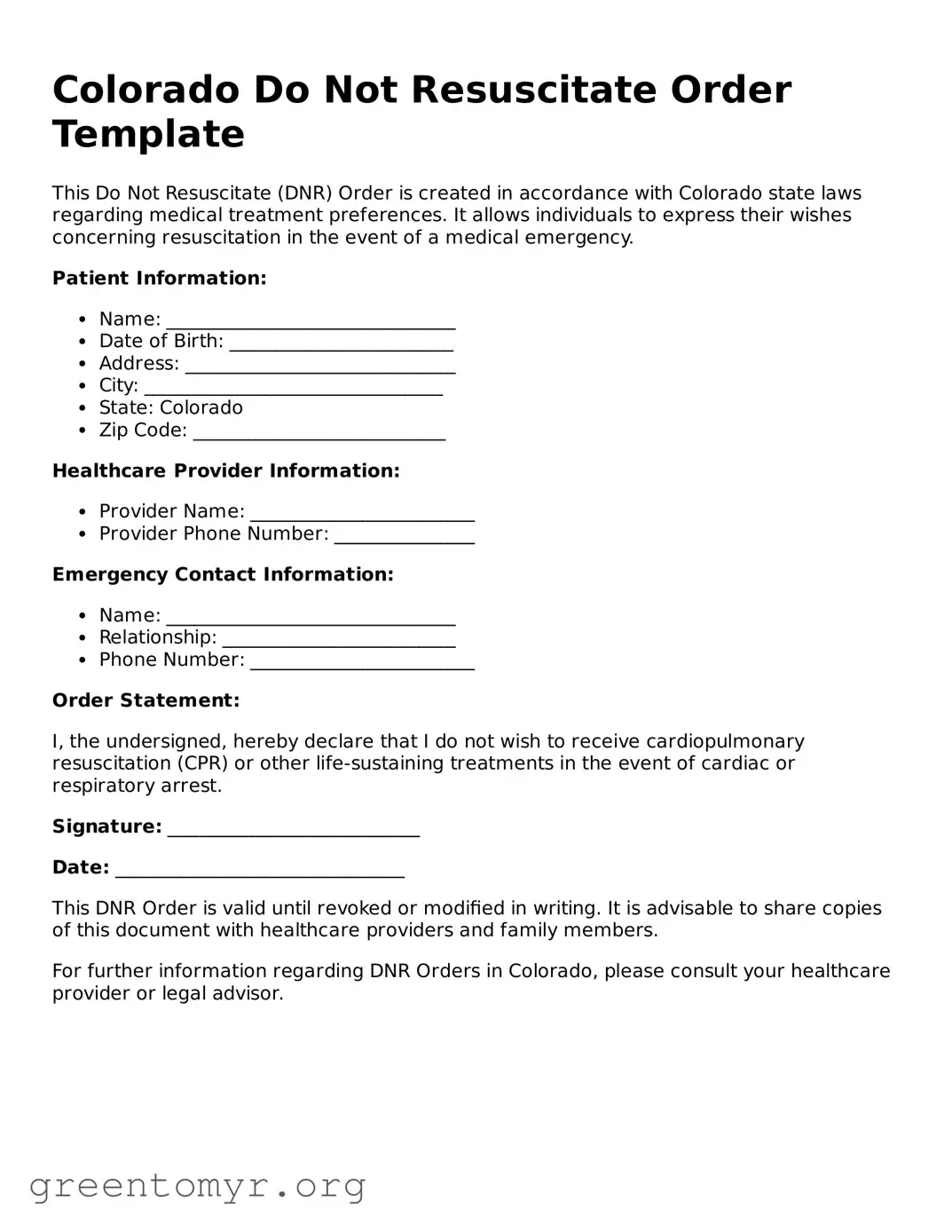
In Colorado, the Do Not Resuscitate (DNR) Order form serves as a vital document for individuals wishing to communicate their preferences regarding resuscitation efforts in the event of a medical emergency. This form is particularly important for those with serious health conditions or terminal illnesses who wish to avoid aggressive life-saving measures that may not align with their values or desired quality of life. The DNR Order must be signed by a physician, ensuring that it reflects informed medical advice and is legally binding. Additionally, the form includes space for the patient's signature, allowing them to actively participate in the decision-making process about their care. Family members and healthcare providers must understand the implications of this order, as it guides the actions taken during critical moments. Ultimately, the DNR Order empowers individuals to maintain control over their healthcare choices, promoting dignity and respect for personal wishes in challenging times.
Colorado Do Not Resuscitate Order Template
This Do Not Resuscitate (DNR) Order is created in accordance with Colorado state laws regarding medical treatment preferences. It allows individuals to express their wishes concerning resuscitation in the event of a medical emergency.
Patient Information:
Healthcare Provider Information:
Emergency Contact Information:
Order Statement:
I, the undersigned, hereby declare that I do not wish to receive cardiopulmonary resuscitation (CPR) or other life-sustaining treatments in the event of cardiac or respiratory arrest.
Signature: ___________________________
Date: _______________________________
This DNR Order is valid until revoked or modified in writing. It is advisable to share copies of this document with healthcare providers and family members.
For further information regarding DNR Orders in Colorado, please consult your healthcare provider or legal advisor.
| Fact Name | Description |
|---|---|
| Purpose | The Colorado Do Not Resuscitate (DNR) Order form allows individuals to express their wishes regarding resuscitation efforts in case of a medical emergency. |
| Governing Law | The DNR Order in Colorado is governed by the Colorado Revised Statutes, specifically C.R.S. § 25-48-101 et seq. |
| Eligibility | Any adult individual can complete a DNR Order, provided they are capable of making informed medical decisions. |
| Signature Requirement | The DNR Order must be signed by the individual or their legally authorized representative to be valid. |
| Medical Provider's Role | Healthcare providers are required to honor a valid DNR Order as long as it is properly completed and signed. |
| Revocation | A DNR Order can be revoked at any time by the individual or their representative, verbally or in writing. |
| Form Availability | The Colorado DNR Order form is available through healthcare facilities, legal offices, and online resources. |
| Emergency Medical Services | Emergency medical services (EMS) personnel are trained to recognize and respect the DNR Orders during emergencies. |
Filling out the Colorado Do Not Resuscitate Order form is an important step in expressing your wishes regarding medical treatment in emergency situations. Once completed, this form will guide healthcare providers in understanding your preferences. Here’s how to fill it out correctly.
After filling out the form, ensure that it is stored in a safe yet accessible place. This way, your healthcare providers can easily find it when needed. Regularly review the document to confirm that it still reflects your wishes.
A Colorado Do Not Resuscitate Order (DNR) form is a legal document that allows a person to refuse cardiopulmonary resuscitation (CPR) and other life-saving measures in case of a medical emergency. This form is typically used by individuals with terminal illnesses or those who wish to avoid aggressive medical interventions at the end of life.
In Colorado, a DNR form can be completed by an adult who is capable of making their own medical decisions. This includes individuals who understand the implications of the DNR order. If the person is unable to make decisions, a legal representative, such as a healthcare proxy or power of attorney, may complete the form on their behalf.
You can obtain a Colorado DNR form from several sources:
The DNR form typically requires the following information:
Yes, a properly completed and signed DNR form is valid in all medical settings in Colorado, including hospitals, nursing homes, and emergency medical services. However, it is important to ensure that the form is readily available to healthcare providers when needed.
Yes, a DNR order can be revoked at any time by the patient or their legal representative. To revoke the order, simply destroy the original DNR form and inform healthcare providers of the change. It is also advisable to complete a new form if the patient’s wishes change.
If you do not have a DNR form and experience a medical emergency, healthcare providers are required to perform life-saving measures, including CPR. Without a DNR order, your wishes regarding resuscitation may not be honored.
Yes, discussing your DNR wishes with family members is encouraged. Open communication can help ensure that your loved ones understand your preferences and can advocate for your wishes if necessary. It is also helpful to provide them with a copy of the DNR form.
Filling out a Do Not Resuscitate (DNR) Order form can be a critical decision for individuals and their families. However, mistakes can happen, leading to confusion and unintended consequences. Understanding these common pitfalls can help ensure that your wishes are respected. Here are seven mistakes people often make when completing the Colorado DNR Order form.
One common error is failing to discuss the DNR decision with family members and healthcare providers. Open conversations about end-of-life wishes can prevent misunderstandings and ensure that everyone is on the same page. Without this dialogue, loved ones may not fully understand the reasons behind the decision, which can lead to conflict during stressful times.
Another mistake involves not properly signing the form. A DNR Order must be signed by the patient or their authorized representative. If the signature is missing or not dated, the form may be considered invalid. It’s essential to double-check that all required signatures are present to avoid any complications when the order is needed.
People sometimes overlook the importance of including specific details about their medical conditions. The DNR form may require information about the patient's health status, and omitting this can lead to confusion for medical staff. Providing clear and accurate information helps ensure that the form is honored in accordance with the patient’s wishes.
Additionally, some individuals fail to provide copies of the DNR Order to relevant parties. After completing the form, it should be shared with healthcare providers, family members, and anyone else involved in the patient’s care. Keeping copies in easily accessible places, like with a primary care physician or in a medical alert system, can make a significant difference in emergencies.
Another mistake is not updating the DNR Order as circumstances change. Life is unpredictable, and health conditions can improve or worsen. It’s important to review and revise the DNR Order periodically to ensure it accurately reflects the patient’s current wishes and medical situation.
Some people may also fail to understand the implications of a DNR Order. A DNR does not mean that all medical care will cease; rather, it specifically addresses resuscitation efforts. Clarifying this distinction with healthcare providers can help alleviate concerns and ensure that patients receive appropriate care even if they choose not to be resuscitated.
Finally, misunderstanding the legal requirements surrounding the DNR Order can lead to mistakes. Each state has its own regulations, and Colorado is no exception. Familiarizing oneself with the specific requirements of the Colorado DNR Order form can help prevent errors that could invalidate the document.
By being aware of these common mistakes, individuals can take proactive steps to ensure that their DNR Order is completed correctly and reflects their true wishes. This preparation can provide peace of mind for both the patient and their loved ones during challenging times.
When considering a Colorado Do Not Resuscitate (DNR) Order, it’s essential to understand that several other forms and documents often accompany it. These documents can provide additional clarity regarding medical preferences, legal rights, and healthcare decisions. Below is a list of commonly used forms that may be relevant in conjunction with a DNR Order.
Understanding these documents can help you make informed decisions about your healthcare preferences. By having these forms in place, you can ensure that your wishes are respected and that your loved ones are clear about your desires in critical situations.
A Do Not Resuscitate (DNR) Order is an important document in healthcare that communicates a patient's wishes regarding resuscitation efforts in the event of a medical emergency. Several other documents serve similar purposes in guiding medical decisions and ensuring that a patient's preferences are respected. Here are four documents that share similarities with a DNR Order:
Each of these documents plays a crucial role in ensuring that individuals receive care that aligns with their values and preferences, especially during critical moments in their healthcare journey.
When filling out the Colorado Do Not Resuscitate Order form, it is essential to follow specific guidelines to ensure that your wishes are clearly communicated. Below are four important dos and don'ts to consider.
Understanding the Colorado Do Not Resuscitate (DNR) Order form is essential for individuals and families navigating end-of-life decisions. Unfortunately, several misconceptions can lead to confusion and anxiety. Here are ten common misconceptions about the Colorado DNR Order form, along with clarifications for each.
This is not true. A DNR order specifically addresses resuscitation efforts in the event of cardiac arrest. It does not prevent other forms of medical treatment, such as pain management or comfort care.
This misconception overlooks the fact that anyone, regardless of their health status, can request a DNR order. It is a personal choice based on individual values and preferences.
While DNR orders are often associated with hospitals, they can also be valid in other settings, such as at home or in long-term care facilities, provided they are properly documented.
This belief can lead to unnecessary guilt. A DNR order is about respecting an individual's wishes regarding the type of medical interventions they want at the end of life, not about giving up.
This is incorrect. Individuals can change or revoke their DNR orders at any time, reflecting their evolving preferences and circumstances.
In most cases, a DNR order is legally binding and cannot be overridden by family members unless they have been granted specific legal authority to do so.
Healthcare providers are ethically and legally obligated to respect a valid DNR order, regardless of their personal beliefs about resuscitation.
While both documents relate to end-of-life care, they serve different purposes. A DNR order specifically addresses resuscitation, while an advance directive outlines broader healthcare preferences.
This is a misunderstanding. A DNR order only applies to resuscitation efforts and does not affect other medical treatments, including those aimed at improving quality of life.
In fact, open communication with family members about a DNR order is encouraged. Discussing these wishes can help ensure that everyone understands and respects the individual's preferences.
Addressing these misconceptions can empower individuals and families to make informed decisions about end-of-life care. It is crucial to approach these discussions with compassion and clarity, ensuring that personal wishes are honored and respected.
Understanding the Colorado Do Not Resuscitate (DNR) Order form is crucial for anyone considering their end-of-life care options. Here are some key takeaways to keep in mind:
Taking the time to understand and properly fill out the Colorado Do Not Resuscitate Order form can provide peace of mind for you and your loved ones. It ensures that your healthcare preferences are respected, even when you cannot communicate them yourself.