The Colorado Durable Power of Attorney form is a crucial legal document that allows individuals to designate someone they trust to make decisions on their behalf in the event they become incapacitated. This form empowers the chosen agent to handle financial matters, including managing bank accounts, paying bills, and making investment decisions. It is important to note that the powers granted can be broad or limited, depending on the individual's preferences. Additionally, the durable aspect of this document ensures that it remains effective even if the principal becomes unable to make decisions due to illness or injury. Properly completing and executing this form can provide peace of mind, knowing that financial affairs will be managed according to one's wishes. Understanding the requirements and implications of the Colorado Durable Power of Attorney is essential for anyone considering this important legal tool.
Colorado Durable Power of Attorney
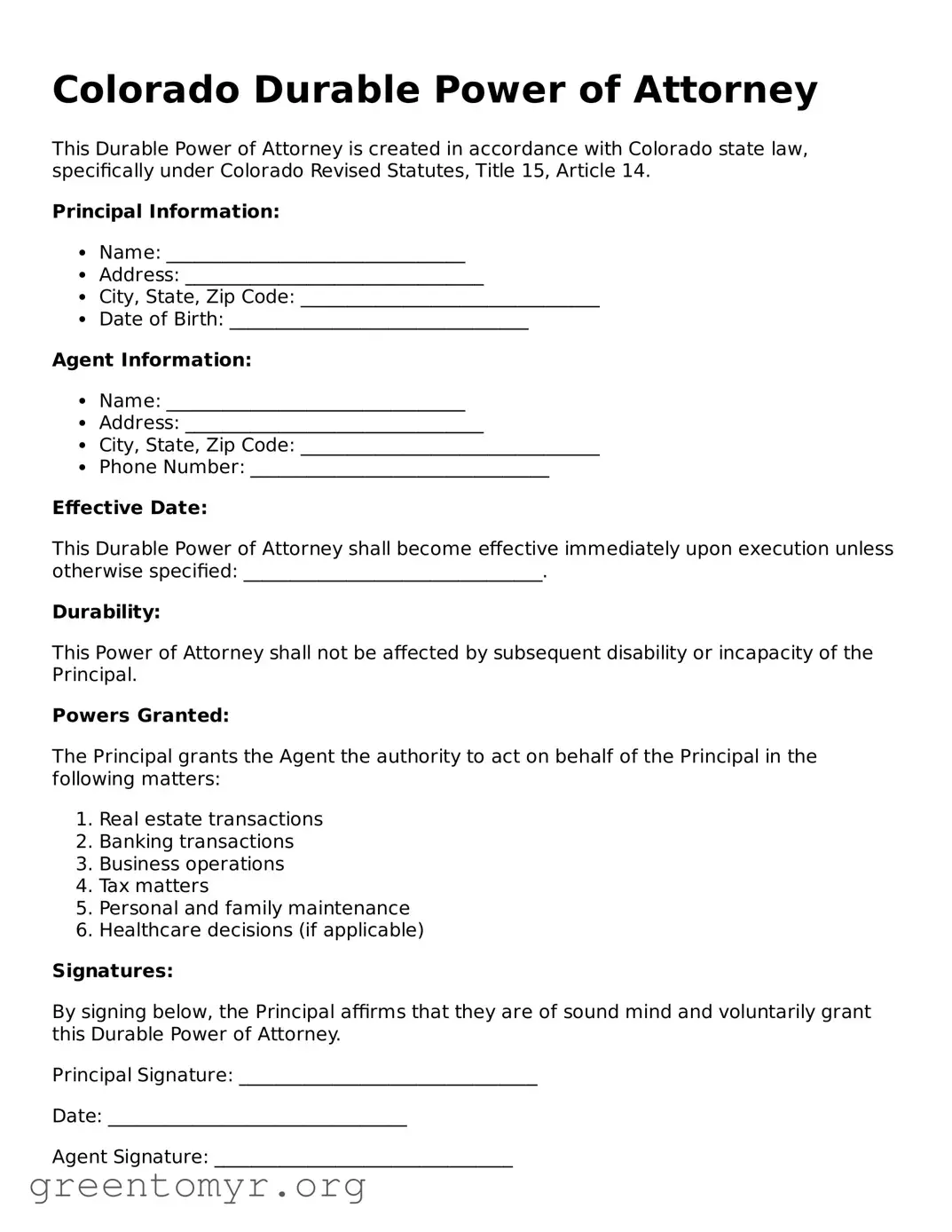
This Durable Power of Attorney is created in accordance with Colorado state law, specifically under Colorado Revised Statutes, Title 15, Article 14.
Principal Information:
Agent Information:
Effective Date:
This Durable Power of Attorney shall become effective immediately upon execution unless otherwise specified: ________________________________.
Durability:
This Power of Attorney shall not be affected by subsequent disability or incapacity of the Principal.
Powers Granted:
The Principal grants the Agent the authority to act on behalf of the Principal in the following matters:
Signatures:
By signing below, the Principal affirms that they are of sound mind and voluntarily grant this Durable Power of Attorney.
Principal Signature: ________________________________
Date: ________________________________
Agent Signature: ________________________________
Date: ________________________________
Witnesses:
This document must be witnessed by two individuals who are not named as Agents.
Witness 1 Signature: ________________________________
Date: ________________________________
Witness 2 Signature: ________________________________
Date: ________________________________
Notary Public:
State of Colorado
County of ________________________________
Subscribed and sworn before me this _____ day of ____________, 20__.
Notary Signature: ________________________________
My commission expires: ________________________________
| Fact Name | Description |
|---|---|
| Definition | A Colorado Durable Power of Attorney allows an individual to designate someone else to make financial and legal decisions on their behalf. |
| Governing Law | The form is governed by the Colorado Revised Statutes, specifically Title 15, Article 14. |
| Durability | This type of power of attorney remains effective even if the principal becomes incapacitated. |
| Agent's Authority | The agent can handle various matters, including banking, real estate transactions, and tax matters, unless restricted in the document. |
| Execution Requirements | The form must be signed by the principal in the presence of a notary public or two witnesses. |
| Revocation | The principal can revoke the power of attorney at any time, as long as they are mentally competent. |
| Importance of Choosing an Agent | Selecting a trustworthy agent is crucial, as they will have significant control over the principal's financial and legal affairs. |
Filling out the Colorado Durable Power of Attorney form is a straightforward process that allows you to designate someone to make decisions on your behalf in the event you become incapacitated. Follow these steps to ensure the form is completed correctly.
After completing these steps, the Durable Power of Attorney form is ready for use. Ensure that you keep a copy for your records and inform your agent about their responsibilities.
A Durable Power of Attorney (DPOA) in Colorado is a legal document that allows an individual (the principal) to designate another person (the agent) to make financial and legal decisions on their behalf. The term "durable" indicates that the authority granted to the agent remains effective even if the principal becomes incapacitated.
In Colorado, any competent adult can serve as an agent. This includes family members, friends, or trusted advisors. However, it is crucial to choose someone who is trustworthy and capable of making decisions in your best interest.
The principal can grant a wide range of powers to the agent, including:
It is important to specify the powers clearly in the document to avoid any confusion later.
Yes, in Colorado, the Durable Power of Attorney must be signed in the presence of a notary public. This helps ensure the authenticity of the document and protects against potential disputes regarding its validity.
A Durable Power of Attorney can become effective immediately upon signing or can be set to activate only upon the principal's incapacitation. It is essential to indicate the preferred timing in the document to ensure that it aligns with your wishes.
Yes, the principal has the right to revoke a Durable Power of Attorney at any time, as long as they are competent to do so. Revocation must be communicated clearly, typically in writing, to the agent and any relevant third parties, such as banks or healthcare providers.
If the designated agent is unable or unwilling to serve, the Durable Power of Attorney can specify alternate agents. If no alternate agent is named, it may be necessary to go through legal proceedings to appoint a new agent.
No, a Durable Power of Attorney primarily covers financial and legal matters. A Medical Power of Attorney, on the other hand, specifically grants authority to make healthcare decisions on behalf of the principal. Both documents can be important components of an overall estate plan.
To create a Durable Power of Attorney in Colorado, you can either draft one yourself using templates available online or seek assistance from an attorney to ensure that it meets all legal requirements. It is advisable to discuss your specific needs and wishes with a legal professional to create a document that accurately reflects your intentions.
Filling out a Colorado Durable Power of Attorney form is an important task that requires careful attention. One common mistake people make is failing to specify the powers granted. It’s crucial to clearly outline what authority the agent will have. If the form is too vague, it may lead to confusion or disputes later on. For example, if you want your agent to handle financial matters, be specific about which transactions they can perform.
Another mistake is not signing the form in the correct manner. In Colorado, the principal must sign the document in the presence of a notary public. If this step is overlooked, the form may not be considered valid. Additionally, if the agent signs the form instead of the principal, it can lead to complications. Always ensure that the principal's signature is the only one on the document.
People often forget to update their Durable Power of Attorney form when their circumstances change. Life events such as marriage, divorce, or the death of a designated agent can impact the validity of the document. It’s important to review and, if necessary, revise the form periodically to reflect your current wishes and situation.
Finally, many individuals neglect to discuss their decisions with the chosen agent. This can lead to misunderstandings about the principal's wishes. It’s essential to have an open conversation with the agent about their responsibilities and your preferences. This ensures that your intentions are clear and that the agent feels prepared to act on your behalf.
A Durable Power of Attorney form allows an individual to designate someone to make decisions on their behalf, particularly in financial or legal matters. This document is often accompanied by other forms to ensure comprehensive planning and management of an individual's affairs. The following is a list of commonly used documents alongside the Colorado Durable Power of Attorney form.
These documents collectively enhance the effectiveness of the Durable Power of Attorney by addressing various aspects of personal and financial management. It is advisable to consider each form carefully to ensure that all preferences and needs are adequately met.
A Durable Power of Attorney (DPOA) is an important legal document that allows someone to make decisions on behalf of another person, especially in financial or medical matters. It shares similarities with several other legal documents. Here are six documents that are comparable to a DPOA:
Understanding these documents can help individuals make informed decisions about their legal and financial planning. It is essential to consider the specific needs and circumstances of each person when choosing the appropriate document.
When filling out the Colorado Durable Power of Attorney form, it’s important to follow certain guidelines to ensure the document is valid and effective. Here’s a list of things you should and shouldn’t do:
When it comes to the Colorado Durable Power of Attorney (DPOA) form, many misunderstandings can lead to confusion. Here are six common misconceptions:
Many people believe that a DPOA can only handle financial decisions. In reality, a DPOA can also grant authority for medical decisions, depending on how it is structured. It's essential to specify the powers you want to include.
Some think that the DPOA is only activated when they are unable to make decisions. However, a DPOA can be set up to take effect immediately, allowing your agent to act on your behalf right away if you choose.
While your agent does have significant authority, they are legally obligated to act in your best interest. Misuse of funds can lead to legal consequences, ensuring that your agent must adhere to a fiduciary duty.
This is a common myth. You can revoke or modify your DPOA at any time, as long as you are mentally competent. It's important to communicate any changes to your agent and relevant parties.
Many believe that only seniors need a DPOA. However, anyone over 18 can benefit from having one, as life is unpredictable, and having a plan in place is wise for individuals of all ages.
Some assume that a DPOA covers all decisions indefinitely. In fact, it is limited to the powers you specify and may need updates as your circumstances or wishes change.
Understanding these misconceptions can help you make informed decisions about your Durable Power of Attorney in Colorado. Always consider consulting with a professional to ensure your documents reflect your wishes accurately.
Filling out and using the Colorado Durable Power of Attorney form is an important step in ensuring your financial and medical decisions are managed according to your wishes. Here are some key takeaways to consider:
By keeping these takeaways in mind, you can ensure that your Durable Power of Attorney is effective and aligns with your personal wishes.