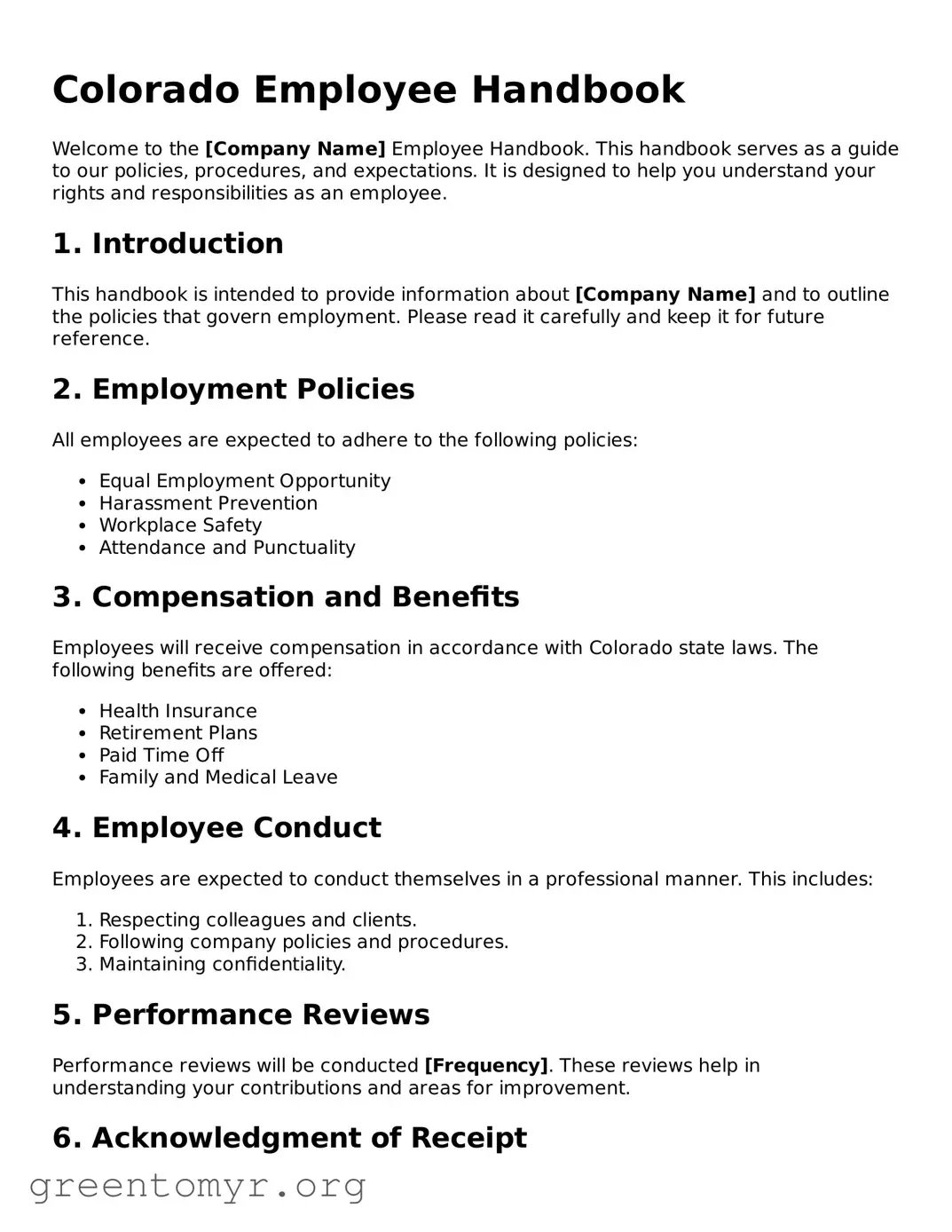
The Colorado Employee Handbook is an essential tool for employers and employees alike, serving as a comprehensive guide to workplace policies, procedures, and expectations. This document outlines important information regarding employee rights, workplace conduct, and benefits, ensuring that all staff members understand their responsibilities and the standards set by the organization. Key aspects of the handbook include details on anti-discrimination policies, workplace safety regulations, and guidelines for reporting grievances. Additionally, it covers topics such as attendance, dress code, and the process for requesting time off. By providing clear and accessible information, the handbook helps foster a positive work environment and promotes compliance with state and federal laws. Employers are encouraged to regularly update the handbook to reflect changes in legislation or company policies, ensuring that employees have the most current information at their fingertips.
Colorado Employee Handbook
Welcome to the [Company Name] Employee Handbook. This handbook serves as a guide to our policies, procedures, and expectations. It is designed to help you understand your rights and responsibilities as an employee.
1. Introduction
This handbook is intended to provide information about [Company Name] and to outline the policies that govern employment. Please read it carefully and keep it for future reference.
2. Employment Policies
All employees are expected to adhere to the following policies:
3. Compensation and Benefits
Employees will receive compensation in accordance with Colorado state laws. The following benefits are offered:
4. Employee Conduct
Employees are expected to conduct themselves in a professional manner. This includes:
5. Performance Reviews
Performance reviews will be conducted [Frequency]. These reviews help in understanding your contributions and areas for improvement.
6. Acknowledgment of Receipt
By signing below, you acknowledge that you have received and read the [Company Name] Employee Handbook.
Employee Name: [Employee Name]
Employee Signature: ______________________
Date: [Date]
7. Contact Information
If you have any questions regarding this handbook or company policies, please contact:
[HR Contact Name]
[HR Contact Phone]
[HR Contact Email]
Thank you for being a part of [Company Name].
| Fact Name | Description |
|---|---|
| Purpose | The Colorado Employee Handbook serves as a guide for employees, outlining company policies, procedures, and expectations. |
| Governing Laws | This handbook is governed by Colorado state employment laws, including the Colorado Wage Act and the Colorado Anti-Discrimination Act. |
| Content Requirements | It must include essential topics such as workplace conduct, leave policies, and employee rights. |
| Distribution | Employers are required to provide the handbook to all employees, ensuring they understand their rights and responsibilities. |
Completing the Colorado Employee Handbook form is a crucial step in ensuring that you understand your rights and responsibilities as an employee. Follow these steps carefully to ensure that all information is accurately provided and submitted correctly.
After submitting the form, you can expect to receive confirmation from your HR department. They will provide any further instructions or address any questions you may have about the policies outlined in the handbook.
The Colorado Employee Handbook form is a document designed to help employers create a comprehensive guide for their employees. It outlines company policies, procedures, and expectations. This handbook serves as a valuable resource for both employers and employees, ensuring everyone is on the same page regarding workplace rules and regulations.
An employee handbook is crucial for several reasons:
This form is intended for employers operating in Colorado, regardless of the size of their business. Whether you are a small business owner or part of a larger organization, having a well-structured employee handbook is beneficial. It can help ensure compliance with state laws and provide guidance to employees.
While the specific contents may vary, a comprehensive employee handbook typically includes:
It is advisable to review and update the employee handbook at least once a year. Changes in laws, company policies, or business practices may necessitate updates. Keeping the handbook current helps ensure compliance and reflects the latest information for employees.
Yes, employees can and should provide input. Involving employees in the process can lead to a more comprehensive and effective handbook. It can also foster a sense of ownership and engagement among staff, making them more likely to adhere to the policies outlined.
If an employee violates a policy, the employer should follow the disciplinary procedures outlined in the handbook. Consistency is key. Ensure that the response is appropriate for the violation and that similar violations are treated similarly to maintain fairness.
While not legally required, having employees sign an acknowledgment can be very beneficial. This signature serves as proof that the employee has received and understands the handbook. It can also help protect the employer in case of disputes regarding policies.
Employees should feel comfortable asking questions about the handbook. Employers should encourage open communication and provide a designated point of contact for any inquiries. This approach helps clarify policies and fosters a positive workplace culture.
Templates for the Colorado Employee Handbook can often be found online through reputable HR websites or legal resources. It’s important to customize any template to fit your specific business needs and ensure compliance with state laws.
Filling out the Colorado Employee Handbook form is an important step for both employees and employers. However, there are common mistakes that individuals often make during this process. Recognizing these pitfalls can help ensure that the form is completed accurately and effectively.
One frequent error is overlooking required fields. Each section of the form serves a specific purpose, and missing even one required field can lead to delays in processing. It’s essential to carefully read through the entire form and ensure that all necessary information is provided. Taking the time to double-check can save a lot of hassle later on.
Another common mistake involves providing outdated or incorrect information. This can happen when employees fail to update their personal details, such as address or emergency contact information. It’s crucial to provide current and accurate information to avoid complications, especially in situations where timely communication is necessary.
Additionally, many individuals neglect to review the handbook's policies before signing the form. Understanding the contents of the employee handbook is vital. Employees should be aware of their rights and responsibilities within the workplace. Failing to read the handbook could lead to misunderstandings about company policies, which can have serious implications down the line.
Finally, some people rush through the process, leading to careless mistakes such as typos or unclear handwriting. Taking the time to fill out the form thoughtfully can prevent confusion and ensure that the information is legible. A well-completed form reflects professionalism and attention to detail, which are valuable traits in any workplace.
When creating an employee handbook in Colorado, there are several other forms and documents that can complement it. These documents help ensure compliance with state and federal laws, clarify company policies, and provide necessary information to employees. Below is a list of commonly used forms and documents that may be beneficial.
Utilizing these forms and documents alongside the employee handbook can help create a comprehensive framework for managing employee relations and maintaining a compliant workplace. Each document plays a vital role in establishing clear communication and expectations within the organization.
When filling out the Colorado Employee Handbook form, it's essential to approach the task with care. Here’s a list of things to do and avoid:
Employee handbooks are essential tools for organizations, but several misconceptions can lead to misunderstandings about their purpose and use. Here are eight common misconceptions about the Colorado Employee Handbook form:
This is not true. Any organization, regardless of size, can benefit from having an employee handbook. It helps establish clear expectations and guidelines for all employees.
While employee handbooks provide important information about company policies, they are generally not considered legally binding contracts. They serve more as guidelines than enforceable agreements.
Each employee handbook can vary significantly based on the organization's culture, industry, and specific needs. There is no one-size-fits-all approach.
This misconception can lead to outdated policies. Regular reviews and updates are necessary to ensure the handbook reflects current laws and company practices.
While new employees often receive handbooks during onboarding, existing employees should also have access to the handbook to stay informed about policies and procedures.
While a well-crafted handbook can help reduce misunderstandings, it cannot eliminate all disputes. Open communication and a positive workplace culture are also essential.
While it is beneficial to have employees acknowledge receipt, it is not always a legal requirement. Employers should document the distribution of the handbook.
Input from various departments can enhance the handbook's relevance. Collaboration ensures that the policies reflect the needs and perspectives of the entire organization.
Filling out and utilizing the Colorado Employee Handbook form is an essential step for employers to ensure clarity and compliance. Here are some key takeaways: