In Colorado, the Independent Contractor Agreement form plays a crucial role in defining the relationship between businesses and independent contractors. This form outlines essential elements such as the scope of work, payment terms, and deadlines, ensuring that both parties have a clear understanding of their obligations. It also addresses important considerations like confidentiality, intellectual property rights, and dispute resolution processes. By establishing these parameters, the agreement helps prevent misunderstandings and protects the interests of both the contractor and the hiring entity. Understanding the nuances of this form can empower contractors to negotiate better terms while providing businesses with the confidence to engage skilled professionals without the complexities of employee status.
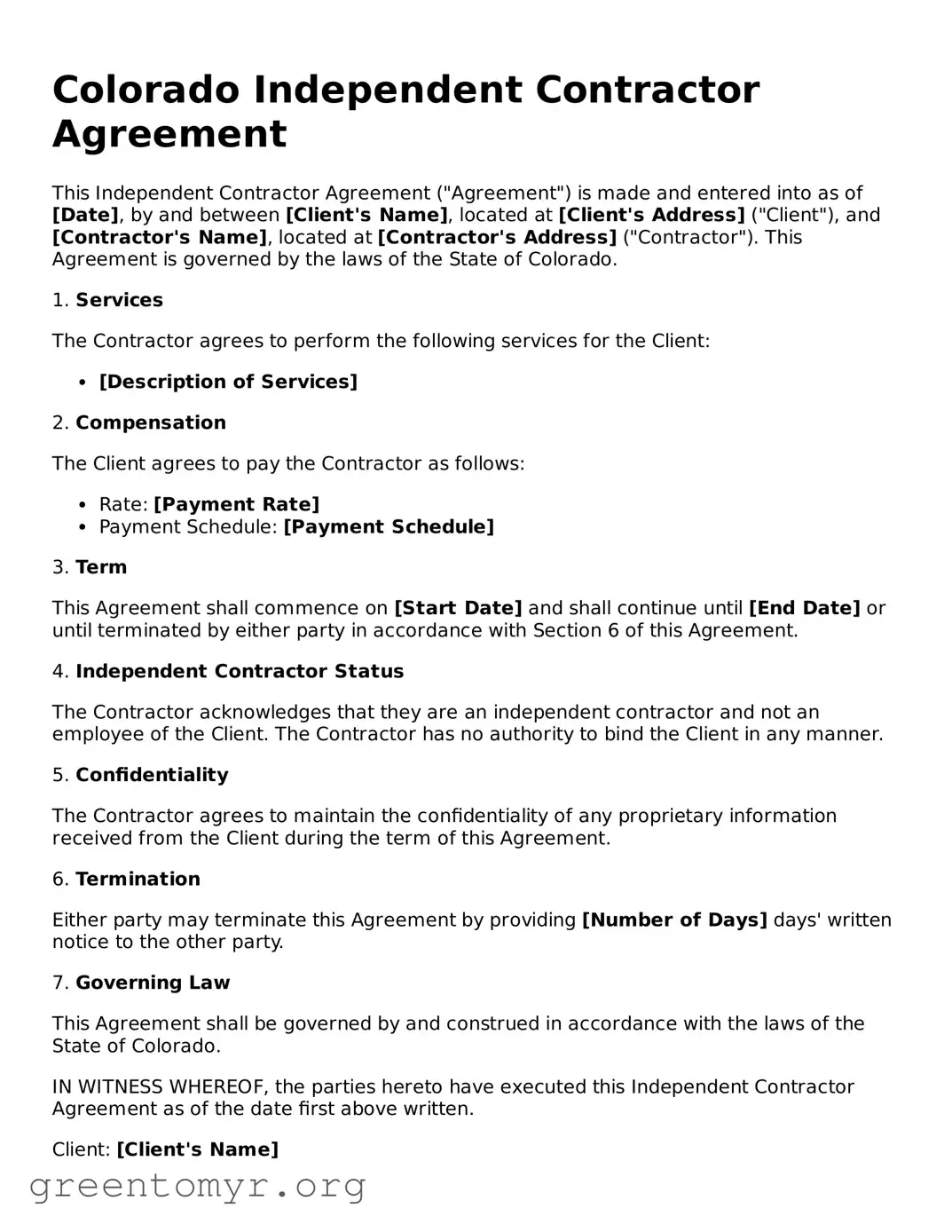
Colorado Independent Contractor Agreement
This Independent Contractor Agreement ("Agreement") is made and entered into as of [Date], by and between [Client's Name], located at [Client's Address] ("Client"), and [Contractor's Name], located at [Contractor's Address] ("Contractor"). This Agreement is governed by the laws of the State of Colorado.
1. Services
The Contractor agrees to perform the following services for the Client:
2. Compensation
The Client agrees to pay the Contractor as follows:
3. Term
This Agreement shall commence on [Start Date] and shall continue until [End Date] or until terminated by either party in accordance with Section 6 of this Agreement.
4. Independent Contractor Status
The Contractor acknowledges that they are an independent contractor and not an employee of the Client. The Contractor has no authority to bind the Client in any manner.
5. Confidentiality
The Contractor agrees to maintain the confidentiality of any proprietary information received from the Client during the term of this Agreement.
6. Termination
Either party may terminate this Agreement by providing [Number of Days] days' written notice to the other party.
7. Governing Law
This Agreement shall be governed by and construed in accordance with the laws of the State of Colorado.
IN WITNESS WHEREOF, the parties hereto have executed this Independent Contractor Agreement as of the date first above written.
Client: [Client's Name]
Signature: ___________________________
Date: ________________________________
Contractor: [Contractor's Name]
Signature: ___________________________
Date: ________________________________
| Fact Name | Description |
|---|---|
| Definition | The Colorado Independent Contractor Agreement is a legal document outlining the terms of a working relationship between an independent contractor and a client. |
| Governing Law | This agreement is governed by the laws of the State of Colorado. |
| Purpose | The primary purpose is to clarify the rights and responsibilities of both parties involved in the contract. |
| Key Components | Typically includes details such as payment terms, project scope, and duration of the contract. |
| Independent Status | The agreement confirms the contractor's status as an independent entity, not an employee. |
| Tax Implications | Independent contractors are responsible for their own taxes, unlike employees whose taxes are withheld by employers. |
| Termination Clauses | It may include provisions for termination by either party, specifying the notice required. |
| Dispute Resolution | Often contains terms for resolving disputes, which may include mediation or arbitration processes. |
| Confidentiality | May include clauses that protect sensitive information shared during the course of the contract. |
| Amendments | Any changes to the agreement generally require written consent from both parties. |
Completing the Colorado Independent Contractor Agreement form requires careful attention to detail. Follow these steps to ensure all necessary information is accurately provided.
Once the form is filled out and signed, keep a copy for your records. This will help both parties stay informed and organized regarding the agreement.
A Colorado Independent Contractor Agreement is a legal document that outlines the relationship between a business and an independent contractor. It defines the terms of work, payment, and other important aspects of the engagement. This agreement helps clarify expectations and protects both parties involved.
Having an Independent Contractor Agreement is crucial for several reasons:
A comprehensive Independent Contractor Agreement typically includes the following elements:
Yes, many templates are available online for Independent Contractor Agreements. However, it's essential to ensure that any template you use complies with Colorado laws and is tailored to your specific situation. Customizing a template can help address unique needs and prevent misunderstandings.
Without an Independent Contractor Agreement, you risk ambiguity in your working relationship. This lack of clarity can lead to disputes over payment, responsibilities, and other critical issues. Additionally, not having a formal agreement may expose you to legal liabilities and complications regarding tax obligations.
To ensure compliance, review the relevant state laws regarding independent contractors. Familiarize yourself with the criteria that distinguish independent contractors from employees. Consulting a legal professional can also provide valuable insights and help you draft an agreement that meets all legal requirements.
While verbal agreements can be legally binding, having a written agreement is highly recommended. A written document provides a clear reference point for both parties and can be crucial in resolving disputes. It serves as proof of the terms agreed upon and offers legal protection.
Yes, the agreement can be modified after it is signed, but both parties must agree to any changes. It is advisable to document any modifications in writing to maintain clarity and avoid future disputes. This can be done through an amendment or addendum to the original agreement.
Filling out the Colorado Independent Contractor Agreement form can be a straightforward process, but many individuals make common mistakes that can lead to confusion or legal issues down the line. Understanding these pitfalls can help ensure that the agreement is completed accurately and effectively.
One frequent mistake is failing to provide complete information about the contractor. This includes not only the contractor's name but also their address and contact information. Omitting these details can lead to difficulties in communication and may cause issues if disputes arise later.
Another common error involves misclassifying the worker. It is crucial to accurately determine whether the individual is an independent contractor or an employee. Misclassification can result in significant legal and financial repercussions for both parties. Understanding the distinctions between these classifications is vital.
People often overlook the importance of specifying the scope of work. A vague description can lead to misunderstandings regarding the contractor's responsibilities. Clearly outlining the tasks and expectations helps prevent disputes and ensures both parties are on the same page.
Additionally, neglecting to include payment terms is a mistake that can create confusion. Clearly stating how much the contractor will be paid, when payments will be made, and the method of payment is essential. This helps establish clear financial expectations from the outset.
Another oversight is failing to include a termination clause. This clause outlines the conditions under which either party can end the agreement. Without it, both parties may find themselves in a difficult position if they wish to terminate the relationship.
Some individuals forget to specify the duration of the contract. Whether it’s for a specific project or an ongoing arrangement, indicating the timeframe is crucial. This helps both parties understand their commitments and plan accordingly.
People sometimes neglect to review the agreement for accuracy before signing. Errors in names, dates, or other critical information can lead to complications. Taking the time to carefully review the document can prevent misunderstandings and legal issues later on.
Another mistake is not considering the implications of local laws. Colorado has specific regulations regarding independent contractors. Failing to adhere to these laws can lead to legal challenges. It’s important to be aware of and comply with local requirements.
Finally, individuals may forget to keep a copy of the signed agreement. Having a record of the contract is essential for both parties. It serves as a reference point and can be invaluable if questions or disputes arise in the future.
By being mindful of these common mistakes, individuals can better navigate the process of completing the Colorado Independent Contractor Agreement form. Careful attention to detail and understanding of the requirements can lead to a smoother and more successful working relationship.
When engaging independent contractors in Colorado, it is essential to have a complete understanding of various forms and documents that may accompany the Colorado Independent Contractor Agreement. These documents help clarify the relationship between the parties and ensure compliance with state laws. Below is a list of commonly used forms that can provide additional structure and clarity to your agreements.
Understanding these documents is crucial for both parties in an independent contractor relationship. Properly executed forms can help mitigate risks and foster a professional working environment. Always consider consulting with a legal professional to ensure that all agreements and documents meet your specific needs and comply with applicable laws.
When filling out the Colorado Independent Contractor Agreement form, it's essential to approach the task with care. Here are some key do's and don'ts to keep in mind:
Misconceptions about the Colorado Independent Contractor Agreement form can lead to confusion for both contractors and employers. Here are eight common misunderstandings:
Not all independent contractors operate under the same terms. Each agreement can be tailored to fit the specific needs of the business and the contractor.
When properly completed and signed, the Colorado Independent Contractor Agreement is a legally binding document that outlines the responsibilities and expectations of both parties.
While independent contractors may not be required to carry insurance, it is often advisable. This protects them from potential liabilities that could arise during their work.
Even though verbal agreements can be valid, having a written contract provides clarity and can help prevent disputes down the line.
While independent contractors typically do not receive employee benefits, they may negotiate certain perks or compensation that can serve as alternatives.
Tax obligations can vary based on the contractor's business structure, income level, and specific deductions they may qualify for.
Including a termination clause can be crucial. It outlines how either party can end the agreement, providing a clear process for both sides.
Independent contractors do have rights under the law. They are entitled to fair treatment and can seek legal recourse if their rights are violated.
Understand the purpose of the Colorado Independent Contractor Agreement. This document outlines the relationship between the contractor and the hiring entity, clarifying expectations and responsibilities.
Ensure that all parties involved review the agreement carefully before signing. This prevents misunderstandings and ensures that everyone is on the same page.
Clearly define the scope of work. Detail the tasks and deliverables expected from the contractor to avoid ambiguity.
Specify payment terms. Include details about compensation, payment schedule, and any expenses that will be reimbursed.
Address confidentiality and non-disclosure obligations. Protect sensitive information by including clauses that restrict sharing or misuse.
Include termination clauses. Outline the conditions under which either party can terminate the agreement, ensuring a clear exit strategy.
Consult with a legal professional if needed. This can help ensure that the agreement complies with Colorado laws and meets the specific needs of the parties involved.