Creating a Last Will and Testament is a crucial step in ensuring that your wishes are honored after you pass away. In Colorado, this legal document outlines how your assets will be distributed, names guardians for your minor children, and appoints an executor to manage your estate. The form allows you to specify particular bequests, ensuring that cherished possessions go to the right individuals. Additionally, it provides a clear framework for addressing debts and taxes, which can ease the burden on your loved ones during a difficult time. Understanding the major components of the Colorado Last Will and Testament form is essential for anyone looking to secure their legacy and provide peace of mind for their family. Whether you are drafting your first will or updating an existing one, knowing what to include can help you create a comprehensive document that reflects your intentions and protects your interests.
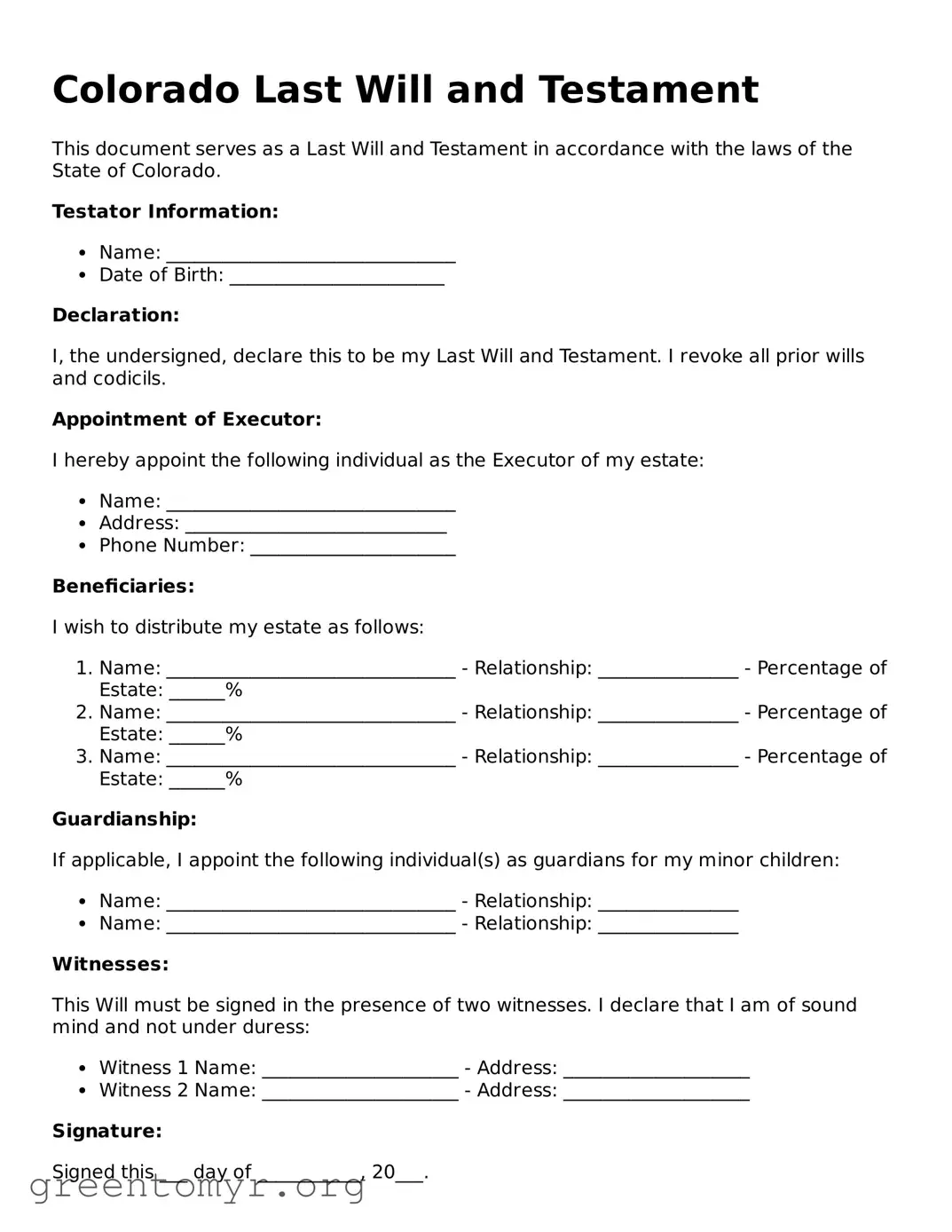
Colorado Last Will and Testament
This document serves as a Last Will and Testament in accordance with the laws of the State of Colorado.
Testator Information:
Declaration:
I, the undersigned, declare this to be my Last Will and Testament. I revoke all prior wills and codicils.
Appointment of Executor:
I hereby appoint the following individual as the Executor of my estate:
Beneficiaries:
I wish to distribute my estate as follows:
Guardianship:
If applicable, I appoint the following individual(s) as guardians for my minor children:
Witnesses:
This Will must be signed in the presence of two witnesses. I declare that I am of sound mind and not under duress:
Signature:
Signed this ___ day of ___________, 20___.
_______________________________
Testator Signature
Witness Signatures:
_______________________________
Witness 1 Signature
_______________________________
Witness 2 Signature
| Fact Name | Details |
|---|---|
| Governing Law | The Colorado Last Will and Testament is governed by Colorado Revised Statutes, Title 15, Article 11. |
| Age Requirement | To create a valid will in Colorado, the individual must be at least 18 years old. |
| Witness Requirement | Two witnesses must sign the will for it to be valid, and they should not be beneficiaries. |
| Revocation | A will can be revoked at any time by the testator through a new will or by destroying the original document. |
| Holographic Wills | Colorado recognizes holographic wills, which are handwritten and do not require witnesses. |
| Self-Proving Wills | A self-proving will includes an affidavit from the witnesses, making it easier to validate in probate court. |
After obtaining the Colorado Last Will and Testament form, you will need to complete it carefully. This document outlines your wishes regarding the distribution of your assets after your passing. Ensure you have all necessary information at hand to fill out the form accurately.
Once you have filled out the form, keep it in a safe place. Inform your executor and close family members where they can find it. Regularly review and update your will as your circumstances change.
A Last Will and Testament is a legal document that outlines how an individual's assets and affairs will be managed after their death. In Colorado, this document allows a person to specify beneficiaries, appoint guardians for minor children, and designate an executor to carry out their wishes. It serves as a crucial tool for ensuring that a person's intentions are honored and can help prevent disputes among family members.
In Colorado, any individual who is at least 18 years old and of sound mind can create a Last Will and Testament. This means that the person must understand the nature of their actions and the implications of making a will. Additionally, Colorado law does not require individuals to be residents of the state to create a valid will there, but it is advisable to consult local laws if the individual resides elsewhere.
To be considered valid in Colorado, a Last Will and Testament must meet the following requirements:
Alternatively, a handwritten will, known as a holographic will, can be valid in Colorado if it is signed by the testator and the material provisions are in their handwriting.
Yes, individuals can change or revoke their Last Will and Testament at any time while they are alive and of sound mind. This can be done by creating a new will that explicitly revokes the previous one or by physically destroying the old will. It is important to ensure that any changes are made in accordance with Colorado law to avoid confusion or legal challenges later on.
If an individual dies without a Last Will and Testament, they are considered to have died "intestate." In this case, Colorado's intestacy laws will dictate how their assets are distributed. Generally, assets will be distributed to the deceased's closest relatives, such as spouses, children, or parents. This process may not align with the deceased's wishes and can lead to disputes among family members.
To appoint an executor in a Last Will and Testament, the individual must clearly name the person they wish to serve in this role within the document. It is advisable to also include a backup executor in case the primary executor is unable or unwilling to fulfill their duties. The executor is responsible for managing the estate, paying debts, and distributing assets according to the will.
While it is not legally required to hire a lawyer to create a Last Will and Testament in Colorado, it is highly recommended. A lawyer can provide valuable guidance to ensure that the will complies with state laws and accurately reflects the individual's wishes. Additionally, legal assistance can help prevent potential disputes or challenges to the will after the individual's death.
Yes, individuals can include specific bequests in their Last Will and Testament. This means they can designate particular items or amounts of money to specific individuals or organizations. For example, a person might leave a family heirloom to a child or a sum of money to a charitable organization. Specific bequests can help clarify intentions and reduce the likelihood of disputes among beneficiaries.
Filling out a Last Will and Testament form in Colorado is an important step in ensuring your wishes are honored after you pass away. However, many people make common mistakes that can lead to confusion or even legal disputes. Being aware of these pitfalls can help you create a clear and effective will.
One frequent mistake is not being specific enough about the distribution of assets. Simply stating that your belongings should go to "my family" can lead to misunderstandings. Instead, list each item and designate who will receive it. This clarity helps avoid potential conflicts among heirs.
Another common error is failing to properly sign the document. In Colorado, a will must be signed by the testator (the person making the will) and witnessed by at least two individuals. If the signing process is not followed correctly, the will may not be considered valid. Always ensure that your signature is witnessed appropriately.
People often overlook the importance of updating their will. Life changes, such as marriage, divorce, or the birth of a child, can significantly impact your wishes. If you don’t revise your will to reflect these changes, your document may not align with your current intentions.
Additionally, some individuals forget to appoint an executor. This person will be responsible for carrying out the instructions in your will. Without a designated executor, the court may have to appoint someone, which can lead to delays and complications. Choose someone you trust to manage your estate effectively.
Finally, many people underestimate the need for legal advice. While it’s possible to fill out the form on your own, consulting with an attorney can help ensure that your will complies with state laws and accurately reflects your wishes. A little guidance can go a long way in preventing future issues.
When preparing a Colorado Last Will and Testament, it’s important to consider additional documents that can support your estate planning. These forms help ensure your wishes are clear and legally binding. Below is a list of documents that are often used alongside a will.
Including these documents in your estate planning can provide clarity and peace of mind. Each serves a unique purpose and can help protect your wishes and your loved ones in various situations.
When filling out the Colorado Last Will and Testament form, it is essential to approach the process with care. Here are some important dos and don'ts to keep in mind:
Following these guidelines can help ensure that your will accurately reflects your intentions and provides clarity for your loved ones.
Understanding the Colorado Last Will and Testament form is essential for anyone looking to plan their estate. However, several misconceptions can lead to confusion. Here are six common misconceptions:
By addressing these misconceptions, individuals can make informed decisions about their estate planning needs.
Filling out and using the Colorado Last Will and Testament form is an important step in ensuring that your wishes are honored after your passing. Here are some key takeaways to consider:
By following these guidelines, you can ensure that your Last Will and Testament reflects your wishes and provides clarity for your loved ones during a difficult time.