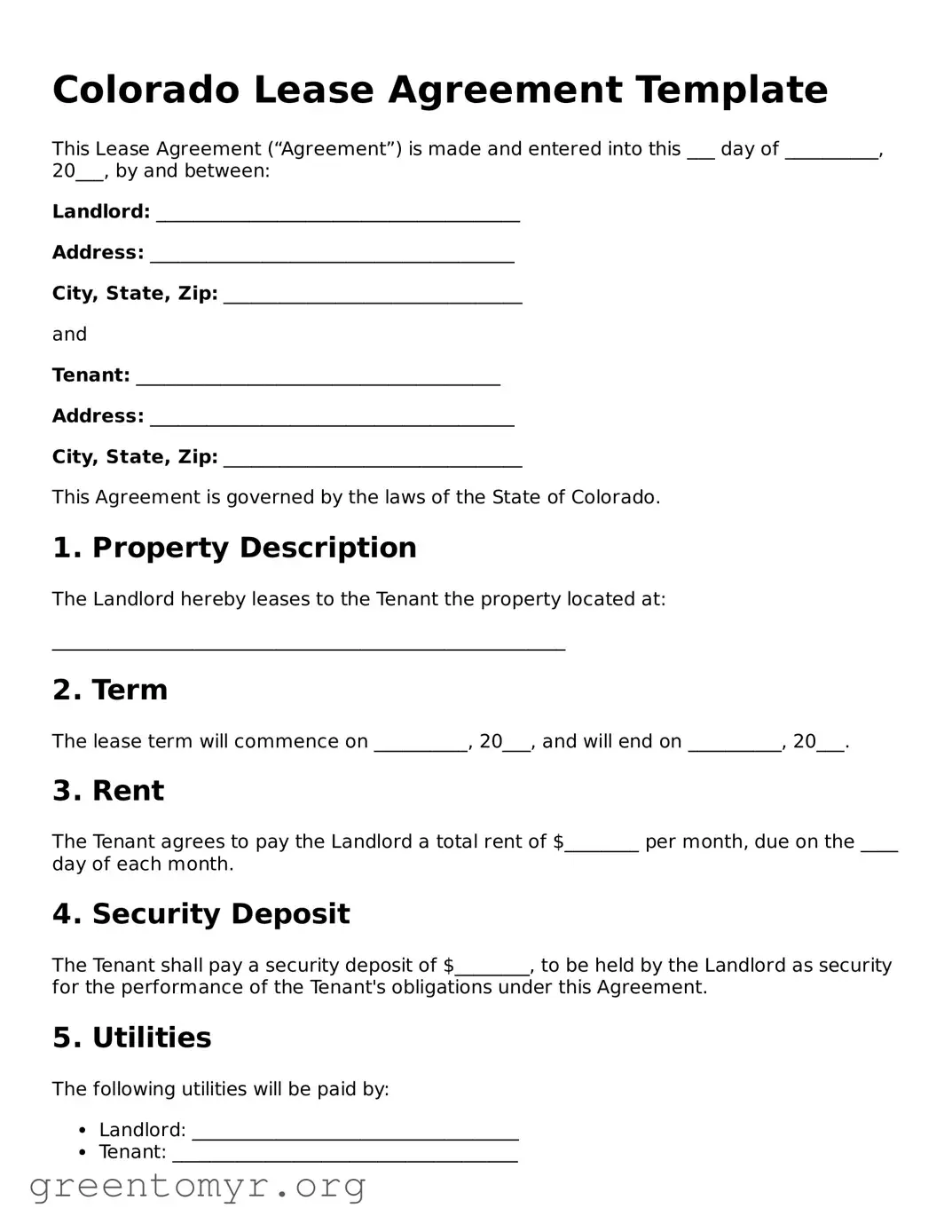
When entering into a rental agreement in Colorado, understanding the Colorado Lease Agreement form is essential for both landlords and tenants. This document outlines the rights and responsibilities of each party, ensuring a clear understanding of the rental terms. Key aspects include the duration of the lease, the amount of rent, and the payment schedule. Additionally, the form addresses security deposits, maintenance responsibilities, and rules regarding pets and guests. It also includes provisions for early termination and the process for resolving disputes. By familiarizing oneself with these components, both landlords and tenants can navigate their rental relationship more effectively, reducing the likelihood of misunderstandings and conflicts.
Colorado Lease Agreement Template
This Lease Agreement (“Agreement”) is made and entered into this ___ day of __________, 20___, by and between:
Landlord: _______________________________________
Address: _______________________________________
City, State, Zip: ________________________________
and
Tenant: _______________________________________
Address: _______________________________________
City, State, Zip: ________________________________
This Agreement is governed by the laws of the State of Colorado.
1. Property Description
The Landlord hereby leases to the Tenant the property located at:
_______________________________________________________
2. Term
The lease term will commence on __________, 20___, and will end on __________, 20___.
3. Rent
The Tenant agrees to pay the Landlord a total rent of $________ per month, due on the ____ day of each month.
4. Security Deposit
The Tenant shall pay a security deposit of $________, to be held by the Landlord as security for the performance of the Tenant's obligations under this Agreement.
5. Utilities
The following utilities will be paid by:
6. Maintenance and Repairs
The Tenant agrees to maintain the premises in good condition. The Landlord is responsible for major repairs unless damage is caused by the Tenant's negligence.
7. Termination
Either party may terminate this Agreement by providing a written notice of ____ days prior to the intended termination date.
8. Additional Terms
Any additional terms or conditions may be added here:
_______________________________________________________
9. Signatures
By signing below, both parties agree to the terms of this Lease Agreement.
Landlord Signature: ____________________________ Date: _______________
Tenant Signature: _____________________________ Date: _______________
| Fact Name | Description |
|---|---|
| Governing Law | The Colorado Lease Agreement is governed by Colorado state law, specifically the Colorado Revised Statutes, Title 38, Article 12. |
| Purpose | This form is used to outline the terms and conditions of a rental agreement between a landlord and tenant in Colorado. |
| Duration | The lease can specify a fixed term, such as one year, or it can be a month-to-month agreement. |
| Security Deposit | Colorado law limits the amount a landlord can charge for a security deposit to one month's rent, unless otherwise agreed. |
| Written Requirement | While a lease can be oral, it is recommended that all agreements be documented in writing to avoid disputes. |
| Notice Period | For month-to-month leases, either party must provide at least 30 days' notice to terminate the agreement. |
| Tenant Rights | Tenants in Colorado have specific rights, including the right to habitable living conditions and protection against unlawful eviction. |
Completing the Colorado Lease Agreement form requires careful attention to detail. After filling out the form, both parties will have a clear understanding of their rights and responsibilities regarding the rental property. Follow these steps to ensure that the form is filled out correctly.
Once completed, both parties should keep a copy for their records. This ensures clarity and can help prevent disputes in the future.
A Colorado Lease Agreement is a legal document that outlines the terms and conditions between a landlord and tenant for renting residential property in Colorado. This agreement specifies the rights and responsibilities of both parties, including rent payment, maintenance obligations, and the duration of the lease.
A comprehensive Colorado Lease Agreement should include the following:
Lease terms in Colorado can vary. The most common duration is one year, but leases can be month-to-month or longer. It’s essential to choose a term that fits both the landlord's and tenant's needs.
Yes, a lease agreement can be modified, but both parties must agree to the changes. It’s best to document any modifications in writing and have both parties sign the updated agreement to avoid disputes later.
If a tenant fails to pay rent, the landlord may begin the eviction process after providing proper notice. In Colorado, landlords typically must give a 10-day notice to pay rent or vacate the property. If the tenant does not comply, legal action may follow.
While a security deposit is not legally required, most landlords in Colorado do request one. The amount is typically one month's rent but can be more. Landlords must return the deposit within 60 days after the lease ends, minus any deductions for damages or unpaid rent.
Yes, Colorado has specific laws that govern lease agreements. These laws cover issues such as security deposits, tenant rights, and eviction procedures. It’s important for both landlords and tenants to familiarize themselves with these laws to ensure compliance.
Breaking a lease early can have consequences, including financial penalties. However, tenants may be able to do so under certain circumstances, such as military deployment or unsafe living conditions. It's advisable to review the lease agreement and discuss options with the landlord.
If disputes arise, communication between the landlord and tenant is crucial. Attempt to resolve the issue amicably. If that fails, consider mediation or legal advice. Document all communications and keep records of any agreements or disagreements.
Filling out a lease agreement can be a straightforward task, but many individuals make common mistakes that can lead to misunderstandings or legal issues down the line. One frequent error is failing to read the entire lease before signing. A lease agreement is a legally binding document, and every clause is important. Skimming through the terms might result in overlooking critical responsibilities or restrictions, such as rules about pets or maintenance obligations.
Another mistake people often make is not providing accurate information. For instance, when listing the names of all tenants, it’s essential to include everyone who will be living in the unit. Omitting a tenant can create complications later, especially regarding who is responsible for rent and damages. Additionally, inaccuracies in personal details, such as contact information, can lead to communication issues between landlords and tenants.
Many individuals also neglect to specify the lease term clearly. Whether it’s a month-to-month arrangement or a fixed-term lease, clarity is crucial. Not defining the lease duration can lead to confusion about when the agreement ends and what the renewal process entails. This oversight can create tension between landlords and tenants, especially if one party assumes the lease has ended while the other believes it is still in effect.
Another common mistake involves not documenting the condition of the property before moving in. It’s vital to conduct a walkthrough with the landlord and note any existing damages or issues. Failing to do this may result in disputes over security deposits when the lease ends. If a tenant does not have a record of the property's condition, they could be held responsible for damages they did not cause.
Lastly, many people overlook the importance of understanding the payment terms. This includes not only the rent amount but also when it is due and acceptable payment methods. Misunderstandings about payment schedules can lead to late fees or even eviction. It’s essential to clarify these details in the lease agreement to ensure that both parties are on the same page.
When entering into a lease agreement in Colorado, several other forms and documents may be necessary to ensure a smooth rental process. These documents help clarify responsibilities, protect both parties, and establish clear terms. Below is a list of commonly used forms that complement the Colorado Lease Agreement.
Having these documents prepared and organized can greatly enhance the leasing experience for both landlords and tenants. They provide clarity and help prevent misunderstandings, fostering a more positive rental relationship.
Rental Agreement: Similar to a lease agreement, a rental agreement outlines the terms of renting a property, typically for a shorter duration, often month-to-month.
Sublease Agreement: This document allows a tenant to rent out their leased space to another party, detailing the rights and responsibilities of all involved.
Commercial Lease: This type of lease is specifically for business premises, addressing unique factors like zoning and business operations.
Residential Lease: A residential lease is tailored for living spaces, focusing on tenant rights, property maintenance, and lease duration.
Lease Option Agreement: This document gives a tenant the option to purchase the property at a later date, outlining terms for both leasing and potential sale.
Property Management Agreement: This agreement defines the relationship between a property owner and a management company, detailing responsibilities for managing rental properties.
Tenancy Agreement: A tenancy agreement is a broader term that encompasses various lease types, establishing the legal relationship between landlord and tenant.
Room Rental Agreement: This document is specifically for renting a room within a property, specifying terms that may differ from a full lease agreement.
When filling out the Colorado Lease Agreement form, it’s crucial to approach the task with care. A well-completed lease can protect both the landlord and the tenant. Here’s a list of things you should and shouldn’t do to ensure that the process goes smoothly.
Understanding the Colorado Lease Agreement form is essential for both landlords and tenants. However, several misconceptions can lead to confusion and potential issues. Here are ten common misconceptions about this important document:
Many people believe that all lease agreements follow a standard template. In reality, each lease can be customized to fit the specific needs of the landlord and tenant, reflecting unique terms and conditions.
Some individuals think that a verbal agreement is enough to establish a lease. However, having a written lease is crucial as it provides clear documentation of the terms and can protect both parties in case of disputes.
It is a common belief that security deposits cannot be refunded. In fact, as long as the tenant fulfills the lease terms and leaves the property in good condition, they are entitled to receive their deposit back.
While many terms can be negotiated, some legal requirements must be adhered to, such as local housing laws and regulations. Understanding these boundaries is key to a successful negotiation.
Some people think lease agreements only apply to long-term rentals. However, they can also be used for short-term rentals, providing clarity and protection for both parties involved.
Many tenants believe that landlords have unrestricted access to the rental property. In reality, landlords must provide notice and have valid reasons for entering, respecting the tenant's right to privacy.
It is a misconception that a lease is set in stone once signed. Modifications can be made, but they must be agreed upon by both parties and documented in writing to be enforceable.
Some believe that tenants must handle all maintenance and repairs. However, landlords are typically responsible for major repairs and ensuring the property is habitable.
This misconception overlooks the fact that lease agreements can also apply to commercial properties. Different terms may be used, but the fundamental purpose remains the same: to outline the rights and responsibilities of both parties.
While breaking a lease can have consequences, it is not impossible. Many leases include clauses that allow for early termination under specific conditions, such as job relocation or health issues.
By debunking these misconceptions, both landlords and tenants can navigate the leasing process more effectively and protect their rights and interests.
When filling out and using the Colorado Lease Agreement form, there are several important points to consider. Below are key takeaways to keep in mind:
By following these guidelines, both landlords and tenants can help ensure a smoother leasing process in Colorado.