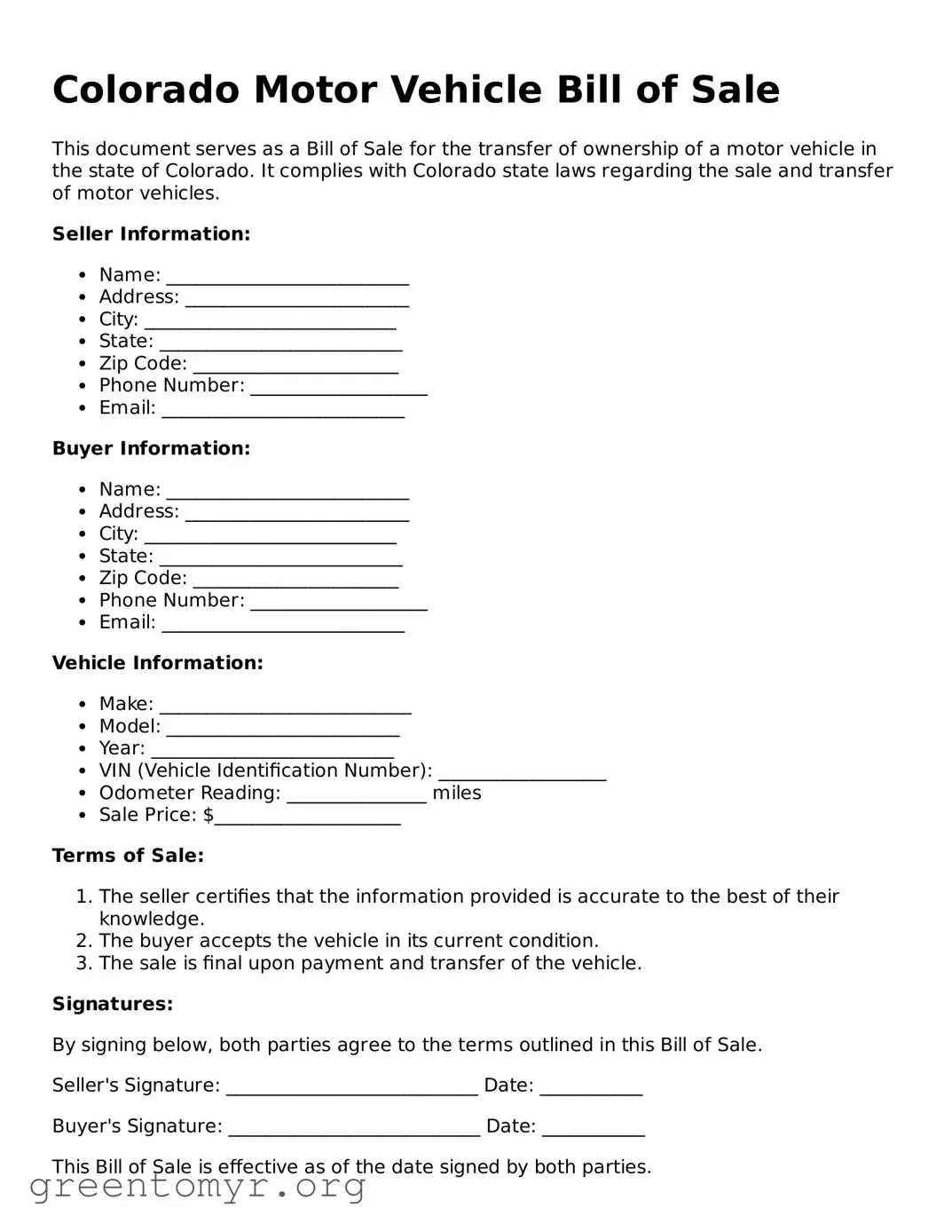
The Colorado Motor Vehicle Bill of Sale form serves as a crucial document for individuals engaged in the buying and selling of vehicles within the state. This form not only facilitates the transfer of ownership but also provides essential information regarding the vehicle, such as its make, model, year, and Vehicle Identification Number (VIN). Additionally, it captures the details of both the buyer and the seller, including their names, addresses, and signatures, ensuring that the transaction is documented and legally recognized. By detailing the sale price and any warranties or conditions attached to the vehicle, the form protects both parties in the event of disputes. Furthermore, it plays a significant role in the registration process, as it may be required by the Colorado Department of Revenue when the new owner seeks to register the vehicle in their name. Understanding the nuances of this form can empower individuals to navigate the vehicle sale process more confidently and efficiently.
Colorado Motor Vehicle Bill of Sale
This document serves as a Bill of Sale for the transfer of ownership of a motor vehicle in the state of Colorado. It complies with Colorado state laws regarding the sale and transfer of motor vehicles.
Seller Information:
Buyer Information:
Vehicle Information:
Terms of Sale:
Signatures:
By signing below, both parties agree to the terms outlined in this Bill of Sale.
Seller's Signature: ___________________________ Date: ___________
Buyer's Signature: ___________________________ Date: ___________
This Bill of Sale is effective as of the date signed by both parties.
| Fact Name | Description |
|---|---|
| Purpose | The Colorado Motor Vehicle Bill of Sale serves as a legal document to transfer ownership of a vehicle from one party to another. |
| Governing Law | This form is governed by Colorado Revised Statutes, specifically Title 42, Article 6, which addresses motor vehicle registration and transfer. |
| Required Information | The form must include details such as the vehicle identification number (VIN), make, model, year, and the sale price. |
| Seller's Information | The seller's name, address, and signature are required to validate the sale. |
| Buyer's Information | Similarly, the buyer's name and address must be included to establish the new owner. |
| Notarization | While notarization is not mandatory, it is highly recommended to enhance the document's credibility. |
| Record Keeping | Both the buyer and seller should retain a copy of the completed Bill of Sale for their records. |
| Use for Tax Purposes | The Bill of Sale can be used as evidence of the purchase price for tax assessments and registration fees. |
| Availability | The Colorado Motor Vehicle Bill of Sale form is readily available online through the Colorado Department of Revenue's website. |
After obtaining the Colorado Motor Vehicle Bill of Sale form, you will need to fill it out accurately to ensure a smooth transaction. Once completed, this form will serve as proof of the sale and help with the title transfer process.
A Colorado Motor Vehicle Bill of Sale is a legal document that serves as a receipt for the sale of a vehicle. It includes important details about the transaction, such as the names of the buyer and seller, the vehicle's identification number (VIN), the sale price, and the date of the sale. This document is essential for both parties, as it provides proof of ownership transfer and can be used when registering the vehicle with the state.
While a Bill of Sale is not legally required in Colorado, it is highly recommended. Having this document can protect both the seller and the buyer. For the seller, it serves as proof that the vehicle has been sold, which can help avoid future liability for any incidents involving the vehicle. For the buyer, it confirms the purchase and can assist with vehicle registration.
A comprehensive Bill of Sale should include the following information:
Including this information helps ensure clarity and legality in the transaction.
Yes, you can create your own Bill of Sale as long as it includes all the necessary information. However, using a template can make the process easier and ensure that you don’t miss any important details. Various resources are available online that provide templates specifically for Colorado vehicle sales.
If there is a lien on the vehicle, it is crucial to address this before completing the sale. The seller should ensure that the lien is paid off and released prior to transferring ownership. The Bill of Sale should also indicate that the lien has been cleared, or it should include information about how the lien will be handled during the sale.
The Bill of Sale itself does not need to be filed with any government agency in Colorado. However, the buyer will need to present it when registering the vehicle with the Colorado Department of Revenue. This is an important step to ensure that the vehicle's title is properly transferred and that the new owner is recognized by the state.
Completing the Colorado Motor Vehicle Bill of Sale form can be straightforward, but several common mistakes can lead to complications. One frequent error is failing to provide accurate vehicle information. This includes the vehicle identification number (VIN), make, model, and year. If any of these details are incorrect, it could result in delays during the registration process or even issues with ownership transfer.
Another common mistake involves the omission of required signatures. Both the seller and buyer must sign the form to validate the transaction. If either party neglects to sign, the bill of sale may be deemed invalid. This can create challenges when trying to register the vehicle or resolve disputes later on.
People often overlook the importance of including the sale price. The form requires the sale price to be stated clearly. Not providing this information can lead to confusion and may raise questions during tax assessments. It's essential to ensure this figure is accurate and clearly written to avoid misunderstandings.
Inaccurate date entries can also pose problems. The date of sale must reflect when the transaction took place. If the date is incorrect, it could affect the timeline for registration and tax obligations. Buyers and sellers should double-check this detail to ensure it matches the actual date of the sale.
Finally, individuals sometimes fail to keep a copy of the completed bill of sale. Retaining a copy is crucial for both parties. It serves as proof of the transaction and can be essential for future reference, especially if any disputes arise. Always make sure to have a signed copy for your records.
When buying or selling a vehicle in Colorado, it's important to have the right documentation. The Colorado Motor Vehicle Bill of Sale is a key document, but several other forms and documents are often used in conjunction with it. Here’s a list of some essential documents that can help ensure a smooth transaction.
Having these documents ready can help streamline the buying or selling process. It ensures that all legal requirements are met and protects both parties involved in the transaction. Always consider consulting with a professional if you have questions about specific forms or procedures.
When filling out the Colorado Motor Vehicle Bill of Sale form, it's important to approach the process with care. This document serves as a crucial record of the transaction between the buyer and seller. Here are some essential dos and don'ts to keep in mind:
By following these guidelines, you can ensure a smooth transaction and avoid potential issues down the line. Remember, attention to detail can make all the difference.
When it comes to buying or selling a vehicle in Colorado, the Motor Vehicle Bill of Sale form is an essential document. However, there are several misconceptions surrounding its use. Here are four common misunderstandings:
Many people believe that a Bill of Sale is only required when buying or selling a vehicle privately. In reality, this form can also be useful in dealership transactions. It serves as a record of the sale and provides proof of ownership, regardless of the seller.
While both documents are important, they serve different purposes. The Bill of Sale records the sale transaction, whereas the title transfer officially changes ownership in the eyes of the state. Both documents are necessary for a smooth transaction.
Some believe that notarization is not required for a Bill of Sale in Colorado. However, having the document notarized adds an extra layer of authenticity and can help prevent disputes later on. It’s a good practice to have it notarized, especially for high-value transactions.
This is a common myth. A Bill of Sale can be used for both new and used vehicles. Whether you’re purchasing a brand-new car or a pre-owned one, having a Bill of Sale is beneficial for record-keeping and legal purposes.
Understanding these misconceptions can help ensure a smoother vehicle transaction process in Colorado. Always take the time to familiarize yourself with the necessary documentation to protect your interests.
When filling out and using the Colorado Motor Vehicle Bill of Sale form, keep the following key takeaways in mind: