The Colorado Power of Attorney form is a crucial legal document that allows individuals to designate someone else to make decisions on their behalf. This form can cover a wide range of responsibilities, from managing financial affairs to making healthcare choices. It empowers the appointed agent to act in the best interest of the principal, ensuring that their wishes are respected even if they are unable to communicate them. The document can be tailored to be effective immediately or only in the event of incapacity, providing flexibility based on personal needs. Additionally, Colorado law requires specific language and formalities to ensure the document is valid and enforceable. Understanding these elements is vital for anyone considering establishing a Power of Attorney in Colorado, as it safeguards personal interests and provides peace of mind in uncertain times.
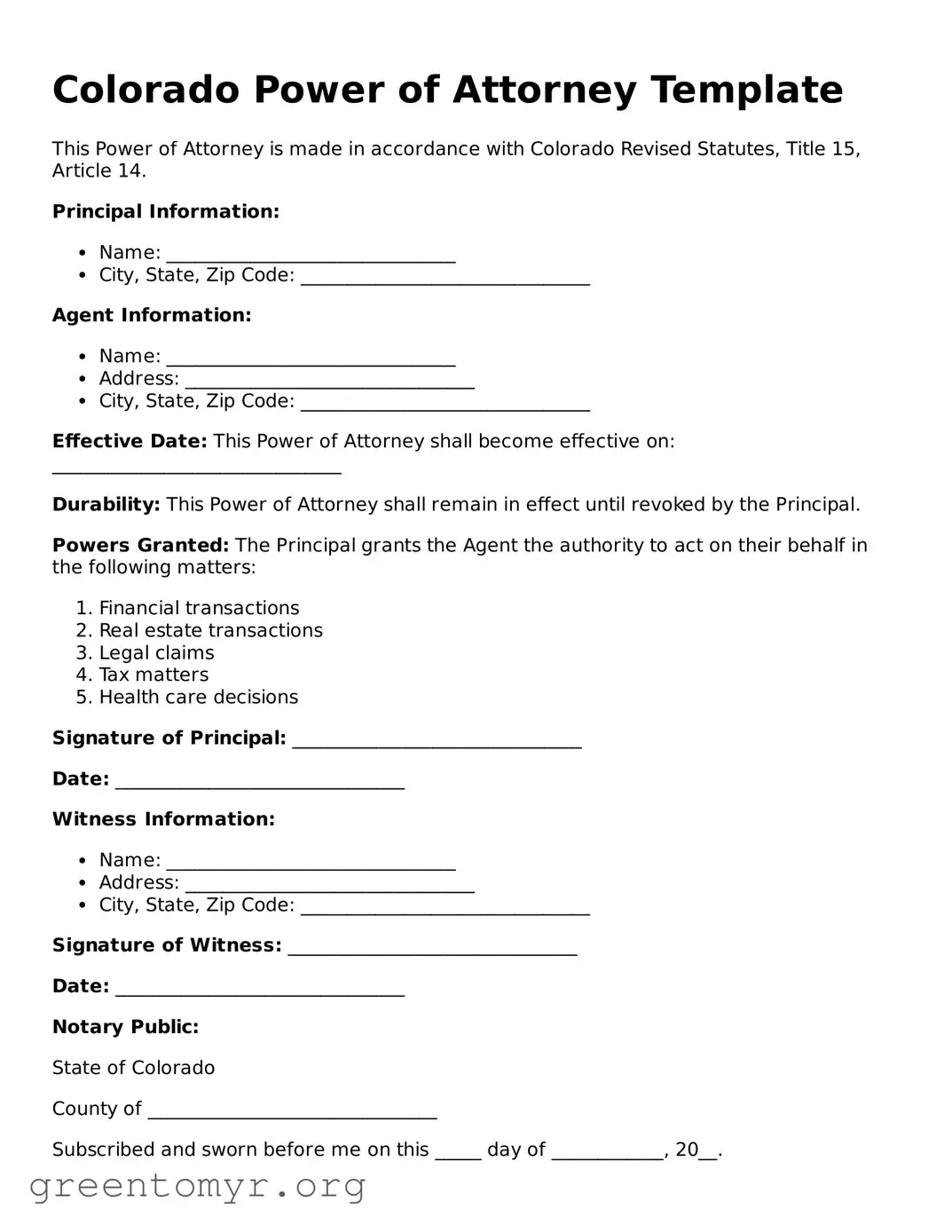
Colorado Power of Attorney Template
This Power of Attorney is made in accordance with Colorado Revised Statutes, Title 15, Article 14.
Principal Information:
Agent Information:
Effective Date: This Power of Attorney shall become effective on: _______________________________
Durability: This Power of Attorney shall remain in effect until revoked by the Principal.
Powers Granted: The Principal grants the Agent the authority to act on their behalf in the following matters:
Signature of Principal: _______________________________
Date: _______________________________
Witness Information:
Signature of Witness: _______________________________
Date: _______________________________
Notary Public:
State of Colorado
County of _______________________________
Subscribed and sworn before me on this _____ day of ____________, 20__.
Notary Public Signature: _______________________________
My Commission Expires: _______________________________
| Fact Name | Details |
|---|---|
| Definition | A Power of Attorney (POA) allows one person to make decisions on behalf of another, typically in financial or medical matters. |
| Governing Law | The Colorado Power of Attorney form is governed by the Colorado Revised Statutes, specifically Title 15, Article 14. |
| Types of POA | In Colorado, there are several types of POAs: General, Durable, and Medical. Each serves different purposes. |
| Durability | A Durable Power of Attorney remains effective even if the principal becomes incapacitated, ensuring continuous decision-making. |
| Signing Requirements | The form must be signed by the principal and witnessed by two individuals or notarized to be legally valid. |
| Revocation | The principal can revoke a Power of Attorney at any time, as long as they are mentally competent to do so. |
Filling out the Colorado Power of Attorney form is an important step in designating someone to act on your behalf in financial or legal matters. Once you complete the form, ensure that it is signed and dated appropriately, as this will make it valid and enforceable.
A Power of Attorney (POA) in Colorado is a legal document that allows one person (the principal) to authorize another person (the agent) to make decisions on their behalf. This can include financial matters, medical decisions, or other specific tasks. The principal must be competent at the time of signing.
In Colorado, there are several types of Power of Attorney, including:
To create a Power of Attorney in Colorado, follow these steps:
No, you do not need a lawyer to create a Power of Attorney in Colorado. However, consulting with a legal professional can provide guidance and ensure that the document meets all legal requirements and accurately reflects your wishes.
Yes, you can revoke a Power of Attorney at any time, as long as you are competent. To revoke, you should create a written notice of revocation and inform your agent and any relevant third parties. It is advisable to destroy any copies of the original Power of Attorney to prevent confusion.
If your designated agent cannot serve, the Power of Attorney may allow for an alternate agent, if one was named. If no alternate agent is specified, the Power of Attorney may become ineffective, and you may need to create a new one or appoint someone else.
A Power of Attorney can be effective immediately upon signing or can be set to activate at a future date or upon a specific event, such as incapacitation. This is known as a "springing" Power of Attorney. Make sure to specify your preference in the document.
Yes, a Power of Attorney can be used for real estate transactions in Colorado. The agent can sign documents related to buying, selling, or managing real estate on behalf of the principal. Ensure that the Power of Attorney specifically grants the agent authority for real estate matters.
Filling out a Power of Attorney (POA) form in Colorado can be a straightforward process, but many individuals make common mistakes that can lead to complications down the line. Understanding these pitfalls can help ensure that the document serves its intended purpose without any hitches.
One common mistake is failing to clearly identify the principal and the agent. The principal is the person granting authority, while the agent is the one receiving it. If names are misspelled or if the wrong person is designated, it can create confusion and potentially invalidate the document. Always double-check the names and ensure they match the individuals’ legal identification.
Another frequent error involves not specifying the powers being granted. Some people may assume that general language suffices, but it’s essential to be explicit about what authority the agent will have. Without clear specifications, the agent may not have the power to act in the ways the principal intends, which could lead to significant issues when the time comes for the agent to step in.
Additionally, neglecting to date the form is a mistake that can have serious implications. A POA should always be dated to establish when it takes effect. If the form is undated, it may lead to disputes regarding its validity, especially if there are changes in the principal’s circumstances after the form is completed.
People often overlook the requirement for signatures. Both the principal and the agent must sign the document for it to be legally binding. In some cases, individuals might forget to have their signatures witnessed or notarized, which can render the document ineffective. Ensuring that all necessary signatures are obtained is crucial for the POA to hold up in legal situations.
Another mistake involves not keeping copies of the completed form. After the POA is filled out and signed, it is important for the principal to retain copies for their records and to provide copies to the agent and any relevant institutions. Without these copies, the agent may face challenges when trying to act on behalf of the principal.
Lastly, individuals sometimes fail to review and update their POA as circumstances change. Life events such as marriage, divorce, or the death of a designated agent can impact the effectiveness of the document. Regularly reviewing the POA ensures that it reflects the principal’s current wishes and provides the necessary authority to the right individuals.
By being aware of these common mistakes, individuals can take steps to avoid them. A well-prepared Power of Attorney can provide peace of mind and ensure that one’s wishes are respected when it matters most.
When creating a Power of Attorney (POA) in Colorado, it is often beneficial to consider additional documents that can enhance your estate planning or ensure your wishes are honored. These documents serve various purposes and can work in tandem with your POA to provide comprehensive coverage for your legal and financial needs.
Incorporating these documents alongside your Colorado Power of Attorney can provide clarity and ensure that your preferences are respected in both healthcare and financial situations. Always consider consulting with a professional to tailor these documents to your unique circumstances.
The Power of Attorney (POA) form is a crucial legal document that allows one person to act on behalf of another in various matters. It shares similarities with several other documents that also grant authority or designate responsibility. Below are seven documents that are akin to the Power of Attorney, along with explanations of their similarities.
Each of these documents serves a unique purpose but shares the common thread of allowing one person to act on behalf of another. Understanding these similarities can help individuals make informed decisions about which documents best suit their needs and circumstances.
When filling out the Colorado Power of Attorney form, it's important to follow specific guidelines to ensure that the document is valid and meets your needs. Below is a list of things you should and shouldn't do.
By following these guidelines, you can help ensure that your Power of Attorney form is completed correctly and serves your intended purpose.
Understanding the Colorado Power of Attorney form is essential for anyone considering this legal document. However, several misconceptions can lead to confusion. Here are six common misunderstandings:
This is not true. While many people associate a Power of Attorney with financial decisions, it can also be used for healthcare decisions. You can specify different powers for different areas, including medical and legal matters.
This misconception is widespread. In reality, you can maintain control as long as you are mentally competent. You can revoke or change the Power of Attorney at any time, as long as you are able to make your own decisions.
This is incorrect. You have the right to modify or revoke your Power of Attorney whenever you choose, provided you are of sound mind. It’s important to keep your documents updated to reflect your current wishes.
While you can choose almost anyone, it’s crucial to select someone you trust completely. The person you appoint should be responsible and capable of making decisions in your best interest.
This is a common belief, but anyone can benefit from having a Power of Attorney. Unexpected events, such as accidents or sudden illness, can happen to anyone, making it wise to have this document in place regardless of age.
This is a misconception. Power of Attorney forms can vary significantly by state and purpose. It’s essential to use the correct form that meets Colorado’s specific legal requirements and your individual needs.
Being aware of these misconceptions can help you make informed decisions about your Power of Attorney. Always consult with a qualified professional to ensure your documents are appropriate for your situation.
When filling out and using the Colorado Power of Attorney form, it's essential to keep several key points in mind. Here are some important takeaways:
Being informed about these aspects can help ensure that your Power of Attorney works effectively when needed.