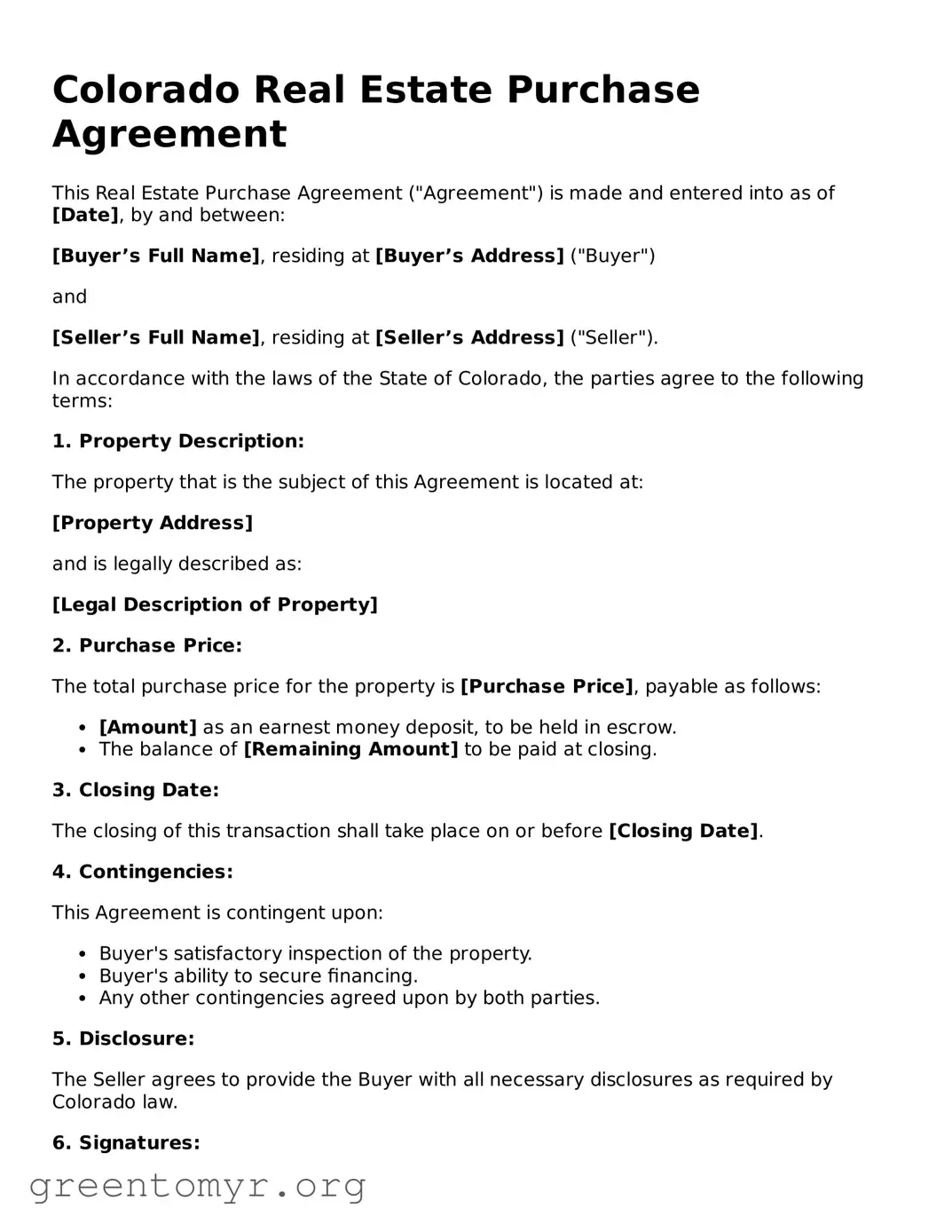
The Colorado Real Estate Purchase Agreement form is a crucial document in the home buying process, serving as the foundation for transactions between buyers and sellers. This comprehensive agreement outlines essential details such as the purchase price, closing date, and any contingencies that may affect the sale. It also includes provisions for earnest money deposits, which demonstrate the buyer's commitment to the purchase. Additionally, the form addresses important aspects like property disclosures, inspection rights, and the allocation of closing costs. By clearly defining the rights and responsibilities of both parties, the Colorado Real Estate Purchase Agreement helps to minimize misunderstandings and protect the interests of everyone involved. Whether you are a first-time homebuyer or a seasoned investor, understanding this form is key to navigating the real estate market in Colorado effectively.
Colorado Real Estate Purchase Agreement
This Real Estate Purchase Agreement ("Agreement") is made and entered into as of [Date], by and between:
[Buyer’s Full Name], residing at [Buyer’s Address] ("Buyer")
and
[Seller’s Full Name], residing at [Seller’s Address] ("Seller").
In accordance with the laws of the State of Colorado, the parties agree to the following terms:
1. Property Description:
The property that is the subject of this Agreement is located at:
[Property Address]
and is legally described as:
[Legal Description of Property]
2. Purchase Price:
The total purchase price for the property is [Purchase Price], payable as follows:
3. Closing Date:
The closing of this transaction shall take place on or before [Closing Date].
4. Contingencies:
This Agreement is contingent upon:
5. Disclosure:
The Seller agrees to provide the Buyer with all necessary disclosures as required by Colorado law.
6. Signatures:
By signing below, both parties agree to the terms outlined in this Agreement.
______________________________
Buyer’s Signature
[Buyer’s Printed Name]
______________________________
Seller’s Signature
[Seller’s Printed Name]
Date: [Date]
| Fact Name | Description |
|---|---|
| Governing Law | The Colorado Real Estate Purchase Agreement is governed by the laws of the State of Colorado. |
| Purpose | This form is used to outline the terms and conditions of a real estate transaction between a buyer and a seller. |
| Parties Involved | The agreement typically includes the buyer, the seller, and may also reference real estate agents. |
| Property Description | A detailed description of the property being sold is required, including the address and legal description. |
| Purchase Price | The form specifies the agreed-upon purchase price for the property. |
| Contingencies | Common contingencies include financing, inspections, and appraisal conditions that must be met for the sale to proceed. |
| Earnest Money | The agreement outlines the amount of earnest money to be deposited, demonstrating the buyer's commitment. |
| Closing Date | A specific closing date is often included, indicating when the transaction will be finalized. |
| Signatures | Both parties must sign the agreement for it to be legally binding, indicating their acceptance of the terms. |
After obtaining the Colorado Real Estate Purchase Agreement form, you will need to fill it out carefully. This document will be used to outline the terms of the real estate transaction. Follow the steps below to complete the form accurately.
Once the form is completed, it should be reviewed for accuracy. After that, it can be submitted to the relevant parties for further processing.
The Colorado Real Estate Purchase Agreement form is a legal document used to outline the terms and conditions of a real estate transaction in Colorado. It serves as a binding contract between the buyer and seller, detailing essential aspects such as the purchase price, property description, contingencies, and closing date. This form is crucial for ensuring both parties understand their obligations and rights throughout the transaction process.
This agreement should be used by anyone involved in a real estate transaction in Colorado, including individual buyers and sellers, real estate agents, and brokers. It is particularly important for those who want to formalize an offer to purchase or sell a property. Using this form helps protect the interests of both parties and provides a clear framework for the transaction.
The Colorado Real Estate Purchase Agreement typically includes the following key elements:
Filling out the Colorado Real Estate Purchase Agreement involves several steps:
Yes, the Colorado Real Estate Purchase Agreement can be modified after it is signed, but both parties must agree to any changes. Modifications should be documented in writing and signed by both the buyer and seller to ensure clarity and enforceability. It's advisable to consult with a real estate professional or attorney when making changes to the agreement.
If one party breaches the Colorado Real Estate Purchase Agreement, the other party may have several options. They can seek to enforce the terms of the contract, which may involve legal action. Alternatively, the non-breaching party may choose to terminate the agreement and seek damages. It's important for both parties to understand their rights and obligations as outlined in the agreement to navigate any potential breaches effectively.
Completing the Colorado Real Estate Purchase Agreement form can be a daunting task. Many individuals make common mistakes that can lead to complications later on. Awareness of these pitfalls can help ensure a smoother transaction.
One frequent error is failing to provide accurate property details. Buyers often overlook essential information such as the legal description of the property or the correct address. This oversight can create confusion and may delay the closing process.
Another common mistake involves not specifying the terms of the offer clearly. Buyers may neglect to outline important details such as the purchase price, earnest money deposit, or financing terms. Incomplete terms can lead to misunderstandings between the parties involved.
Additionally, people sometimes forget to include contingencies. These are conditions that must be met for the sale to proceed, such as home inspections or financing approval. Without clearly defined contingencies, buyers may find themselves in a vulnerable position.
Failure to understand the timeline of the agreement is another mistake. Buyers might not pay attention to deadlines for inspections, loan approvals, or closing dates. Missing these deadlines can result in lost opportunities or even legal issues.
Lastly, not seeking professional advice can be detrimental. Many individuals attempt to navigate the process without the guidance of a real estate agent or attorney. This can lead to errors that might have been avoided with expert insight.
When engaging in a real estate transaction in Colorado, several documents complement the Real Estate Purchase Agreement. Each of these forms serves a specific purpose, ensuring that all aspects of the transaction are covered and that both parties are protected. Below is a list of commonly used documents in conjunction with the purchase agreement.
Understanding these documents is essential for anyone involved in a real estate transaction. They help clarify the responsibilities of both parties and ensure a smoother process from agreement to closing.
Lease Agreement: This document outlines the terms under which one party rents property from another. Like a Real Estate Purchase Agreement, it specifies the duration, payment terms, and responsibilities of both parties.
Option to Purchase Agreement: This agreement grants a tenant the right to purchase the property at a later date. Similar to a Real Estate Purchase Agreement, it includes terms for price and conditions of sale.
Listing Agreement: A property owner enters into this contract with a real estate agent to sell the property. It shares similarities with a Real Estate Purchase Agreement by detailing the sale terms and agent's responsibilities.
Purchase and Sale Agreement: This document is often used interchangeably with the Real Estate Purchase Agreement. It details the sale of property and includes terms such as purchase price, closing date, and contingencies.
Joint Venture Agreement: When two or more parties collaborate on a real estate investment, this agreement outlines each party's contributions and profits. It mirrors the Real Estate Purchase Agreement in specifying roles and expectations.
Property Management Agreement: This contract allows a property owner to hire a management company to oversee their property. Both agreements define responsibilities and expectations, though the focus differs.
Financing Agreement: This document outlines the terms of a loan for purchasing property. Similar to a Real Estate Purchase Agreement, it details payment terms and obligations of the borrower and lender.
When filling out the Colorado Real Estate Purchase Agreement form, it’s crucial to approach the task with care. Here’s a helpful list of things you should and shouldn’t do to ensure a smooth process.
By following these guidelines, you can navigate the Colorado Real Estate Purchase Agreement with confidence and clarity.
The Colorado Real Estate Purchase Agreement form is a crucial document in real estate transactions. However, several misconceptions surround its use and implications. Below is a list of ten common misunderstandings regarding this form, along with clarifications for each.
Understanding these misconceptions can lead to more informed decisions when engaging in real estate transactions in Colorado. It is essential to approach the Real Estate Purchase Agreement with clarity and knowledge.
When filling out and using the Colorado Real Estate Purchase Agreement form, there are several important points to keep in mind: