The Colorado Residential Lease Agreement is a vital document that outlines the terms and conditions between landlords and tenants in rental situations. This form serves as a roadmap for the rental relationship, detailing essential aspects such as the duration of the lease, rent payment details, and security deposit requirements. It also covers the responsibilities of both parties, including maintenance obligations and rules regarding property use. By clearly defining these elements, the agreement helps prevent misunderstandings and disputes. Additionally, it addresses important topics like termination procedures and penalties for late payments, ensuring that both landlords and tenants are aware of their rights and obligations. Understanding this form is crucial for anyone involved in renting residential property in Colorado, as it lays the groundwork for a smooth and respectful leasing experience.
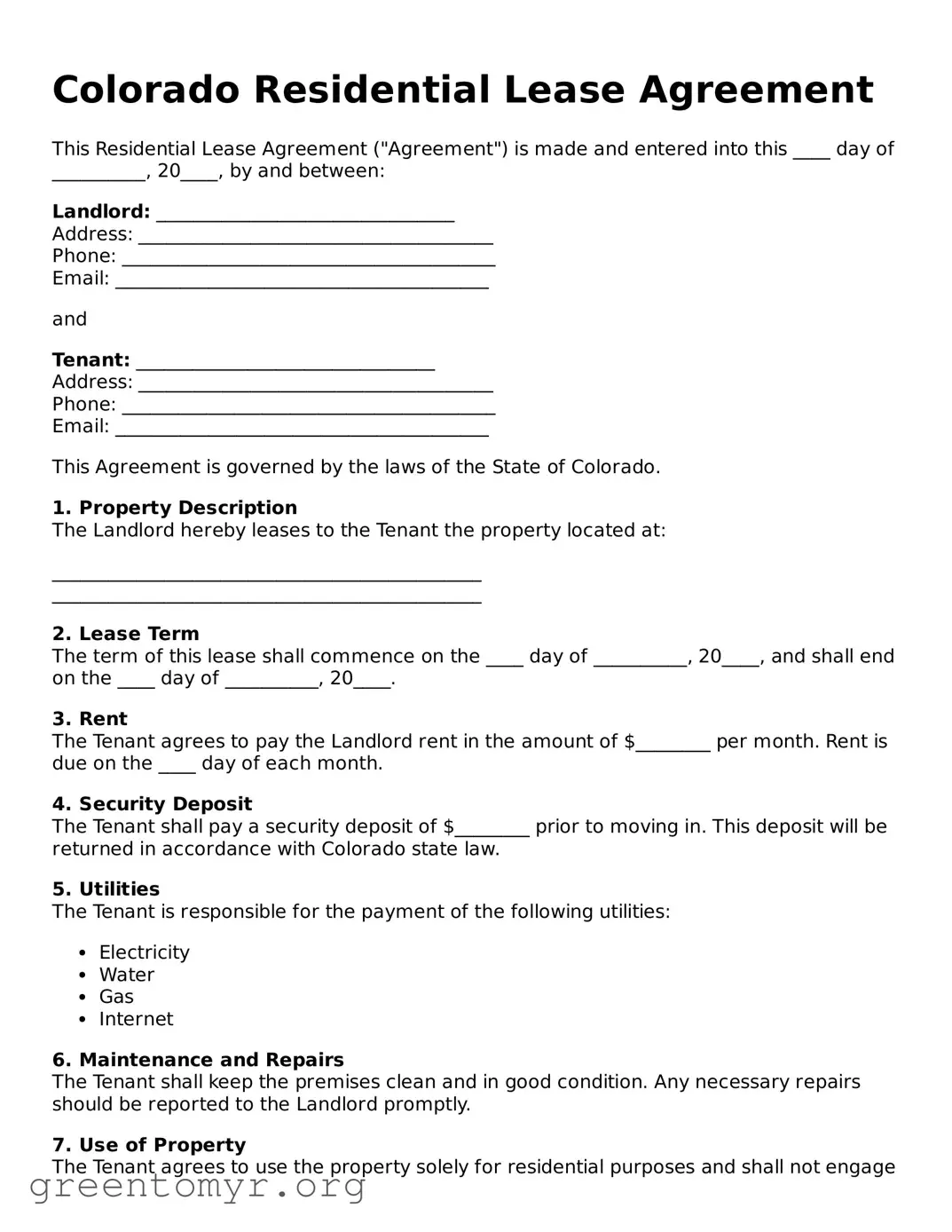
Colorado Residential Lease Agreement
This Residential Lease Agreement ("Agreement") is made and entered into this ____ day of __________, 20____, by and between:
Landlord: ________________________________
Address: ______________________________________
Phone: ________________________________________
Email: ________________________________________
and
Tenant: ________________________________
Address: ______________________________________
Phone: ________________________________________
Email: ________________________________________
This Agreement is governed by the laws of the State of Colorado.
1. Property Description
The Landlord hereby leases to the Tenant the property located at:
______________________________________________
______________________________________________
2. Lease Term
The term of this lease shall commence on the ____ day of __________, 20____, and shall end on the ____ day of __________, 20____.
3. Rent
The Tenant agrees to pay the Landlord rent in the amount of $________ per month. Rent is due on the ____ day of each month.
4. Security Deposit
The Tenant shall pay a security deposit of $________ prior to moving in. This deposit will be returned in accordance with Colorado state law.
5. Utilities
The Tenant is responsible for the payment of the following utilities:
6. Maintenance and Repairs
The Tenant shall keep the premises clean and in good condition. Any necessary repairs should be reported to the Landlord promptly.
7. Use of Property
The Tenant agrees to use the property solely for residential purposes and shall not engage in any illegal activities on the premises.
8. Termination
This Agreement may be terminated by either party with a written notice of ____ days prior to the intended termination date.
9. Governing Law
This Agreement shall be governed by and construed in accordance with the laws of the State of Colorado.
10. Signatures
By signing below, both parties agree to the terms and conditions set forth in this Residential Lease Agreement.
______________________________
Landlord Signature
Date: ________________________
______________________________
Tenant Signature
Date: ________________________
| Fact Name | Details |
|---|---|
| Purpose | The Colorado Residential Lease Agreement is used to outline the terms between landlords and tenants for renting residential properties. |
| Governing Laws | This agreement is governed by the Colorado Revised Statutes, specifically Title 38, Article 12, which covers landlord-tenant relationships. |
| Duration | The lease can be for a fixed term, typically one year, or can be month-to-month, depending on the agreement between the parties. |
| Security Deposit | Landlords may require a security deposit, which is typically equal to one month's rent, and must be returned within 60 days after lease termination, minus any allowable deductions. |
Filling out the Colorado Residential Lease Agreement form is a straightforward process. This document outlines the terms of the rental agreement between the landlord and tenant. Completing it accurately ensures that both parties understand their rights and responsibilities.
A Colorado Residential Lease Agreement is a legal document that outlines the terms and conditions under which a landlord rents property to a tenant. This agreement covers important aspects such as rent amount, lease duration, security deposits, and maintenance responsibilities. It protects both the landlord's and tenant's rights and helps prevent misunderstandings.
The key components typically include:
While a written lease is not legally required for leases shorter than one year, it is highly recommended. A written agreement provides clarity and serves as a reference for both parties. It can help resolve disputes and protect your rights in case of misunderstandings.
If the lease is not signed, the terms may still be enforceable if both parties act as if the lease is in effect. This is known as an implied lease. However, without a signed document, it can be difficult to prove the specific terms agreed upon, which may lead to disputes later on.
Generally, a landlord cannot increase rent during the lease term unless the lease specifically allows for it. If the lease is month-to-month, the landlord can typically raise the rent with proper notice, which is usually 30 days in Colorado. Always check the lease terms for specifics.
Tenants in Colorado have the right to a habitable living environment. This means that the property must meet basic health and safety standards. If repairs are needed, tenants should notify the landlord in writing. If the landlord fails to address significant issues, tenants may have legal options to pursue repairs or even withhold rent in some cases.
To terminate a lease early, tenants usually need to provide written notice to the landlord, as specified in the lease agreement. Some leases include a termination clause that outlines specific conditions for early termination. If no such clause exists, tenants may need to negotiate with the landlord or face potential penalties.
If a dispute arises, the first step is to communicate directly with the landlord to try to resolve the issue amicably. If that fails, consider reviewing the lease agreement for guidance. Mediation services are also available in Colorado to help both parties reach a resolution. If necessary, legal action may be pursued, but this should be a last resort.
When filling out the Colorado Residential Lease Agreement, individuals often overlook critical details that can lead to misunderstandings or legal issues. One common mistake is failing to include the full names of all tenants. Each tenant should be clearly identified to ensure that everyone is held accountable under the lease terms.
Another frequent error involves neglecting to specify the lease term. The agreement should clearly state the start and end dates of the lease. Without this information, disputes may arise regarding the duration of occupancy and rental obligations.
Many people also forget to address the security deposit. It is essential to outline the amount of the deposit, the conditions for its return, and any deductions that may be taken. Leaving this section incomplete can lead to confusion and potential conflict when the lease ends.
Some tenants mistakenly assume that verbal agreements are sufficient. All terms, including rent amounts and maintenance responsibilities, should be documented in writing. Relying on verbal promises can lead to disputes and a lack of clarity.
Inadequate descriptions of the rental property can create problems. The lease should include a detailed description of the premises, including any specific areas or amenities included in the rental. This ensures that both parties have a mutual understanding of what is being rented.
Another common oversight is not reviewing the lease for compliance with Colorado laws. Certain provisions may be required or prohibited by state law. Failing to comply can render parts of the lease unenforceable.
People often neglect to discuss pet policies. If pets are allowed or prohibited, this should be clearly stated in the lease. Misunderstandings regarding pets can lead to significant disputes and potential eviction.
Some individuals do not consider the consequences of breaking the lease. It is crucial to include terms regarding early termination and any penalties that may apply. This helps protect both the landlord and the tenant in case circumstances change.
Lastly, many tenants fail to obtain copies of the signed lease. Each party should keep a copy for their records. This ensures that everyone has access to the agreed-upon terms and can refer back to them if needed.
By being aware of these common mistakes, individuals can better protect their rights and responsibilities when entering into a lease agreement. Attention to detail and clear communication can help foster a positive landlord-tenant relationship.
When entering into a residential lease agreement in Colorado, several other forms and documents may be necessary to ensure a smooth rental process. Below is a list of commonly used documents that complement the Colorado Residential Lease Agreement.
These documents play a crucial role in the rental process, ensuring clarity and protection for both landlords and tenants. Familiarizing oneself with these forms can help create a positive rental experience.
When filling out the Colorado Residential Lease Agreement form, there are important guidelines to follow. Here’s a list of what you should and shouldn't do:
When it comes to the Colorado Residential Lease Agreement form, several misconceptions can lead to confusion for both landlords and tenants. Understanding these misconceptions can help clarify the rights and responsibilities of each party involved in a lease. Here are five common misconceptions:
By addressing these misconceptions, both landlords and tenants can better navigate their lease agreements and foster a more positive rental experience.
When filling out and using the Colorado Residential Lease Agreement form, several key points should be considered to ensure clarity and compliance. Here are the essential takeaways:
By keeping these points in mind, both landlords and tenants can navigate the leasing process more effectively and with greater confidence.