When renting a room in Colorado, having a clear and comprehensive Room Rental Agreement is essential for both landlords and tenants. This document serves as a binding contract that outlines the rights and responsibilities of each party, ensuring a mutual understanding of the rental terms. Key elements typically included in this agreement are the rental amount, payment schedule, and the duration of the lease. Additionally, it addresses security deposits, maintenance responsibilities, and conditions under which the agreement can be terminated. The form also often specifies rules regarding guests, pets, and other important aspects that contribute to a harmonious living environment. By carefully reviewing and signing this agreement, both parties can avoid misunderstandings and establish a solid foundation for their rental relationship.
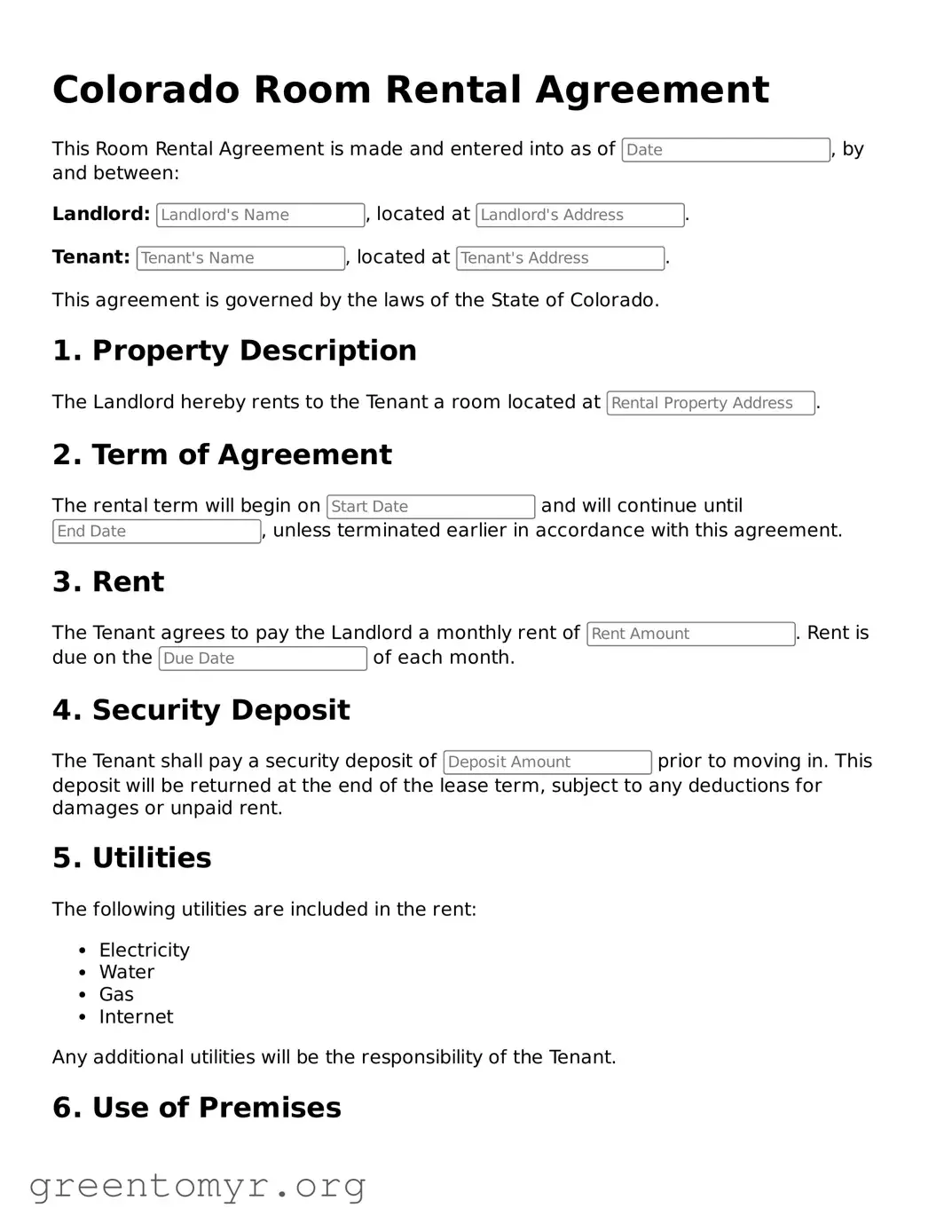
Colorado Room Rental Agreement
This Room Rental Agreement is made and entered into as of , by and between:
Landlord: , located at .
Tenant: , located at .
This agreement is governed by the laws of the State of Colorado.
1. Property Description
The Landlord hereby rents to the Tenant a room located at .
2. Term of Agreement
The rental term will begin on and will continue until , unless terminated earlier in accordance with this agreement.
3. Rent
The Tenant agrees to pay the Landlord a monthly rent of . Rent is due on the of each month.
4. Security Deposit
The Tenant shall pay a security deposit of prior to moving in. This deposit will be returned at the end of the lease term, subject to any deductions for damages or unpaid rent.
5. Utilities
The following utilities are included in the rent:
Any additional utilities will be the responsibility of the Tenant.
6. Use of Premises
The Tenant agrees to use the room solely for residential purposes and shall not engage in any illegal activities on the premises.
7. Maintenance and Repairs
The Tenant shall keep the room in a clean and sanitary condition. Any necessary repairs should be reported to the Landlord promptly.
8. Termination
Either party may terminate this agreement by providing days written notice to the other party.
9. Governing Law
This agreement shall be governed by and construed in accordance with the laws of the State of Colorado.
10. Signatures
By signing below, both parties agree to the terms outlined in this Room Rental Agreement.
Landlord Signature: ________________________ Date: ________________
Tenant Signature: ________________________ Date: ________________
| Fact Name | Description |
|---|---|
| Purpose | The Colorado Room Rental Agreement outlines the terms between a landlord and tenant for renting a room. |
| Governing Law | This agreement is governed by the Colorado Revised Statutes, specifically Title 38, Article 12. |
| Parties Involved | The agreement must clearly identify the landlord and tenant, including their full names and contact information. |
| Rental Amount | The document specifies the rental amount due, payment frequency, and acceptable payment methods. |
| Security Deposit | It outlines the terms for the security deposit, including the amount and conditions for its return. |
| Duration | The agreement states the duration of the rental period, whether it is month-to-month or for a fixed term. |
| Utilities | Details regarding which utilities are included in the rent or are the tenant's responsibility are included. |
| Maintenance Responsibilities | The document defines the maintenance responsibilities of both the landlord and the tenant. |
| Termination Clause | A termination clause outlines how either party can end the agreement, including notice periods. |
| Signatures | Both parties must sign and date the agreement for it to be legally binding. |
Completing the Colorado Room Rental Agreement form requires careful attention to detail. This process involves gathering necessary information and accurately filling out each section of the form. Following the steps outlined below will help ensure that the form is completed correctly.
Once the form is completed and signed, it is advisable to keep a copy for personal records. This agreement serves as a binding document that outlines the rights and responsibilities of both parties involved in the rental arrangement.
A Colorado Room Rental Agreement is a legal document that outlines the terms and conditions between a landlord and a tenant for renting a room in a property. This agreement specifies important details such as the rental amount, duration of the lease, security deposit requirements, and the responsibilities of both parties. Having a written agreement helps protect the rights of both the landlord and the tenant, ensuring clarity and reducing potential disputes.
When creating a Room Rental Agreement, it’s important to include the following key elements:
A Room Rental Agreement is enforceable in Colorado as long as it complies with state laws. If either party fails to adhere to the terms outlined in the agreement, the other party may take legal action. This could involve mediation, arbitration, or filing a lawsuit in small claims court, depending on the situation. It’s important for both landlords and tenants to keep a copy of the signed agreement and any correspondence related to the rental to support their case if a dispute arises.
Yes, a Room Rental Agreement can be modified, but both parties must agree to the changes. Modifications should be documented in writing and signed by both the landlord and tenant to ensure they are legally binding. Common reasons for modifications include changes in rent, extending the lease term, or updating house rules. Always keep a copy of the modified agreement for reference.
Filling out a Room Rental Agreement in Colorado can be straightforward, but many individuals make common mistakes that can lead to complications down the road. Understanding these pitfalls can save renters and landlords alike from potential disputes. Here are eight mistakes often encountered when completing this important document.
One frequent error is failing to include all necessary personal information. Renters should ensure that their full name, contact details, and any other required information are accurately provided. Omitting this information can create confusion and hinder communication between parties.
Another common mistake is neglecting to specify the rental term. It’s essential to clearly outline the start and end dates of the rental period. Without this information, both parties may have different expectations regarding the duration of the agreement.
Many people also overlook the importance of detailing the rental payment terms. This includes not just the amount due but also the payment method and due date. Inadequate information in this section can lead to misunderstandings and financial disputes later on.
Additionally, some individuals forget to address security deposits. It’s vital to specify the amount of the deposit, the conditions for its return, and any deductions that may apply. A lack of clarity here can lead to disagreements when the rental term ends.
Another mistake is failing to include rules and regulations regarding the property. This might encompass pet policies, noise restrictions, or maintenance responsibilities. Clear guidelines help prevent conflicts and ensure that both parties understand their obligations.
People often underestimate the importance of signatures. Both the landlord and tenant must sign the agreement for it to be legally binding. Failing to obtain all necessary signatures can render the agreement unenforceable.
Lastly, individuals sometimes neglect to keep a copy of the signed agreement. Having a physical or digital copy is crucial for reference in case any issues arise during or after the rental period. Without a copy, it becomes challenging to resolve disputes effectively.
By being aware of these common mistakes, both landlords and tenants can create a more effective and clear Room Rental Agreement. Taking the time to fill out the form accurately can lead to a smoother rental experience for everyone involved.
When renting a room in Colorado, it’s essential to have the right documents in place to ensure a smooth and clear agreement between the landlord and tenant. Alongside the Colorado Room Rental Agreement form, there are several other forms and documents that can help clarify the terms of the rental arrangement. Here’s a brief overview of five commonly used documents.
Having these documents in place can help protect both landlords and tenants by ensuring that all parties understand their rights and responsibilities. Clear communication and proper documentation are key to a successful rental experience.
Lease Agreement: A lease agreement outlines the terms and conditions for renting a property. Like a room rental agreement, it specifies the duration of the rental, payment details, and responsibilities of both the landlord and tenant.
Sublease Agreement: This document allows a tenant to rent out their leased space to another person. Similar to a room rental agreement, it includes terms regarding rent, duration, and responsibilities, but it involves an existing tenant and a new occupant.
Rental Application: A rental application is filled out by potential tenants to provide information to landlords. It serves as a preliminary step before entering into a room rental agreement, helping landlords assess applicants.
Roommate Agreement: This document is created between individuals sharing a rental space. It details how expenses are shared and sets rules for living together, similar to how a room rental agreement defines responsibilities for the tenant.
Property Management Agreement: This agreement is between a property owner and a management company. It outlines the management of rental properties, including room rentals, and specifies duties similar to those in a room rental agreement.
Tenancy Agreement: A tenancy agreement is a broader term that encompasses various rental arrangements. It shares common elements with room rental agreements, such as duration, payment terms, and tenant obligations.
Eviction Notice: While this document serves a different purpose, it is related to rental agreements. It informs tenants of lease violations, similar to how a room rental agreement outlines tenant responsibilities.
Move-In Checklist: This document is used when tenants move into a rental space. It lists the condition of the property, similar to how a room rental agreement details the terms of occupancy and expectations for the space.
Security Deposit Agreement: This agreement outlines the terms for the security deposit required before moving in. It is similar to a room rental agreement in that it establishes financial obligations and conditions for returning the deposit.
Termination Notice: A termination notice is provided when a tenant or landlord wishes to end the rental agreement. It relates to the room rental agreement by detailing the process for ending the tenancy.
When filling out the Colorado Room Rental Agreement form, it's essential to approach the process with care. Here is a list of things to do and avoid to ensure that the agreement is completed correctly and legally binding.
Things You Should Do:
Things You Shouldn't Do:
By following these guidelines, you can help ensure that the Room Rental Agreement is completed properly and protects the rights of everyone involved.
Understanding the Colorado Room Rental Agreement form is crucial for both landlords and tenants. However, several misconceptions can lead to confusion. Here are seven common misconceptions:
Many people believe that the agreement becomes enforceable as soon as both parties sign. In reality, the agreement only becomes binding once all parties have acknowledged the terms and conditions, including any required deposits or fees.
While it is advisable to have a written agreement, verbal agreements can also be legally binding in Colorado. However, having a written document provides clarity and serves as evidence in case of disputes.
Tenants have the right to request modifications to the rental agreement. Both parties must agree to any changes, and these modifications should be documented in writing to avoid misunderstandings.
While many rental agreements specify a lease term, it is not a requirement. Month-to-month agreements are common and can be renewed or terminated with proper notice.
This is a common myth. In Colorado, security deposits are refundable as long as the property is returned in good condition, minus any agreed-upon deductions for damages or unpaid rent.
Landlords must provide reasonable notice before entering a tenant's rented space. Colorado law typically requires at least 24 hours' notice, except in emergencies.
Each rental agreement can vary significantly based on the specific terms negotiated between the landlord and tenant. It is essential to read and understand the unique provisions of each agreement.
When filling out and using the Colorado Room Rental Agreement form, it is essential to keep several key points in mind to ensure a smooth rental experience.
By following these guidelines, you can help create a positive rental experience for both parties involved.