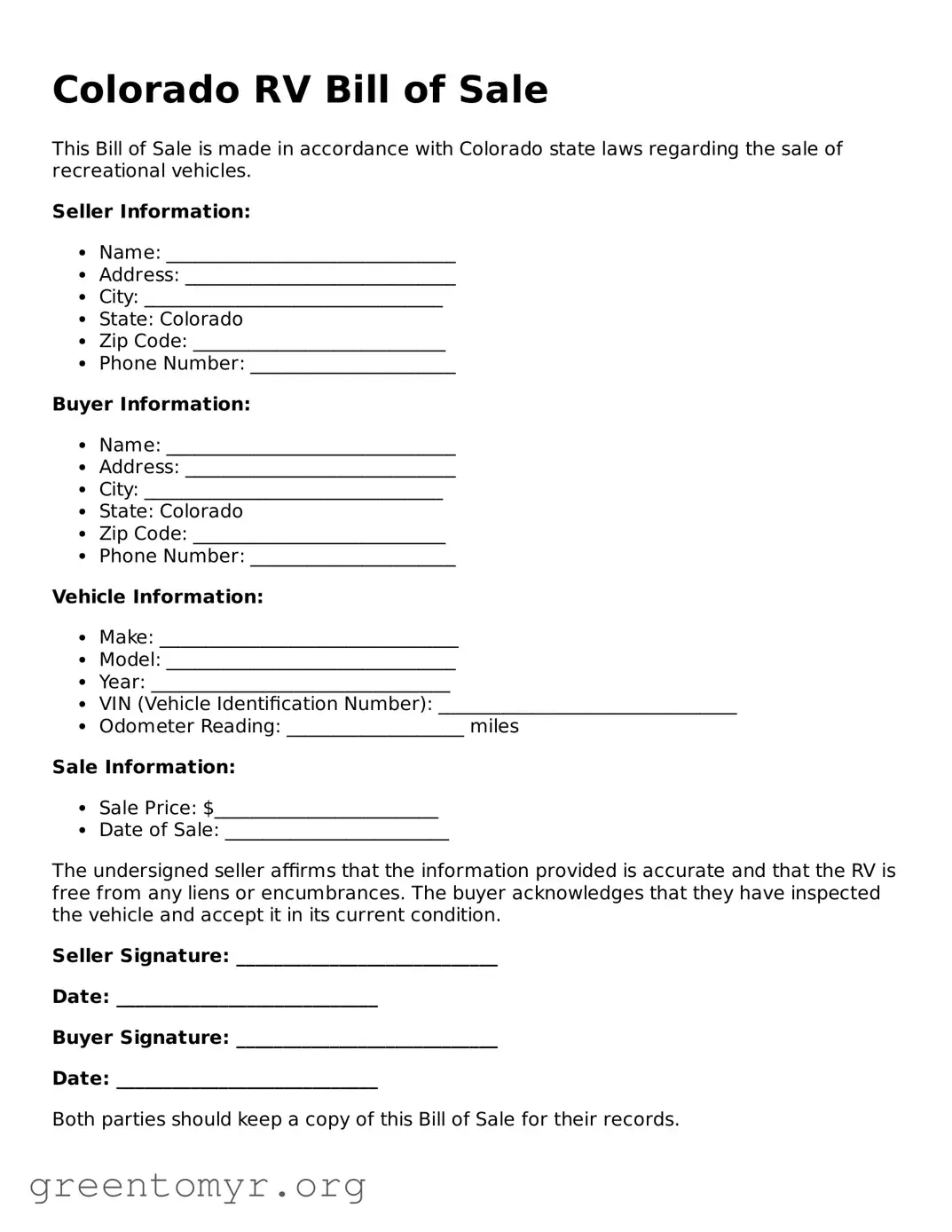
When it comes to buying or selling a recreational vehicle (RV) in Colorado, having the right documentation is essential for a smooth transaction. The Colorado RV Bill of Sale form serves as a crucial record that outlines the details of the sale, including the names and addresses of both the buyer and the seller, the vehicle identification number (VIN), and the sale price. This document not only confirms the transfer of ownership but also protects both parties by providing evidence of the transaction. Additionally, it may include information about any warranties or disclosures related to the RV, ensuring that both the buyer and seller are on the same page regarding the vehicle's condition. Properly completing this form is a vital step in the process, as it can help prevent disputes and facilitate a seamless registration process with the Colorado Department of Revenue. Understanding the key components of the Colorado RV Bill of Sale can empower individuals to navigate their RV transactions with confidence.
Colorado RV Bill of Sale
This Bill of Sale is made in accordance with Colorado state laws regarding the sale of recreational vehicles.
Seller Information:
Buyer Information:
Vehicle Information:
Sale Information:
The undersigned seller affirms that the information provided is accurate and that the RV is free from any liens or encumbrances. The buyer acknowledges that they have inspected the vehicle and accept it in its current condition.
Seller Signature: ____________________________
Date: ____________________________
Buyer Signature: ____________________________
Date: ____________________________
Both parties should keep a copy of this Bill of Sale for their records.
| Fact Name | Description |
|---|---|
| Purpose | The Colorado RV Bill of Sale form is used to document the sale of a recreational vehicle between a buyer and a seller. |
| Governing Law | This form is governed by Colorado state law, specifically the Colorado Revised Statutes. |
| Required Information | Both parties must provide their names, addresses, and signatures, along with details of the RV, including the VIN, make, model, and year. |
| Notarization | While notarization is not mandatory, it is highly recommended to ensure the authenticity of the signatures. |
| Transfer of Ownership | Completion of the Bill of Sale serves as proof of the transfer of ownership and is important for registering the vehicle with the state. |
| Tax Implications | Sales tax may apply to the sale of the RV, and it is the buyer's responsibility to pay this tax when registering the vehicle. |
Filling out the Colorado RV Bill of Sale form is an important step in the process of transferring ownership of a recreational vehicle. Once you have completed the form, it will serve as a legal document to confirm the sale between the buyer and the seller. Follow these steps carefully to ensure all necessary information is accurately recorded.
After completing these steps, ensure that both parties keep a copy of the signed Bill of Sale for their records. This document is essential for future reference, especially for registration and title transfer purposes.
A Colorado RV Bill of Sale is a legal document that records the sale of a recreational vehicle (RV) in the state of Colorado. This document serves as proof of the transaction between the seller and the buyer. It includes important details about the RV, such as the make, model, year, vehicle identification number (VIN), and the sale price. Both parties should keep a copy for their records, as it can be useful for registration and tax purposes.
Having a Bill of Sale is crucial for several reasons:
To ensure the Bill of Sale is comprehensive and legally sound, it should include the following information:
Including all of this information helps to create a clear and enforceable record of the transaction.
In Colorado, notarization of the Bill of Sale is not a requirement for the document to be valid. However, having it notarized can add an extra layer of security and authenticity to the transaction. It may also make it easier to resolve any future disputes, as a notary verifies the identities of the parties involved and confirms that they signed the document willingly. While it is not mandatory, it is often considered a best practice.
Filling out the Colorado RV Bill of Sale form can seem straightforward, but many people make common mistakes that can lead to complications later on. One frequent error is failing to provide accurate information about the RV itself. This includes the Vehicle Identification Number (VIN), make, model, and year. If any of these details are incorrect or missing, it can create issues with registration or ownership transfer.
Another mistake often seen is neglecting to include the sale price. The Bill of Sale serves as a record of the transaction, and omitting the price can lead to misunderstandings between the buyer and seller. It is essential to document the agreed-upon amount clearly to avoid potential disputes in the future.
People sometimes forget to sign the form. Both the buyer and seller must sign the Bill of Sale for it to be valid. Without signatures, the document lacks legal weight, which can complicate the transfer of ownership. Ensure that both parties have signed the document before finalizing the sale.
Additionally, some individuals do not provide the correct date of sale. The date is crucial for establishing when the transaction took place, which can impact tax obligations and ownership timelines. Always double-check that the date is accurate and clearly written.
Another common oversight is failing to provide contact information for both parties. This information is important for future reference, especially if any issues arise after the sale. Including phone numbers and addresses can help facilitate communication if needed.
Lastly, people often overlook the importance of keeping a copy of the completed Bill of Sale. After signing the document, both the buyer and seller should retain a copy for their records. This serves as proof of the transaction and can be helpful for future reference, especially when it comes to registration or potential disputes.
When purchasing or selling a recreational vehicle (RV) in Colorado, the RV Bill of Sale is a crucial document. However, it is often accompanied by several other forms and documents that help ensure a smooth transaction. Below is a list of some essential documents frequently used alongside the Colorado RV Bill of Sale.
In summary, while the Colorado RV Bill of Sale is an essential component of the RV buying and selling process, it is just one part of a larger puzzle. Each of the documents listed plays a significant role in facilitating a transparent and legally sound transaction. Being aware of these forms can help both buyers and sellers navigate the complexities of RV ownership with confidence.
Vehicle Bill of Sale: This document serves a similar purpose for cars and trucks. It provides proof of ownership transfer from the seller to the buyer, detailing the vehicle's make, model, year, and VIN.
Boat Bill of Sale: Just like the RV Bill of Sale, this document is used for transferring ownership of a boat. It includes information about the vessel, such as its registration number and hull identification number, ensuring a clear transfer of title.
Motorcycle Bill of Sale: This form is specifically for motorcycles and includes essential details like the motorcycle's make, model, and VIN. It helps establish ownership and can be important for registration purposes.
Trailer Bill of Sale: Similar to the RV Bill of Sale, this document is used for the sale of trailers. It outlines the specifics of the trailer being sold, including its identification number and any relevant specifications.
Personal Property Bill of Sale: This broader document can be used for various types of personal property, not limited to vehicles. It details the items being sold, the sale price, and the parties involved, serving as proof of the transaction.
When filling out the Colorado RV Bill of Sale form, it's important to follow certain guidelines to ensure the document is accurate and legally binding. Here are four key dos and don'ts to consider:
Following these guidelines will help ensure a smooth transaction when buying or selling an RV in Colorado.
Understanding the Colorado RV Bill of Sale form is essential for anyone buying or selling a recreational vehicle in the state. However, several misconceptions can lead to confusion. Here are six common misunderstandings:
Being aware of these misconceptions can help ensure a smooth transaction when buying or selling an RV in Colorado. Always consider consulting with a professional if you have questions about the process.
When dealing with the Colorado RV Bill of Sale form, there are several important points to keep in mind. Understanding these key takeaways can help ensure a smooth transaction.