Content Navigation

When buying or selling a tractor in Colorado, having the right documentation is essential for a smooth transaction. The Colorado Tractor Bill of Sale form serves as a crucial record that outlines the details of the sale, including the identities of the buyer and seller, the tractor's make, model, year, and Vehicle Identification Number (VIN). This form not only provides proof of ownership transfer but also protects both parties by detailing the agreed-upon purchase price and any conditions of the sale. Additionally, it may include information about warranties or disclosures regarding the tractor's condition. Using this form ensures that all necessary information is captured, helping to prevent disputes and facilitating a clear understanding of the transaction. Whether you're a seasoned farmer or a first-time buyer, understanding the importance of this document can make the process easier and more secure.

Colorado Tractor Bill of Sale Example

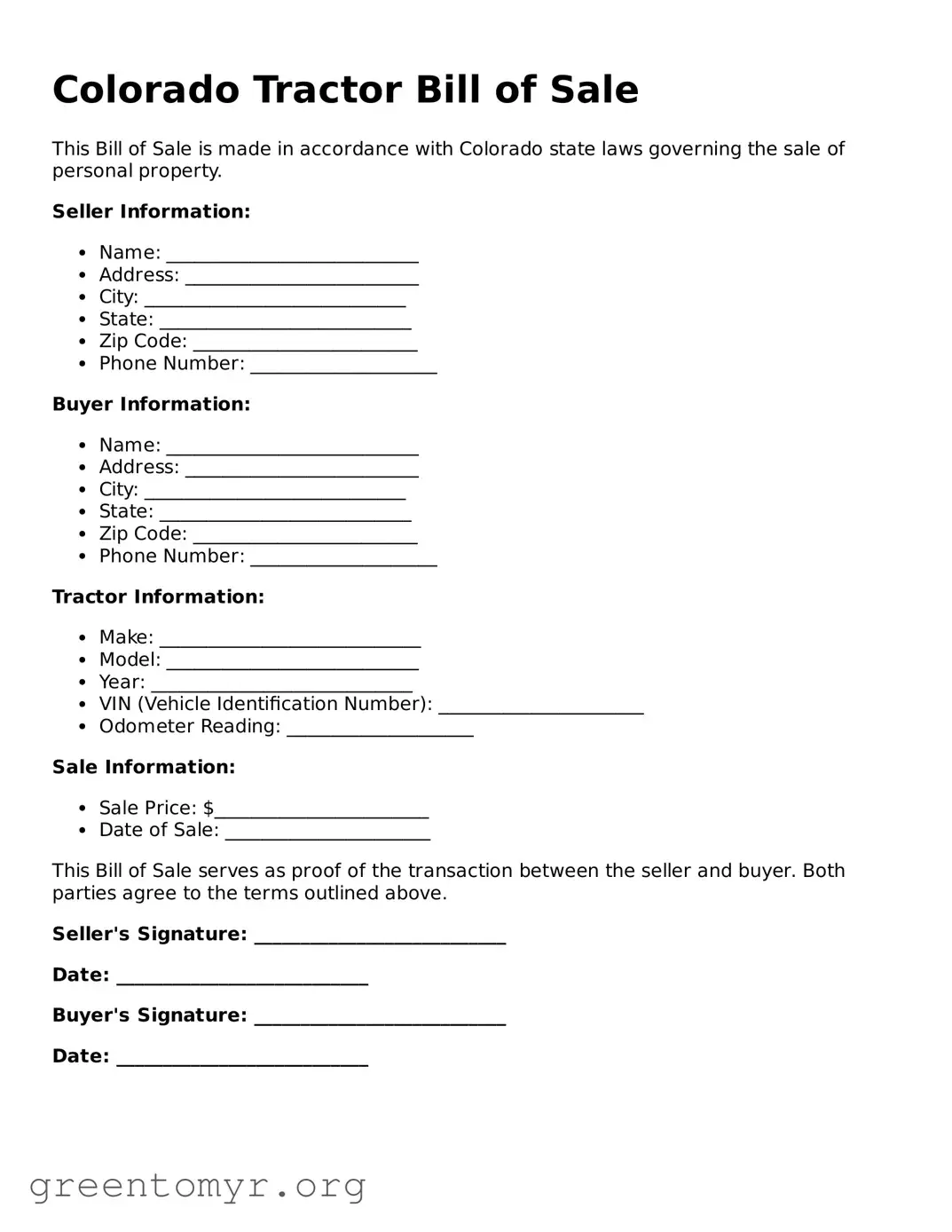
Colorado Tractor Bill of Sale

This Bill of Sale is made in accordance with Colorado state laws governing the sale of personal property.

Seller Information:

  • Name: ___________________________
  • Address: _________________________
  • City: ____________________________
  • State: ___________________________
  • Zip Code: ________________________
  • Phone Number: ____________________

Buyer Information:

  • Name: ___________________________
  • Address: _________________________
  • City: ____________________________
  • State: ___________________________
  • Zip Code: ________________________
  • Phone Number: ____________________

Tractor Information:

  • Make: ____________________________
  • Model: ___________________________
  • Year: ____________________________
  • VIN (Vehicle Identification Number): ______________________
  • Odometer Reading: ____________________

Sale Information:

  • Sale Price: $_______________________
  • Date of Sale: ______________________

This Bill of Sale serves as proof of the transaction between the seller and buyer. Both parties agree to the terms outlined above.

Seller's Signature: ___________________________

Date: ___________________________

Buyer's Signature: ___________________________

Date: ___________________________

PDF Form Features

Fact Name Description
Purpose The Colorado Tractor Bill of Sale form serves as a legal document to record the sale and transfer of ownership of a tractor.
Governing Law This form is governed by the laws of the State of Colorado, specifically under the Colorado Revised Statutes.
Parties Involved The form includes information about the seller (current owner) and the buyer (new owner), ensuring both parties are clearly identified.
Vehicle Information It requires detailed information about the tractor, including the make, model, year, and Vehicle Identification Number (VIN).
Sale Price The sale price must be documented, providing transparency and clarity on the financial aspect of the transaction.
Date of Sale The date when the sale takes place is crucial, as it marks the official transfer of ownership.
Signatures Both the seller and buyer must sign the form to validate the transaction, indicating their agreement to the terms outlined.
Record Keeping It is advisable for both parties to keep a copy of the completed Bill of Sale for their records, as it may be needed for future reference.

Guide to Using Colorado Tractor Bill of Sale

Once you have the Colorado Tractor Bill of Sale form ready, you will need to complete it accurately to ensure a smooth transfer of ownership. Follow the steps below carefully to fill out the form correctly.

  1. Begin by entering the date of the transaction at the top of the form.
  2. Next, provide the full name and address of the seller. Ensure all details are clear and legible.
  3. Then, enter the full name and address of the buyer in the designated section.
  4. Include the make, model, year, and VIN (Vehicle Identification Number) of the tractor. This information is crucial for identification.
  5. Specify the purchase price of the tractor. Clearly state the amount in numbers and words to avoid confusion.
  6. If applicable, note any trade-in details or additional terms agreed upon by both parties.
  7. Both the seller and buyer must sign and date the form at the bottom. Ensure that signatures are clear and match the names provided earlier.

After completing the form, both parties should retain a copy for their records. It is advisable to keep the bill of sale in a safe place, as it serves as proof of the transaction.

Get Answers on Colorado Tractor Bill of Sale

What is a Colorado Tractor Bill of Sale?

A Colorado Tractor Bill of Sale is a legal document that records the sale of a tractor from one party to another. This form outlines the details of the transaction, including the buyer, seller, and specifics about the tractor itself. It serves as proof of ownership and can be useful for registration purposes.

Why do I need a Bill of Sale for my tractor?

A Bill of Sale is important for several reasons:

  • It provides legal proof of the transaction.
  • It helps establish the new owner's rights to the tractor.
  • It can be required for registration with the Department of Motor Vehicles (DMV).
  • It protects both the buyer and seller in case of disputes.

What information should be included in the Bill of Sale?

The Bill of Sale should include the following information:

  1. The names and addresses of both the buyer and seller.
  2. The date of the sale.
  3. A detailed description of the tractor, including make, model, year, and Vehicle Identification Number (VIN).
  4. The sale price.
  5. Any warranties or conditions of the sale.

Is a Bill of Sale required in Colorado?

While a Bill of Sale is not legally required for all transactions in Colorado, it is highly recommended. Having this document can simplify the process of transferring ownership and help avoid potential issues in the future.

How do I complete a Colorado Tractor Bill of Sale?

To complete a Bill of Sale, follow these steps:

  1. Gather all necessary information about the tractor and the parties involved.
  2. Fill out the form with accurate details.
  3. Both the buyer and seller should sign the document.
  4. Keep a copy for your records.

Can I use a generic Bill of Sale template?

Yes, you can use a generic Bill of Sale template. However, make sure it includes all the necessary information specific to the tractor and the transaction. Tailoring the template to meet Colorado's requirements will help ensure it is valid and effective.

What should I do if I lose the Bill of Sale?

If you lose the Bill of Sale, it is advisable to contact the seller to request a duplicate. If that’s not possible, you may need to create a new Bill of Sale and have both parties sign it again. Keep in mind that having a copy is important for future reference and for any registration needs.

Common mistakes

Filling out the Colorado Tractor Bill of Sale form can be straightforward, but many people make common mistakes that can lead to complications. One frequent error is not providing all required information. This form typically asks for details about the tractor, such as the make, model, year, and Vehicle Identification Number (VIN). Omitting any of this information can create issues during registration.

Another common mistake is failing to include the correct purchase price. This amount should reflect the actual transaction. If the price is left blank or inaccurately stated, it may raise questions during a future audit or transaction verification.

People often neglect to sign the document. Both the seller and the buyer must sign the Bill of Sale for it to be valid. Without signatures, the form holds no legal weight, which can lead to disputes later on.

Incorrectly listing the date of the sale is another mistake. The date should accurately reflect when the transaction took place. If this is wrong, it can complicate ownership transfer and tax implications.

Some individuals forget to provide their contact information. Including names, addresses, and phone numbers for both parties is crucial. This information helps in case any follow-up is needed regarding the sale.

Not keeping a copy of the completed form is a mistake many make. After filling out the Bill of Sale, both parties should retain a copy for their records. This can be invaluable if any issues arise in the future.

People sometimes fail to check for typos or inaccuracies. Simple mistakes in spelling or numbers can lead to significant problems. Taking a moment to review the form before submission can save time and hassle later.

Another issue arises when buyers and sellers do not understand the importance of notarization. While not always required, having the document notarized can add an extra layer of protection and authenticity to the transaction.

Some individuals overlook the need for witnesses. Depending on local regulations, having a witness present during the signing may be necessary. This can help validate the transaction if disputes occur later.

Lastly, many people do not verify that they are using the most current version of the form. Laws and regulations can change, and using an outdated form can lead to issues. Always check for the latest version before filling out the Bill of Sale.

Documents used along the form

When completing a transaction involving the sale or purchase of a tractor in Colorado, several additional documents may be necessary to ensure everything is in order. Each of these documents serves a specific purpose and can help protect both the buyer and the seller. Below is a list of common forms and documents often used alongside the Colorado Tractor Bill of Sale.

  • Title Transfer Form: This document officially transfers ownership of the tractor from the seller to the buyer. It includes important information such as the vehicle identification number (VIN) and the names of both parties.
  • Affidavit of Sale: This is a sworn statement that confirms the sale took place. It can be useful in case of disputes regarding the transaction.
  • Odometer Disclosure Statement: Required by federal law, this form verifies the tractor's mileage at the time of sale. It protects against odometer fraud and ensures transparency.
  • Bill of Sale for Personal Property: While the Tractor Bill of Sale is specific to tractors, this general bill of sale can be used for other personal property included in the transaction, such as attachments or equipment.
  • Sales Tax Form: Depending on the local jurisdiction, buyers may need to fill out a sales tax form to report the purchase and pay any applicable taxes.
  • Insurance Verification: Buyers often need to provide proof of insurance for the tractor before completing the sale. This ensures that the vehicle is covered from the moment of purchase.
  • Registration Application: After the sale, the buyer must apply for registration with the Colorado Department of Motor Vehicles (DMV). This form is essential for legally operating the tractor on public roads.
  • Release of Liability: This document protects the seller by releasing them from any future claims related to the tractor once the sale is completed.

Having these documents ready can make the buying or selling process smoother and more efficient. Each piece of paperwork plays a role in ensuring that the transaction is legally sound and that both parties are protected. It's always a good idea to double-check that all necessary forms are completed accurately before finalizing the sale.

Similar forms

The Tractor Bill of Sale form shares similarities with several other documents used in transactions involving vehicles and equipment. Below are four documents that have comparable functions and features:

  • Vehicle Bill of Sale: This document serves as proof of the transfer of ownership for a motor vehicle. Like the Tractor Bill of Sale, it includes details such as the buyer's and seller's information, vehicle identification number (VIN), and sale price.
  • Equipment Bill of Sale: This form is used for the sale of various types of equipment, including agricultural machinery. It outlines the terms of the sale, identifies the equipment being sold, and provides information about both parties, similar to the Tractor Bill of Sale.
  • Motorcycle Bill of Sale: This document functions similarly to the Tractor Bill of Sale by facilitating the transfer of ownership of a motorcycle. It includes buyer and seller details, motorcycle specifications, and the agreed sale price, ensuring both parties have a record of the transaction.
  • Boat Bill of Sale: This form is used for the sale of boats and shares many characteristics with the Tractor Bill of Sale. It documents the transfer of ownership, includes details about the boat, and captures the sale price and buyer/seller information.

Dos and Don'ts

When filling out the Colorado Tractor Bill of Sale form, it is essential to approach the process with care. Here are some important dos and don'ts to keep in mind:

  • Do ensure that all information is accurate and complete.
  • Do include the Vehicle Identification Number (VIN) for the tractor.
  • Do have both the buyer and seller sign the document.
  • Do provide a clear description of the tractor, including make, model, and year.
  • Don't leave any sections blank; fill out every required field.
  • Don't use abbreviations or shorthand that could cause confusion.
  • Don't forget to keep a copy of the completed form for your records.

By following these guidelines, individuals can ensure a smooth transaction and avoid potential issues in the future.

Misconceptions

There are several misconceptions surrounding the Colorado Tractor Bill of Sale form. Understanding these misconceptions can help clarify the requirements and importance of this document.

  • It is not necessary for private sales. Many people believe that a bill of sale is only needed for transactions involving dealerships. However, a bill of sale is essential for private sales to provide proof of ownership.
  • All states require the same bill of sale format. Each state has its own requirements for a bill of sale. The Colorado Tractor Bill of Sale form has specific elements that may differ from other states.
  • Only the seller needs to sign the bill of sale. Both the buyer and seller should sign the document. This ensures that both parties agree to the terms of the sale.
  • It is not needed if the tractor is registered. Even if the tractor is registered, a bill of sale is still important. It serves as a record of the transaction and can be useful for future reference.
  • The form does not need to be notarized. While notarization is not always required, having the bill of sale notarized can provide additional legal protection and verification.
  • It only serves as a receipt. The bill of sale is more than just a receipt. It also transfers ownership and can be used to resolve disputes over ownership in the future.
  • There is no specific information required on the form. The Colorado Tractor Bill of Sale must include specific information, such as the buyer's and seller's names, the tractor's identification details, and the sale price.
  • It is not important for tax purposes. The bill of sale can be important for tax records. It may be needed to prove the purchase price when filing taxes or for any future resale.
  • Once signed, it cannot be changed. If both parties agree, changes can be made to the bill of sale after it is signed. It is advisable to document any changes clearly and have both parties initial them.

Key takeaways

When filling out and using the Colorado Tractor Bill of Sale form, keep the following key takeaways in mind:

  • Complete All Sections: Ensure every section of the form is filled out accurately to avoid potential disputes.
  • Provide Accurate Information: Include the correct details about the tractor, such as make, model, year, and VIN.
  • Seller and Buyer Information: Clearly list the names and addresses of both the seller and the buyer to establish ownership transfer.
  • Signatures Required: Both parties must sign the document to validate the sale and transfer of ownership.
  • Consider Notarization: While not required, having the bill of sale notarized can add an extra layer of security.
  • Retain Copies: Both the buyer and seller should keep a copy of the completed bill of sale for their records.
  • Check for Additional Requirements: Verify if there are any additional local or state requirements for the sale of agricultural equipment.
  • Use for Registration: The bill of sale may be necessary for registering the tractor with the state, so keep it accessible.