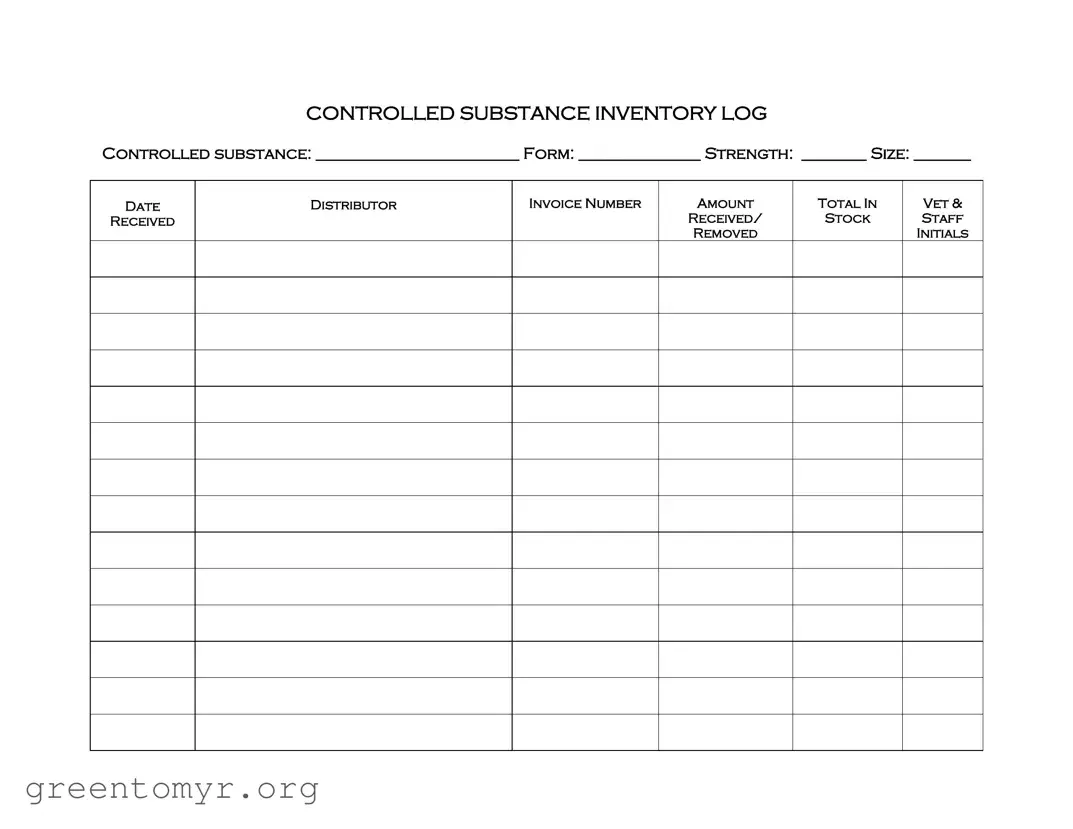
The Controlled Drug Log form plays a crucial role in the management and tracking of controlled substances within a veterinary practice. This form is designed to ensure that all controlled drugs are accounted for, from the moment they are received to when they are dispensed or used. Each entry on the form includes essential details such as the name of the controlled substance, its form, strength, and size. Additionally, the log captures the date of receipt, the distributor's information, the corresponding invoice number, and the amount received. It also requires staff initials to confirm that the drugs have been verified and added to stock. This meticulous documentation helps maintain compliance with regulatory standards and promotes accountability in the handling of these sensitive medications. By keeping accurate records, veterinary practices can safeguard against misuse and ensure that they are providing the highest standard of care to their patients.
CONTROLLED SUBSTANCE INVENTORY LOG
CONTROLLED SUBSTANCE: _________________________ FORM: _______________ STRENGTH: ________ SIZE: _______
DATE |
DISTRIBUTOR |
INVOICE NUMBER |
AMOUNT |
TOTAL IN |
VET & |
RECEIVED |
|
|
RECEIVED/ |
STOCK |
STAFF |
|
|
|
|
|
|
|
|
|
REMOVED |
|
INITIALS |
|
|
|
|
|
|
|
|
|
|
|
|
|
|
|
|
|
|
|
|
|
|
|
|
|
|
|
|
|
|
|
|
|
|
|
|
|
|
|
|
|
|
|
|
|
|
|
|
|
|
|
|
|
|
|
|
|
|
|
|
|
|
|
|
|
|
|
|
|
|
|
|
|
|
|
|
|
|
|
|
|
|
|
|
|
|
|
|
|
|
| Fact Name | Description |
|---|---|
| Purpose | The Controlled Drug Log form is used to track the inventory of controlled substances in a facility. |
| Required Fields | Essential information includes the controlled substance name, form, strength, size, date, distributor, invoice number, amount received, and initials of the staff involved. |
| Governing Law | In the United States, the use of controlled substance logs is governed by the Drug Enforcement Administration (DEA) regulations. |
| Frequency of Updates | The log must be updated every time a controlled substance is received or removed from inventory. |
| Storage Requirements | Controlled substances must be stored securely, and the log should be kept in a location that is accessible to authorized personnel only. |
| Record Retention | Logs must be retained for a minimum of two years, as required by federal law. |
| State-Specific Regulations | Some states may have additional regulations regarding the use of controlled drug logs. It is important to consult state laws for compliance. |
Completing the Controlled Drug Log form is essential for maintaining accurate records of controlled substances. Follow these steps carefully to ensure all necessary information is recorded properly.
The Controlled Drug Log form is designed to track the inventory and usage of controlled substances. This log helps ensure compliance with regulations governing the handling of these drugs. It provides a clear record of when substances are received, how much is in stock, and who has accessed them. Keeping accurate records is essential for both legal compliance and patient safety.
The form requires several key pieces of information:
When a controlled substance is removed from stock, it is crucial to document this accurately. You should fill in the following details on the log:
Make sure to update the total in stock accordingly. This ensures that you maintain an accurate inventory and comply with regulations.
It is best practice to update the Controlled Drug Log immediately after any transaction involving controlled substances. This includes when you receive new stock or when a substance is removed for use. Regular updates help prevent discrepancies and ensure that you always have an accurate count of your inventory.
If you notice a discrepancy in the Controlled Drug Log, take the following steps:
Addressing discrepancies promptly is vital for maintaining compliance and ensuring safety in your practice.
Filling out the Controlled Drug Log form accurately is crucial for compliance and accountability. However, many individuals make common mistakes that can lead to issues down the line. One frequent error is failing to include all required information. Each section of the form must be completed, including the controlled substance name, form, strength, size, and relevant dates. Omitting any of these details can create confusion and lead to discrepancies in inventory records.
Another mistake is inaccurate data entry. When recording information such as the invoice number or amount received, it's essential to double-check for typos or miscalculations. Errors in these fields can result in improper tracking of controlled substances, which may have legal repercussions.
Some individuals overlook the importance of initials and signatures. Each entry must be authenticated by the staff responsible for the transaction. Neglecting to initial the log can lead to questions about who handled the substances, making it difficult to trace accountability if an issue arises.
Additionally, not updating the log in real-time can cause significant problems. Waiting to fill out the log until later can lead to forgotten details or inaccurate records. It's best practice to update the log immediately after a transaction to maintain accurate inventory records.
Another common mistake is failing to maintain a consistent format. The log should follow a clear and organized structure. For instance, dates should be recorded in the same format throughout the document. Inconsistencies can lead to confusion and make it difficult to analyze the data later.
Some users also forget to cross-reference with other records. The Controlled Drug Log should align with other inventory records and invoices. Discrepancies between these documents can raise red flags during audits, so ensuring they match is essential.
Finally, neglecting to review the log periodically can lead to oversights. Regularly reviewing the log helps identify any errors or inconsistencies early on. This proactive approach can prevent larger issues from developing and ensures compliance with regulations.
The Controlled Drug Log form is essential for tracking the use and distribution of controlled substances. To maintain accurate records and ensure compliance with regulations, several other forms and documents are commonly used alongside it. Below is a list of these documents.
Utilizing these forms and documents together with the Controlled Drug Log form creates a comprehensive system for managing controlled substances. This approach not only ensures regulatory compliance but also promotes responsible handling of these medications.
The Controlled Drug Log form is essential for tracking the use and distribution of controlled substances. Several other documents serve similar purposes in managing and documenting controlled substances. Here are five documents that share similarities with the Controlled Drug Log form:
When filling out the Controlled Drug Log form, accuracy and attention to detail are paramount. Here are six essential guidelines to follow:
Following these guidelines will help ensure compliance and maintain the integrity of your records.
Here are seven common misconceptions about the Controlled Drug Log form:
Many believe that only veterinarians need to fill out this log. In reality, anyone handling controlled substances, including veterinary technicians and support staff, must complete it.
Some think that using the Controlled Drug Log form is optional. However, it is a legal requirement to track controlled substances accurately.
People often assume that one log can cover multiple types of controlled substances. Each substance should have its own log for clear tracking and accountability.
There is a misconception that initials can be anyone's when recording who removed the drug. Only authorized personnel should initial the log to maintain accountability.
Some believe the log is only necessary for inspections. In truth, it should be maintained regularly to ensure compliance and safety at all times.
Many think that completing the log takes too much time. In fact, with a consistent process, it can be quick and straightforward.
Some people think they can erase mistakes on the log. Instead, errors should be crossed out neatly and corrected to maintain a clear record.
When filling out and using the Controlled Drug Log form, it is important to follow specific guidelines to ensure accuracy and compliance. The following key takeaways can assist in this process:
Following these guidelines will help maintain a clear and compliant Controlled Drug Log.