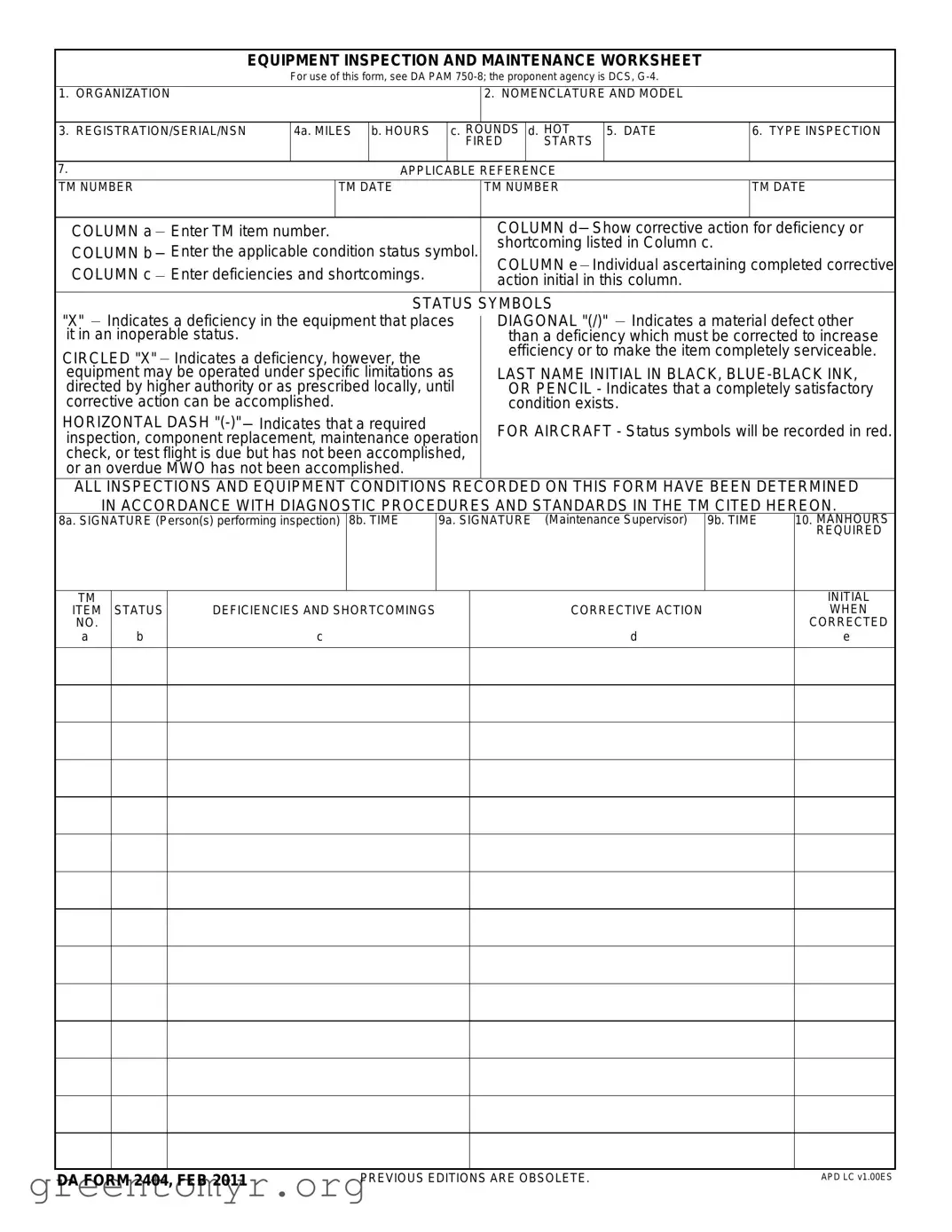
The DA 5988 E form serves as a critical tool in the inspection and maintenance of military equipment, particularly aircraft. This form is essential for documenting the status of equipment, ensuring that all necessary inspections and corrective actions are accurately recorded. It includes several key sections, such as organization details, nomenclature, model, and registration numbers, which help identify the specific equipment being assessed. The form also provides a comprehensive breakdown of inspection criteria, including miles, hours, fired rounds, and start shots. Status symbols play a vital role in conveying the condition of the equipment, with indicators for deficiencies and material defects clearly defined. The use of initials and signatures from personnel performing inspections and maintenance supervisors adds an extra layer of accountability. By following the guidelines outlined in DA PAM 750-8, users can ensure that all inspections adhere to established diagnostic procedures and standards, thereby maintaining the operational readiness of military assets.
EQUIPMENT INSPECTION AND MAINTENANCE WORKSHEET
For use of this form, see DA PAM
|
1. ORGANIZATION |
|
|
|
|
|
2. NOMENCLATURE AND MODEL |
|
||||||||||||||
|
|
|
|
|
|
|
|
|
|
|
|
|
|
|
|
|
|
|
|
|
|
|
|
3. REGISTRATION/SERIAL/NSN |
4a. MILES |
b. HOURS |
c. FIREDROUNDS |
d. STARTSHOT |
5. DATE |
6. TYPE INSPECTION |
|||||||||||||||
|
|
|
|
|
|
|
|
|
|
|
|
|
|
|
|
|
|
|
|
|
|
|
7. |
|
|
|
|
|
|
|
|
|
APPLICABLE REFERENCE |
|
|
|
|
||||||||
|
TM NUMBER |
|
|
TM DATE |
TM NUMBER |
|
|
|
TM DATE |
|||||||||||||
|
|
|
|
|
|
|
|
|
|
|
|
|
|
|
|
|
||||||
|
COLUMN a |
|
Enter TM item number. |
COLUMN d |
|
Show corrective action for deficiency or |
||||||||||||||||
|
|
|||||||||||||||||||||
|
|
|
|
|||||||||||||||||||
|
COLUMN b |
|
|
|
|
Enter the applicable condition status symbol. |
shortcoming listed in Column c. |
|
||||||||||||||
|
|
|
COLUMN e |
|
|
Individual ascertaining completed corrective |
||||||||||||||||
|
COLUMN c |
|
|
Enter deficiencies and shortcomings. |
|
|
||||||||||||||||
|
|
|
|
|
||||||||||||||||||
|
|
action initial in this column. |
|
|||||||||||||||||||
|
|
|
||||||||||||||||||||
|
|
|
|
|
|
|
|
|
|
|
|
|
|
|||||||||
|
|
|
|
|
|
|
|
|
|
|
STATUS SYMBOLS |
|
|
|
|
|||||||
|
"X" |
|
Indicates a deficiency in the equipment that places |
DIAGONAL "(/)" |
|
Indicates a material defect other |
||||||||||||||||
|
|
|
||||||||||||||||||||
|
it in an inoperable status. |
|
|
|
|
than a deficiency which must be corrected to increase |
||||||||||||||||
|
CIRCLED "X" |
|
|
|
Indicates a deficiency, however, the |
efficiency or to make the item completely serviceable. |
||||||||||||||||
|
|
|
||||||||||||||||||||
|
equipment may be operated under specific limitations as |
LAST NAME INITIAL IN BLACK, |
||||||||||||||||||||
|
directed by higher authority or as prescribed locally, until |
OR PENCIL - Indicates that a completely satisfactory |
||||||||||||||||||||
|
corrective action can be accomplished. |
condition exists. |
|
|||||||||||||||||||
HORIZONTAL DASH
ALL INSPECTIONS AND EQUIPMENT CONDITIONS RECORDED ON THIS FORM HAVE BEEN DETERMINED IN ACCORDANCE WITH DIAGNOSTIC PROCEDURES AND STANDARDS IN THE TM CITED HEREON.
8a. SIGNATURE (Person(s) performing inspection) 8b. TIME 9a. SIGNATURE (Maintenance Supervisor) 9b. TIME 10. MANHOURS REQUIRED
TM |
|
|
|
INITIAL |
ITEM |
STATUS |
DEFICIENCIES AND SHORTCOMINGS |
CORRECTIVE ACTION |
WHEN |
NO. |
|
|
|
CORRECTED |
a |
b |
c |
d |
e |
DA FORM 2404, FEB 2011 |
PREVIOUS EDITIONS ARE OBSOLETE. |
APD LC v1.00ES |
|
|
TM |
STATUS |
ITEM |
|
NO. |
b |
a |
DEFICIENCIES AND SHORTCOMINGS
c
CORRECTIVE ACTION
d
INITIAL
WHEN
CORRECTED e
DA FORM 2404, FEB 2011
APD LC v1.00ES
| Fact Name | Description |
|---|---|
| Purpose | The DA 5988 E form is used for recording equipment inspection and maintenance details for aircraft. |
| Status Symbols | Status symbols are recorded in red to indicate the condition of the equipment. |
| Regulatory Reference | This form is governed by DA PAM 750-8, which outlines the procedures for maintenance management. |
| Inspection Types | Different types of inspections can be documented, including routine checks and specific maintenance actions. |
| Signature Requirement | Signatures from both the person performing the inspection and the maintenance supervisor are required on the form. |
| Deficiency Reporting | Deficiencies and shortcomings must be recorded, along with corrective actions taken to resolve them. |
Filling out the DA 5988 E form is a straightforward process that requires attention to detail. This form is essential for documenting the inspection and maintenance of equipment. Below are the steps to ensure accurate completion of the form.
Once you have filled out the form, review it for accuracy. This ensures that all necessary information is documented correctly, which is crucial for maintaining equipment readiness and compliance with maintenance standards.
The DA 5988 E form serves as an Equipment Inspection and Maintenance Worksheet. It is primarily used by military personnel to record the status of equipment, including aircraft. This form helps ensure that all inspections and maintenance activities are documented systematically. By maintaining accurate records, organizations can track the operational readiness of their equipment and identify any deficiencies that need to be addressed.
When filling out the DA 5988 E form, several key pieces of information must be included:
Additionally, columns are designated for entering deficiencies, corrective actions, and the initials of personnel involved in the inspection.
Deficiencies on the DA 5988 E form are indicated using specific status symbols, which help convey the condition of the equipment. The following symbols are commonly used:
These symbols provide quick visual cues about the equipment's status, aiding maintenance personnel in prioritizing corrective actions.
Several individuals are responsible for signing the DA 5988 E form to ensure accountability and traceability. The person performing the inspection must sign and indicate the time of the inspection. Additionally, a maintenance supervisor is required to sign the form, confirming that they have reviewed the inspection results. This dual-signature process helps maintain oversight and ensures that all necessary corrective actions are acknowledged and documented.
Filling out the DA 5988 E form can be straightforward, but several common mistakes often lead to confusion and errors. One frequent error is failing to provide accurate information in the organization section. This section is crucial for identifying who is responsible for the equipment. Leaving this blank or entering incorrect details can cause delays in processing and accountability issues.
Another common mistake is related to the nomenclature and model of the equipment. People sometimes write vague descriptions or abbreviations that may not be universally understood. It's essential to be specific and clear about the equipment being inspected to ensure proper maintenance and tracking.
Many individuals also overlook the importance of documenting deficiencies and shortcomings correctly. In column c, it's vital to accurately describe any issues found during the inspection. Failing to do so can lead to incomplete maintenance records, which may result in unresolved problems and potential safety hazards.
Additionally, people often forget to include the corrective action taken in column d. This step is crucial for accountability and for tracking the resolution of identified issues. If this information is missing, it can create confusion about whether the problem has been addressed or if further action is needed.
Lastly, many individuals neglect to ensure that signatures are filled out correctly. Both the person performing the inspection and the maintenance supervisor must sign and date the form. Missing signatures can delay the processing of the form and create complications in maintaining accurate records.
The DA 5988 E form is a crucial document used for recording the status of equipment, specifically in the context of aircraft maintenance and inspection. Alongside this form, there are several other documents that play a vital role in ensuring comprehensive maintenance records and compliance with regulations. Below is a list of related forms that are often utilized in conjunction with the DA 5988 E.
Using these forms in conjunction with the DA 5988 E ensures a comprehensive approach to equipment maintenance and inspection. Accurate documentation is not only essential for operational efficiency but also for compliance with military regulations and safety standards. Each form complements the others, creating a robust system for tracking and managing equipment status.
The DA 5988 E form serves as an essential tool for documenting the status and maintenance of equipment, particularly for aircraft. Several other documents share similar functions and purposes. Below is a list of these documents and their similarities to the DA 5988 E form:
Understanding these documents is crucial for maintaining operational efficiency and safety in military operations.
When filling out the DA 5988 E form, it is essential to ensure accuracy and clarity. Here are some important dos and don’ts to keep in mind:
Understanding the DA 5988 E form is crucial for effective equipment inspection and maintenance. However, several misconceptions can lead to confusion. Here are eight common misunderstandings:
By clarifying these misconceptions, users can better utilize the DA 5988 E form for effective equipment management.
Filling out and using the DA 5988 E form is essential for maintaining aircraft and ensuring their operational readiness. Here are some key takeaways to help you navigate this important document:
By keeping these takeaways in mind, you can effectively utilize the DA 5988 E form to enhance aircraft maintenance and ensure safety in operations.