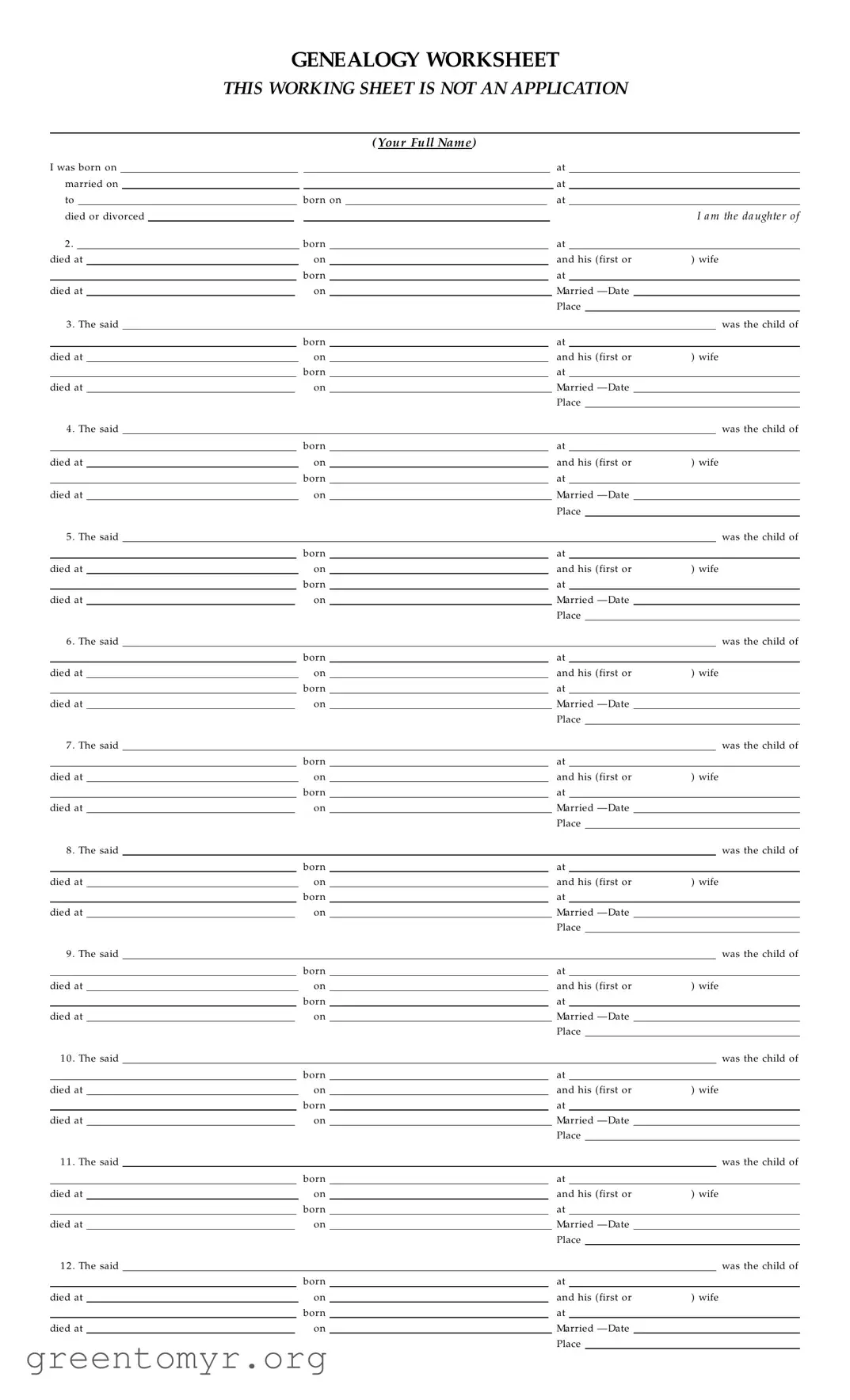
The DAR Genealogy Worksheet form serves as a crucial tool for individuals seeking to trace their lineage back to ancestors who participated in the American Revolutionary War. This form is not an application but rather a working document designed to collect essential details about one’s family history. It begins with personal information, including full name, birth date, and marital status, and progresses through multiple generations, requiring the names, birth and death dates, and marriage details of ancestors. Each section allows for the recording of vital information about parents, grandparents, and great-grandparents, ensuring a comprehensive lineage is established. Additionally, the form emphasizes the importance of documenting the services rendered by the ancestor during the Revolutionary War, along with sourcing that information accurately. Applicants must provide proof of lineage through various records, including wills, census data, and other official documents, while traditional accounts are not deemed sufficient. This meticulous approach not only aids in establishing eligibility for membership but also enriches the understanding of one’s heritage.

GENEALOGY WORKSHEET
THIS WORKING SHEET IS NOT AN APPLICATION
|
|
|
|
|
|
|
|
|
|
|
|
( YOU R FU LL NAM E ) |
|
|
|||||||
I was born on |
|
|
|
|
|
|
|
|
|
|
|
at |
|
|
|
||||||
married on |
|
|
|
|
|
|
|
|
|
|
|
at |
|
|
|
||||||
to |
|
|
|
born on |
|
|
|
|
|
at |
|
|
|
||||||||
died or divorced |
|
|
|
|
|
|
|
|
|
|
|
|
|
I a m the da ughte r o f |
|||||||
2 . |
|
|
|
|
|
|
|
|
born |
|
|
|
|
|
|
at |
|
|
|
||
died at |
|
|
|
on |
|
|
|
|
|
|
and his (first or |
) wife |
|||||||||
|
|
|
|
|
|
|
|
|
born |
|
|
|
|
|
|
at |
|
|
|
||
died at |
|
|
on |
|
|
|
|
|
Married — Date |
|
|
||||||||||
|
|
|
|
|
|
|
|
|
|
|
|
|
|
|
|
|
Place |
|
|
||
3 . The said |
|
|
|
|
|
|
|
|
|
|
|
|
|
|
was the child of |
||||||
|
|
|
|
|
|
|
|
|
born |
|
|
|
|
|
|
at |
|
|
|
||
died at |
|
|
|
on |
|
|
|
|
|
|
and his (first or |
) wife |
|||||||||
|
|
|
|
|
|
|
|
|
born |
|
|
|
|
|
|
at |
|
|
|
||
died at |
|
|
on |
|
|
|
|
|
Married — Date |
|
|
||||||||||
|
|
|
|
|
|
|
|
|
|
|
|
|
|
|
|
|
Place |
|
|
||
4 . The said |
|
|
|
|
|
|
|
|
|
|
|
|
|
|
was the child of |
||||||
|
|
|
|
|
|
|
|
|
born |
|
|
|
|
|
|
at |
|
|
|
||
died at |
|
|
|
on |
|
|
|
|
|
|
and his (first or |
) wife |
|||||||||
|
|
|
|
|
|
|
|
|
born |
|
|
|
|
|
|
at |
|
|
|
||
died at |
|
|
on |
|
|
|
|
|
Married — Date |
|
|
||||||||||
|
|
|
|
|
|
|
|
|
|
|
|
|
|
|
|
|
Place |
|
|
||
5 . The said |
|
|
|
|
|
|
|
|
|
|
|
|
|
|
was the child of |
||||||
|
|
|
|
|
|
|
|
|
born |
|
|
|
|
|
|
at |
|
|
|
||
died at |
|
|
|
on |
|
|
|
|
|
|
and his (first or |
) wife |
|||||||||
|
|
|
|
|
|
|
|
|
born |
|
|
|
|
|
|
at |
|
|
|
||
died at |
|
|
on |
|
|
|
|
|
Married — Date |
|
|
||||||||||
|
|
|
|
|
|
|
|
|
|
|
|
|
|
|
|
|
Place |
|
|
||
6 . The said |
|
|
|
|
|
|
|
|
|
|
|
|
|
|
was the child of |
||||||
|
|
|
|
|
|
|
|
|
born |
|
|
|
|
|
|
at |
|
|
|
||
died at |
|
|
|
on |
|
|
|
|
|
|
and his (first or |
) wife |
|||||||||
|
|
|
|
|
|
|
|
|
born |
|
|
|
|
|
|
at |
|
|
|
||
died at |
|
|
on |
|
|
|
|
|
Married — Date |
|
|
||||||||||
|
|
|
|
|
|
|
|
|
|
|
|
|
|
|
|
|
Place |
|
|
||
7 . The said |
|
|
|
|
|
|
|
|
|
|
|
|
|
|
was the child of |
||||||
|
|
|
|
|
|
|
|
|
born |
|
|
|
|
|
|
at |
|
|
|
||
died at |
|
|
|
on |
|
|
|
|
|
|
and his (first or |
) wife |
|||||||||
|
|
|
|
|
|
|
|
|
born |
|
|
|
|
|
|
at |
|
|
|
||
died at |
|
|
on |
|
|
|
|
|
Married — Date |
|
|
||||||||||
|
|
|
|
|
|
|
|
|
|
|
|
|
|
|
|
|
Place |
|
|
||
8 . The said |
|
|
|
|
|
|
|
|
|
|
|
|
|
|
was the child of |
||||||
|
|
|
|
|
|
|
|
|
born |
|
|
|
|
|
|
at |
|
|
|
||
died at |
|
|
|
on |
|
|
|
|
|
|
and his (first or |
) wife |
|||||||||
|
|
|
|
|
|
|
|
|
born |
|
|
|
|
|
|
at |
|
|
|
||
died at |
|
|
on |
|
|
|
|
|
Married — Date |
|
|
||||||||||
|
|
|
|
|
|
|
|
|
|
|
|
|
|
|
|
|
Place |
|
|
||
9 . The said |
|
|
|
|
|
|
|
|
|
|
|
|
|
|
was the child of |
||||||
|
|
|
|
|
|
|
|
|
born |
|
|
|
|
|
|
at |
|
|
|
||
died at |
|
|
|
on |
|
|
|
|
|
|
and his (first or |
) wife |
|||||||||
|
|
|
|
|
|
|
|
|
born |
|
|
|
|
|
|
at |
|
|
|
||
died at |
|
|
on |
|
|
|
|
|
Married — Date |
|
|
||||||||||
|
|
|
|
|
|
|
|
|
|
|
|
|
|
|
|
|
Place |
|
|
||
1 0 . The said |
|
|
|
|
|
|
|
|
|
|
|
|
|
|
was the child of |
||||||
|
|
|
|
|
|
|
|
|
born |
|
|
|
|
|
|
at |
|
|
|
||
died at |
|
|
|
on |
|
|
|
|
|
|
and his (first or |
) wife |
|||||||||
|
|
|
|
|
|
|
|
|
born |
|
|
|
|
|
|
at |
|
|
|
||
died at |
|
|
on |
|
|
|
|
|
Married — Date |
|
|
||||||||||
|
|
|
|
|
|
|
|
|
|
|
|
|
|
|
|
|
Place |
|
|
||
1 1 . The said |
|
|
|
|
|
|
|
|
|
|
|
|
|
|
was the child of |
||||||
|
|
|
|
|
|
|
|
|
born |
|
|
|
|
|
|
at |
|
|
|
||
died at |
|
|
|
on |
|
|
|
|
|
|
and his (first or |
) wife |
|||||||||
|
|
|
|
|
|
|
|
|
born |
|
|
|
|
|
|
at |
|
|
|
||
died at |
|
|
on |
|
|
|
|
|
Married — Date |
|
|
||||||||||
|
|
|
|
|
|
|
|
|
|
|
|
|
|
|
|
|
Place |
|
|
||
1 2 . The said |
|
|
|
|
|
|
|
|
|
|
|
|
|
|
was the child of |
||||||
|
|
|
|
|
|
|
|
|
born |
|
|
|
|
|
|
at |
|
|
|
||
died at |
|
|
|
on |
|
|
|
|
|
|
and his (first or |
) wife |
|||||||||
|
|
|
|
|
|
|
|
|
born |
|
|
|
|
|
|
at |
|
|
|
||
died at |
|
|
on |
|
|
|
|
|
Married — Date |
|
|
||||||||||
|
|
|
|
|
|
|
|
|
|
|
|
|
|
|
|
|
Place |
|
|
|
|

|
|
|
ANCESTOR’S SERVICES |
||
The said |
|
|
who resided during the American |
||
Revolution at |
|
|
|
assisted in establishing |
|
American Independence, while acting in the capacity of |
|
|
|
||
|
|
|
|
|
|
My Ancestor’s services during the Revolutionary War were as follows:
Give source for ancestor’s service above. For published records give author, title, volume and page: applicant shall file a photocopy of official unpublished record.
REFERENCES FOR LINEAGE
Give below proof for EACH statement of Birth, marriage, death dates and places and connections between generations from the applicant through the generation of the Revolutionary ancestor. Published authorities should be cited by title, author, date of publication, volume and page. Send one certified, attested copy or photocopy of each unpublished data. Proofs of line of descent comprise wills, administrations, deeds, church, town and court records, Bible, census and pension records, tombstone inscriptions, genealogies and such other records. TRADITION is not acceptable. Give National Numbers and relationships of any close relatives credited with this ancestor.
1 st. Gen.
2 nd Gen.
3 rd Gen.
4 th Gen.
5 th Gen.
6 th Gen.
7 th Gen.
8 th Gen.
9 th Gen.
1 0 th Gen.
1 1 th Gen.
CHILDREN OF REVOLUTIONARY ANCESTOR
( By e a ch m a rria ge , if m a rrie d m o re tha n o nce .)
TO WHOM MARRIED, NOTING IF
NAMES |
|
DATES OF BIRTH |
MARRIED MORE THAN ONCE |
|
|
|
|
|
|
|
|
|
|
|
|
|
|
|
|
|
|
|
|
|
|
|
|
|
|
|
|
|
|
|
|
|
|
|
|
|
|
|
|
|
|
|
|
|
|
|
|
|
|
|
|
|
|
|
|
|
|
|
|
|
|
|
|
|
|
|
|
|
|
|
Do cum e nt No . |
( |
| Fact Name | Description |
|---|---|
| Purpose | The Dar Genealogy Worksheet is designed to assist individuals in organizing their family history and lineage, particularly for applications related to membership in the Daughters of the American Revolution (DAR). |
| Not an Application | This form is a working sheet and is not an official application for membership. It serves as a preliminary tool to gather necessary information before submitting a formal application. |
| Required Information | Users must provide detailed information about their ancestors, including birth, marriage, and death dates, as well as places of these events. This information is crucial for proving lineage. |
| Proof of Lineage | Applicants are required to provide proof for each statement made regarding their ancestors. Acceptable forms of proof include official records such as wills, marriage certificates, and census records. |
| Tradition Not Accepted | Any claims based solely on family tradition are not acceptable. All information must be supported by documented evidence to establish a clear line of descent. |
| State-Specific Forms | While the worksheet itself is standardized, state-specific forms may exist that adhere to local laws governing genealogical research and documentation. It is important to check with local DAR chapters for any additional requirements. |
Filling out the DAR Genealogy Worksheet is an essential step in documenting your lineage for the Daughters of the American Revolution. This form requires detailed information about your ancestry, including names, dates, and places of birth, marriage, and death. Follow the steps below to complete the worksheet accurately.
After completing the form, review all entries for accuracy. Ensure you have all necessary documentation ready to support your claims. This will help streamline the verification process as you move forward with your application.
The DAR Genealogy Worksheet is a tool designed to help individuals gather and organize their family history information. It is essential for those seeking to establish a lineage connection to a Revolutionary War ancestor. However, it is important to note that this worksheet is not an official application for membership.
Anyone interested in tracing their ancestry back to a Revolutionary War ancestor should fill out this worksheet. This includes individuals who are preparing to apply for membership in the Daughters of the American Revolution (DAR) or those simply wanting to document their family history.
The worksheet requires detailed information about your lineage, including:
Acceptable records include:
Tradition alone is not sufficient proof.
Yes, when citing sources, provide the author, title, volume, and page number for published records. For unpublished records, a photocopy should be included with the application. Proper citation is crucial for verifying the information provided.
If you have close relatives who are DAR members, include their National Numbers and relationships on the worksheet. This information can help streamline the verification process of your lineage.
This worksheet is specifically tailored for tracing lineage to Revolutionary War ancestors. While it can be a helpful tool for general genealogy, it is primarily intended for those seeking DAR membership.
After completing the worksheet, gather all supporting documents and ensure that each claim is well-documented. You can then submit your application for membership in the DAR along with the completed worksheet and the necessary proofs of lineage.
For more information and assistance, you can visit the DAR website or contact your local DAR chapter. They can provide guidance on completing the worksheet and the application process.
Filling out the DAR Genealogy Worksheet can be a daunting task. Many people make common mistakes that can lead to confusion or delays in processing their applications. Here are nine mistakes to avoid.
First, many individuals forget to include their full name at the top of the worksheet. This might seem simple, but it is essential for identification. Without a complete name, it can be challenging for the organization to process the information accurately.
Another frequent error is neglecting to provide complete dates. When listing birth, marriage, or death dates, be sure to include the full date, not just the month and year. For example, instead of writing "July 1776," write "July 4, 1776." This precision helps establish clear timelines.
People often overlook the importance of providing locations. When stating where someone was born or died, include the city and state. Missing this information can create gaps in the family tree that are hard to fill later on.
Additionally, some applicants mistakenly leave out the names of spouses. If your ancestor was married, include the spouse's name and any relevant details about their marriage. This information strengthens the lineage connection.
Another common mistake is failing to provide proof for claims made in the worksheet. The DAR requires documentation for each statement regarding birth, marriage, and death. Without these documents, your application may be rejected.
It’s also important to remember that traditional stories or family lore are not acceptable as proof. Relying solely on these narratives can lead to inaccuracies. Always seek out official records or published sources to support your claims.
Many applicants forget to include their ancestor’s service during the American Revolution. This section is crucial, as it demonstrates your ancestor's contribution to American independence. Be specific about the role they played and provide sources for verification.
Lastly, some people fail to check their work for clarity and accuracy. Errors in spelling or grammar can create confusion. Take the time to review your worksheet carefully before submission. Clear and accurate information will help expedite the review process.
Avoiding these mistakes can make a significant difference in the application process. By taking the time to ensure all information is complete and accurate, you’ll help pave the way for a smoother experience in documenting your lineage.
The DAR Genealogy Worksheet is a crucial tool for those tracing their lineage, particularly for individuals seeking to establish their connection to ancestors who served during the American Revolution. However, several other forms and documents complement this worksheet, helping to substantiate claims and provide a more comprehensive view of one’s family history. Below is a list of these important documents.
Collecting these documents is essential for anyone pursuing membership in organizations like the Daughters of the American Revolution. Each piece of evidence strengthens your application and provides a clearer picture of your family’s history. Take the time to gather and verify these records to ensure a successful lineage claim.
The DAR Genealogy Worksheet form is a valuable tool for documenting family history. It shares similarities with several other documents commonly used for genealogical research. Here are six documents that are similar to the DAR Genealogy Worksheet:
When filling out the DAR Genealogy Worksheet form, it is crucial to ensure accuracy and completeness. Here are six important dos and don’ts to keep in mind:
By adhering to these guidelines, you can facilitate a smoother application process and ensure that your lineage is accurately represented.
Many people have misconceptions about the DAR Genealogy Worksheet form. Understanding these can help ensure accurate completion and submission. Here are seven common misconceptions:
By addressing these misconceptions, applicants can better navigate the process and ensure their submissions meet the necessary requirements.
When using the DAR Genealogy Worksheet form, there are several important points to keep in mind to ensure accurate and complete information. Here are nine key takeaways:
By following these guidelines, you can effectively utilize the DAR Genealogy Worksheet to trace your lineage and support your application for membership.