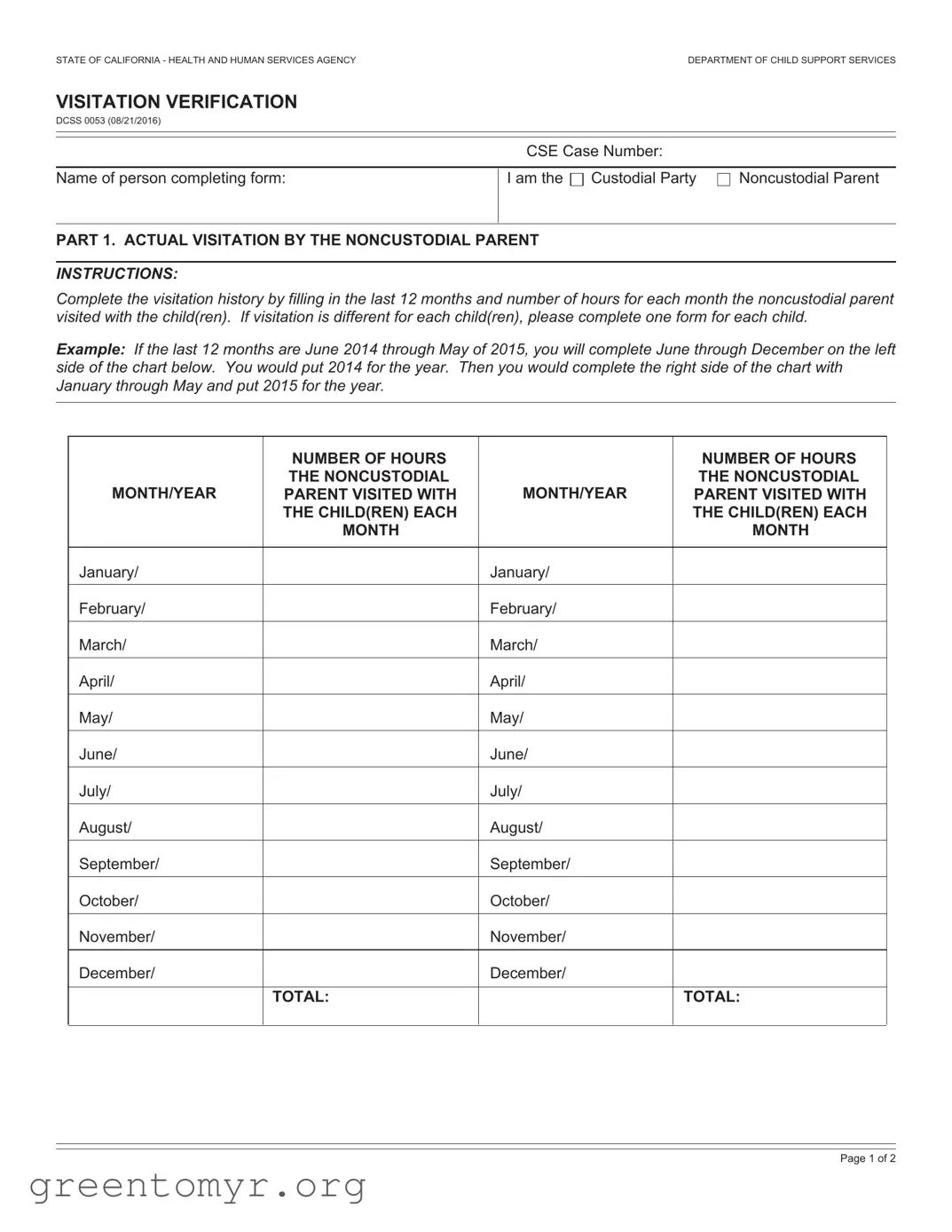
The DCSS 0053 form plays a crucial role in documenting visitation arrangements and ensuring that child support matters are handled fairly and accurately in California. Designed for use by both custodial and noncustodial parents, this form captures essential details about the visitation history over the past twelve months. Parents are required to record the number of hours the noncustodial parent spent with the child or children each month, allowing for a clear picture of actual visitation patterns. If there are multiple children involved, a separate form must be completed for each child to reflect their unique visitation experiences. Additionally, the form addresses shared custody arrangements and various types of visitation, including regular, vacation, summer, and holiday visits. It even allows for the specification of overnight visits. Parents must certify the accuracy of the information provided, acknowledging that it may be shared with the other parent for verification purposes. Understanding how to properly complete the DCSS 0053 form is essential for maintaining transparency and ensuring the best interests of the child are prioritized in custody and support arrangements.
STATE OF CALIFORNIA - HEALTH AND HUMAN SERVICES AGENCY |
DEPARTMENT OF CHILD SUPPORT SERVICES |
VISITATION VERIFICATION
DCSS 0053 (08/21/2016)
CSE Case Number:
Name of person completing form: |
I am the |
Custodial Party |
Noncustodial Parent |
|
|
|
|
PART 1. ACTUAL VISITATION BY THE NONCUSTODIAL PARENT
INSTRUCTIONS:
Complete the visitation history by filling in the last 12 months and number of hours for each month the noncustodial parent visited with the child(ren). If visitation is different for each child(ren), please complete one form for each child.
Example: If the last 12 months are June 2014 through May of 2015, you will complete June through December on the left side of the chart below. You would put 2014 for the year. Then you would complete the right side of the chart with January through May and put 2015 for the year.
|
NUMBER OF HOURS |
|
NUMBER OF HOURS |
|
THE NONCUSTODIAL |
|
THE NONCUSTODIAL |
MONTH/YEAR |
PARENT VISITED WITH |
MONTH/YEAR |
PARENT VISITED WITH |
|
THE CHILD(REN) EACH |
|
THE CHILD(REN) EACH |
|
MONTH |
|
MONTH |
|
|
|
|
January/ |
|
January/ |
|
|
|
|
|
February/ |
|
February/ |
|
|
|
|
|
March/ |
|
March/ |
|
|
|
|
|
April/ |
|
April/ |
|
|
|
|
|
May/ |
|
May/ |
|
|
|
|
|
June/ |
|
June/ |
|
|
|
|
|
July/ |
|
July/ |
|
|
|
|
|
August/ |
|
August/ |
|
|
|
|
|
September/ |
|
September/ |
|
|
|
|
|
October/ |
|
October/ |
|
|
|
|
|
November/ |
|
November/ |
|
|
|
|
|
December/ |
|
December/ |
|
|
|
|
|
|
TOTAL: |
|
TOTAL: |
|
|
|
|
Page 1 of 2
STATE OF CALIFORNIA - HEALTH AND HUMAN SERVICES AGENCY |
DEPARTMENT OF CHILD SUPPORT SERVICES |
VISITATION VERIFICATION
DCSS 0053 (08/21/2016)
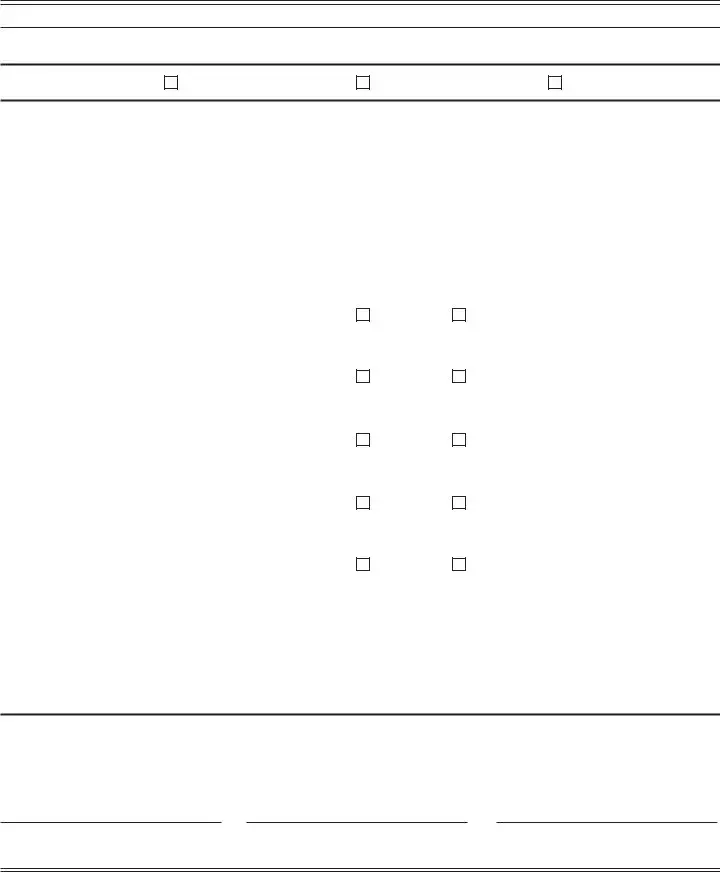
PART 2. SHARED CUSTODY/VISITATION
CHECK ONE:
Shared Custody
Visitation Only
Neither
VISITATION HOURS:
Regular Visitation:
From (specify day of the week) |
at (specify time) |
To (specify day of the week) |
at (specify time) |
Vacation Visitation: |
Yes |
If Yes, please specify dates/times: |
|
Summer Visitation: |
Yes |
If Yes, please specify dates/times: |
|
Holiday Visitation: |
Yes |
If Yes, please specify dates/times: |
|
Overnight Visitation: |
Yes |
If Yes, please specify dates/times: |
|
(Circle one) a.m./p.m.
(Circle one) a.m./p.m.
No
No
No
No
Yes
No
Additional Information:
I declare to the best of my knowledge and belief that the above information is true and correct. I am aware that this information may be provided to the other parent for their verification and that either party may be required to provide documentation.
PRINT NAME |
SIGNATURE |
DATE |
Page 2 of 2
| Fact Name | Description |
|---|---|
| Form Purpose | The DCSS 0053 form is used to verify visitation between a noncustodial parent and their child(ren). |
| Governing Agency | This form is issued by the California Department of Child Support Services. |
| Frequency of Use | It is typically completed annually to reflect the visitation history over the past 12 months. |
| Custodial Designation | The form requires the person completing it to identify as either the custodial party or the noncustodial parent. |
| Visit Tracking | Users must fill in the number of hours the noncustodial parent visited the child(ren) for each month. |
| Shared Custody Options | The form allows for the selection of shared custody, visitation only, or neither. |
| Holiday Visitation | Specific sections are dedicated to detailing holiday, vacation, and summer visitation times. |
| Legal Declaration | Completing the form includes a declaration affirming the truthfulness of the provided information. |
| Documentation Requirement | Either party may need to provide documentation to support the visitation claims made on the form. |
| Date of Revision | The current version of the DCSS 0053 form was revised on August 21, 2016. |
After completing the DCSS 0053 form, it will be submitted to the appropriate authorities for processing. This form helps in verifying visitation arrangements between parents. Accurate and truthful information is essential, as it may be shared with the other parent and could require supporting documentation.
The DCSS 0053 form, known as the Visitation Verification form, is designed to document the visitation history of a noncustodial parent with their child or children. This form helps establish the actual visitation hours over the past 12 months, which can be important for child support calculations and custody arrangements. By providing a clear record of visitation, the form supports both parents in understanding and verifying their roles in the child's life.
The form should be completed by either the custodial party or the noncustodial parent. The individual filling out the form must indicate their role by selecting either "Custodial Party" or "Noncustodial Parent." It is important to accurately reflect the visitation history, as this information may be shared with the other parent and could be subject to verification.
To fill out the visitation history section, you will need to provide details for each month over the last 12 months. This includes:
If visitation varies for different children, a separate form must be completed for each child. Make sure to include all relevant months, starting from the earliest month and moving to the most recent.
If there are shared custody arrangements or specific visitation schedules, you will need to check the appropriate box in Part 2 of the form. Here, you can provide details about regular visitation, vacation visitation, summer visitation, holiday visitation, and overnight visitation. For each type, specify the days, times, and any relevant dates. This information helps clarify the visitation expectations for both parents and ensures compliance with any court-ordered arrangements.
Once you submit the DCSS 0053 form, the information may be reviewed by the Department of Child Support Services and could be provided to the other parent for verification. Both parties may be asked to provide additional documentation to support the visitation claims made in the form. It is crucial to ensure that all information is accurate and truthful, as discrepancies could lead to further inquiries or complications in custody and support matters.
Filling out the DCSS 0053 form can be a straightforward process, yet many individuals encounter common pitfalls. One frequent mistake is failing to accurately document the visitation history. The form requires a detailed account of the last twelve months, specifying the number of hours the noncustodial parent spent with the child(ren) each month. Incomplete or vague entries can lead to discrepancies that may complicate the verification process.
Another common error involves misunderstanding the requirements for shared custody or visitation. The form includes a section where individuals must indicate whether the arrangement is shared custody, visitation only, or neither. Selecting the incorrect option can misrepresent the actual situation, leading to confusion and potential disputes. It is crucial to carefully assess the arrangement before making a selection.
Additionally, many people neglect to provide complete details regarding visitation hours. The form asks for specific days and times for regular, vacation, summer, and holiday visitations. Omitting this information or providing vague responses can hinder the clarity of the visitation schedule. Clear documentation is essential for establishing a mutual understanding of the visitation plan.
Lastly, individuals often overlook the importance of signing and dating the form. A declaration of truthfulness is included at the end, which requires the individual completing the form to affirm that the information provided is accurate. Failing to sign or date the form can render it invalid, potentially delaying the processing of the child support case. Ensuring that all sections of the form are completed thoroughly is essential for a smooth submission process.
The DCSS 0053 form, also known as the Visitation Verification form, is a critical document used in child support and custody cases in California. It helps to verify the visitation history of a noncustodial parent with their child or children. In addition to this form, there are several other documents that are often used in conjunction with it to ensure a comprehensive understanding of custody and visitation arrangements. Below are four commonly associated forms and documents.
These documents, along with the DCSS 0053 form, play a vital role in ensuring that the rights and responsibilities of both parents are clearly defined and that the best interests of the child are prioritized in custody and visitation matters. Understanding each of these forms can help parents navigate the complexities of family law more effectively.
When filling out the DCSS 0053 form, consider the following guidelines to ensure accuracy and clarity.
Understanding the DCSS 0053 form is essential for parents navigating child support and visitation issues. However, several misconceptions about this form persist. Below is a list of common misunderstandings along with clarifications.
By addressing these misconceptions, parents can better understand the purpose and requirements of the DCSS 0053 form, ultimately aiding in the management of their child support and visitation obligations.
Here are key takeaways about filling out and using the DCSS 0053 form: