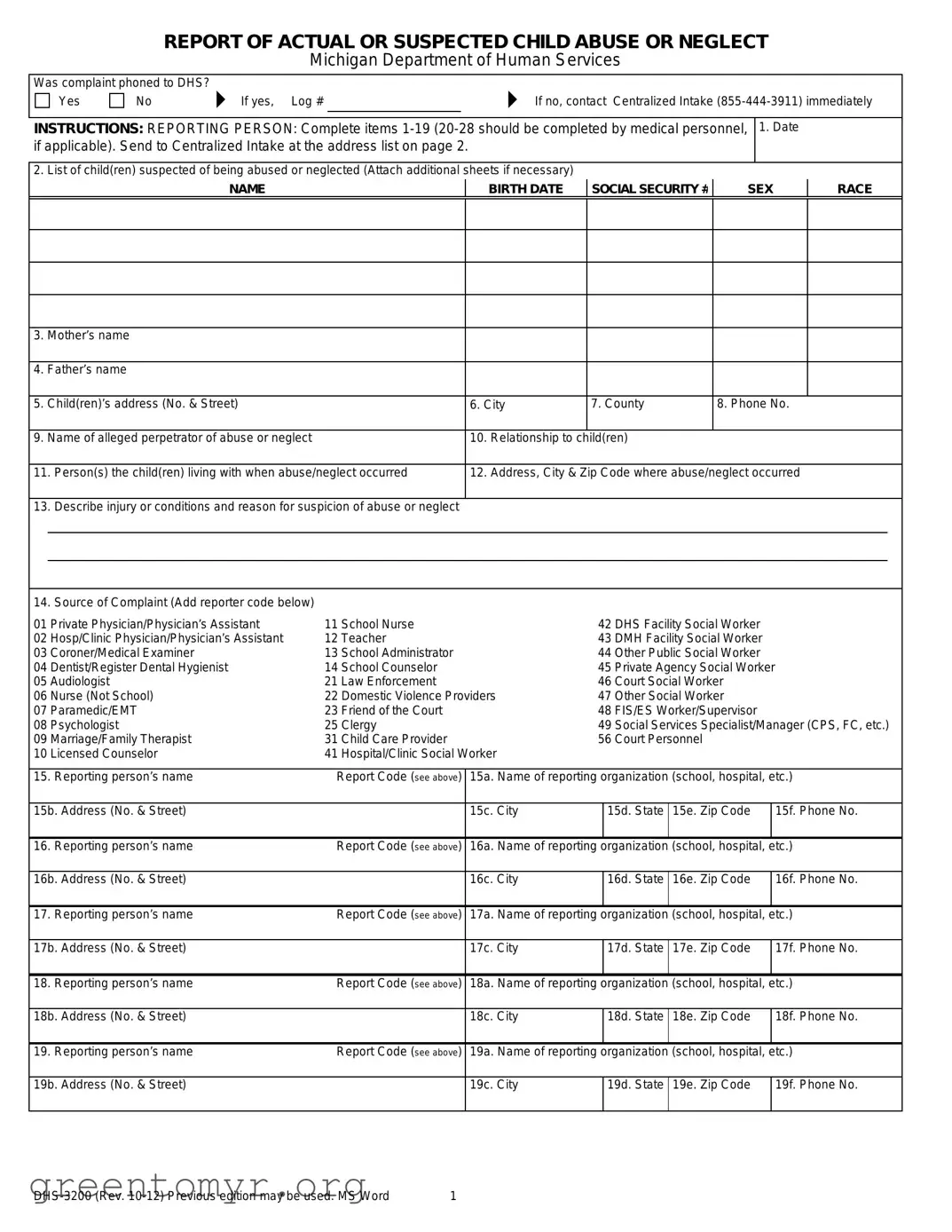
The Dhs 3200 form serves as a critical tool for reporting actual or suspected child abuse or neglect in Michigan. Designed by the Michigan Department of Human Services, this form is essential for ensuring that concerns about a child's safety are documented and addressed promptly. The reporting process begins with determining whether the complaint has already been communicated to the Department of Human Services (DHS) via phone. If not, immediate contact with Centralized Intake is necessary. The form requires detailed information about the child or children involved, including their names, birth dates, and addresses, as well as specifics about the alleged perpetrator and the nature of the suspected abuse or neglect. It also prompts the reporting individual to provide context, such as the source of the complaint and any relevant medical history if applicable. The latter sections of the form are reserved for medical professionals who may need to document findings from physical examinations or other medical assessments. Overall, the Dhs 3200 form is a vital step in protecting vulnerable children and ensuring that appropriate actions are taken to address any potential harm.
REPORT OF ACTUAL OR SUSPECTED CHILD ABUSE OR NEGLECT
Michigan Department of Human Services
Was complaint phoned to DHS? |
If no, contact Centralized Intake |
||
Yes |
No |
If yes, Log # |
|
INSTRUCTIONS: REPORTING PERSON: Complete items
2. List of child(ren) suspected of being abused or neglected (Attach additional sheets if necessary)
1. Date
NAME
BIRTH DATE
SOCIAL SECURITY #
SEX
RACE
|
|
|
|
|
|
|
|
|
|
|
|
|
|
|
|
|
|
|
|
|
|
|
|
|
|
|
|
3. |
Mother’s name |
|
|
|
|
|
|
|
|
|
|
|
|
4. |
Father’s name |
|
|
|
|
|
|
|
|
7. County |
|
|
|
5. |
Child(ren)’s address (No. & Street) |
6. City |
8. Phone No. |
|
||
|
|
|
|
child(ren) |
|
|
9. |
Name of alleged perpetrator of abuse or neglect |
10. |
Relationship to |
|
|
|
|
|
|
||||
11. Person(s) the child(ren) living with when abuse/neglect occurred |
12. |
Address, City & Zip Code where abuse/neglect occurred |
||||
13.Describe injury or conditions and reason for suspicion of abuse or neglect
14.Source of Complaint (Add reporter code below)
01 |
Private Physician/Physician’s Assistant |
11 |
School Nurse |
|
42 |
DHS Facility Social Worker |
|
|||
02 |
Hosp/Clinic Physician/Physician’s Assistant |
12 |
Teacher |
|
43 |
DMH Facility Social Worker |
|
|||
03 |
Coroner/Medical Examiner |
13 |
School Administrator |
|
44 |
Other Public Social Worker |
|
|||
04 |
Dentist/Register Dental Hygienist |
14 |
School Counselor |
|
45 |
Private Agency Social Worker |
|
|||
05 |
Audiologist |
21 |
Law Enforcement |
|
46 |
Court Social Worker |
|
|||
06 |
Nurse (Not School) |
22 |
Domestic Violence Providers |
47 |
Other Social Worker |
|
||||
07 |
Paramedic/EMT |
23 |
Friend of the Court |
|
48 |
FIS/ES Worker/Supervisor |
|
|||
08 |
Psychologist |
25 |
Clergy |
|
49 |
Social Services Specialist/Manager (CPS, FC, etc.) |
||||
09 |
Marriage/Family Therapist |
31 |
Child Care Provider |
|
56 |
Court Personnel |
|
|||
10 |
Licensed Counselor |
41 |
Hospital/Clinic Social Worker |
|
|
|
|
|
|
|
|
|
|
|
|
|
|||||
15. Reporting person’s name |
Report Code (see above) |
15a. Name of reporting organization (school, hospital, etc.) |
||||||||
|
|
|
|
|
|
|
|
|
||
15b. Address (No. & Street) |
|
|
15c. City |
|
15d. State |
15e. Zip Code |
|
15f. Phone No. |
||
|
|
|
|
|
|
|||||
16. Reporting person’s name |
Report Code (see above) |
16a. Name of reporting |
organization |
(school, hospital, |
etc.) |
|||||
|
|
|
|
|
|
|
||||
16b. Address (No. & Street) |
|
|
16c. City |
|
16d. State |
16e. Zip Code |
|
16f. Phone No. |
||
|
|
|
|
|
|
|||||
17. Reporting person’s name |
Report Code (see above) |
17a. Name of reporting |
organization |
(school, hospital, |
etc.) |
|||||
|
|
|
|
|
|
|
||||
17b. Address (No. & Street) |
|
|
17c. City |
|
17d. State |
17e. Zip Code |
|
17f. Phone No. |
||
|
|
|
|
|
|
|||||
18. Reporting person’s name |
Report Code (see above) |
18a. Name of reporting |
organization |
(school, hospital, |
etc.) |
|||||
|
|
|
|
|
|
|
||||
18b. Address (No. & Street) |
|
|
18c. City |
|
18d. State |
18e. Zip Code |
|
18f. Phone No. |
||
|
|
|
|
|
|
|||||
19. Reporting person’s name |
Report Code (see above) |
19a. Name of reporting |
organization |
(school, hospital, |
etc.) |
|||||
|
|
|
|
|
|
|
||||
19b. Address (No. & Street) |
|
|
19c. City |
|
19d. State |
19e. Zip Code |
|
19f. Phone No. |
||
|
|
|
|
|
|
|
|
|
|
|
1 |
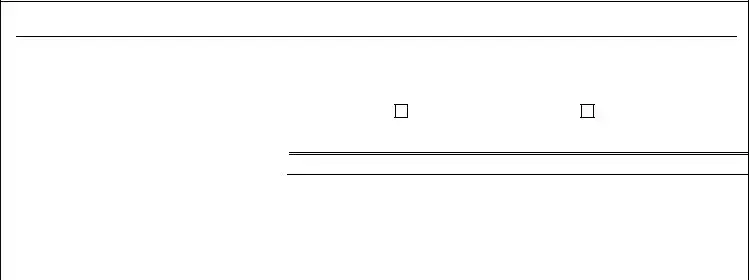
TO BE COMPLETED BY MEDICAL PERSONNEL WHEN PHYSICAL EXAMINATION HAS BEEN DONE
20. Summary report and conclusions of physical examination (Attach Medical Documentation)
21. |
Laboratory report |
|
|
22. |
|
|
||
|
|
|
|
|
|
|
||
23. |
Other (specify) |
|
|
24. History or physical signs of previous abuse/neglect |
||||
|
|
|
|
|
YES |
|
NO |
|
25. |
Prior hospitalization or medical examination for this child |
|
|
|
|
|
||
|
DATES |
|
|
|
|
PLACES |
|
|
|
|
|
|
|
|
|
|
|
|
|
|
|
|
|
|
||
|
|
|
|
|
|
|
|
|
|
|
|
|
|
|
|
|
|
26. |
Physician’s Signature |
|
27. Date |
|
28. Hospital (if applicable) |
|
||
|
|
|
|
|
|
|||
Department of Human Services (DHS) will not discriminate |
against |
any individual or group |
AUTHORITY: |
P.A. 238 of 1975. |
||||
because of race, religion, age, national origin, color, height, weight, marital status, sex, sexual |
||||||||
COMPLETION: |
Mandatory. |
|||||||
orientation, gender identity or expression, political beliefs or disability. If you need help with |
||||||||
PENALTY: |
None. |
|||||||
reading, writing, hearing, etc., under the Americans with Disabilities Act, you are invited to make |
||||||||
your needs known to a DHS office in your area. |
|
|
|
|
|
|||
INSTRUCTIONS
GENERAL INFORMATION:
This form is to be completed as the written
# (if known). The reporting person is to fill out as completely as possible items
Mail this form to:
Centralized Intake for Abuse & Neglect 5321 28th Street Court S.E.
Grand Rapids, MI 49546
OR
Fax this form to
OR
email this form to
1.Date – Enter the date the form is being completed.
2.List child(ren) suspected of being abused or neglected – Enter available information for the child(ren) believed to be abused or neglected. Indicate if child has a disability that may need accommodation.
3.Mother’s name – Enter mother’s name (or mother substitute) and other available information. Indicate if mother has a disability that may need accommodation.
4.Father’s name – Enter father’s name (or father substitute) and other available information. Indicate if father has a disability that may need accommodation.
8.Phone – Enter phone number of the household where child(ren) resides.
9.Name of alleged perpetrator of abuse or neglect – Indicate person(s) suspected or presumed to be responsible for the alleged abuse or neglect.
10.Relationship to child(ren) – Indicate the relationship to the child(ren) of the alleged perpetrator of neglect or abuse, e.g., parent, grandparent, babysitter.
11.Person(s) child(ren) living with when abuse/neglect occurred – Enter name(s). Indicate if individuals have a disability that may need accommodation.
12.Address where abuse / neglect occurred.
13.Describe injury or conditions and reason of suspicion of abuse or neglect – Indicate the basis for making a report and the information available about the abuse or neglect.
14.Source of complaint – Check appropriate box noting professional group or appropriate category.
Note: If abuse or neglect is suspected in a hospital, also check hospital.
DHS Facility – Refers to any group home, shelter home, halfway house or institution operated by the Department of Human Services. DCH Facility – Refers to any institution or facility operated by the Department of Community Health.
2 |
| Fact Name | Details |
|---|---|
| Purpose | The DHS-3200 form is used to report actual or suspected child abuse or neglect in Michigan. |
| Mandatory Completion | Filling out this form is mandatory as a follow-up to an oral report, as required by Michigan law. |
| Governing Law | This form is governed by P.A. 238 of 1975, which mandates the reporting of child abuse and neglect. |
| Submission Methods | The completed form can be mailed, faxed, or emailed to the Centralized Intake for Abuse & Neglect. |
| Reporting Process | Sections 1-19 must be completed by the reporting person, while medical personnel complete sections 20-28 if applicable. |
Filling out the Dhs 3200 form is an important step in reporting suspected child abuse or neglect. After completing the form, it should be sent to the Centralized Intake for Abuse & Neglect. This process ensures that the necessary authorities can investigate and take appropriate action.
After completing all required fields, send the form to the specified address, or consider faxing or emailing it as outlined in the instructions. Make sure to keep a copy for your records.
The Dhs 3200 form is designed to report actual or suspected child abuse or neglect in Michigan. It serves as a written follow-up to an oral report made to the Department of Human Services (DHS). This form collects essential information about the child or children suspected of being abused or neglected, the alleged perpetrator, and the circumstances surrounding the situation. By completing this form, individuals can ensure that the appropriate authorities are notified, allowing for timely intervention and support.
The form must be completed by the reporting person, who can be anyone with knowledge of the suspected abuse or neglect. This may include parents, teachers, medical professionals, or social workers. Items 1-19 should be filled out by the reporting person, while medical personnel are responsible for completing items 20-28 if a physical examination has been conducted. It is crucial that the form is filled out as completely as possible to provide accurate information to the authorities.
Once the form is completed, it must be submitted to the Centralized Intake for Abuse & Neglect. There are several ways to do this:
It is important to choose a submission method that ensures the form reaches the appropriate department promptly.
To complete the Dhs 3200 form, the following information is typically required:
Providing as much detail as possible will assist the authorities in their investigation and response.
Filling out the Dhs 3200 form can be a daunting task, especially given the sensitive nature of the information being reported. One common mistake is failing to provide complete information about the child or children suspected of being abused or neglected. Incomplete entries can lead to delays in response or even miscommunication regarding the child's needs. It is crucial to ensure that all relevant details, such as names, birth dates, and addresses, are accurately filled out.
Another frequent error involves neglecting to specify the relationship of the alleged perpetrator to the child. This information is vital for investigators to understand the context of the situation. Without it, the report may lack clarity, which could hinder the investigation process. Additionally, individuals often overlook the importance of detailing the circumstances surrounding the abuse or neglect. A vague description may not provide the necessary insight for authorities to take appropriate action.
People sometimes skip the section that asks if the report was phoned into the Department of Human Services (DHS). This step is essential, as it helps track the report's origin and ensures that the appropriate log number is assigned. Without this information, the report may not be processed correctly. Furthermore, failing to provide contact information for the reporting person can lead to complications. Authorities may need to reach out for further details, and without a phone number or address, this becomes impossible.
Another common oversight is not indicating whether the child has a disability that may require accommodations. This information is critical for ensuring that the child receives the necessary support throughout the investigation. Additionally, some individuals mistakenly assume that medical personnel will complete the medical sections of the form. However, if medical professionals are not involved, the reporting person must ensure that all relevant information is provided.
Lastly, many individuals forget to sign and date the form. This final step is crucial, as it verifies that the report is legitimate and that the information provided is accurate to the best of the reporter's knowledge. Without a signature, the form may not be accepted, which could delay critical intervention for the child. By being aware of these common mistakes, individuals can help ensure that their reports are complete and effective in protecting children from abuse and neglect.
When filing the Dhs 3200 form, there are several other documents that may be necessary to support the report of suspected child abuse or neglect. Each document serves a specific purpose and helps ensure that all relevant information is gathered and submitted properly. Below is a list of these forms and documents, along with a brief description of each.
Gathering these documents can help ensure that the report is thorough and provides a complete picture of the situation. It is important to approach this process with care, as the well-being of the child is the top priority. If you have any questions or need assistance, there are resources available to help you navigate this process.
The DHS 3200 form is a crucial document for reporting suspected child abuse or neglect. Several other forms serve similar purposes in different contexts, each designed to facilitate the reporting and documentation of such serious matters. Here’s a list of seven documents that share similarities with the DHS 3200 form:
Each of these documents plays a vital role in ensuring the safety and well-being of children and vulnerable individuals. They help create a structured process for reporting and responding to abuse, fostering a safer environment for all.
When filling out the Dhs 3200 form, it is essential to approach the task with care and attention to detail. Here is a list of things you should and shouldn't do to ensure the process goes smoothly.
Completing the Dhs 3200 form is a serious responsibility, and taking the time to follow these guidelines can make a significant difference in the outcome. Your diligence and care in this process can help ensure that children receive the protection and support they need.
Misconceptions about the DHS 3200 form can lead to confusion and delays in reporting suspected child abuse or neglect. Here are seven common misunderstandings:
Understanding these misconceptions can help ensure that concerns about child welfare are addressed promptly and appropriately.
When filling out the Dhs 3200 form, it’s crucial to pay attention to detail. Here are some key takeaways to ensure the process goes smoothly:
By following these guidelines, you can help ensure that reports of suspected child abuse or neglect are handled effectively and efficiently.