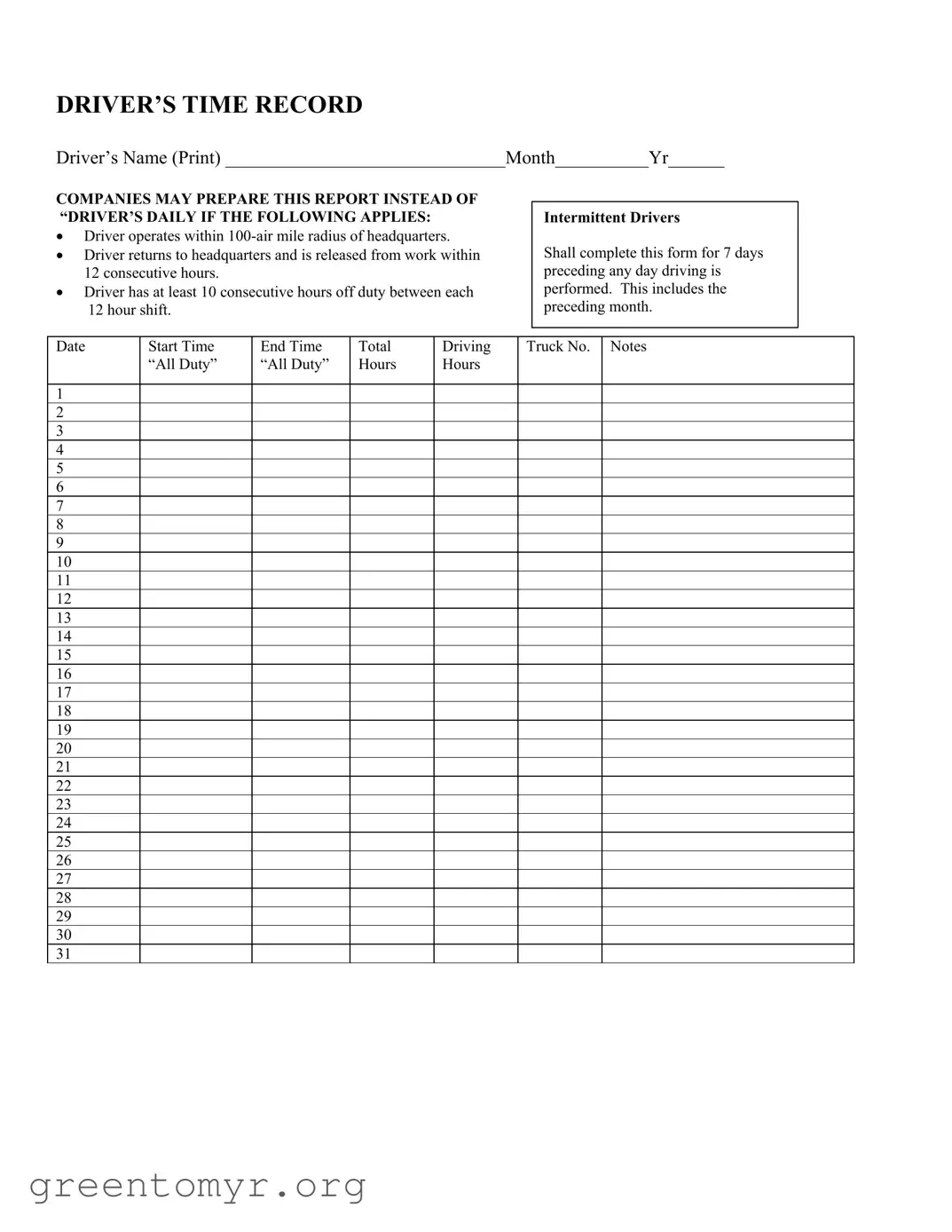
Keeping accurate records of driving hours is essential for compliance and safety in the transportation industry. The Driver Time Record form serves as a crucial tool for drivers to log their hours and ensure they adhere to regulations regarding work and rest periods. This form is particularly useful for drivers operating within a 100-air mile radius of their headquarters, as it allows them to document their daily activities without the need for a more complex daily log. To qualify for this simplified reporting, drivers must return to their headquarters and be released from work within 12 consecutive hours, while also ensuring they have at least 10 consecutive hours off duty between shifts. For intermittent drivers, it is important to fill out this form for the seven days leading up to any driving day, which includes the previous month. The form requires essential details such as the driver's name, the month and year, as well as a breakdown of each day’s start and end times, total driving hours, truck number, and any pertinent notes. By maintaining this record, drivers can not only comply with legal requirements but also promote safer driving practices.

DRIVER’S TIME RECORD
Driver’s Name (Print) ______________________________Month__________Yr______
COMPANIES MAY PREPARE THIS REPORT INSTEAD OF “DRIVER’S DAILY IF THE FOLLOWING APPLIES:
•Driver operates within
•Driver returns to headquarters and is released from work within 12 consecutive hours.
•Driver has at least 10 consecutive hours off duty between each 12 hour shift.
INTERMITTENT DRIVERS
Shall complete this form for 7 days preceding any day driving is performed. This includes the preceding month.
Date |
Start Time |
End Time |
Total |
Driving |
Truck No. |
Notes |
|
“All Duty” |
“All Duty” |
Hours |
Hours |
|
|
|
|
|
|
|
|
|
1 |
|
|
|
|
|
|
2 |
|
|
|
|
|
|
3 |
|
|
|
|
|
|
4 |
|
|
|
|
|
|
5 |
|
|
|
|
|
|
6 |
|
|
|
|
|
|
7 |
|
|
|
|
|
|
8 |
|
|
|
|
|
|
9 |
|
|
|
|
|
|
10 |
|
|
|
|
|
|
11 |
|
|
|
|
|
|
12 |
|
|
|
|
|
|
13 |
|
|
|
|
|
|
14 |
|
|
|
|
|
|
15 |
|
|
|
|
|
|
16 |
|
|
|
|
|
|
17 |
|
|
|
|
|
|
18 |
|
|
|
|
|
|
19 |
|
|
|
|
|
|
20 |
|
|
|
|
|
|
21 |
|
|
|
|
|
|
22 |
|
|
|
|
|
|
23 |
|
|
|
|
|
|
24 |
|
|
|
|
|
|
25 |
|
|
|
|
|
|
26 |
|
|
|
|
|
|
27 |
|
|
|
|
|
|
28 |
|
|
|
|
|
|
29 |
|
|
|
|
|
|
30 |
|
|
|
|
|
|
31 |
|
|
|
|
|
|

| Fact Name | Description |
|---|---|
| Driver’s Name | The form requires the driver’s name to be printed clearly at the top. |
| Time Period | It covers the month and year in which the driving activities occurred. |
| Eligibility Criteria | Companies can use this form instead of the Driver’s Daily Log if the driver operates within a 100-air mile radius, returns to headquarters within 12 hours, and has at least 10 consecutive hours off duty. |
| Intermittent Drivers | Drivers who do not drive every day must complete this form for the 7 days leading up to any driving performed. |
| Daily Entries | The form includes sections for date, start time, end time, total driving hours, truck number, and notes. |
| Governing Laws | This form is governed by the Federal Motor Carrier Safety Administration (FMCSA) regulations, specifically 49 CFR Part 395. |
Completing the Driver Time Record form is essential for tracking driving hours accurately. After filling out the form, it will be submitted to the appropriate authority for record-keeping and compliance purposes. Follow these steps to ensure the form is completed correctly.
The Driver Time Record form is a document used by drivers to log their working hours and driving time. It helps ensure compliance with regulations regarding hours of service. This form is particularly useful for drivers who operate within a specific radius and meet certain criteria.
This form is required for drivers who operate within a 100-air mile radius of their headquarters. It is also necessary for intermittent drivers who must record their driving hours for the seven days preceding any day they drive. This includes the previous month’s driving activities.
To use the Driver Time Record form instead of the Driver’s Daily Log, the following criteria must be met:
To fill out the form, you will need to provide your name, the month and year, and log your driving hours for each day. Record the start and end times, total driving hours, and any notes relevant to your driving activities. Make sure to fill out the form accurately for each day you drive.
The notes section can include any relevant information about your driving, such as unusual circumstances, vehicle issues, or any breaks taken during your shift. This helps provide context for your recorded hours.
It is advisable to keep the Driver Time Record form for at least six months. This duration allows for compliance with regulatory requirements and provides a record in case of any audits or inquiries.
Yes, companies can prepare the Driver Time Record form on behalf of their drivers, as long as the criteria for using this form are met. This can streamline the process and ensure that all necessary information is accurately recorded.
Filling out the form incorrectly can lead to compliance issues and potential penalties. It is crucial to double-check your entries for accuracy and completeness. If you make a mistake, correct it immediately and document the change.
You can typically obtain the Driver Time Record form from your employer, transportation department, or online resources related to driver compliance. Ensure you have the most current version to meet regulatory standards.
Filling out the Driver Time Record form is crucial for compliance and safety. However, many drivers make common mistakes that can lead to issues down the line. Awareness of these pitfalls can help ensure accuracy and avoid unnecessary complications.
One frequent mistake is failing to provide the driver’s name clearly. It’s essential to print the name legibly at the top of the form. Illegible handwriting can lead to confusion and miscommunication, especially if the form is reviewed by someone unfamiliar with the driver.
Another common error occurs with the month and year section. Some drivers neglect to fill in this information entirely or make it unclear. Always ensure that the month and year are accurately noted. This detail is vital for record-keeping and regulatory compliance.
Drivers often overlook the requirement for intermittent drivers to complete the form for the seven days preceding any driving performed. This includes the preceding month. Missing this step can result in incomplete records, which could lead to penalties or violations.
Inaccurate time entries are another significant issue. Drivers may incorrectly record start and end times, leading to discrepancies in total driving hours. It’s crucial to double-check these entries to ensure they reflect the actual driving time. Accuracy matters in maintaining compliance with regulations.
Additionally, some drivers forget to fill in the truck number. This detail is important for tracking vehicle usage and ensuring that all records align with company policies. Omitting the truck number can complicate audits or investigations.
Notes are often left blank, but they can provide essential context for the recorded hours. Whether it’s a special circumstance or an explanation for unusual hours, including notes can clarify the entries. This additional information can be invaluable during reviews.
Lastly, not keeping a copy of the completed form can be a critical oversight. Drivers should always retain a copy for their records. This practice not only helps in case of disputes but also ensures that drivers have a reference for future entries. Keeping organized records is a best practice that can save time and trouble later.
The Driver Time Record form is an essential document for tracking a driver's hours and ensuring compliance with regulations. Several other forms and documents complement this record, providing additional information and support for both drivers and their employers. Below is a list of these documents, each serving a specific purpose.
Each of these documents plays a critical role in the transportation industry, ensuring safety, compliance, and efficient operations. Proper management of these forms enhances accountability and supports a safe working environment for drivers.
The Driver Time Record form serves a specific purpose in tracking driving hours and compliance with regulations. However, it shares similarities with several other documents used in the transportation and logistics industry. Below are seven documents that are comparable to the Driver Time Record form, highlighting their similarities.
When filling out the Driver Time Record form, there are several important guidelines to keep in mind. Here is a list of things you should and shouldn't do:
Following these guidelines can help ensure that your Driver Time Record form is completed correctly and submitted without issues.
Misconceptions about the Driver Time Record form can lead to confusion and compliance issues. Here are seven common misunderstandings:
Filling out and using the Driver Time Record form is essential for compliance and accurate record-keeping. Here are four key takeaways: