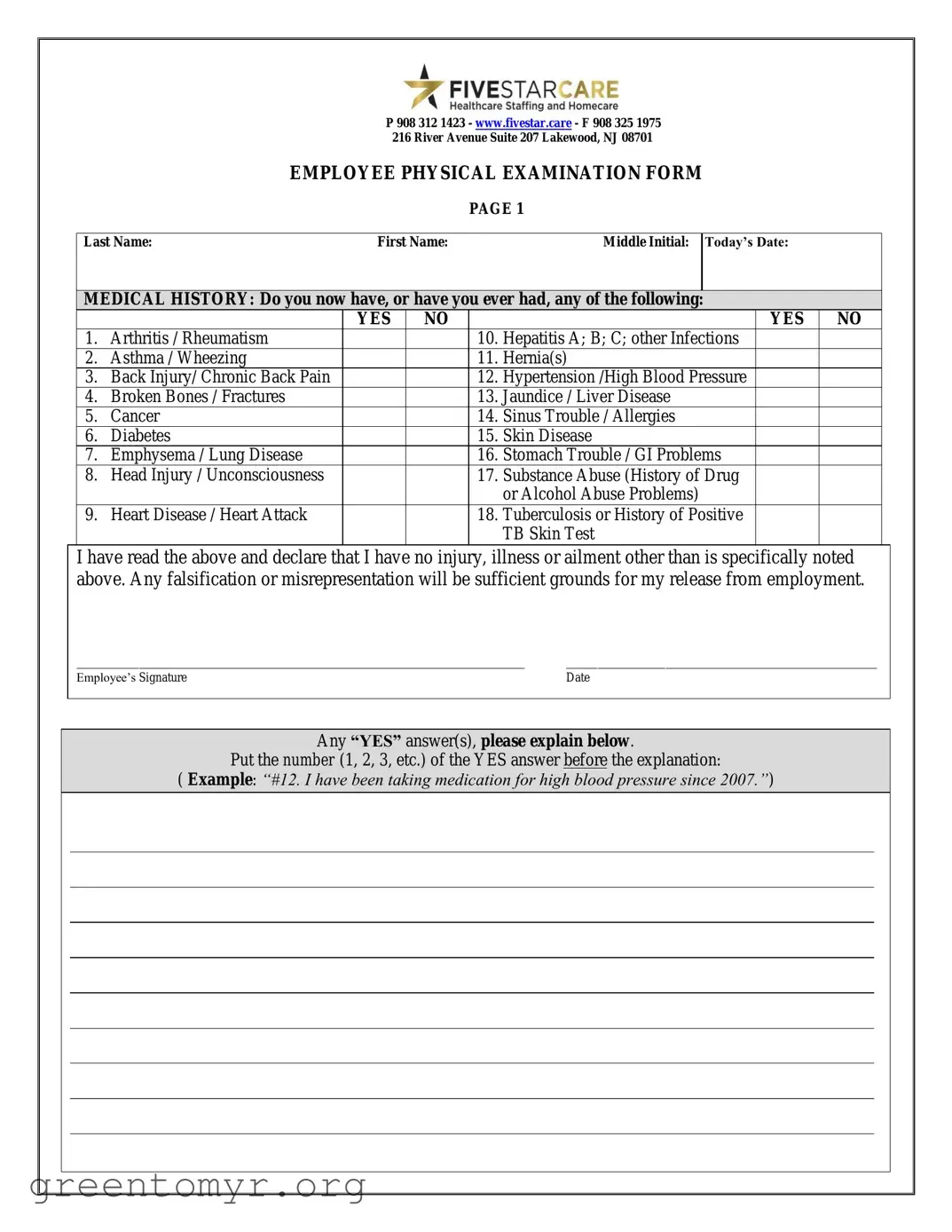
The Employee Physical Examination Form is a vital document designed to assess the health and fitness of individuals before they begin or continue employment. This form collects essential information about an employee's medical history, including any past or present conditions that could impact their ability to perform job duties safely. Sections include inquiries about various health issues, such as arthritis, asthma, heart disease, and substance abuse, allowing employers to identify potential health risks. Additionally, the form requires a physical examination, where a physician evaluates general appearance, vital signs, and specific bodily systems. The results of this examination help determine if the applicant is fit for employment or if further evaluation is necessary. By ensuring that employees are in good health, the form plays a crucial role in maintaining a safe and productive workplace. Furthermore, it emphasizes the importance of honesty in reporting medical history, as any misrepresentation can lead to serious consequences, including employment termination.
P 908 312 1423 - www.fivestar.care - F 908 325 1975 216 River Avenue Suite 207 Lakewood, NJ 08701
EMPLOYEE PHYSICAL EXAMINATION FORM
PAGE 1
Last Name: |
First Name: |
Middle Initial: Today’s Date: |
MEDICAL HISTORY: Do you now have, or have you ever had, any of the following:
|
|
|
YES |
NO |
|
|
YES |
NO |
|
|
1. |
Arthritis / Rheumatism |
|
|
10. |
Hepatitis A; B; C; other Infections |
|
|
|
|
2. |
Asthma / Wheezing |
|
|
11. |
Hernia(s) |
|
|
|
|
3. |
Back Injury/ Chronic Back Pain |
|
|
12. |
Hypertension /High Blood Pressure |
|
|
|
|
4. |
Broken Bones / Fractures |
|
|
13. Jaundice / Liver Disease |
|
|
|
|
|
5. |
Cancer |
|
|
14. |
Sinus Trouble / Allergies |
|
|
|
|
6. |
Diabetes |
|
|
15. |
Skin Disease |
|
|
|
|
7. |
Emphysema / Lung Disease |
|
|
16. |
Stomach Trouble / GI Problems |
|
|
|
|
8. |
Head Injury / Unconsciousness |
|
|
17. |
Substance Abuse (History of Drug |
|
|
|
|
|
|
|
|
|
or Alcohol Abuse Problems) |
|
|
|
|
9. |
Heart Disease / Heart Attack |
|
|
18. |
Tuberculosis or History of Positive |
|
|
|
|
|
|
|
|
|
TB Skin Test |
|
|
|
I have read the above and declare that I have no injury, illness or ailment other than is specifically noted above. Any falsification or misrepresentation will be sufficient grounds for my release from employment.
Employee’s Signature |
Date |
Any “YES” answer(s), please explain below.
Put the number (1, 2, 3, etc.) of the YES answer before the explanation:
( Example: “#12. I have been taking medication for high blood pressure since 2007.”)

P 908 312 1423 - www.fivestar.care - F 908 325 1975 216 River Avenue Suite 207 Lakewood, NJ 08701
EMPLOYEE PHYSICAL EXAMINATION FORM
PAGE 2
Last Name: |
|
|
|
|
|
|
|
First Name: |
|
|
|
|
Middle Initial: |
|
Today’s Date: |
|
Job Title: |
||||||||||
|
|
|
|
|
|
|
|
|
|
|
|
|
|
|
|
|
|
|
|
|
|
|
|
|
|
|
|
|
DOB |
|
Age |
|
Sex |
|
HT |
|
WT |
|
Temp. |
Pulse |
Resp. |
|
B/P |
|
Drug/Food Allergies |
||||||||||
|
|
|
|
|
|
|
|
|
|
|
|
|
|
|
|
|
|
|
|
||||||||
Vision: R 20/ |
|
|
L 20/ |
|
Pupils: Equal |
|
Unequal Glasses/Lenses: Y / N |
Hearing: Normal Impaired Hearing Aid |
|||||||||||||||||||
|
|
|
|
|
|
|
|
|
|
|
|
|
|
|
|
|
|
||||||||||
PHYSICAL EXAM |
|
|
|
NORMAL |
|
ABNORMAL |
|
|
|
COMMENTS |
|||||||||||||||||
1. |
General Appearance / BMI |
|
|
|
|
|
|
|
|
|
|
|
|
|
|
|
|
|
|
|
|||||||
|
|
|
|
|
|
|
|
|
|
|
|
|
|
|
|
|
|
|
|
|
|
|
|
|
|
||
2. |
Skin |
|
|
|
|
|
|
|
|
|
|
|
|
|
|
|
|
|
|
|
|
|
|
|
|
||
|
|
|
|
|
|
|
|
|
|
|
|
|
|
|
|
|
|
|
|
|
|
|
|
|
|
||
3. |
HEENT |
|
|
|
|
|
|
|
|
|
|
|
|
|
|
|
|
|
|
|
|
|
|
|
|
||
|
|
|
|
|
|
|
|
|
|
|
|
|
|
|
|
|
|
|
|
|
|
|
|
|
|
||
4. |
Teeth |
|
|
|
|
|
|
|
|
|
|
|
|
|
|
|
|
|
|
|
|
|
|
|
|
||
|
|
|
|
|
|
|
|
|
|
|
|
|
|
|
|
|
|
|
|
|
|
|
|
|
|
||
5. |
Neck |
|
|
|
|
|
|
|
|
|
|
|
|
|
|
|
|
|
|
|
|
|
|
|
|
||
|
|
|
|
|
|
|
|
|
|
|
|
|
|
|
|
|
|
|
|
|
|
|
|
|
|
||
6. |
Lungs |
|
|
|
|
|
|
|
|
|
|
|
|
|
|
|
|
|
|
|
|
|
|
|
|
||
|
|
|
|
|
|
|
|
|
|
|
|
|
|
|
|
|
|
|
|
|
|
|
|
|
|
||
7. |
Heart |
|
|
|
|
|
|
|
|
|
|
|
|
|
|
|
|
|
|
|
|
|
|
|
|
||
|
|
|
|
|
|
|
|
|
|
|
|
|
|
|
|
|
|
|
|
|
|
|
|
|
|
||
8. |
Abdomen |
|
|
|
|
|
|
|
|
|
|
|
|
|
|
|
|
|
|
|
|
|
|
|
|
||
|
|
|
|
|
|
|
|
|
|
|
|
|
|
|
|
|
|
|
|
|
|
|
|
|
|
||
9. |
GU System |
|
|
|
|
|
|
|
|
|
|
|
|
|
|
|
|
|
|
|
|
|
|
|
|
||
|
|
|
|
|
|
|
|
|
|
|
|
|
|
|
|
||||||||||||
10. Musculoskeletal Functioning |
|
|
|
|
|
|
|
|
|
|
|
|
|
|
|
||||||||||||
(Full ROM to all extremities? History |
|
|
|
|
|
|
|
|
|
|
|
|
|
|
|
||||||||||||
of injury to knees or hips?) |
|
|
|
|
|
|
|
|
|
|
|
|
|
|
|
|
|
|
|
|
|||||||
11. Back / Spine (History of injury?) |
|
|
|
|
|
|
|
|
|
|
|
|
|
|
|
||||||||||||
|
|
|
|
|
|
|
|
|
|
|
|
|
|
|
|
||||||||||||
12. Neurological (Gross observation |
|
|
|
|
|
|
|
|
|
|
|
|
|
|
|
||||||||||||
of gait, coordination, tremors, etc.) |
|
|
|
|
|
|
|
|
|
|
|
|
|
|
|
||||||||||||
|
|
|
|
|
|
|
|
|
|
|
|
|
|
|
|
||||||||||||
13. Psychiatric (tics, stuttering, nail- |
|
|
|
|
|
|
|
|
|
|
|
|
|
|
|
||||||||||||
biting, cognition, orientation, affect, |
|
|
|
|
|
|
|
|
|
|
|
|
|
|
|
||||||||||||
obvious personality disorders, etc.) |
|
|
|
|
|
|
|
|
|
|
|
|
|
|
|
||||||||||||
Physician’s review of person’s medical history as recorded on reverse side of this form:
PPD / Mantoux Test for Tuberculosis: 1st Step Date: |
|
|
|
_ Result: |
_ 2nd Step Date: |
Result: |
|
|||||||||
Chest |
|
|
Results: |
|
|
|
|
|
|
|
|
|
||||
|
|
|
|
|
|
|
|
|
|
|
|
|||||
THIS APPLICANT IS FIT FOR EMPLOYMENT: YES: |
|
|
|
|
NO: |
|
|
Deferred for Functional Capacity Evaluation: |
|
|
||||||
|
|
|
|
|
|
Examining Physician’s Signature |
|
Date Physical Examination Performed |
|
| Fact Name | Fact Description |
|---|---|
| Purpose | The Employee Physical Examination Form is used to assess the health and fitness of employees before they begin work. |
| Medical History | Employees must disclose any past or present medical conditions, including serious illnesses and injuries. |
| Signature Requirement | Employees must sign the form, confirming the accuracy of the information provided. |
| Confidentiality | The information collected is confidential and should be handled according to privacy regulations. |
| State-Specific Forms | Some states may have specific requirements for employee physical forms, governed by local labor laws. |
| Common Conditions | Conditions like hypertension, diabetes, and heart disease are commonly assessed during the examination. |
| Physical Examination | A physical examination includes assessments of various body systems, such as cardiovascular and respiratory health. |
| Drug Allergies | Employees should list any known drug or food allergies to ensure safety in the workplace. |
| Fit for Employment | The examining physician will determine if the employee is fit for employment based on the examination results. |
| Follow-Up Tests | Additional tests, like a PPD test for tuberculosis, may be required depending on the job's nature. |
Completing the Employee Physical form is an important step in the hiring process. This form collects essential medical history and physical examination details. After filling out the form, it will be reviewed by a healthcare professional to ensure fitness for employment.
The Employee Physical form is designed to assess the overall health and fitness of an individual prior to employment. It helps employers ensure that potential hires are capable of performing the essential functions of their job without compromising their health or safety. By collecting medical history and performing a physical examination, employers can make informed decisions regarding an applicant's suitability for a specific role.
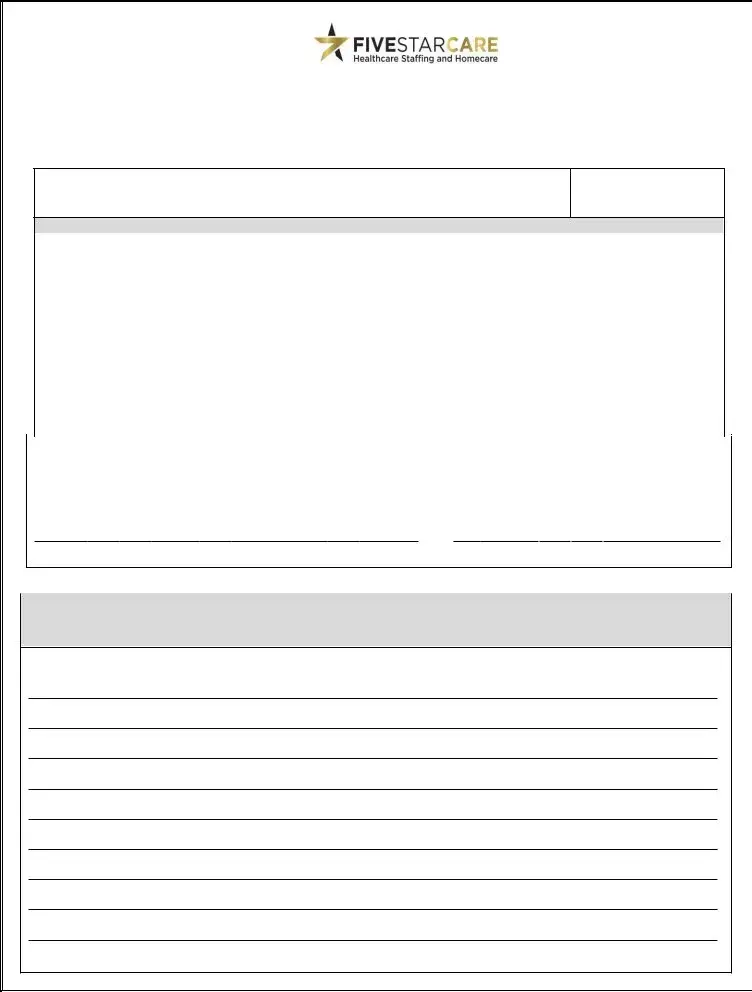
The form requires personal details such as the applicant's name, date of birth, job title, and contact information. Additionally, it includes sections for medical history, a physical examination, and evaluations of vision and hearing. Specifically, applicants must answer questions regarding previous medical conditions, allergies, and any relevant physical limitations.
If you answer "YES" to any of the medical history questions, you are required to provide further explanations for each affirmative response. This information is crucial as it allows the examining physician to understand your health background better and evaluate your fitness for the job more accurately.
Falsifying or misrepresenting information on the Employee Physical form can lead to serious consequences, including termination of employment. Employers take such actions seriously, as they can affect workplace safety and health. It is essential to be truthful and transparent when completing the form.
The completed form is typically reviewed by a licensed physician or healthcare professional. This individual will assess the medical history and physical examination results to determine if the applicant is fit for employment. Their signature on the form indicates that they have conducted a thorough evaluation.
The physical examination includes a comprehensive assessment of various body systems, including:
Each section is marked as either normal or abnormal, with space for comments to provide additional context.
The PPD/Mantoux test is a screening for tuberculosis exposure, while the Chest X-Ray may be performed to further evaluate the lungs if needed. These tests are critical in ensuring that applicants do not pose a health risk to themselves or others in the workplace. Results from these tests will be documented on the form.
Yes, completing the Employee Physical form is typically a mandatory requirement for employment in many organizations. Employers use this form to comply with health and safety regulations and to ensure that all employees are fit for their designated roles.
Employers are required to maintain the confidentiality of medical information as per the Health Insurance Portability and Accountability Act (HIPAA). The details provided on the Employee Physical form should be stored securely and accessed only by authorized personnel involved in the hiring process or health assessments.
Completing the Employee Physical Examination Form is an essential step in the hiring process, but many individuals make common mistakes that can lead to complications. One frequent error is failing to provide accurate personal information. It's crucial to ensure that the last name, first name, and middle initial are spelled correctly. Inaccuracies can create confusion and may delay the processing of your application.
Another common mistake is not updating medical history. Many people overlook the importance of disclosing past medical conditions. If you have a history of issues like asthma or heart disease, these should be noted. Omitting this information can lead to significant consequences, including potential job termination if discrepancies are discovered later.
Some applicants also misunderstand the "YES" and "NO" sections regarding medical history. It’s essential to read each question carefully. Responding incorrectly can result in misrepresentation, which the form explicitly states can lead to release from employment. If you're unsure, it's better to clarify than to guess.
In the section that asks for explanations of any "YES" answers, people often forget to include this crucial detail. Each affirmative response requires elaboration, and failing to provide context can lead to misunderstandings about your health status. For instance, if you answer "YES" to having hypertension, you should explain how it is managed.
Another mistake involves neglecting to complete the physical examination section thoroughly. It’s vital to ensure that all aspects, such as vision and hearing, are accurately reported. Skipping these details could raise questions about your fitness for the job.
Some individuals mistakenly assume that their physician will fill out all required sections without guidance. It’s essential to communicate with your healthcare provider about the form’s requirements. If certain areas are left blank, it may delay the review process.
Additionally, failing to sign and date the form can render it invalid. This simple oversight can lead to unnecessary complications in your employment process. Always double-check that your signature is present and that the date is accurate.
Another common error is not disclosing drug or food allergies. This information is vital for your safety and should be included. Employers need to be aware of any allergies that could affect your work environment.
Lastly, individuals often overlook the importance of reviewing the entire form before submission. Taking a moment to go through each section can help catch errors or omissions that might otherwise go unnoticed. A thorough review can save time and prevent issues down the line.
The Employee Physical form is a crucial document that ensures the health and fitness of individuals before they begin their roles in an organization. Alongside this form, several other documents are commonly utilized to provide a comprehensive overview of an employee's health status and eligibility for employment. Below is a list of these additional forms and documents.
Each of these documents plays a significant role in maintaining workplace safety and health. Together, they create a robust framework for evaluating and supporting employee well-being, ultimately contributing to a productive work environment.
When filling out the Employee Physical form, it is important to follow certain guidelines to ensure accuracy and compliance. Here are five things you should and shouldn't do:
Misconception 1: The Employee Physical Form is only for those with health issues.
Many believe that only employees with existing health problems need to complete this form. In reality, it is a standard procedure for all employees, regardless of their health status. This ensures a safe working environment for everyone.
Misconception 2: Completing the form is optional.
Some individuals think that filling out the Employee Physical Form is not mandatory. However, it is typically a requirement for employment. Employers use this information to assess the fitness of an employee for their specific job duties.
Misconception 3: The form is only concerned with physical health.
While the form focuses on physical health, it also addresses mental health aspects. Questions regarding psychiatric conditions are included to provide a comprehensive view of an employee's overall well-being.
Misconception 4: Any disclosed health issues will lead to discrimination.
Some employees fear that revealing health issues will result in discrimination. However, laws protect individuals from such actions. Employers must keep this information confidential and cannot discriminate based on disclosed health conditions.
Misconception 5: The form is irrelevant if I feel healthy.
Even if an employee feels healthy, the form remains important. It helps identify any underlying conditions that may affect job performance or safety. Completing the form accurately contributes to a safer workplace for everyone.
When filling out and using the Employee Physical form, consider the following key points: