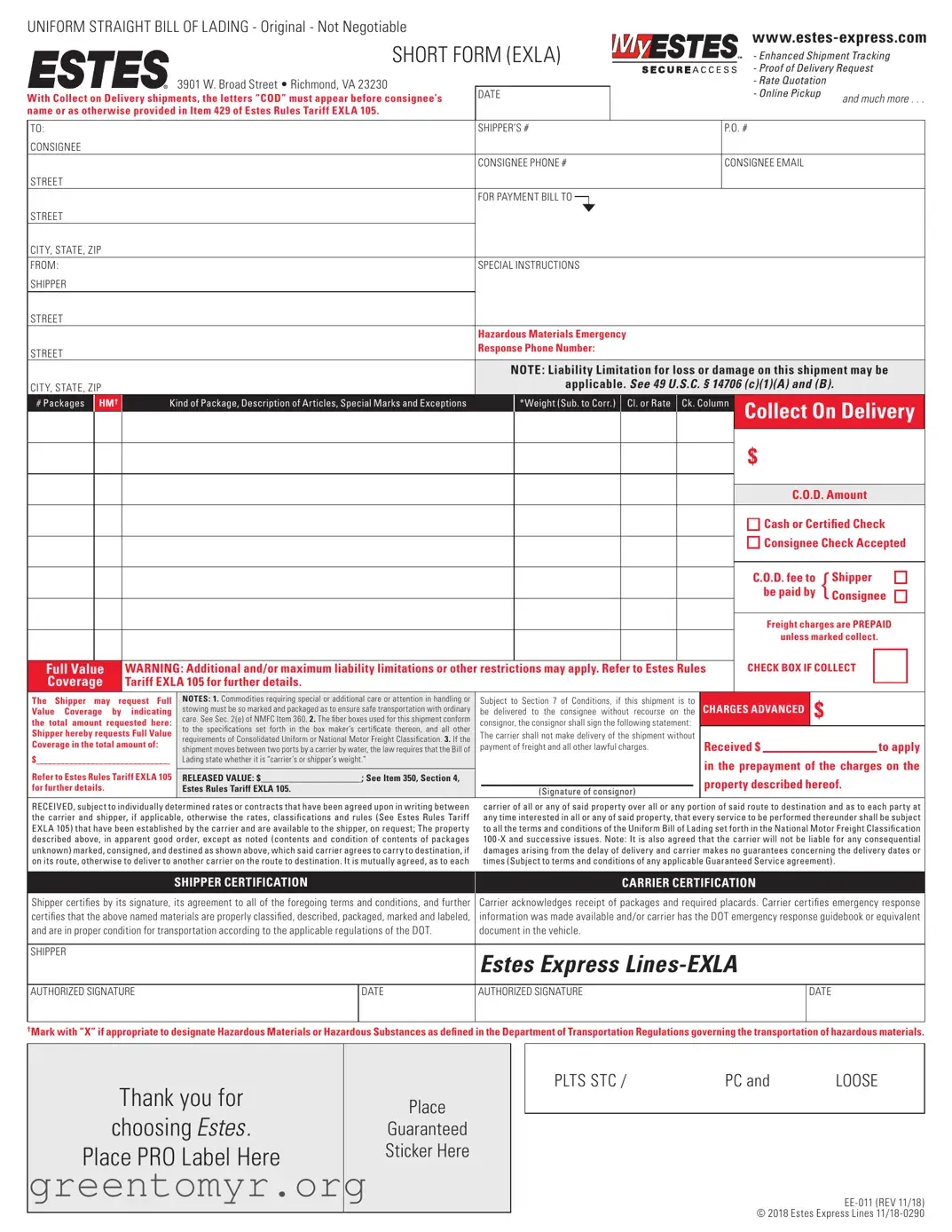
The Estes Express Bill of Lading form is an essential document for anyone involved in shipping goods. This form serves multiple purposes, including acting as a receipt for the shipper and the carrier, detailing the shipment's contents, and outlining payment terms. It includes sections for important information such as the shipper's and consignee's contact details, shipment weight, and any special instructions that may apply. If you're shipping items that require special handling or are hazardous, this form allows you to indicate those needs clearly. Additionally, it specifies whether freight charges are prepaid or collect, which is crucial for managing costs. The form also covers liability limitations for loss or damage, ensuring that both parties understand their responsibilities. With features like enhanced shipment tracking and proof of delivery requests, the Estes Express Bill of Lading streamlines the shipping process, making it easier for everyone involved to stay informed and organized.
UNIFORM STRAIGHT BILL OF LADING - Original - Not Negotiable
SHORT FORM (EXLA)
3901 W. Broad Street • Richmond, VA 23230 |
|
With Collect on Delivery shipments, the letters “COD” must appear before consignee’s |
DATE |
|
|
name or as otherwise provided in Item 429 of Estes Rules Tariff EXLA 105. |
|
|
|
-Enhanced Shipment Tracking
-Proof of Delivery Request
-Rate Quotation
- Online Pickup |
and much more . . . |
|
TO: |
|
|
|
|
SHIPPER’S # |
|
|
|
P.O. # |
|
|
|
|
|||||||||||
CONSIGNEE |
|
|
|
|
|
|
|
|
|
|
|
|
|
|
|
|
|
|
|
|
|
|
|
|
|
|
|
|
|
|
CoNSIGNEE PhONE # |
|
|
|
CoNSIGNEE EmAIL |
|
|
|
|
||||||||||
STREET |
|
|
|
|
|
|
|
|
|
|
|
|
|
|
|
|
|
|
|
|
|
|
|
|
STREET |
|
|
|
|
FOR PAYMENT BILL TO |
|
|
|
|
|
|
|
|
|
|
|
|
|
|
|
|
|||
|
|
|
|
|
|
|
|
|
|
|
|
|
|
|
|
|
|
|
|
|||||
|
|
|
|
|
|
|
|
|
|
|
|
|
|
|
|
|
|
|
|
|
|
|
||
CITY, STATE, ZIP |
|
|
|
|
|
|
|
|
|
|
|
|
|
|
|
|
|
|
|
|
|
|
|
|
FROM: |
|
|
|
|
SPECIAL INSTRUCTIONS |
|
|
|
|
|
|
|
|
|
|
|
|
|||||||
SHIPPER |
|
|
|
|
|
|
|
|
|
|
|
|
|
|
|
|
|
|
|
|
|
|
|
|
STREET |
|
|
|
|
|
|
|
|
|
|
|
|
|
|
|
|
|
|
|
|
|
|
|
|
|
|
|
|
|
|
Hazardous Materials Emergency |
|
|
|
|
|
|
|
|
|
|
|
|
||||||
STREET |
|
|
|
|
Response Phone Number: |
|
|
|
|
|
|
|
|
|
|
|
|
|||||||
|
|
|
|
|
|
|
|
|
|
|
|
|
|
|
|
|
|
|
|
|
|
|
||
|
|
|
|
|
|
|
NOTE: Liability Limitation for loss or damage on this shipment may be |
|||||||||||||||||
CITY, STATE, ZIP |
|
|
|
|
|
|
applicable. See 49 U.S.C. § 14706 (c)(1)(A) and (B). |
|||||||||||||||||
# Packages |
HM† |
Kind of Package, Description of Articles, Special Marks and Exceptions |
|
|
*Weight (Sub. to Corr.) |
Cl. or Rate |
|
Ck. Column |
|
Collect On Delivery |
||||||||||||||
|
|
|
|
|
|
|
|
|
|
|
|
|
|
|
|
|
|
|||||||
|
|
|
|
|
|
|
|
|
|
|
|
|
|
|
|
|
|
$ |
|
|
|
|
|
|
|
|
|
|
|
|
|
|
|
|
|
|
|
|
|
|
|
|
|
|
|
|
|
|
|
|
|
|
|
|
|
|
|
|
|
|
|
|
|
|
|
|
|
|
|
|
|
|
|
|
|
|
|
|
|
|
|
|
|
|
|
|
|
|
|
|
|
|
|
|
|
|
|
|
|
|
|
|
|
|
|
|
|
|
|
|
|
|
|
|
|
|
|
|
C.O.D. Amount |
|||||
|
|
|
|
|
|
|
|
|
|
|
|
|
|
|
|
|
|
|
Cash or Certified Check |
|||||
|
|
|
|
|
|
|
|
|
|
|
|
|
|
|
|
|
|
|
Consignee Check Accepted |
|||||
|
|
|
|
|
|
|
|
|
|
|
|
|
|
|
|
|
|
|
||||||
|
|
|
|
|
|
|
|
|
|
|
|
|
|
|
|
|
|
|
|
|
||||
|
|
|
|
|
|
|
|
|
|
|
|
|
|
|
|
|
|
C.O.D. fee to |
Shipper |
|||||
|
|
|
|
|
|
|
|
|
|
|
|
|
|
|
|
|
|
|||||||
|
|
|
|
|
|
|
|
|
|
|
|
|
|
|
|
|
|
|
be paid by |
{Consignee |
||||
|
|
|
|
|
|
|
|
|
|
|
|
|
|
|
|
|
|
|
||||||
|
|
|
|
|
|
|
|
|
|
|
|
|
|
|
|
|
|
|
Freight charges are PREPAID |
|||||
|
|
|
|
|
|
|
|
|
|
|
|
|
|
|
|
|
|
|
unless marked collect. |
|||||
|
|
|
|
|
|
|
|
|
|
|
|
|
|
|
|
|
|
|
|
|
|
|||
|
|
|
|
|
|
|
|
|
|
|
|
|
|
|
|
|
|
|
|
|
|
|
|
|
Full Value |
WARNING: Additional and/or maximum liability limitations or other restrictions may apply. Refer to Estes Rules |
|
CHECK BOX IF COLLECT |
|
|
|
||||||||||||||||||
Coverage |
Tariff EXLA 105 for further details. |
|
|
|
|
|
|
|
|
|
|
|
|
|
|
|
|
|
|
|
||||
|
|
|
|
|
|
|
|
|
|
|
|
|
|
|
|
|
|
|
||||||
|
|
|
|
NOTES: 1. Commodities requiring special or additional care or attention in handling or |
|
|
|
|
|
|
|
|
|
|
|
|
|
|
|
|
|
|
||
The Shipper may request Full |
|
Subject to Section 7 of Conditions, if this shipment is to |
CHARGES ADVANCED |
$ |
|
|
|
|||||||||||||||||
Value Coverage by |
indicating |
|
care. See Sec. 2(e) of NMFC Item 360. 2. The fiber boxes used for this shipment conform |
be delivered to the consignee without recourse on |
the |
|
|
|
||||||||||||||||
|
|
|
|
stowing must be so marked and packaged as to ensure safe transportation with ordinary |
|
|
|
|
|
|
|
|
|
|
|
|
|
|
|
|
|
|
|
|
the total amount requested here: |
|
to the specifications set forth in the box maker’s certificate thereon, and all other |
consignor, the consignor shall sign the following statement: |
|
|
|
|
|
|
|
|
|
|
|||||||||||
Shipper hereby requests Full Value |
|
The carrier shall not make delivery of the shipment without |
|
|
|
|
|
|
|
|
|
|
||||||||||||
|
requirements of Consolidated Uniform or National Motor Freight Classification. 3. If the |
|
|
|
|
|
|
|
|
|
||||||||||||||
Coverage in the total amount of: |
|
payment of freight and all other lawful charges. |
|
|
Received $ |
|
|
|
|
to apply |
||||||||||||||
|
shipment moves between two ports by a carrier by water, the law requires that the Bill of |
|
|
|
|
|
|
|||||||||||||||||
$_______________________________ |
|
|
|
|
|
|
|
|
|
|
|
|
|
|
||||||||||
|
Lading state whether it is “carrier’s or shipper’s weight.” |
|
|
|
|
|
|
|
|
|
in the prepayment of the charges on the |
|||||||||||||
Refer to Estes Rules Tariff EXLA 105 |
RELEASED VALUE: $________________________; See Item 350, Section 4, |
|
|
|
|
|
|
|
|
|
||||||||||||||
|
|
|
|
|
|
|
|
|
property described hereof. |
|||||||||||||||
for further details. |
|
|
Estes Rules Tariff EXLA 105. |
|
|
|
|
|
|
|
|
|
||||||||||||
|
|
|
|
(Signature of consignor) |
|
|
||||||||||||||||||
RECEIVED, subject to individually determined rates or contracts that have been agreed upon in writing between |
|
carrier of all or any of said property over all or any portion of said route to destination and as to each party at |
||||||||||||||||||||||
the carrier and shipper, if applicable, otherwise the rates, classifications and rules (See Estes Rules Tariff |
|
any time interested in all or any of said property, that every service to be performed thereunder shall be subject |
||||||||||||||||||||||
EXLA 105) that have been established by the carrier and are available to the shipper, on request; The property |
|
to all the terms and conditions of the Uniform Bill of Lading set forth in the National Motor Freight Classification |
||||||||||||||||||||||
described above, in apparent good order, except as noted (contents and condition of contents of packages |
|
|||||||||||||||||||||||
unknown) marked, consigned, and destined as shown above, which said carrier agrees to carry to destination, if |
|
damages arising from the delay of delivery and carrier makes no guarantees concerning the delivery dates or |
||||||||||||||||||||||
on its route, otherwise to deliver to another carrier on the route to destination. It is mutually agreed, as to each |
|
times (Subject to terms and conditions of any applicable Guaranteed Service agreement). |
||||||||||||||||||||||
|
|
|
|
|
|
|
|
|
|
|
|
|
|
|
|
|
|
|
|
|
|
|
||
|
|
|
SHIPPER CERTIFICATION |
|
|
|
|
|
CARRIER CERTIFICATION |
|
|
|
|
|||||||||||
Shipper certifies by its signature, its agreement to all of the foregoing terms and conditions, and further |
Carrier acknowledges receipt of packages and required placards. Carrier certifies emergency response |
|||||||||||||||||||||||
certifies that the above named materials are properly classified, described, packaged, marked and labeled, |
information was made available and/or carrier has the DOT emergency response guidebook or equivalent |
|||||||||||||||||||||||
and are in proper condition for transportation according to the applicable regulations of the DOT. |
document in the vehicle. |
|
|
|
|
|
|
|
|
|
|
|
|
|||||||||||
|
|
|
|
|
|
|
|
|
|
|
|
|
|
|
|
|
|
|
|
|
|
|
|
|
SHIPPER |
|
|
|
|
Estes Express |
|
|
|
|
|
|
|
||||||||||||
|
|
|
|
|
|
|
|
|
|
|
|
|
||||||||||||
|
|
|
|
|
|
|
|
|
|
|
|
|
|
|
|
|
|
|
|
|||||
AUTHORIZED SIGNATURE |
|
|
DATE |
AUTHORIZED SIGNATURE |
|
|
|
|
|
|
|
DATE |
||||||||||||
|
|
|
|
|
|
|
|
|
|
|
|
|
|
|
|
|
|
|
|
|
|
|
|
|
†Mark with “X” if appropriate to designate Hazardous Materials or Hazardous Substances as defined in the Department of Transportation Regulations governing the transportation of hazardous materials.
Thank you for
choosing Estes.
Place PRO Label Here
Place
Guaranteed
Sticker Here
PLTS STC / |
PC and |
LOOSE |
|
|
|
| Fact Name | Details |
|---|---|
| Form Type | This is a Uniform Straight Bill of Lading, designated as Original and Not Negotiable. |
| Governing Laws | The form is subject to the regulations outlined in 49 U.S.C. § 14706 (c)(1)(A) and (B). |
| Collect on Delivery (COD) | When applicable, the letters “COD” must appear before the consignee's name as specified in Item 429 of Estes Rules Tariff EXLA 105. |
| Liability Limitations | Liability limitations for loss or damage may apply. Refer to Estes Rules Tariff EXLA 105 for more details. |
| Special Instructions | Shippers can include special instructions and must indicate if Full Value Coverage is requested. |
| Hazardous Materials | Shipments containing hazardous materials must be marked accordingly, following Department of Transportation regulations. |
| Payment Terms | Freight charges are typically prepaid unless marked as collect, and C.O.D. fees are to be paid by the consignee. |
Filling out the Estes Express Bill of Lading form is an essential step in ensuring that your shipment is processed accurately and efficiently. The following instructions will guide you through the process, helping you complete the form correctly.
Once you have completed the form, ensure that all information is accurate before submitting it. This will help facilitate the shipping process and minimize any potential issues during transit.
The Estes Express Bill of Lading serves as a contract between the shipper and the carrier. It outlines the terms and conditions of the shipment, including details such as the type and quantity of goods being transported, the consignee's information, and any special instructions. This document is essential for tracking shipments and ensuring that both parties understand their responsibilities.
To complete the Bill of Lading accurately, follow these steps:
Ensure that all required fields are completed to avoid delays in processing.
"Collect on Delivery" (COD) refers to a shipping arrangement where the carrier collects payment for the shipment at the time of delivery. The letters “COD” must appear before the consignee's name on the Bill of Lading. This ensures that the consignee is aware of their obligation to pay upon receipt of the goods. Payment can typically be made via cash or certified check, and the carrier will not release the shipment until payment is confirmed.
Yes, there are liability limitations for loss or damage to shipments as specified under 49 U.S.C. § 14706 (c)(1)(A) and (B). It is crucial for shippers to understand these limitations and consider additional coverage options if necessary. The Bill of Lading includes sections where shippers can request Full Value Coverage for their shipments, which provides a higher level of protection against potential loss or damage.
If changes are required after the Bill of Lading has been issued, it is important to contact Estes Express as soon as possible. Depending on the nature of the changes, a new Bill of Lading may need to be created. Changes to consignee information, shipment details, or payment terms should be documented and confirmed to ensure that all parties are aligned. Clear communication is key to preventing issues during transit.
Filling out the Estes Express Bill of Lading form can seem straightforward, but many people make common mistakes that can lead to delays or complications in the shipping process. Understanding these pitfalls can help ensure that your shipment goes smoothly and reaches its destination without unnecessary issues.
One frequent error occurs with the consignee information. Individuals often forget to include the consignee's complete address, including city, state, and zip code. This oversight can result in misdelivery or delays, as carriers rely on accurate information to facilitate the delivery process. It’s essential to double-check that all fields are filled out correctly before submitting the form.
Another common mistake involves the payment terms. Some shippers overlook marking whether the freight charges are prepaid or collect. If this information is not clearly indicated, it can lead to confusion and disputes over who is responsible for payment upon delivery. Always ensure that you specify the payment method to avoid any misunderstandings later on.
Additionally, many people fail to indicate whether the shipment contains hazardous materials. This is crucial, as specific regulations govern the transport of such items. Not marking the appropriate box can lead to serious legal and safety issues. If your shipment includes hazardous materials, it’s vital to follow the necessary guidelines and mark the form accordingly.
Moreover, shippers sometimes neglect to provide special instructions that may be necessary for handling their packages. Whether it’s fragile items that require extra care or specific delivery instructions, failing to communicate these details can result in damage or mishandling. Including special instructions can help ensure that your shipment is treated appropriately throughout its journey.
Lastly, many individuals do not take the time to review the entire form before submitting it. Skipping this final step can lead to overlooked errors or missing information. A thorough review can catch mistakes that could delay the shipment or cause complications. Taking a few extra moments to ensure accuracy can save time and hassle down the road.
The Estes Express Bill of Lading is a crucial document in the shipping process, but it is often accompanied by other forms that help facilitate transportation and ensure compliance with regulations. Here are six common documents that are typically used alongside the Bill of Lading:
These documents work together to ensure that shipments are handled properly and that all parties are informed throughout the shipping process. Understanding these forms can help streamline logistics and improve communication between shippers and carriers.
When filling out the Estes Express Bill of Lading form, it's important to follow certain guidelines to ensure accuracy and compliance. Here are seven things you should and shouldn't do:
Misconception 1: The Bill of Lading is just a receipt for the shipment.
While it serves as a receipt, the Bill of Lading also acts as a contract between the shipper and the carrier. It outlines the terms of transportation, responsibilities, and liabilities.
Misconception 2: All Bills of Lading are the same.
Different carriers may have specific formats and rules. The Estes Express Bill of Lading has unique features and regulations that may not apply to other carriers.
Misconception 3: The shipper can change the terms after signing.
Once the Bill of Lading is signed, the terms are generally set. Any changes would require agreement from both the shipper and the carrier.
Misconception 4: Liability for lost or damaged goods is always the same.
Liability limitations can vary. The Estes Bill of Lading specifies different liability levels based on the type of coverage selected.
Misconception 5: The shipper is not responsible for hazardous materials.
Shippers must properly classify and label hazardous materials. The Bill of Lading requires shippers to certify compliance with regulations.
Misconception 6: The consignee is always responsible for freight charges.
Freight charges can be prepaid or collect. The Bill of Lading allows the shipper to specify who is responsible for payment.
Misconception 7: A Bill of Lading guarantees delivery dates.
Delivery dates are not guaranteed. The Estes Bill of Lading states that the carrier makes no guarantees regarding delivery times.
Misconception 8: The Bill of Lading is only necessary for large shipments.
Regardless of size, a Bill of Lading is required for all shipments to ensure proper documentation and legal protection.
Misconception 9: Once the Bill of Lading is issued, the shipment cannot be modified.
While the Bill of Lading sets terms, modifications can be made if both the shipper and carrier agree to the changes.
When using the Estes Express Bill of Lading form, there are several important points to keep in mind to ensure a smooth shipping process. Here are some key takeaways: