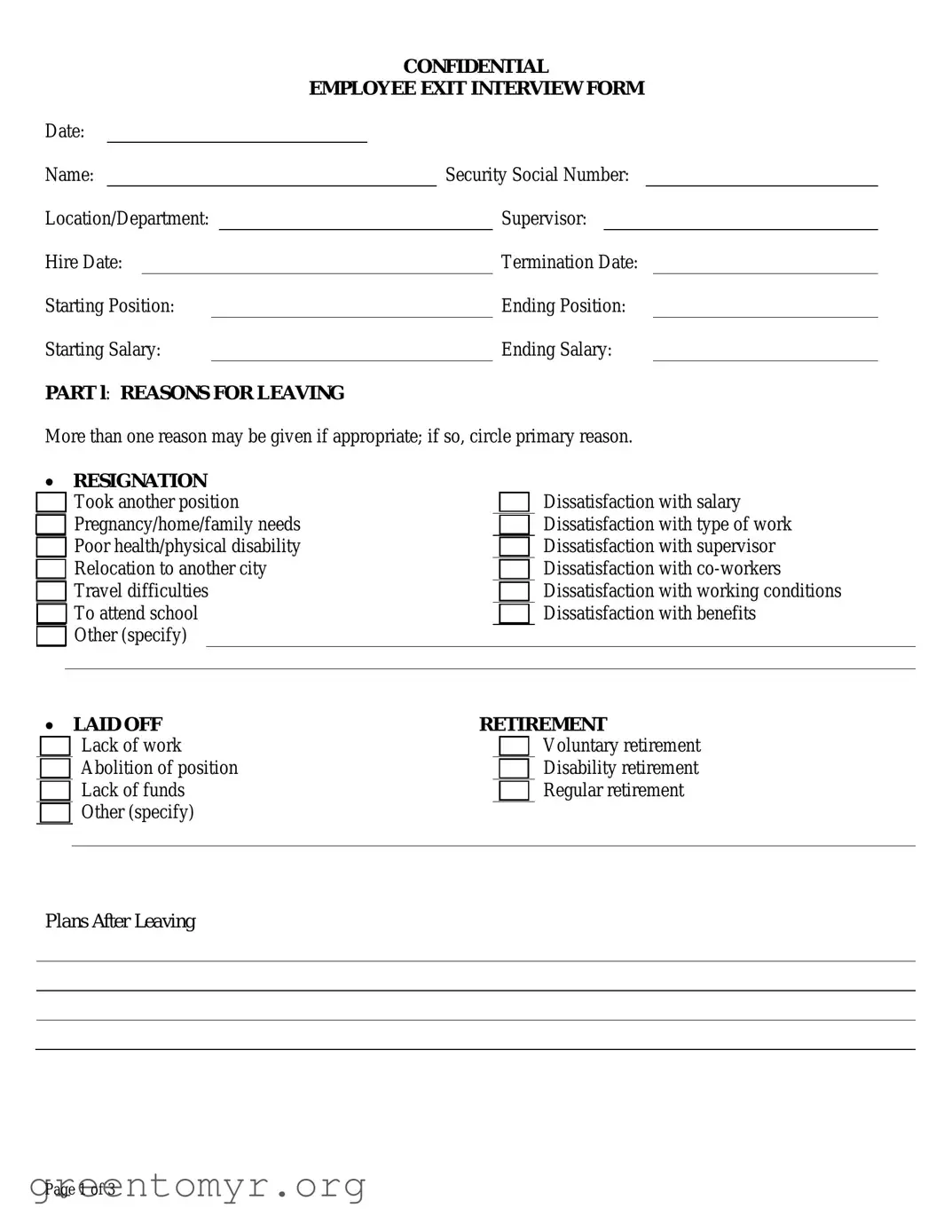
When an employee decides to leave an organization, an exit interview serves as a valuable opportunity for both the departing individual and the employer. This process allows for open communication about the employee's experiences, insights, and suggestions for improvement within the workplace. The Exit Interview form typically includes sections that cover various aspects such as reasons for leaving, job satisfaction, workplace culture, and feedback on management practices. Additionally, it may inquire about the employee's overall experience, training received, and any suggestions they might have for enhancing the work environment. By gathering this information, organizations can identify trends, address potential issues, and ultimately foster a more positive and productive workplace for current and future employees. This form not only aids in retaining talent but also helps in creating a culture of continuous improvement.

CONFIDENTIAL
EMPLOYEE EXIT INTERVIEW FORM
Date: |
|
|
|
|
|
|
|
|||
Name: |
|
|
Security Social Number: |
|
||||||
Location/Department: |
|
|
|
Supervisor: |
|
|||||
Hire Date: |
|
|
|
Termination Date: |
|
|||||
Starting Position: |
|
|
|
Ending Position: |
|
|||||
Starting Salary: |
|
|
|
Ending Salary: |
|
|||||
PART l: REASONS FOR LEAVING |
|
|
|
|
|
|
||||
More than one reason may be given if appropriate; if so, circle primary reason.
|
|
RESIGNATION |
|
|
|
|
|
Took another position |
|
Dissatisfaction with salary |
|
|
|
Pregnancy/home/family needs |
|
Dissatisfaction with type of work |
|
|
|
Poor health/physical disability |
|
Dissatisfaction with supervisor |
|
|
|
Relocation to another city |
|
Dissatisfaction with |
|
|
|
Travel difficulties |
|
Dissatisfaction with working conditions |
|
|
|
To attend school |
|
Dissatisfaction with benefits |
|
|
|
Other (specify) |
|
|
|
|
|
|
|
|
|
|
|
LAID OFF |
RETIREMENT |
||
|
|
Lack of work |
|
|
Voluntary retirement |
|
|
Abolition of position |
|
|
Disability retirement |
|
|
Lack of funds |
|
|
Regular retirement |
|
|
Other (specify) |
|
|
|
|
|
|
|
|
|
Plans After Leaving
Page 1 of 3
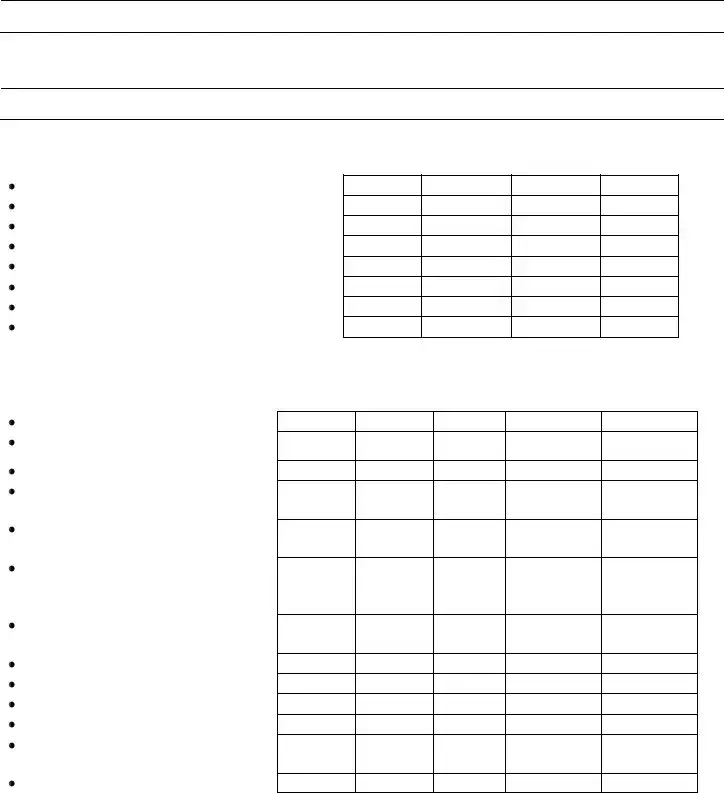
PART ll: COMMENTS/SUGGESTIONS FOR IMPROVEMENT
We are interested in what our employees have to say about their work experience with us. Please complete this form.
1.What did you like most about your job?
2.What did you like least about your job?
3.How did you feel about the pay and benefits?
Excellent Good Fair Poor
Rate of pay for your job
Paid holidays
Paid vacations
Retirement plan
Medical coverage for self
Medical coverage for dependents
Life insurance
Sick leave
4. How did you feel about the following:
Very |
Slightly |
Slightly |
Very |
Satisfied |
Satisfied |
Neutral Dissatisfied |
Dissatisfied |
Opportunity to use your abilities
Recognition for the work you did
Training you received
Your supervisor’s management methods
The opportunity to talk with your supervisor
The information you received on policies, programs, projects and problems
The information you received on departmental structure Promotion policies and practices Discipline policies and practices Job transfer policies and practices Overtime policies and practices Performance review policies and practices
Physical working conditions
Page 2 of 3

COMMENTS:
5.a) If you are taking another job, what kind of work will you be doing?
b)What has your new place of employment offered you that is more attractive than your present job?
6.Could we have made any improvements that might have influenced you to stay on the job?
Other remarks (optional):
_____________________________________________________ |
__________________________ |
|
|
Employee’s Signature |
Date |
DO NOT WRITE BELOW THIS LINE. OFFICE USE ONLY. |
|
|
( ) Discussed with employee |
|
|
( |
) Right to file for unemployment benefits |
|
( |
) Conversion of benefits |
|
( |
) If retiring, state option for payment of unused leave ____________________________________________ |
|
______________________________________________________ |
__________________________ |
|
|
Interviewer’s Signature |
Date |
Page 3 of 3
| Fact Name | Description |
|---|---|
| Purpose | The Exit Interview form serves to gather feedback from employees who are leaving an organization. It helps employers understand the reasons behind the departure and improve workplace conditions. |
| Confidentiality | Responses provided in the Exit Interview are typically confidential. This encourages honesty and openness, allowing employees to express their thoughts without fear of repercussions. |
| State-Specific Laws | Some states may have specific laws regarding employee exit interviews. For example, California requires employers to maintain certain records related to employee feedback. |
| Benefits | Utilizing an Exit Interview form can lead to valuable insights. Employers can identify trends, improve retention strategies, and enhance overall workplace culture based on the feedback received. |
Once you have completed the Exit Interview form, it will be reviewed by the appropriate personnel. They will use your feedback to improve the workplace environment and address any concerns you may have raised.
An Exit Interview form is a document used by employers to gather feedback from employees who are leaving the company. This form helps organizations understand the reasons behind an employee's departure, assess workplace culture, and identify areas for improvement. It typically includes questions about job satisfaction, management, and overall experiences at the company.
Conducting Exit Interviews is crucial for several reasons:
The Exit Interview form should be filled out by employees who are voluntarily leaving the organization. This includes those who are resigning, retiring, or transitioning to a new role outside the company. It's an opportunity for them to share their thoughts and experiences candidly.
Exit Interview forms usually contain a mix of open-ended and multiple-choice questions. Common topics include:
The information collected from Exit Interviews is analyzed to identify patterns and trends. Companies use this feedback to make informed decisions about workplace policies, employee engagement strategies, and overall organizational culture. The goal is to enhance the work environment for current and future employees.
Participation in an Exit Interview is generally voluntary. While many companies encourage employees to complete the form, it is ultimately up to the individual to decide whether they want to share their feedback. Employers should respect the employee's choice if they choose not to participate.
Yes, many organizations prioritize confidentiality when it comes to Exit Interview responses. Employers typically assure departing employees that their feedback will be kept private and used only for improvement purposes. However, it's always good to clarify the confidentiality policy with HR before completing the form.
To provide constructive feedback, consider the following tips:
By following these guidelines, you can help create a more positive work environment for those who remain.
Completing an Exit Interview form can be a crucial step for employees transitioning out of a company. However, several common mistakes can hinder the effectiveness of this process. One frequent error is providing vague feedback. When employees do not elaborate on their experiences, the information collected lacks depth and may not yield actionable insights for the organization.
Another mistake is neglecting to address specific incidents or situations that influenced their decision to leave. General statements can obscure underlying issues. For example, stating "I didn't like the management" without detailing specific behaviors or incidents does not help the company understand what needs improvement.
Some individuals also fail to consider the tone of their responses. Writing in an overly negative or emotional manner can diminish the professionalism of the feedback. Constructive criticism is more valuable than a purely negative account. A balanced approach, highlighting both positives and negatives, can lead to more productive outcomes.
Additionally, employees often overlook the importance of confidentiality. While sharing honest feedback is essential, some may inadvertently disclose sensitive information about colleagues or internal processes. This can create unnecessary complications for both the employee and the organization.
Another common error is rushing through the form. Taking time to reflect on experiences and articulate thoughts can lead to more meaningful feedback. A hurried response may leave out critical insights that could benefit the organization in the long run.
Moreover, individuals sometimes forget to follow the guidelines provided for the Exit Interview. Each organization may have specific expectations regarding the format or content of the feedback. Ignoring these guidelines can result in incomplete submissions that do not fulfill the intended purpose.
Finally, failing to provide contact information can be a missed opportunity for further dialogue. If the organization wishes to follow up on certain points, having a way to reach the departing employee can facilitate a more in-depth understanding of their experiences.
When an employee leaves a company, several documents may be utilized alongside the Exit Interview form to ensure a smooth transition and proper documentation of the departure. These forms help gather necessary information and fulfill administrative requirements. Below is a list of other commonly used forms and documents that often accompany the Exit Interview form.
These documents serve important functions in managing the exit process. They help clarify responsibilities, ensure compliance with legal requirements, and gather valuable feedback that can enhance future employee experiences. By utilizing these forms, companies can facilitate a respectful and organized transition for departing employees.
The Exit Interview form serves as a crucial tool for gathering insights from departing employees. Its structure and purpose share similarities with several other documents commonly used in human resources and organizational management. Below is a list of nine documents that resemble the Exit Interview form, along with explanations of their similarities.
Filling out an Exit Interview form is a crucial step in the employee departure process. It provides valuable feedback for the organization and helps ensure a smoother transition. Here are some essential dos and don’ts to consider:
Exit interviews are an essential part of the employee departure process. However, several misconceptions surround the Exit Interview form. Understanding these misconceptions can help both employers and employees navigate the exit process more effectively.
By addressing these misconceptions, both employers and employees can make the most of the exit interview process, fostering a better understanding and improving future workplace dynamics.
Completing an Exit Interview form is a significant step in the employee departure process. It provides valuable insights for both the organization and the departing employee. Here are some key takeaways to consider:
By understanding these key points, organizations can maximize the benefits of the Exit Interview process, ultimately leading to a healthier workplace environment.