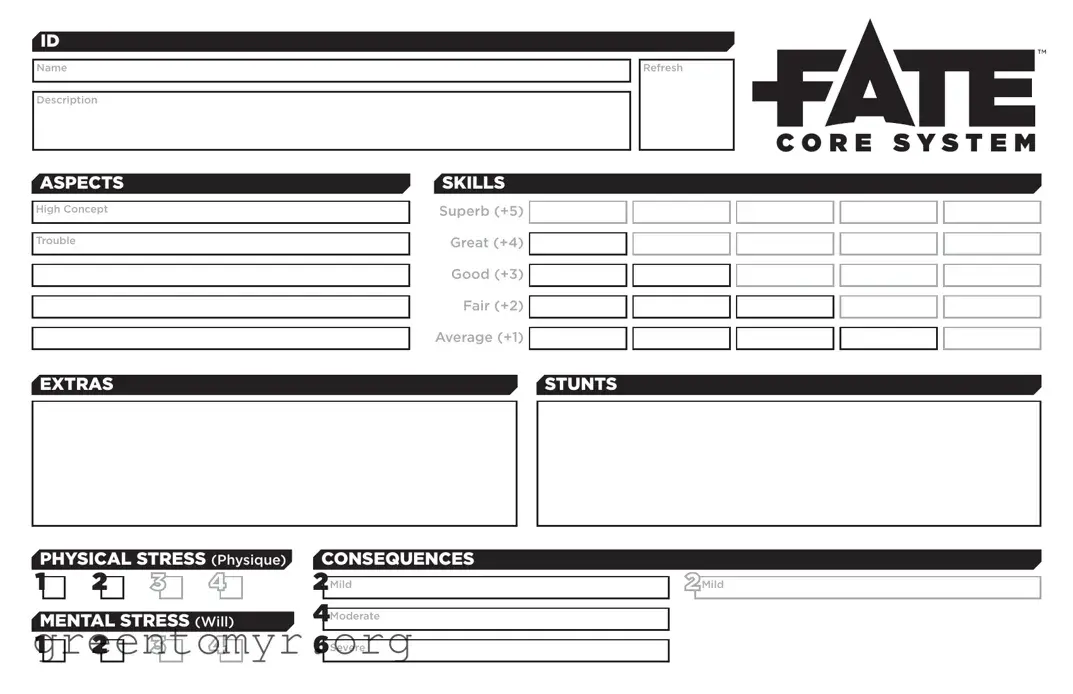
The Fate Character Sheet form is an essential tool for players diving into the Fate role-playing game. This form helps players organize their character's identity and abilities in a structured way. At the top, you'll find key sections like "Aspects," which include the character's High Concept and Trouble, providing a snapshot of their personality and challenges. The form also features "Skills," where players can rank their abilities from Superb to Average, giving a clear view of what their character excels at. Additionally, players can track "Stunts" that enhance their skills or provide unique advantages during gameplay. The sheet includes a section for "Extras" and "Refresh," ensuring players have a handle on their character's resources. Finally, the physical and mental stress sections allow for the management of health and well-being, with spaces for consequences that can impact the character's journey. Overall, this form serves as a comprehensive guide to help players navigate their characters' strengths and weaknesses in the Fate universe.
ID
Name
Description
ASPECTS
High Concept
Trouble
EXTRAS
Refresh
SKILLS
Superb (+5)
Great (+4)
Good (+3)
Fair (+2)
Average (+1)
STUNTS
C O R E S Y S T E M
PHYSICAL STRESS (Physique) |
CONSEQUENCES |
||||
1 |
2 |
3 |
4 |
|
|
2Mild |
|||||
|
|
|
|
|
|
MENTAL STRESS (Will) |
|
Moderate |
|||
4 |
|||||
|
|
|
|
|
|
2Mild
1 2
3
4
6Severe
| Fact Name | Description |
|---|---|
| ID | A unique identifier for each character sheet. |
| Name | The name of the character being created. |
| High Concept | A brief description that defines the character's main traits or role. |
| Trouble | A defining flaw or challenge that complicates the character's life. |
| Refresh | The amount of Fate Points a character starts with, based on their aspects and stunts. |
| Skills | Skills are ranked from Superb (+5) to Average (+1), indicating the character's abilities. |
| Stress and Consequences | Physical and mental stress levels are tracked, with consequences affecting gameplay. |
To complete the Fate Character Sheet form, follow the outlined steps carefully. This form is designed to help you create and organize your character's attributes and abilities in a structured manner.
The Fate Character Sheet form is a tool used in the Fate role-playing game to help players create and manage their characters. It provides a structured way to record essential character information, such as aspects, skills, and stress levels. This sheet is crucial for keeping track of a character’s abilities and narrative elements throughout the game.
Aspects are key phrases that define a character’s personality, motivations, and unique traits. Each character typically has two main aspects: a High Concept, which summarizes who they are, and a Trouble, which describes a significant challenge or flaw they face. These aspects guide storytelling and gameplay, influencing how characters react to situations and interact with others.
Skills represent a character's abilities in various areas, ranging from combat to social interactions. Each skill is rated on a scale from Average (+1) to Superb (+5). Players allocate points to these skills during character creation, allowing them to specialize in certain areas while maintaining a balanced character. This rating system helps determine the outcome of actions during gameplay.
Stunts are special abilities or advantages that give characters unique capabilities or bonuses in specific situations. Each stunt typically has a defined effect, such as allowing a character to reroll a dice or gain a bonus to a skill check. Players can choose stunts based on their character’s skills and aspects, further customizing their gameplay experience.
Refresh refers to the number of Fate Points a character starts with at the beginning of a game session. Fate Points are a valuable resource that players can use to invoke aspects, gain advantages, or reroll dice. The Refresh value helps balance gameplay by limiting how often players can utilize these powerful points, encouraging strategic use throughout the game.
Physical and Mental Stress represent the character's capacity to withstand challenges and setbacks. Physical Stress is measured by the Physique skill, while Mental Stress is based on the Will skill. When characters take damage or face mental challenges, they accumulate stress. If stress exceeds their capacity, they may suffer consequences, impacting their performance in the game.
Consequences are the lasting effects of stress that a character endures during the game. They come in three levels: Mild, Moderate, and Severe. Each level represents a different degree of impact on the character. For instance, a Mild consequence might be a minor injury, while a Severe consequence could significantly hinder a character's abilities. Players must manage these consequences carefully to maintain their effectiveness in the game.
Filling out the Fate Character Sheet involves several steps:
Once completed, the sheet serves as a comprehensive reference for your character throughout the game.
When filling out the Fate Character Sheet, many individuals make common mistakes that can hinder their gameplay experience. One of the most frequent errors is neglecting to clearly define the High Concept. This aspect serves as the foundation of a character, providing insight into their identity and motivations. A vague or overly complicated High Concept can lead to confusion and a lack of direction during the game.
Another mistake involves the Trouble aspect. Players often fail to choose a Trouble that genuinely reflects their character’s challenges. Instead of selecting something meaningful, they might opt for a generic issue that does not enhance their character's story. A well-thought-out Trouble can create engaging conflicts and opportunities for character development.
In the Extras section, players sometimes overlook the importance of this area. Extras can add depth to a character, yet many fill this section with irrelevant details or skip it altogether. Including thoughtful and relevant extras can enrich the gameplay and provide unique advantages during sessions.
When it comes to Skills, players frequently misjudge their character's abilities. For instance, assigning too many high ratings can lead to an imbalance in gameplay. It's essential to distribute skills thoughtfully, reflecting a character’s strengths and weaknesses accurately. This balance is crucial for fostering teamwork and ensuring everyone has a role to play.
Another common pitfall is the mismanagement of Stunts. Players might either ignore this section or choose stunts that do not align with their character’s skills and aspects. Stunts should complement the character’s abilities and enhance their unique qualities. Thoughtfully selected stunts can provide significant advantages in various situations.
In the Physical Stress and Mental Stress sections, some players forget to track their stress levels accurately. This oversight can lead to confusion during gameplay, especially when characters face challenges. Keeping a close eye on stress levels is essential for maintaining a character's viability in the game.
Consequences are another area where mistakes can occur. Players sometimes miscalculate the severity of consequences or fail to apply them correctly. Understanding how to manage consequences is vital for maintaining the narrative flow and ensuring that characters face realistic repercussions for their actions.
Finally, many players overlook the importance of reviewing their completed character sheet. Skimming through the form can lead to errors that might not be immediately obvious. Taking the time to double-check all sections ensures that the character is well-rounded and ready for the adventures ahead.
The Fate Character Sheet is a crucial document for players engaging in the Fate role-playing game. However, it is often accompanied by several other forms and documents that enhance gameplay and character development. Below is a list of these essential documents.
Each of these documents plays a vital role in enhancing the gaming experience. They provide structure and depth, ensuring that players can fully engage with the Fate system and enjoy their adventures together.
The Fate Character Sheet is a unique tool designed for role-playing games, but several other documents share similarities in structure and purpose. Here’s a look at eight documents that resemble the Fate Character Sheet:
When filling out the Fate Character Sheet, there are some important guidelines to keep in mind. Here’s a list of what you should and shouldn’t do:
Here are some common misconceptions about the Fate Character Sheet form:
Many people think that the Fate Character Sheet is difficult to understand. In reality, it is designed to be straightforward. Each section serves a specific purpose, making it easier for players to develop their characters.
Some believe that every part of the sheet must be filled out in detail. While it’s important to have key elements like your High Concept and Trouble, you can leave some areas more open for interpretation as your character evolves during gameplay.
Many assume that the skills listed on the sheet are set in stone. However, players can adjust and customize their skills based on their character's story and development. This flexibility is a core part of the Fate system.
Some players think that stunts can be ignored without consequence. In fact, stunts provide unique abilities that can significantly enhance gameplay. They are an essential aspect of character development and can shape how a character interacts with the game world.
When using the Fate Character Sheet, several important aspects should be kept in mind to ensure a smooth gaming experience. Here are some key takeaways: